
This story is a partnership between the Nashville Banner and the Nashville Scene. The Nashville Banner is a nonprofit, nonpartisan news organization focused on civic news. Visit nashvillebanner.com for more information. The story is part of the Nashville Banner’s ZIP Code Project. The community engagement effort assigns Banner staffers to various ZIP codes across the city, where they spend significant time listening to residents and elevating stories directly from the community.
Fisk University wants to build a multi-use data center on the historic North Nashville campus, which proponents say will allow the university to keep up with the demands of the future, while being a mindful steward of the controversial technology. Neighbors and alumni question the premise that any entity can operate a data center “the right way.”
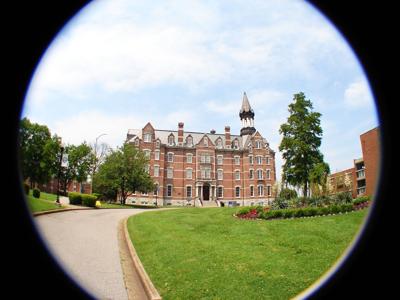
In May, Fisk announced a $900 million master plan for revamping the 160-year-old historically Black university's North Nashville campus. Among student housing and more predictable campus improvements, the university announced plans for a 30-megawatt data center.
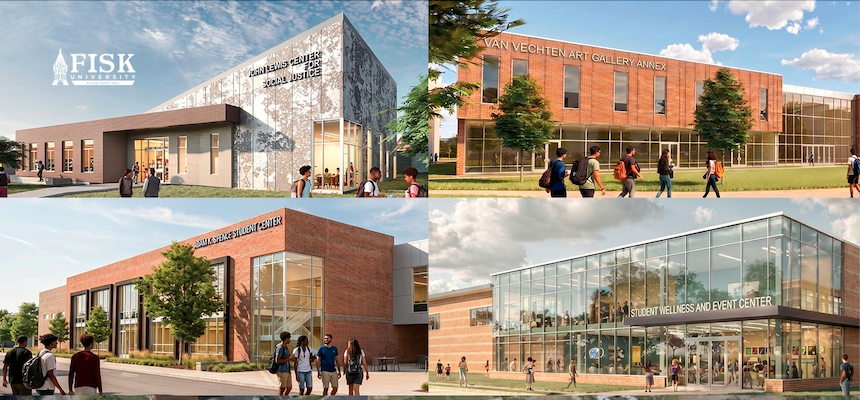
University’s 10-year Quantum Leap initiative will include $400 million innovation center, arena, student center
While the university said the data center will be done responsibly and acknowledges concerns from other communities where data centers have developed in recent years, some neighbors are skeptical of the environmental and other community impacts.
“It could mean higher electric bills, unsafe drinking water, pollution and whatever else, and they’re not even talking to the community about it,” Kaylynn Mourning, a resident of North Nashville, tells the Banner.
Mourning is a mother of two who walks around her neighborhood in 37208 near Buchanan Street every morning. Since the Fisk project was announced, she has spent those walks handing out flyers, urging people to sign a petition opposing the data center.
In many cases, the people she talks to have not heard of the plan to construct a data center in their ZIP code. Mourning takes particular issue with Fisk’s lack of community input so far and with how little information they’ve made available to the public.
“Like, OK, say you are fine with data centers — which make no sense, but say you are — then at least you need to know about it, because it will affect us,” Mourning says.
While the university is making certain planning choices to mitigate the harm caused by developing a data center, the plan has stirred debate over development in the historically Black community and illuminated a citywide lack of zoning policy for data centers.
‘It’s Going to Be Done Right’
Fisk has been a fixture of the North Nashville community for more than 150 years. The university's pitch is that data centers are almost certainly coming, and that Fisk will be the most responsible home for this type of facility. The facility would be built on a vacant parcel of land owned by Fisk, on the backside of the campus, a few blocks from the historic Jefferson Street and abutting Dr. DB Todd Jr. Boulevard.
The 100,000-square-foot data and technology center would be used by both the university and some unknown, potentially commercial, partners.
“Fisk would not need all that power for themselves,” Don Hardin, president and CEO of the Don Hardin Group, said Friday. “Though university [president Dr. Agenia Clark] loves the idea of a supercomputer, that won’t take up that much megawattage. So the idea would be to have others tap into that computing power.”
Fisk says it would use it for technological educational purposes but also for storage capacity for university research projects.
Hardin, who is managing the project for Fisk, says the university is in part racing to build a facility that will benefit the university while being mindful of the community that houses it, as others vie for limited access to utilities required to run such a system.
“I have to live here, and there's no way I'm going to be a part of something that doesn’t try to respect the community,” says Hardin, a Tennessee State University graduate whose wife is a Fisk alumna, of his regard for the HBCUs and surrounding community of North Nashville.
Fisk’s would not be the first data center in Nashville, but the exact number of facilities is hard to pinpoint, given how rapidly they are being constructed and the variety of sizes and purposes.
There are at least two dozen data centers in Middle Tennessee, ranging in scale and, therefore, consumption of resources. (See a map of the Nashville area's data centers and their megawatt capacity at this link.) In Gallatin, Facebook’s parent company Meta operates a 500-megawatt data center, which is reportedly 100 percent solar-powered. Another new facility being constructed by RadiusDC in Trinity Hills is just 20 megawatts and will use a closed-loop system to reduce water consumption, but has still spurred pushback from neighbors worried about wastewater, noise and other impacts on the neighborhood.
According to Hardin, the Fisk project would require an individual power source, meaning direct lines to the data center. But he was assured by Nashville Electric Service that the facility won’t overburden the area’s power supply and won’t impact residential electricity bills. The facility would also use a closed-loop cooling system, minimizing the water consumption needed to run the computers.
While Hardin says the facility would consume about the same amount of water as 10 households — and that the water would be provided by a 16-inch main identified by Metro Water Services — there is still research to be done on the impacts of wastewater and noise pollution.
“Those are next steps, and we have to figure all of that out before we’re comfortable going forward,” Hardin says.
Fisk hopes to sign a memorandum of understanding with NES reserving the right to use that power soon to effectively hold its spot in line as data centers across the county are racing to access the limited power supply.
“There's competition to get to that spot to be the best and be first,” Hardin says, comparing available local power to a hospital certificate of need. “And NES kind of hinted, ‘Well, there are others inquiring.’”
In February, the Tennessee Valley Authority told each of the more than 100 local power companies it services that it may introduce a new rate class for data centers “recognizing their unique load and potential impacts, both positively and negatively, on the system.”
According to Scott Brooks, a spokesperson for TVA, data centers currently make up around 18 percent of TVA’s power consumption. The number could double by 2030, as TVA is currently adding 3,700 megawatts of new generation to keep up with an increased demand, driven in large part by population growth and data centers.
Brooks emphasizes that the reclassification, which will be considered at TVA’s August board meeting, would not include rate increases.
NES acknowledges the strain centers could have on the utility in a statement to the Banner.
“Data center development is challenging to predict in terms of both timing and location, necessitating careful, data-driven planning,” the statement reads. “NES is actively monitoring the rapid increase in data center demand and is investing in system capacity and long-term planning to ensure the continued provision of safe, reliable, and affordable power to all customers. NES, in alignment with TVA, coordinates data center development using a disciplined approach. As a community-owned, non-for-profit utility, we set rates that protect our financial position and protect our current customers.”
NES did not provide any statistics on the number of data centers it services or how much power those facilities use in aggregate, noting that data centers are tracked “as any large-load customer.” The utility did not provide energy consumption for specific projects, citing privacy laws.
A spokesperson for Metro Water says the utility had “not yet received any formal data center requests. However, any development proposing greater than 3,500 gallons per day (GPD) in water use is required to undergo a capacity analysis, pay appropriate capacity fees, and obtain a capacity letter from MWS.”
‘Kind of Diabolical’
The immediate concerns of neighbors like Mourning hinge on the toll these facilities have on the environment and quality of life for nearby community members.
“That’s a lot of power usage, a lot of water usage, and the water has to go out somewhere, which can contaminate our drinking water,” Mourning says. “Data centers as a whole have also only been around for like 20 years, so we don’t even know all of the effects of them on community members’ health.”
“And what happens when Belmont or Vanderbilt or all of these other schools in Nashville decide they need one too?” she asks.
Across the country, neighbors and activists are opposing the construction of these facilities, citing data centers like Elon Musk’s xAI center in Memphis — a whopping 150-megawatt center powering Grok AI, which is using far more water than was proposed and is polluting the air around it, spurring an ACLU lawsuit.
While the Memphis data center is five times the size of the one proposed by Fisk, Mourning is concerned by the growing number of data centers in Nashville having a similar cumulative impact. For Mourning, another primary concern is how increased power demands will impact NES residential customers, especially on the heels of ice storm-related blackouts this winter showing strain in the utility’s management.

Six weeks after Winter Storm Fern knocked out power for hundreds of thousands of people, Nashvillians are looking for answers
“They couldn’t handle an ice storm, how are they going to handle data centers?” Mourning asks.
As communities grapple with the consequences of data center development, Winston Wright, a Fisk alumnus with a master's in public health, is concerned that the school with a long history of civil rights and community engagement is neglecting the predominantly Black neighborhood in 37208.
“It's just kind of like perverse and weird,” Wright says, comparing the construction of a data center to the construction of Interstate 40, which effectively split the neighborhood in half in the 1960s, an example of predatory development that the HBCUs on Jefferson Street opposed.
In addition to the standard concerns about data centers, Wright says that the facility being planned at the corner of 17th and Herman right next to the Andrew Jackson Commons affordable housing development without community input is “kind of diabolical.”
“Now here we are in 2026, and our university is accelerating detrimental infrastructure in our neighborhood," Wright says. "It's almost shocking and hard to believe. If there were anyone in the administration that actually knew the history of North Nashville, the history of Fisk, the history of TSU, perhaps they would be a little bit more mindful.”
Wright and some other alumni have expressed concern about the unknown business partners involved in the project and who may utilize the facility, even if it’s owned by Fisk. On an alumni call after the master plan was announced, Wright said an administrator mentioned the involvement of an alumna with connections to Equinix, a data center company that has been partnering with the university since 2020, pledging $1 million to the school in 2023.
Hardin says the school was working with alumni at a Silicon Valley company, but would not provide the name of either, and school administrators have denied publicly that Equinix will own or operate the facility.
Both Mourning and Wright think it’s likely that the data center gets approved, but lament that Fisk has made these plans without meaningful input from the neighborhood, students or alumni of the university.
“They just haven’t been forthcoming at all,” Wright says.
‘We Have No Rules’
To pump the brakes on unfettered development, Metro Councilmember Rollin Horton introduced a data center zoning bill last week that will be heard for the first time Tuesday, and would be the first regulation of the industry in Nashville.
“We have no rules or restrictions on them in place currently, so theoretically they could be built in neighborhoods today without any restrictions, without the opportunity for community involvement,” Horton tells the Banner, echoing concerns about environmental strain, noise and other impacts data centers can have on communities.

Councilmember Rollin Horton files bill to impose local restrictions on massive tech powerhouses
“I filed this legislation to impose some common-sense rules around them before this becomes an issue in Nashville,” he adds.
Horton’s zoning policy classifies data centers by footprint and power usage, categorizing 20- to 100-megawatt centers, like the Fisk facility, as “large data centers,” which would require a special exception to construct. Facilities larger than 100 megawatts or 500,000 square feet would be prohibited in Nashville under the proposed bill. All data centers constructed under the proposal would have to use closed-loop cooling to reduce water consumption.
Horton says his constituents have repeatedly raised concerns about potential data centers and whether the city could stop one from being built.
“And the answer currently is no,” Horton says. “This is not a defined land use in our code of ordinances. We have no rules or restrictions on them in place currently, so theoretically they could be built in neighborhoods today without any restrictions, without the opportunity for community involvement.”
As of Friday, Horton’s bill had 17 co-sponsors and, he said, was likely to pass sometime in August, following zoning change procedures in both the council and planning commission.
This article first appeared on Nashville Banner and is republished here under a Creative Commons Attribution-NoDerivatives 4.0 International License.



Post a comment as anonymous
Report
Watch this discussion.
(0) comments
Welcome to the discussion.
Log In
Welcome to the discussion.
Keep it clean. Please avoid obscene, vulgar, lewd, racist or otherwise abusive language. Comments featuring hate speech or threatening or violent content will not be tolerated.
PLEASE TURN OFF YOUR CAPS LOCK.
Be truthful. Don't knowingly lie or mislead.
Be proactive. Use the “report” link on any comment that violates our comment policy.
Share with us. We'd love to hear your feedback.