

It’s hot.
Sweltering. Blazing. Scorching. Whatever adjective you use to describe Nashville’s relentless, sticky summer heat, it is impossible to ignore.
While some of this can of course be chalked up to the fact that we live in the South, climate change data shows that Nashville — and the rest of the world — is getting hotter. Earth’s average surface temperature has risen approximately 2 degrees Fahrenheit since the late 19th century, according to NASA data. Meanwhile, global surface temperature has increased more rapidly since 1970 than in any other 50-year period over at least the past 2,000 years.
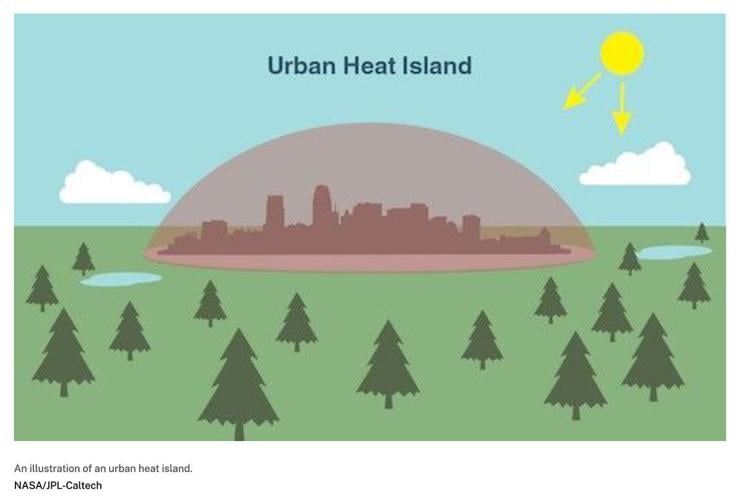
Amid rising temperatures, Nashville grapples with what’s known as the urban heat island effect, an environmental phenomenon common among metropolitan areas in which city temperatures become significantly hotter than surrounding rural areas. This is often caused by the widespread placement of low-albedo surfaces like asphalt, pavement and roadways, all of which trap and absorb heat, releasing it throughout the day. There’s not much reprieve when the sun goes down either, as the trapped heat often raises temperatures even more at night.

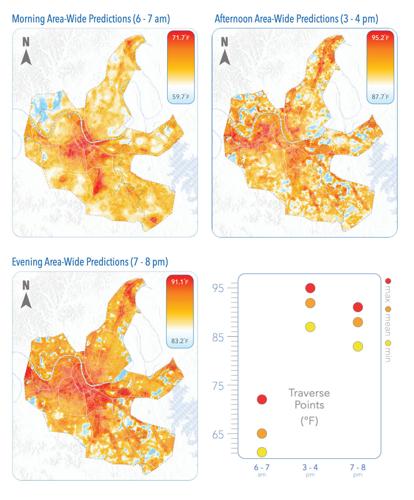
Being in close proximity to green spaces and a lush tree canopy can significantly reduce temperatures. But in Nashville, these cooling methods are not evenly distributed. When comparing the temperatures of downtown Nashville to more rural, peripheral areas of Davidson County, there is sometimes a difference of 10 degrees Fahrenheit, depending on the time of day.
While Nashville’s urban core — full of asphalt and tall buildings (many of which also trap heat and block wind) — is often hotter than the more rural parts of Davidson County, other neighborhoods are also disproportionately affected by lack of trees and the urban heat island effect.

Fifty years after I-40’s construction, a cycle of poverty and displacement churns again in 37208
This comes in part due to racist practices like redlining and projects constructed during urban renewal efforts in the 1950s and ’60s. These practices were seen in the historically Black neighborhood North Nashville, which was split in two with the construction of Interstate 40, and faced rampant disinvestment. The massive highway, along with unused parking lots and other abandoned paved areas, have led to that community experiencing higher temperatures and worsening air conditions than other parts of Nashville.
In 2022, Metro Nashville completed an Urban Heat Mapping Campaign, which shows the urban core, North Nashville, Edgehill and Madison, as well as parts of South Nashville, Elm Hill and West Nashville bordering I-40 and Charlotte Pike as considerably hotter than other areas of Davidson County during the same time of day.

Citywide temperatures gathered throughout the day on Aug. 14, 2022
The Nashville neighborhoods experiencing the most extreme heat also frequently include communities with residents who are most vulnerable to its detrimental effects: older adults, young children and people with chronic diseases and mental illnesses that could make heat a risk to their health. The map shows areas of North and South Nashville having a higher population of residents with health conditions like asthma, diabetes, heart disease, pulmonary illness and obesity that could affect their bodies’ capacity to cool down. According to the World Health Organization, heat is the leading cause of weather-related deaths, and the Tennessee Department of Health reported more than 3,000 heat-related hospitalizations and emergency department visits in Davidson County between 2010 and 2021.
This also becomes a socioeconomic issue, as the unhoused community, people who can’t afford central air conditioning and those who rely on public transit are especially vulnerable to heat exposure. Outdoor workers, people living alone, individuals with disabilities and non-English speakers also face increased risk of heat vulnerability.
A new research report from Vanderbilt University explores the concept of heat as not just numbered temperature, but also a socially produced condition substantially impacted by racial geographies, historic marginalization, health risks and other cultural factors — such as the way people dress, live, work and adapt to heat.
“This idea that heat is socially produced refers to all of this complex mix of biophysical factors, health factors, social factors, economic factors that can put certain people more at risk and also allow other people to be more protected or less vulnerable during a heat event,” says Ashley Carse, a cultural anthropologist at Vanderbilt and one of the primary authors of the research.
The report notes that metrics like the heat index and wet-bulb temperature — along with standards set by the American Society of Heating, Refrigerating and Air-Conditioning Engineers — largely use the experience of young or middle-aged men who are able-bodied and standing in shaded or temperate areas as the standard. There’s little research denoting how people of different experiences respond to heat.
History also plays a huge part in how humans have adapted to extreme heat over time.
Carse notes that use of air conditioning is still a relatively new practice. Through looking at archived newspapers, Carse found that air conditioning slowly began to be integrated into life in Nashville in the early 20th century. Places like theaters, stores and hotels were the first to offer air conditioning, and those were the spaces people would flock to if they needed to cool off. If people didn’t have the money, shaded parks were often where they sought relief from the heat. Even back then, many Nashvillians made efforts to help their neighbors. Carse says pre-World War I newspapers detailed ice funds and donations for low-income families during heat waves.
Now air conditioning is commonplace in the U.S. — and Vanderbilt’s research found that consistent use of air conditioning can make people more susceptible to heat-related stress when outdoors.
“A lot of us live in these kind of air-conditioned bubbles,” Carse says. “We go from our air-conditioned houses to our air-conditioned cars to our air-conditioned offices or stores or whatever, but that’s all pretty new. … I think that we can learn from how people lived and coped with heat here before AC and things, how people have done it in other parts of the world.”
The research treats this historical and cultural knowledge as necessary infrastructure when crafting heat-related policy and solutions.
Amid the incessant heat, there are several local organizations taking note of these factors through initiatives intended to cool down the city, especially in the neighborhoods that are most vulnerable.
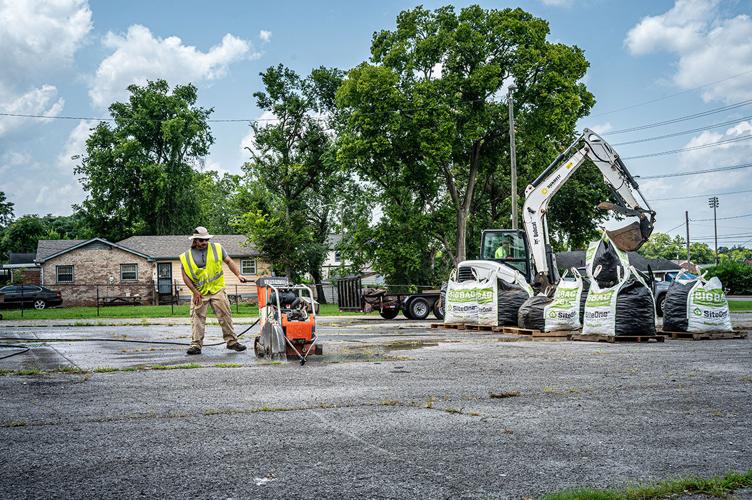
One is the Cumberland River Compact, which is conducting a series of depaving projects across the city. The initiative transforms underutilized parking lots and other derelict parcels of pavement into green space — an effort funded through Biden-era COVID-19 relief dollars designed to mitigate stormwater runoff and prevent contaminated water from draining into Nashville’s waterways — including Tennessee State University’s Tiger Bay Wetlands. By removing impervious surfaces like pavement, the water is then filtered through leaves and soil rather than running directly into Nashville’s water channels.
Depaving also plays a major role in cooling down the surrounding areas through the removal of low-albedo surfaces that absorb heat, as well as the addition of trees that provide additional shade.
“Driving around Nashville, everybody has just seen some space that’s overpaved,” says Jason Sprouls, urban waters division manager with the Cumberland River Compact. “Typically, those are spaces that were developed in the ’50s or ’60s before our stormwater codes were in place.”
Recent depaving projects have taken place at Pearl-Cohn High School, Mt. Calvary Missionary Baptist Church and Westwood Baptist Church, University Center — all of which are in North Nashville. Sprouls says by the end of September, the compact will have depaved 31,000 square feet in North Nashville and more than 100,000 square feet across Davidson County.

William Ross at Mt. Calvary Missionary Baptist Church depaving project
Sprouls also helps lead the Root Nashville campaign, a partnership between the compact and Metro Nashville aiming to plant 500,000 trees across Davidson County by 2050. Through the campaign, Davidson County residents can receive up to three free trees to plant on their property. (Current orders close Aug. 31.)

Officials vow to restore canopy after winter storm devastation; Nashville Electric Service steps up tree-trimming
“If people are feeling the duress of summer and they’re wanting to take an action to help promote climate resilience at a hyperlocal scale, the act of planting a tree really helps a lot because also it’s a measure of cost savings as well,” Sprouls says. “Having shade near your property can help reduce your dependency on air conditioning and heating, so it helps you reduce your emissions and dependency on utilities as well.”
Meanwhile, organizations like The Alliance to Conserve Nashville’s Highland Rim Forest and the Nashville Tree Conservation Corps are working to preserve and protect Davidson County’s tree canopy.
The Nashville Tree Conservation Corps recently conducted a shade report ranking all parks in Davidson County based on their heat index and tree coverage. The report found that Nashville’s least shaded parks include Watkins Park, William Edmondson Park, Owen Bradley Park and Morgan Park.
Chris Leonard, board chair of the Nashville Tree Conservation Corps, tells the Scene that shade at parks can be important for children and families, the unhoused community or anyone else who congregates in the green spaces — and the addition of trees can significantly cool down the area.
“I want [trees] to be really close to the playground equipment, overhanging the playground equipment, so that there’s shade on that stuff, and the temperature of the actual physical equipment can stay down throughout the day,” Leonard says. “So if I’m a parent sitting on a bench watching my kids play, I have the option of sitting in the shade. Think about nursing mothers who are going to this park who have to watch their older kids play while basically being stuck stationary on a bench while nursing. They shouldn’t have to do that in blazing heat.”
Leonard encourages anyone who sees a need for tree coverage in their neighborhood to request trees through Metro’s hubNashville portal.
“People who care, who are close to the action, need to be the ones to request this stuff,” says Leonard. “Not only because they’re the ones who should care the most, but also because they would have the most informed opinion about what and where this stuff should go.”

After fallen limbs aggravated ice storm outages, NES has widened its buffer into private property — Metro Council is pushing back
Amid the push to replenish Nashville’s tree canopy come brazen efforts from Nashville Electric Service to ramp up tree trimming in the wake of Winter Storm Fern. During January’s storm, tree limbs across Davidson County broke under the weight of the ice, subsequently causing damage to power lines. Before the storm, NES’ buffer between a power pole and a tree was 6 feet. Since the storm, it’s increased to 15 feet, which has been scrutinized by tree conservationists and other residents across the city who say NES was overcorrecting after falling behind on tree trimming in previous years.
“Citizens have more power than we think we do, but now we have some data,” Leonard says. “We should always have data at our fingertips to inform our decisions and priorities, because it’s important to me that the underserved areas of Nashville, or sometimes the forgotten areas of Nashville, just don’t get left behind as we improve things.”
As far as what’s being done at the Metro level, Kendra Abkowitz — who works as deputy chief of operations in the Mayor’s Office for Sustainability, Resilience, and the Environment — notes Nashville’s recently launched ecological conservation strategy and study.
“[The study] is helping us better understand where we have unique ecological resources, how they benefit the community, and then figuring out different tools within our toolbox that we could use to preserve those,” Abkowitz tells the Scene. “It recognizes that there are several different levers that we could pull to try to preserve and conserve spaces that provide unique value to our community.”
This comes as Metro recently announced a 300-acre expansion of Beaman Park through an acquisition of forest property adjoining the park, protecting it from any potential development.
Abkowitz says as Metro collects information through the study, it could recommend new planning regulations that could help alleviate the urban heat island effect in Nashville as the city continues to grow and face threats from large developments like data centers, which emit large amounts of heat.
“Examples of this would be things like, how are we taking existing regulatory programs like the bonus height program within downtown code and trying to make new development or significant renovations be more climate-friendly,” she says. “For example, if you’re building to a certain level of LEED certification in the downtown core, and you’re achieving that LEED certification — which could include things like green space, green roofs, things like that — you could be able to build to a higher height.”
She adds that Metro will soon host a retreat including all of its departments to identify gaps in how the government addresses heat exposure and vulnerability in Nashville. Abkowitz says this includes identifying pilot projects like a recent Nashville Department of Transportation and Multimodal Infrastructure initiative experimenting with a cool sealant that has a reflecting characteristic and helps prevent roadways from absorbing heat.
“It’ll be one of the more recent activities that we’re taking across multiple different departments to really examine how the decisions that we’re making are affecting the heat landscape and how heat is felt by our residents,” Abkowitz says.
She says Metro departments will often reference data from the heat mapping campaign to understand where certain projects could be piloted.
“If we’re going to start setting up places like resilience hubs or more intentional cooling centers, if we were to do that, which communities would we want to go to first?” she says. “I think it’s hard, because you want to make sure that you’re responding to the needs of all your residents. That’s what government does. But I do think there is a way that you can prioritize your engagements, or if you are in a piloting framework, maybe you want to test out and try some more innovative approaches in neighborhoods that need it the most.”
Abkowitz says efforts to reduce the urban heat island effect in Nashville will take both large-scale efforts like the Beaman Park expansion as well as neighborhood-focused projects like individual tree plantings across the city.
“I’m trying to think a lot about scale, and thinking about sort of micro-level interventions as well as these more macro-level interventions,” she says.
As dangerous heat is expected to permeate Davidson County in the weeks to come, it’s safe to say most Nashvillians will welcome interventions at any level.




Post a comment as anonymous
Report
Watch this discussion.
(0) comments
Welcome to the discussion.
Log In
Welcome to the discussion.
Keep it clean. Please avoid obscene, vulgar, lewd, racist or otherwise abusive language. Comments featuring hate speech or threatening or violent content will not be tolerated.
PLEASE TURN OFF YOUR CAPS LOCK.
Be truthful. Don't knowingly lie or mislead.
Be proactive. Use the “report” link on any comment that violates our comment policy.
Share with us. We'd love to hear your feedback.