
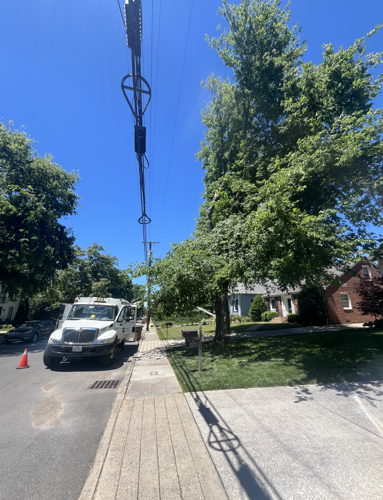

Linden, Ashwood, Cedar, Magnolia. The streets that branch off of 21st Avenue aren’t just named after trees — they’re lined with them, large-caliper hardwoods that shade front porches and loom over power lines.
“I think this hackberry was planted before this road was paved,” says Stacy Davis, whose home lost half a tree this week due to a new Nashville Electric Service tree-buffer policy. “ We take steps to keep it healthy in the spring with injections, and it gave us no issues during the ice storm. Now here we are with half-trees.”
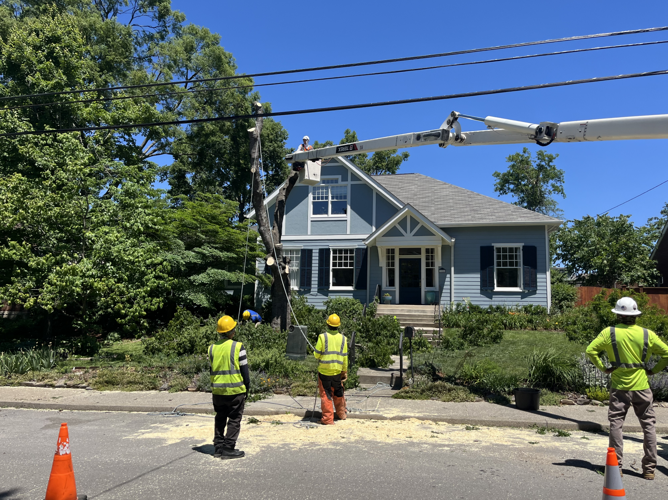
On Wednesday, Davis watched NES contractors lop off limbs to satisfy the utility’s expanded 15-foot ground-to-sky power line buffer, which was put in place after the disastrous January ice storm that left hundreds of thousands of homes without power. Before January, the utility’s buffer was six feet, a loosely enforced bubble that let many trees grow over and through utility space in the years that preceded the winter storm.

Six weeks after Winter Storm Fern knocked out power for hundreds of thousands of people, Nashvillians are looking for answers
Charter language gives the city’s urban forester, Jonathan Wyatt, broad power to designate “hazard trees” on private property that interfere with public utilities. Designation begins a 30-day window for removal by owner, after which the city has the right by charter to remove the tree, and even bill the owner for costs.
A real estate agent with a law degree, Davis recalls multiple recent visits from the city, during which she asked to speak with NES legal counsel. The city gave her little room to negotiate and wanted to clear the whole tree. She brokered a severe trim instead, hoping that the hackberry could survive with its trunk intact. The compromise is a misshapen topiary that gives electric lines a wide berth and shades Davis' home.
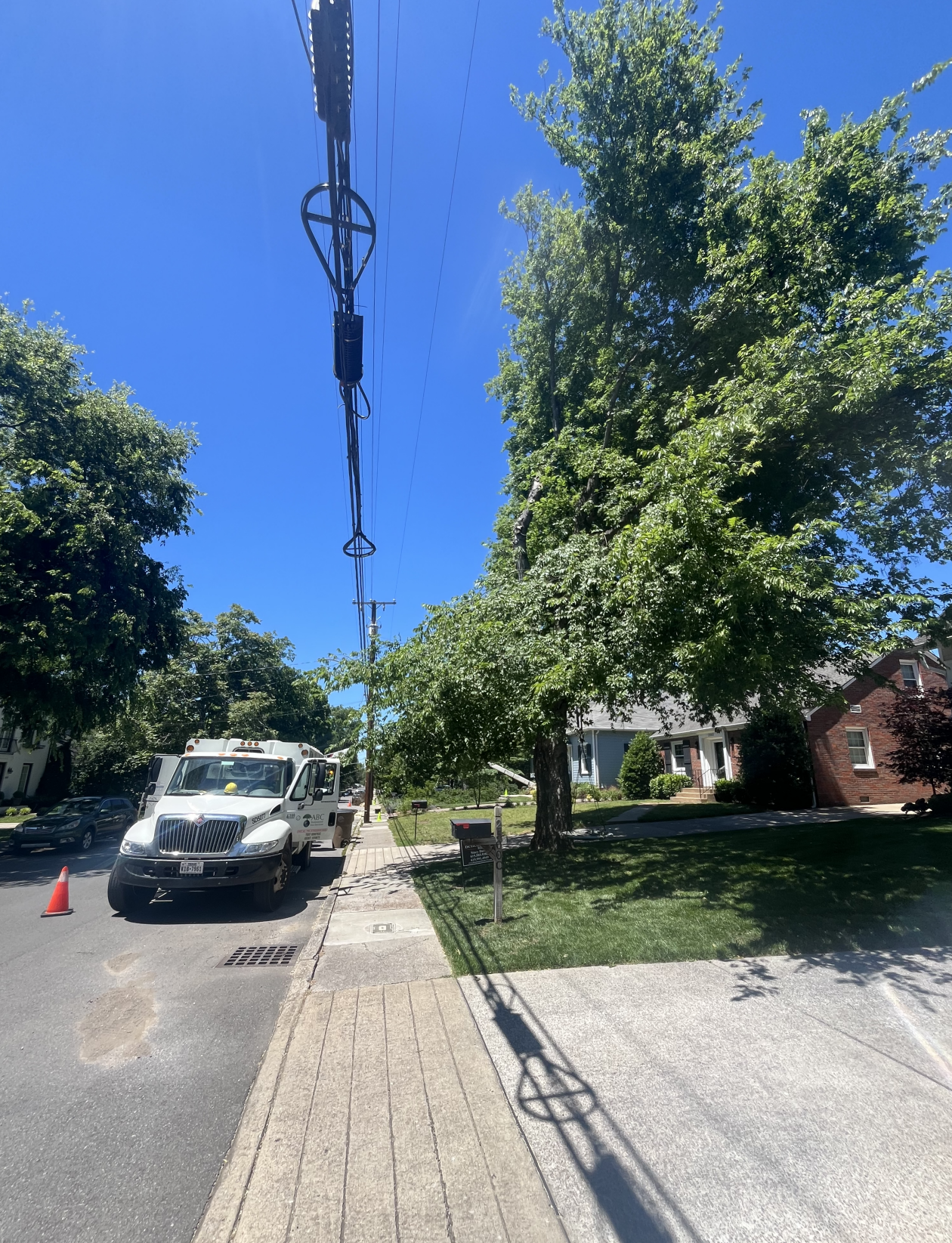
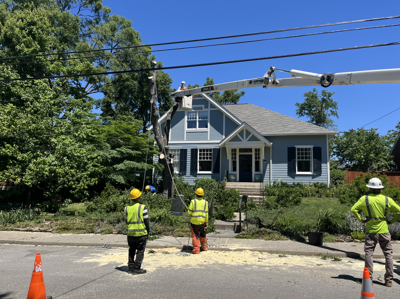
Crew clearing trees near 21st Avenue, May 14, 2026
Crews are now working in front of Steve Hanks’ home next door.
“ They've gotten much more aggressive this year,” adds Hanks, a professor emeritus in biology at Vanderbilt University. “Somebody made that decision. Was that really necessary? Did homeowners have any voice in them making that decision? That would be a good question. I doubt it.”
Hanks welcomed the city’s offer to clear a mature, healthy hackberry in his front yard on the taxpayers' dime. Private tree work is expensive, and hackberries are notorious for throwing limbs during tornadoes — the real painful tree-trimming, he says, is happening to big oaks and maples.
“NES did a yeoman’s amount of work to recover from that storm, and I give them tremendous credit — the real culprit is climate change and Mother Nature,” Hanks says. “We just took one on the chin from Mother Nature. It's not the first time it's happened, and it won't be the last.”
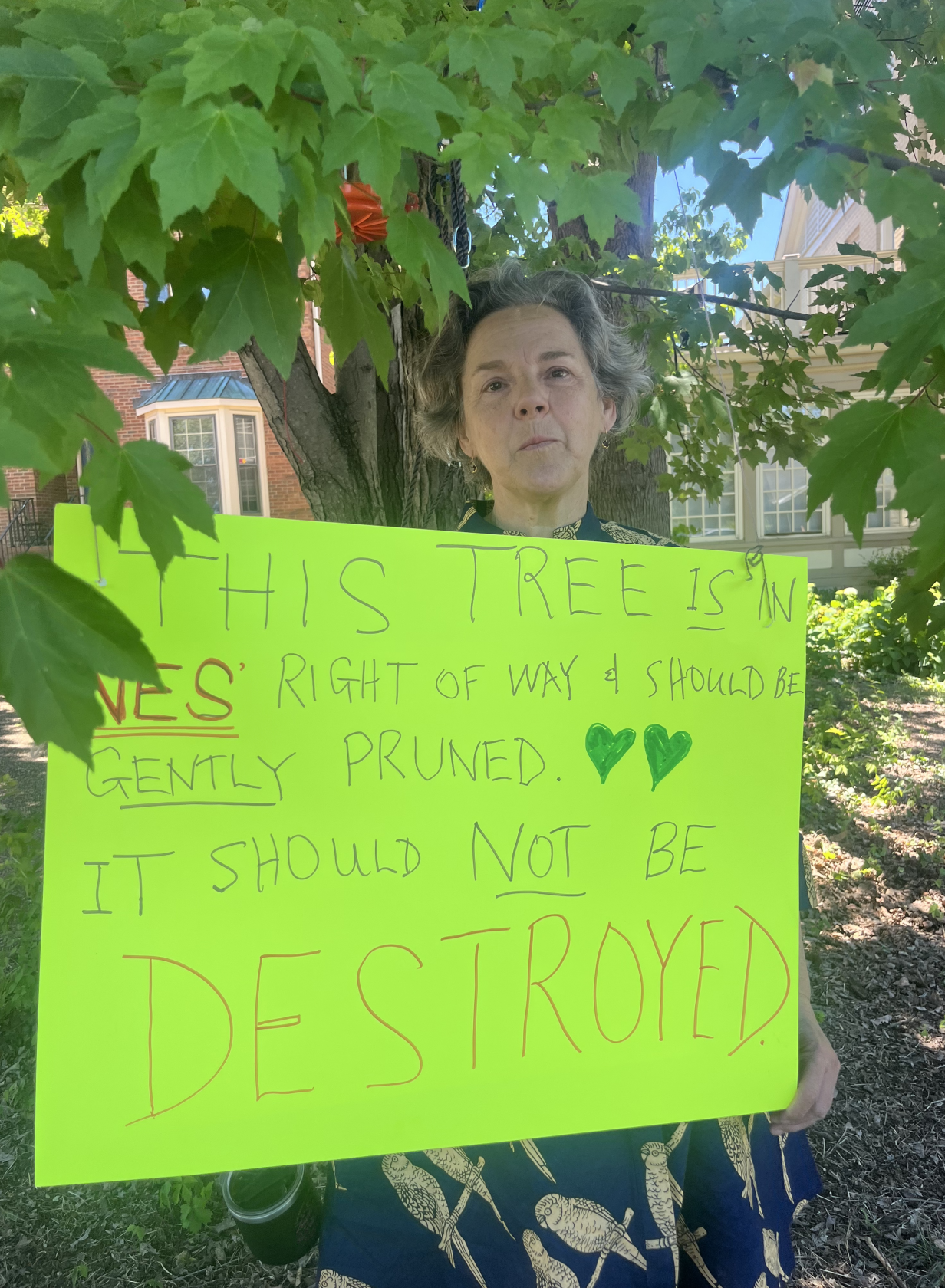
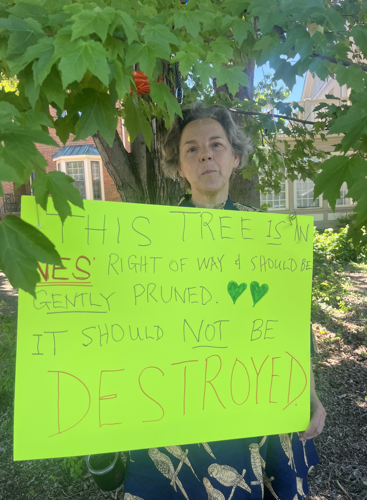
Tandy Solomon
Standing with Davis on the sidewalk Thursday, Hanks questions whether the utility isn’t overcorrecting after extended outages provoked an NES public relations nightmare. Another neighbor, Tandy Solomon, has spent the morning climbing in a small but full maple. She hoped it would one day be a climbing tree for her 4-year-old daughter.
“I decided I didn’t have a voice to raise, so I got in this tree today,” Solomon says, rattling off the many benefits of a healthy tree canopy to humans, birds and insects. “Orioles come to red maples to nest and have their babies. This tree is facing an uncertain future, and I just want to have some time with it today.”
On Thursday, Solomon learned that tree-trimmers would pass over her maple tree, which stands just under power lines on Ashwood Avenue, with plans to return in the fall.

Officials vow to restore canopy after winter storm devastation; Nashville Electric Service steps up tree-trimming
Metro Councilmember Tom Cash, the neighborhood’s representative, is co-sponsoring a resolution filed Tuesday requesting a moratorium on NES’ expanded vegetation control for fear of permanently altering the city’s valuable tree canopy. Neighbors — citing conversations with work crews — trade rumors that the city has ramped up its trimming efforts in the area to beat the ban on additional work.
“This resolution is just a request,” Cash tells the Scene. “NES has said they have not encouraged people to hurry for any reason. Some people are nervous about anything major done to their trees, and I think there are legitimate concerns about how crews on the ground are interpreting the guidelines. According to NES, they’ve already backed off of a few things.”
The resolution hits the council floor on May 19.



Post a comment as anonymous
Report
Watch this discussion.
(0) comments
Welcome to the discussion.
Log In
Welcome to the discussion.
Keep it clean. Please avoid obscene, vulgar, lewd, racist or otherwise abusive language. Comments featuring hate speech or threatening or violent content will not be tolerated.
PLEASE TURN OFF YOUR CAPS LOCK.
Be truthful. Don't knowingly lie or mislead.
Be proactive. Use the “report” link on any comment that violates our comment policy.
Share with us. We'd love to hear your feedback.