

Metropolitik is a recurring column featuring the Scene’s analysis of Metro dealings.
Sometimes “a seat at the table” is a metaphor for inclusive decision-making, especially when lots of money is involved. Other times, it’s more literal.
At the request of Councilmember Kyonztè Toombs, Cade Wooten, Maryam Abolfazli and Andrew Krinks took three chairs at a May 27 work session hosted by the Metro Council’s Budget and Finance Committee. Abolfazli and Wooten work for Stand Up Nashville, the advocacy group that rose to prominence after negotiating a 2018 community benefits agreement with Nashville SC ownership. Krinks works with the Nashville People’s Budget Coalition, a member-led outfit that lobbies for more government investment in housing and non-police public safety.
“The backbone of our city, and our thriving economy — our workers — are literally slipping through our fingers,” Abolfazli told councilmembers at the committee meeting. “We are sending a message to them that, actually, Nashville is not a place to root yourself — it’s a place to leave within two to three years because you can’t afford it.”
The three successfully pitched social housing investments that survived through the Metro Council’s June 16 budget vote, when members passed a $3.85 billion budget for fiscal year 2027. (A new fiscal year begins on July 1.) Both SUN and the People’s Budget Coalition swiftly declared victory for the millions that will go toward new strategies and new staff meant to improve affordability in the city’s housing market. Their only misstep: two separate celebration parties scheduled for the same Thursday evening.
While the mayor and his fully staffed office file the city’s massive budget, the Metro Council holds the power of the purse. Dividing and balancing billions is a massive undertaking, and time, coordination, expertise and sunshine laws make it unfeasible for the council’s 40-person body to overhaul the mayor’s first draft. Instead, members propose funding changes between a few hundred thousand and a few million dollars. Toombs, who oversees the council budgeting process and files its substitute as chair of the Budget and Finance Committee, earned the respect of her colleagues throughout the process.

Council approves $3.8 billion spending plan that includes Barnes Fund funding, grocery tax relief, return of entertainment commission
Toombs, an attorney, showed off tactful mediating skills while navigating political and personal turbulence, successfully broaching a controversial aspect of this year’s budget — a city entertainment commission that has been a battleground since its inception in 2022. Mayor Freddie O’Connell’s budget scrapped funding for the body.
“Before I call on councilmembers, I do want to emphasize that this is a collaborative process,” cautioned Toombs as she prepared to tap District 32 Councilmember Joy Styles for comment at another budget work session on June 4. “There will be differing opinions, but I think it’s our job to try to work together and come to a resolution.”
Styles took the chance to slam the O’Connell administration for “machinations,” “nonsense” and “shenanigans.” Styles announced her bid for mayor in January, but her campaign has not translated to blockbuster fundraising or high-profile endorsements. It has, however, given her a perch from which to pillory O’Connell and his administration. During the budget process, she levied charges without hesitation.
“This has not been a matter of legislation — this has been personal, and I’m sad about that because it’s affecting constituents,” said Styles on June 4. “This has been a veritable nightmare, and we have an opportunity in this budget season to fix that.”
The entertainment commission won $300,000 via council intervention. It was among several small but impactful tweaks during budget season, many of which reflect the council’s prevailing commitment to progressive politics. Small grants to nonprofits, like the Sexual Assault Center and the Nashville Children’s Alliance, target social services like SAC’s Safe Bar program. Bigger cutouts for housing stability — including $1 million to Rebuilding Together Nashville and $2 million to the Hispanic Bar Association Foundation — will back affordable housing preservation and legal support for renters facing eviction. Relatively flat city income — mostly from property taxes, followed by local sales tax and various smaller government revenue streams — means councilmembers raided contingency funds for extra money, specifically the Judgments and Losses fund, which pays out when Nashville is on the wrong side of a legal dispute.
It’s easy to imagine that now-Mayor O’Connell would have pushed for the same investments when he was a councilmember. As the city’s top official, he’s now more prone to worrying about unforeseen catastrophe, the blame for which would fall on his office. He’s still taking predictable flak for last year’s countywide property tax reassessment — specifically from local business owners including Acme Feed & Seed proprietor Tom Morales, who received an eye-popping tax bill increase along with other Lower Broadway property owners. The mayor typically plays this card once per term for a big revenue bump that normalizes the city budget.
The city’s overall economic picture is neither good nor bad; Nashville still enjoys great bond ratings, the equivalent of a city’s credit score, but remains vulnerable to the volatile tourism economy. Tourism income has slowed — vacations often come last in a tight economy, making revenue from sales and hotel taxes sensitive to overall trends for better and worse. Local sales tax revenue grew a bit this year alongside scant property tax growth, outweighing downtrends elsewhere, leaving the city up about $50 million. O’Connell committed roughly the same amount to Metro Nashville Public Schools’ budget increase, which passes its own annual budget based on the city’s allocation (about $1.45 billion this year).
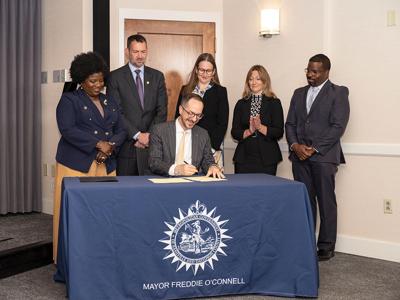
Without much new cash to work with, the mayor added $6 million to the Barnes Affordable Housing Trust Fund and $7 million for a revolving affordable housing loan fund, and cut the grocery tax by 0.5 percent, which will cost the city an estimated $9 million. The priorities — housing, cost of living, affordability — match O’Connell’s campaign talking points as he prepares for a second term.



Post a comment as anonymous
Report
Watch this discussion.
(0) comments
Welcome to the discussion.
Log In
Welcome to the discussion.
Keep it clean. Please avoid obscene, vulgar, lewd, racist or otherwise abusive language. Comments featuring hate speech or threatening or violent content will not be tolerated.
PLEASE TURN OFF YOUR CAPS LOCK.
Be truthful. Don't knowingly lie or mislead.
Be proactive. Use the “report” link on any comment that violates our comment policy.
Share with us. We'd love to hear your feedback.