

Last month, TomKats Hospitality founder Tom Morales posted on social media a letter he wrote to Mayor Freddie O’Connell. In the letter, Morales asked for a face-to-face meeting to discuss the effects of property tax bill increases on independent businesses in Nashville. And with that post, seemingly everyone in the online Nashville bubble stopped talking about the ice storm and the Winter Olympics, and all conversation turned to property taxes.
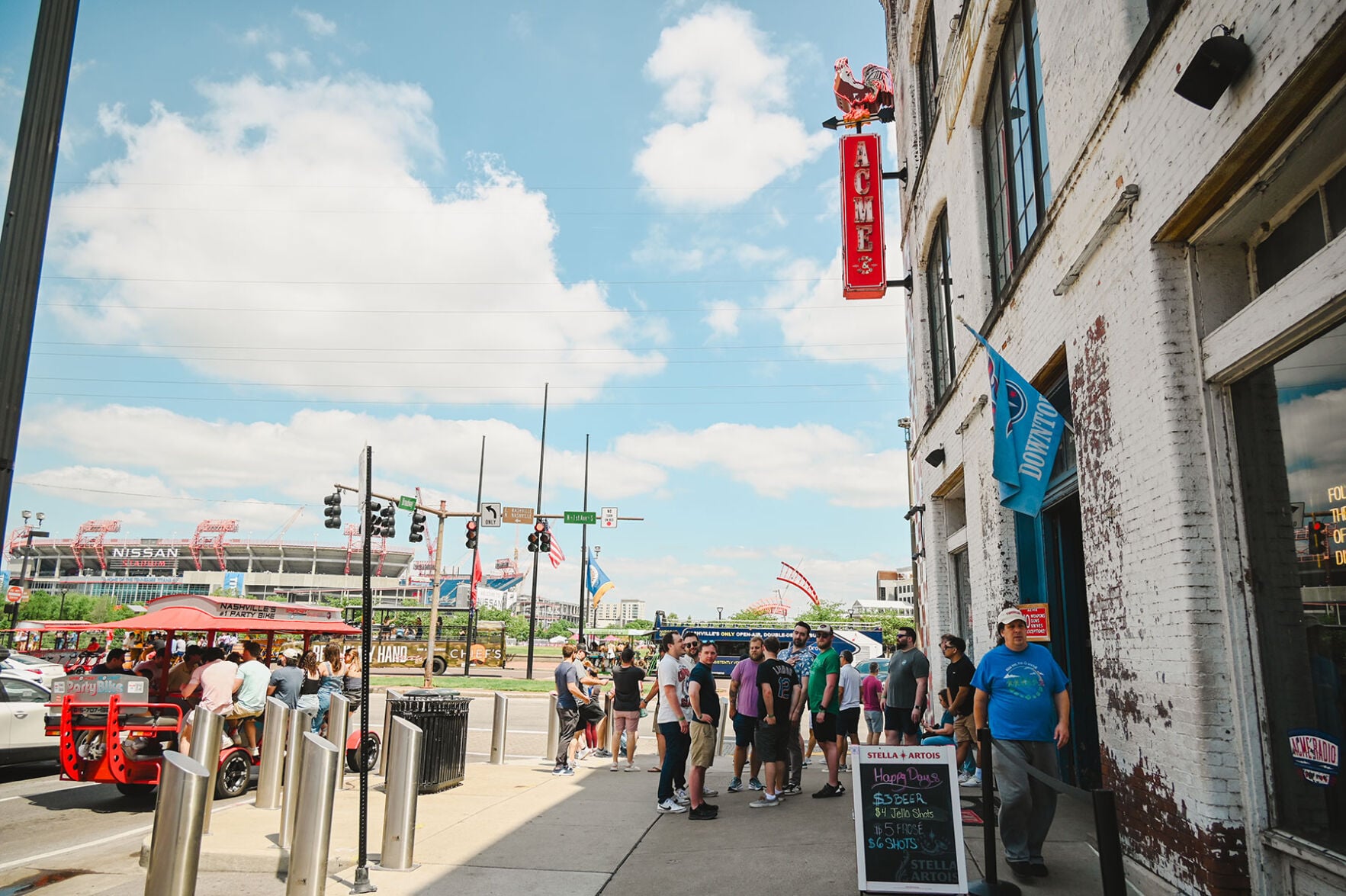
In the letter, Morales explains that Acme Feed & Seed — the music venue and restaurant TomKats runs on Broadway — may have to close due to a property tax bill that has increased from $129,000 to $589,000. (Lester Turner and Currey Thornton own the building itself and lease to TomKats, which pays the property’s annual property taxes, maintenance and insurance under what’s known as a triple-net lease.) Morales and his team have brought multiple historic Nashville spots back to life, including The Loveless Cafe.

Tom Morales says his annual tax payment has increased from $129,000 to $600,000, future of restaurant business uncertain
Morales and his daughter Lauren Morales, COO of TomKats, say Acme isn’t closing immediately, but because of the property tax increase, closure is “imminent” if they cannot find a solution.
Morales’ letter and TomKats’ situation hit a nerve. (So did the mayor’s response: In a Fox 17 story about the situation, O’Connell was partially quoted as saying, “It’s not up to me whether [Morales] is going to keep that business open.” The mayor’s office later released the full transcript of his conversation with Fox 17, though that did little to calm the storm.) The Moraleses are not alone. Small business owners across the city — restaurant and bar owners, retailers, venue operators and a new coalition of them — say something has to happen, or Nashville will lose independent businesses.
“You cannot sell enough beer to cover this,” says Rob Mortensen, a lobbyist representing Broadway Entertainment Association, an organization advocating for Broadway business owners. In Davidson County, properties are reassessed every four years, meaning this is the first post-pandemic assessment. Some believe properties were under-assessed during COVID, contributing to the large increases in 2025. Both the state and the city have issued statements saying they think the Broadway assessments, including that of Acme, are accurate.
Business owners know the city isn’t solely responsible for fixing the problem, but they want the mayor to help them work with the state to examine ideas for Nashville’s long-term benefit. Given that both the state and the city have offered tax benefits to major corporations — Amazon and Oracle, in particular — they feel certain something can be done.
Mortensen estimates that about half of the 37 businesses in the Broadway Entertainment Association rent their space, many with triple-net leases like Acme’s.
Owning property outright hasn’t sheltered other business owners from the problem of a high property tax bill. Carey Bringle (owner of Peg Leg Porker in The Gulch and Bringle’s Smoking Oasis in The Nations) and Rose and Kahlil Arnold (owners of Arnold’s Country Kitchen) are facing the same pressure. Rose and her husband Jack opened Arnold’s in 1982, operating from a rented building on Eighth Avenue South. When she saw the Music City Center being built nearby, she knew the neighborhood was about to change. In 2012, she bought the building that houses the restaurant, thinking that would insulate her from the cost of growth. Property taxes then were around $1,100 per year. By 2016, they had increased to $40,000; in 2020, they were more than $79,000, and now they are around $131,000 per year.
In 2023, Jack Arnold died. Rose sold their house, the house she raised her kids in, and moved in with a friend, using the proceeds from the sale to pay the business’s property taxes. She and her son Kahlil decided to close the beloved meat-and-three and sell the building. But when the deal fell through, they reopened, much to culinary Nashville’s delight. But now they are trying to figure out how to increase revenue to make it work. Kahlil Arnold says there have been proposals from developers to build high-rises with Arnold’s on the ground floor.
“I’ve thought about it — I go back and forth,” Kahlil Arnold says. “It wouldn’t feel like Arnold’s.” (Due to historic protections, some buildings don’t have the option of building multiple stories in order to increase revenue.)
Bringle and Lauren Morales have heard feedback that, as business owners, they simply need to budget for such property increases. They both say they did, but neither could have conceived of these increases. Lauren Morales budgeted for a 40 percent increase.
“That’s a lot, and we had heard this was coming,” she says. “But when I opened the envelope and saw the number there, I don’t know if anything could have prepared us for that, for it to quadruple. That’s a 400 percent increase, and nobody prepared us for a 400 percent increase.”
Because of the Tennessee Constitution, some initiatives that provide relief elsewhere may be difficult to implement in Tennessee. As previously reported by the Scene, a program in Toronto offers indie music venues a 50 percent reduction in property taxes. Landlords are obligated to pass on the savings to their tenants. An incremental tax increase on other types of businesses made up for the lost revenue due to the decrease.

615 Indie Live is poised to celebrate the city’s independent artists and venues this weekend
The state does not collect property tax, but the State Board of Equalization establishes policies and procedures for local property assessors. The state constitution — Article II, Section 28 — mandates uniformity in property taxes, meaning carve-outs like Toronto’s are not possible without a change to the constitution, a multiyear process.
Other possibilities include a change to calculate property taxes on realized value — the cost at which the property was purchased.
“Assessments say that your property is worth five, 10, 20 times more than you paid for it, and now you’re paying taxes on that,” Bringle says. “That’s taxing on future speculative profits. It’s just insane, and there’s no way that a business can keep up with that.”
In an announcement timed with the Feb. 28 due date of commercial property taxes, a group of nearly 100 locally owned businesses formed the Nashville Property Tax Coalition. Their goal is not to address the state limitations but instead encourage Metro Nashville to use the tools available at the local level to prevent these businesses from closing. Under the current system, businesses must pay their new tax bills while waiting for an appeal hearing. Many businesses do not have their hearings scheduled until this summer or fall. The Nashville Property Tax Coalition wants businesses to be able to make previous-year payments or receive some other type of extension while waiting for appeals to be heard. They also ask for an expedited appeals process, and request that commercial properties be valued using an income-based approach rather than assessments based on estimates of current real estate values. The revenue-based model is one that Mortensen sees working for the Broadway Entertainment Association.
The Tennessee General Assembly, during its current session, is considering multiple property-tax bills, including House Bill 2607, which would cap increases at no more than 2 percent annually. While politicians will have to be involved to help solve the issue, those speaking out span both sides of the political spectrum and see it as a bipartisan concern.
In fiscal year 2026, property taxes accounted for 57 percent of the Metro Nashville budget. So if there is a reduction in fees collected, the budget would need to be adjusted. Publicly, the mayor has said caps on property tax increases could hurt the city’s long-term finances. Business owners have a long list of ideas of where the city can trim the budget.
“If we lose [Broadway honky-tonks], we’re all in trouble — it’s a downfall that nobody wants,” says lobbyist Mortensen. “What will eventually end up happening is Starbucks will come in and go, ‘Hey, yeah, we’ll spend $80 million for that building.’ They don’t care if they make money or not. Or McDonald’s or fill-in-the-blank. It’s not going to matter if they’re selling anything. They just want their name on Broadway. And we lose the authenticity of who we are and what we’re about.”



Post a comment as anonymous
Report
Watch this discussion.
(0) comments
Welcome to the discussion.
Log In
Welcome to the discussion.
Keep it clean. Please avoid obscene, vulgar, lewd, racist or otherwise abusive language. Comments featuring hate speech or threatening or violent content will not be tolerated.
PLEASE TURN OFF YOUR CAPS LOCK.
Be truthful. Don't knowingly lie or mislead.
Be proactive. Use the “report” link on any comment that violates our comment policy.
Share with us. We'd love to hear your feedback.