

The newly formed Nashville Property Tax Coalition is continuing its efforts to find near-term solutions to the city’s ongoing commercial property tax affordability crisis. Several members of the coalition — including entrepreneur Christian Paro, CEO of Paro South — met with Assessor of Property Vivian Wilhoite and staff last month. That followed several meetings the group had with Mayor Freddie O’Connell and his staff.
The coalition is a nonpolitical alliance of more than 200 small business owners (it has doubled its membership since its inception in February) seeking solutions to property tax bill pressure. The coalition was founded when businesses were struggling with how to pay triple-digit increases in the amount of their property tax bills — which were due at the end of February.
“It does surprise me that there has not been any offer of assistance from the city,” says Bill Miller, founder and CEO of Icon Entertainment & Hospitality, owner of the Johnny Cash Museum, Skull’s Rainbow Room, Nudie’s Honky Tonk and other businesses. “There are many operators who are truly on the ropes, and for some it may be too late. I don’t care how successful a restaurant operator is, if you add $50,000 a month to their bills, that’s going to kill most operators.”
Property tax bill calculation is not particularly straightforward. Different parts of the process are governed by different Metro departments as well as by the state. The Tennessee Comptroller of the Treasury’s Division of Property Assessments monitors assessments, and the state Board of Equalization hears appeals, sets rules and approves the certified tax rate set by the mayor’s office and the Metro Council. The county assessor’s office analyzes sales data to establish market value.

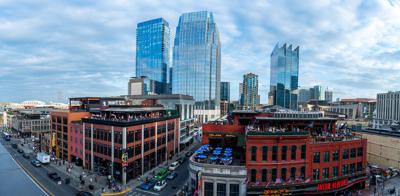
Newly formed Nashville Property Tax Coalition says businesses will close without some form of intervention
The assessor’s office has given more than 300 presentations on the process since 2016, including to coalition representatives last month. Wilhoite’s goal in the meeting was to explain that the 2025 reappraisal is revenue-neutral by state law — meaning the county must collect the same amount of revenue from existing construction in total as collected in the prior year. The increase in tax bills, she says, is due to the 26 percent tax rate increase set last year by the mayor and the Metro Council. Property values are assessed every four years, and Wilhoite encourages property owners to appeal their assessed valuation when appropriate. Property owners can appeal even in non-reassessment years.
Many business owners say last year’s assessments do not reflect current market conditions. Indeed, Wilhoite says assessments do reflect the value from the previous year. But development has slowed in the city. (It may not look like that’s the case, but many of today’s projects were negotiated years ago.) Paro says it would be impossible for him to sell his property on Main Street in East Nashville for the $12.7 million at which it was appraised. “Commercial Realtors in this city would just laugh,” Paro says. “We can’t pay our taxes and we can’t sell our buildings. What do they want us to do?”
The property tax bill increases affect business owners who rent their buildings as well. Many have triple-net leases, which call for annual property taxes, maintenance and insurance to be paid for by the tenant.
Wilhoite says “an unprecedented number” of property owners are currently appealing their assessments, a process that can take nine months to a year. The mayor’s office is in the process of adding more volunteers to the independent Metro Board of Equalization so the board can hear more appeals. Board members — often real estate agents — are paid $100 per day for their work.
“We are appealing our assessments,” says Miller. “I would think that almost everybody is. But we haven’t had any word as to a hearing date. Typically, the hearings have come before the taxes are due. So this is a big whammy, because now you’ve got my money. And we don’t know how long the appeal process can go on.”
Miller has not been involved with the work of the coalition (although his sons, who are behind Schulman’s Neighborhood Bar in East Nashville, have been). But he is part of the Broadway Entertainment Association, an organization advocating for Broadway business owners. While the coalition is focused on near-term Metro changes, BEA is focusing its efforts on long-term state assistance. Miller supports efforts to introduce a property tax cap — Tennessee is one of just four states without such a cap. This year’s session of the Tennessee General Assembly saw consideration of Senate Bill 2064/House Bill 1873, which would require a local governmental entity to hold a referendum to approve a property tax increase that exceeds specified thresholds — but that legislation stalled in a Senate committee last month. A cap would make life difficult for Tennessee cities, says a spokesperson for the mayor’s office, because property taxes are revenue-neutral by state law. It would be hard to afford to fill potholes or pick up the trash, particularly as inflation rises.
“What we heard from the business leaders is a desire to work with us to identify a variety of ways we can both support and promote our local businesses,” says a spokesperson for Mayor O’Connell’s office, recapping the coalition meetings. “We’re reviewing a number of options now, such as how we make our traditional programs responsive to current needs and create new programs to respond to current challenges. We also want to increase awareness of our existing offerings, like our Property Investment Incentive or the Fast-Growing Business Incentive, so that more companies are able to take advantage of these funds’ availability.”
Paro says he appreciates the transparency and the willingness of both the mayor’s office and the assessor’s office to meet. But he’s frustrated by what feels like finger-pointing.
“Where is the leadership saying, ‘We’ve heard you and we’re going to try the best we can to help’?” Paro asks. “Where’s that? Because that’s coming out of no office at all.”
Miller agrees that inaction could be bad for the city if it leads to Broadway businesses closing. “If you bleed the golden goose, the only answer is going to be to raise property taxes again and again and again, because all the tax revenue you’re getting from retail and food and beverage and hospitality is going to go away. There’s no happy ending unless somebody steps up and does the right thing.”



Post a comment as anonymous
Report
Watch this discussion.
(0) comments
Welcome to the discussion.
Log In
Welcome to the discussion.
Keep it clean. Please avoid obscene, vulgar, lewd, racist or otherwise abusive language. Comments featuring hate speech or threatening or violent content will not be tolerated.
PLEASE TURN OFF YOUR CAPS LOCK.
Be truthful. Don't knowingly lie or mislead.
Be proactive. Use the “report” link on any comment that violates our comment policy.
Share with us. We'd love to hear your feedback.