

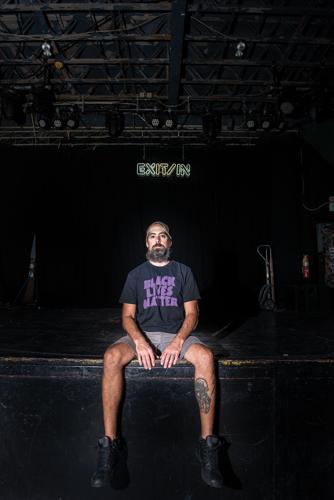

Bruce Fitzpatrick at The End
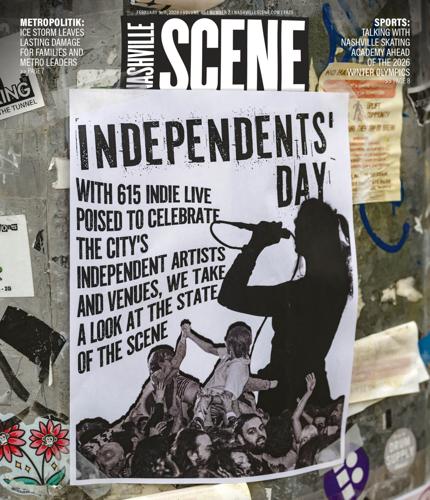
See also: "A 615 Indie Live Field Guide."
In January, Elliston Place’s The End posted that for the first time in the independent music venue’s 27-year history, it was struggling to pay rent. The club posted a link to its GoFundMe campaign, and within four hours, it met its $25,000 goal — primarily through small donations — and gratefully closed the request.
But the public asked to keep making donations. “We are seeing lots of messages about reopening donation acceptance,” venue ownership posted on social media. “Instead of further donations, we encourage you to attend local shows. Buy tickets, drinks, merch, even water. It may seem like a small purchase, but everything counts at these independent venues.”

Our picks for can’t-miss shows during the 2026 run of the citywide celebration of indie venues
The End’s experience is indicative of the state of indie music venues in Nashville today. It’s a roller coaster of being behind on rent, then having enthusiastic public support. It’s a mix of booking acts and needing to sell a can of water and a T-shirt. It’s a mix of state legislation, business-plan pivots, GoFundMe campaigns and cheap beer.
Nashville has more live music venues per capita than any other city, according to the Nashville Independent Venues Study, conducted in 2023 and 2024. At that time, the city had 252 spaces where live music was the main draw. Of those, 24 were independently owned, and 48 had some degree of independent ownership. Those venues each had their own wild rides in 2025. Some, including Madison’s Eastside Bowl, had their best year to date. Late last year, the owners of Rudy’s Jazz Room announced they plan to open a second location in East Nashville, near nonprofit venue Drkmttr. Iconic venue The Basement just celebrated its 21st anniversary. But others, including The End and Lower Broad’s Acme Feed & Seed, counted 2025 among their most challenging years. East Nashville’s The 5 Spot recently launched a Support Pass initiative — an opportunity for patrons to buy tickets now and redeem them for entry into a future show of their choice — to help offset recent losses.
A diverse set of live music venues — both corporate-owned and locally and independently owned — is crucial for a healthy live music ecosystem. Without it, Nashville could not and would not be Nashville. Without smaller venues and stages, musicians don’t get the live, in-person experience they need to later sell out arena shows.
There was a moment when the industry thought TikTok might be the incubator that would help new musicians be born and discovered, says Lauren Morales, COO of TomKats Hospitality and owner of Acme Feed & Seed. But you can’t take anyone — no matter how talented — from playing in their bedroom for a video audience on TikTok to playing before a live, in-person audience of thousands. Musicians need to hone their craft in front of live audiences, and smaller indie venues provide that training ground.

Kendall (left) and Lauren Morales at Acme Feed & Seed
In the National Independent Venue Alliance’s recent State of Live study, published in June 2025, 64 percent of venues reported being unprofitable. Most venue owners don’t own the properties where they operate, so in addition to inflation and other economic pressures, they face rent increases and displacement. As a result, most indie venues are trying a variety of new approaches to solidify their finances.
Tennessee is close to having a model for indie venues and corporate-owned venues to coexist, says Chris Cobb, president of nonprofit independent venue organization Music Venue Alliance Nashville. “Tennessee should lead,” says Cobb. “The titans of the music business and industry that thrive here should be excited to support the idea of figuring out how to best reinvest their profits back into the foundation of the live business.”
That model includes the Tennessee Live Music and Performance Venue Fund. Passed with bipartisan support by the state legislature in 2024, the fund is designed to provide grants to venues, promoters and performers. It has not been funded, however, so Jamie Kent — a lobbyist, communications consultant and founder of Backstage Strategies — is working with legislators to pass a bill to put dollars to work. One option is to impose a small levy on all tickets sold by third-party resellers.
“We actively invest in initiatives that strengthen Nashville’s live music ecosystem by making financial contributions to local organizations that champion artists, songwriters and venues,” says Grant Lyman, Live Nation’s U.S. Regions East president, via email when asked about funding the live music fund. “And we encourage policymakers to focus on curbing abusive resale practices while keeping tickets affordable and accessible for fans.” (Representatives of AEG, another major corporate venue owner in Nashville, declined to be interviewed for this piece.)
A separate proposal under discussion: providing property tax relief for independent venues and their landlords. Such legislation was passed in Toronto in 2022 and has provided a boost for venues, according to Mike Tanner, music sector development manager for the city of Toronto.
As in Nashville, most indie venues in Toronto don’t own their properties, and the system is designed so landlords pass on 100 percent of savings to their tenants. The program offers a 50 percent reduction in property taxes. Venues apply for the program, providing evidence of the frequency of their live music and that they pay performers. They apply annually, although once deemed eligible and approved, the reapplication process requires less paperwork. Landlords then sign an attestation that they will pass on savings to the tenant, although the specifics of how they do so (through a rebate or rent reduction) is not dictated by the government. The city follows up on reported concerns.
The number of participating venues has increased from 48 to 71 in just a few years, Tanner says. The small amount of lost revenue to the city from the discounted property tax — about $900,000 — has been recovered via what Tanner calls “a very small incremental increase tax” for other types of businesses in the city. The program has been successful in promoting Toronto’s music culture. After post-pandemic venue closures, Tanner says new venues are opening.

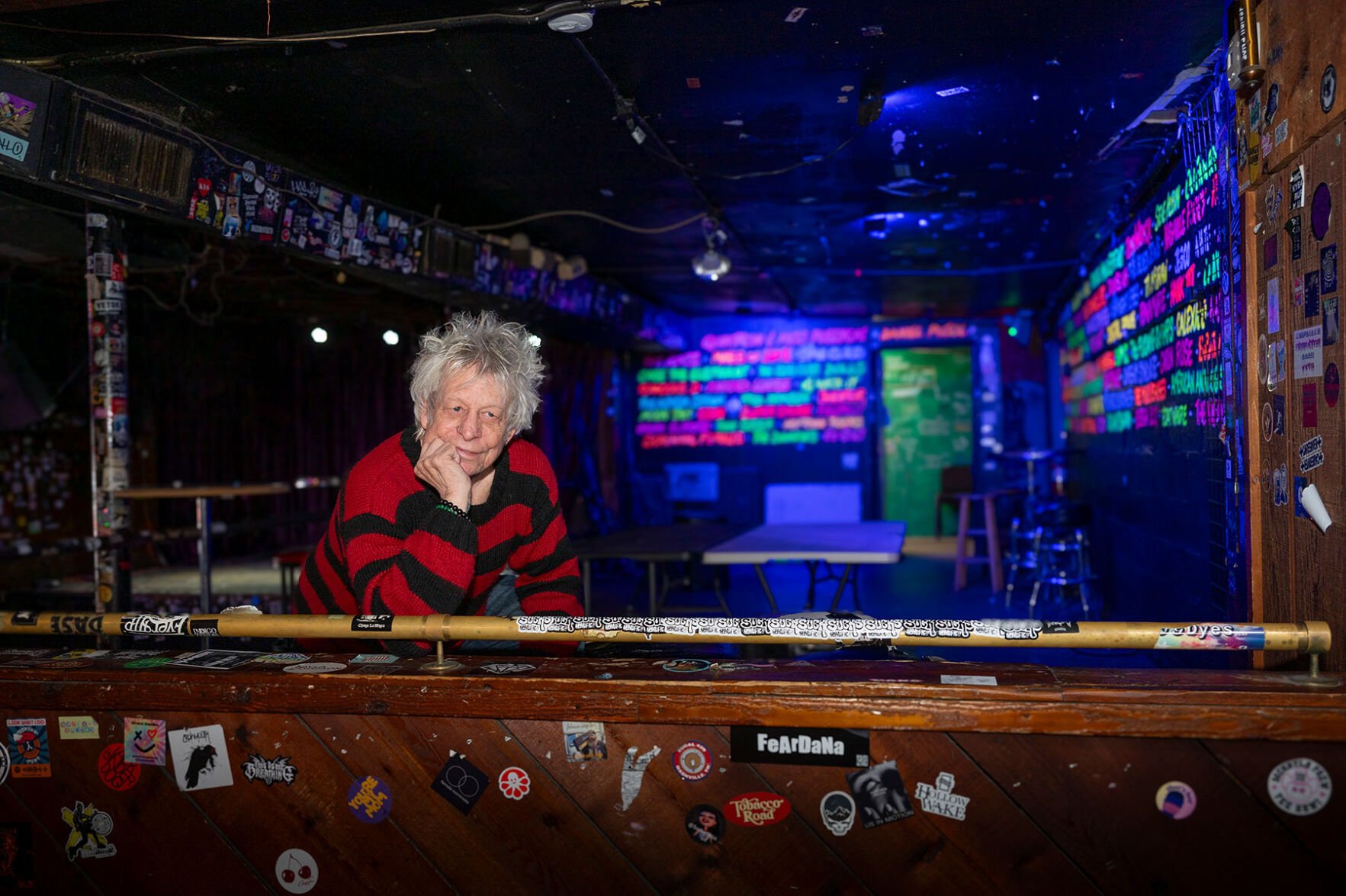
Chris Cobb
“We’ve been in a five-year phase since COVID and pivoting so much you’re dizzy,” says MVAN’s Chris Cobb. “It can be exhausting for the folks who do it every day.”
In general, says Acme Feed & Seed’s Morales, her establishment is not bringing in less revenue, but because costs have risen so dramatically — insurance costs are up roughly 30 percent this year — Acme has tried several approaches. One pivot was adding more lower-priced beers. Many venues on Broadway sell $10 to $12 beers, so Acme added $3 Busch Lights, a beer they did not carry 18 months ago, as well as other less expensive beers, albeit with smaller margins. Morales has been surprised by how well Busch Light has sold. And food sales are up at Acme as beer sales are down — a trend seen nationwide as people consume less alcohol. Food costs have risen, however, so margins are slim.
Some venues are selling nonalcoholic and CBD beverages to make up for the lost income from alcohol sales, although none say the revenue is a replacement yet. Changes in CBD beverage regulations in Tennessee are also leaving some venue owners unsure of how best to stock and price those products. Some venues have free water available for patrons — “water is a right,” quips Eastside Bowl co-owner Chark Kinsolving — but selling canned or bottled water at $6 a pop can help bring in revenue. One of the most popular canned water brands, Liquid Death, is partially owned by Live Nation, the corporate owner of Ticketmaster as well as forthcoming Wedgewood-Houston venue The Truth. Some indie venue owners would prefer not to line their competitor’s coffers, although the brand sells well.
Other pivots include offering more all-ages hours and leaning into the family-friendly offerings so that locals can bring their kids to hear original live music.
Kinsolving says 2025 was Eastside Bowl’s best year since opening in 2021 because the venue was “brave enough to pivot.” He and co-owner Jamie Rubin converted the space’s former restaurant into The ’58, a 225-person venue that brings the number of music venues in the former Kmart to three. The bowling alley brings in guests of all ages, and the design of the building allows under-age bowlers to see live music through the windows, which Kinsolving thinks contributes to a community-gathering vibe. Another boost for Eastside Bowl has been Honky Tonk Tuesday Nights, which moved from American Legion Post 82 to Eastside Bowl in August 2024. That regular weekly audience brings another cross section of dancers and music lovers to the venue.

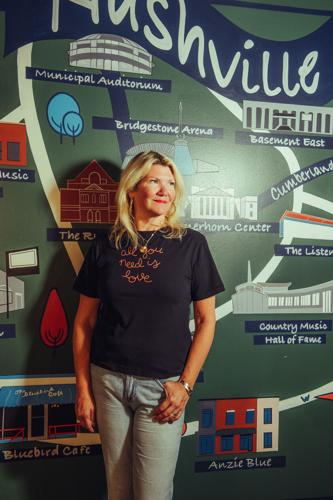
Marcie Allen Van Mol, co-owner of Anzie Blue
Marcie Allen Van Mol, co-owner of Anzie Blue, agrees with the pivot language, joking that she feels like she’s on the famous “Pivot!” episode of Friends. She has expanded the offerings at the Hillsboro Village venue, including adding a recording studio and hosting all manner of events, from Hollywood premieres to discussions on mental health in music to bar and mat mitzvahs. The emphasis is on events for and by locals, and often, she says, they are available to make events accessible that would not otherwise be affordable.
Morales sees Metro addressing affordability citywide as crucial to indie venue success. Without affordable housing and transportation, musicians can’t live and work in the city and locals can’t go see music. And while having free, easy and ample parking may seem like an oversimplification of what makes for a successful music venue, multiple venue owners report that it makes a big difference.
Both Eastside Bowl and Anzie Blue have at least some free parking, and Kinsolving says it’s one of the things attendees repeatedly mention. Morales knows parking at her Lower Broad venue is a challenge for attendees, staff and musicians. Even with deals for discounted parking for staff and free parking for musicians playing downtown through Metropolis’ Park and Play, Morales knows locals find the lack of affordable parking a deterrent to going downtown. With the closure of the Nashville Public Library parking garage due to a fire in June, locals are hesitant to pay $20 to $40 for parking during a night out. Rideshare apps can be pricey, and WeGo service may help some locals get downtown but is not feasible for those living in many residential areas, particularly late at night.
Programming can help address that. In its second year, 615 Indie Live offers dozens of artists performing on more than 15 independent stages for just $20 per wristband. The Nashville Convention & Visitors Corp and other sponsors cover the event’s operating budget (including more than 50 percent to paying artists), and ticket sales support MVAN and Nashville Public Radio music discovery station WNXP. Many venues are on bus lines and outside of the downtown core.
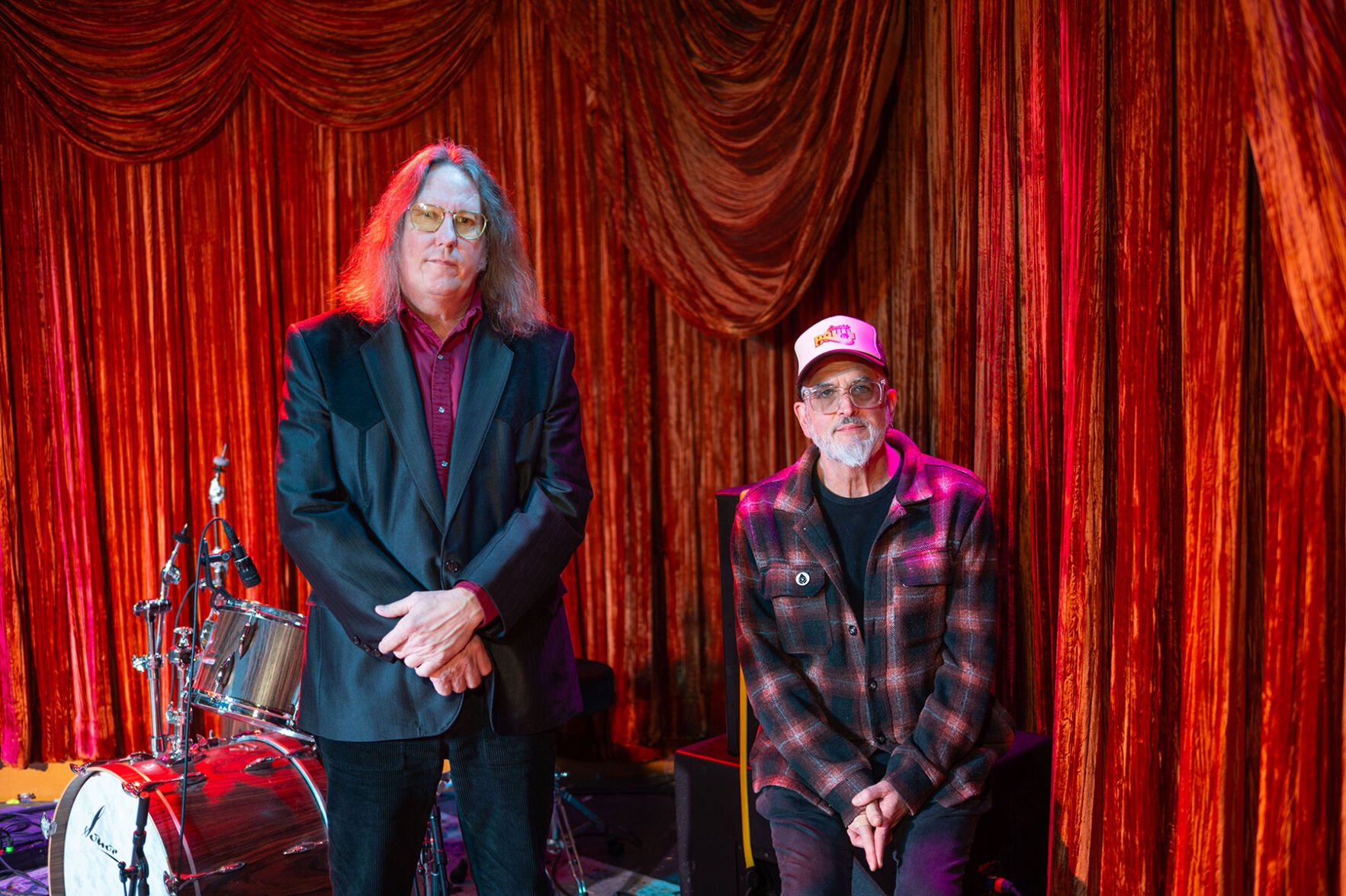
Eastside Bowl co-owners Chark Kinsolving (left) and Jamie Rubin
The proliferation of performance rights organizations, commonly called PROs, is another stressor for venue owners. There used to be three main PROs: BMI, ASCAP and SESAC. Now some venues are paying licensing fees to as many as six PROs, with a few others in the works. Each PRO covers licensing for different musicians whose music is played in public spaces, and each charges fees for blanket licenses. The licenses are based on projections from the top live music venues in the country, but many feel they don’t accurately depict what music actually is played on independent stages. PROs are known to be litigious, venue owners say, so there’s no way to scale back on paying these fees. Live Nation’s Lyman says the corporation does negotiate rates with some PROs.
Eric Holt — associate professor of music business at Belmont University’s Mike Curb College of Entertainment and Music Business and co-founder of promotion group Lovenoise — believes technology can improve the situation. Voice recognition could track which music is actually being played in venues, benefiting smaller artists and venues, rather than having the bulk of fees go to top radio artists.
Despite the challenges, Acme’s Morales remains optimistic.
“People still want to hear live music, and in Nashville specifically, we are still such a hub for live music,” she says. “At Acme, we are grateful every day for our artists. We are who we are because of our artists. Hearing them perform five days a week is still just a treat for a music lover.”
Corrections, Feb. 5: This story has been updated with the following. We regret the errors.
- The statistic that 64 percent of responding indie venues are not profitable came from a recent survey published by the National Independent Venue Association.
- Incomplete and incorrect details regarding sources of funding and distribution of revenue from 615 Indie Live have been updated.
- In the wake of Winter Storm Fern, 615 Indie Live organizers made the call to keep the day-of wristband price at $20.



Post a comment as anonymous
Report
Watch this discussion.
(0) comments
Welcome to the discussion.
Log In
Welcome to the discussion.
Keep it clean. Please avoid obscene, vulgar, lewd, racist or otherwise abusive language. Comments featuring hate speech or threatening or violent content will not be tolerated.
PLEASE TURN OFF YOUR CAPS LOCK.
Be truthful. Don't knowingly lie or mislead.
Be proactive. Use the “report” link on any comment that violates our comment policy.
Share with us. We'd love to hear your feedback.