

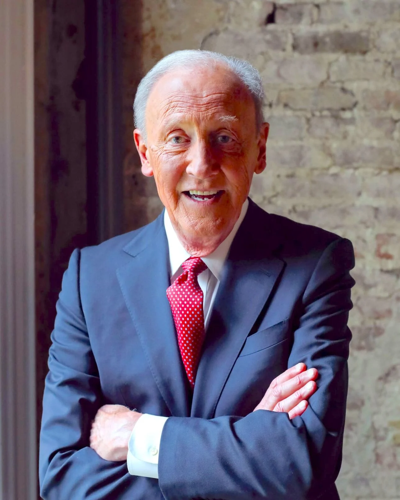
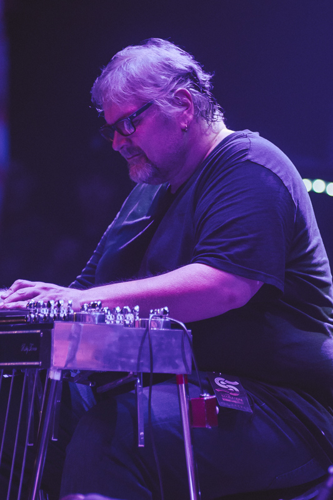


Todd Snider
Todd Snider
The Slacker Dylan
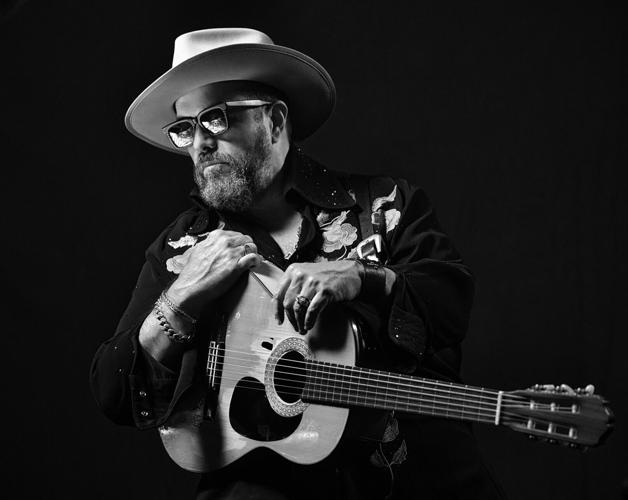
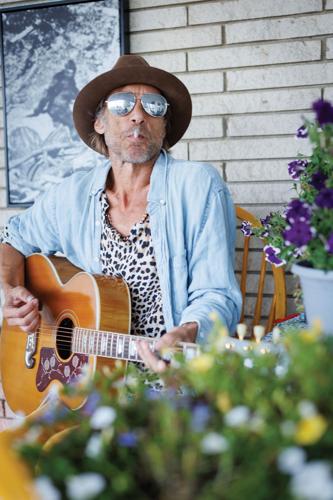
Beloved East Nashville singer-songwriter and recording artist Todd Snider passed away on Nov. 14 from complications related to pneumonia. He was 59 years old.
Snider was one of the leading songwriters of his generation. The dean of American rock critics Robert Christgau once described him as “the finest natural comedian in music,” and humor was one of Snider’s primary lyrical devices. But he used humor in an artful and entertaining way to address serious matters, as well as life’s absurdities. His performances were famous for the hilarious stories he told between songs.
“John Prine is a titan, and [Snider] belongs in that league,” Christgau says of Snider. “And to say somebody is in John Prine’s league is to say he’s some kind of a fucking genius.”
Prine was an important mentor to Snider, and his breakthrough album East Nashville Skyline was released on Prine’s Oh Boy label. That album put East Nashville on the national radar. After its release, Snider became East Nashville’s unofficial ambassador to the world, often acting as personal tour guide for visiting journalists from national magazines and major dailies.
In a career spanning more than three decades, Snider released 15 studio albums — eight of which were on his own Aimless Records label — and numerous live recordings. He also released two studio albums and one live double album with his jam-band supergroup Hard Working Americans. Snider’s final album High, Lonesome and Then Some was released exactly three weeks before his death and debuted at No. 45 on the Billboard 200 album chart, the highest position on the chart by any album in his career. —Daryl Sanders

Raul Malo
Raul Malo
A legendary voice, an American story
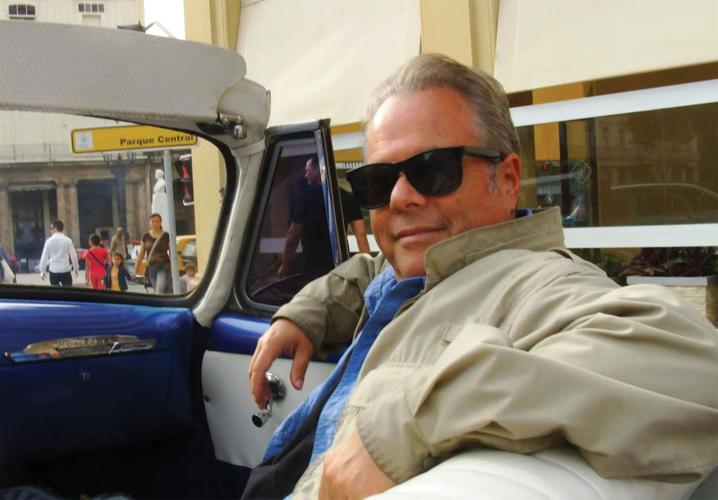
Days after a pair of rollicking concerts in his honor at the Ryman, The Mavericks’ frontman Raul Malo died Dec. 8 from the cancer he’d been treated for over the past year-and-a-half. Only in September did the progression of his illness lead the beloved country-rock-and-more band to cancel its remaining tour dates. Malo leaves behind wife Betty Malo and their children, his longtime bandmates, many other friends and family and a legion of fans. He was 60 years old.
Malo grew up in Miami, born to parents who came from Cuba, and he developed a deep love for quintessential American music from the mid-20th century (including vocal pop, country and rock ’n’ roll) as well as Latin music from a wide variety of cultures. The Mavericks got their start in Florida clubs in the late 1980s with a charismatic style that caught the attention of Nashville record execs, and they rose to fame in the country world before dissolving around the turn of the millennium. Malo built up a solo catalog, but the band eventually reunited, recording and touring steadily over the past decade-and-a-half.
Among other noble endeavors, Malo lifted up rising artists, like Cuban rock band Sweet Lizzy Project, whom he helped to make a home in Nashville. He and The Mavericks continued to explore their Latin heritage, and their 2020 Spanish-language album En Español became a fan favorite and enjoyed chart success. “The Mavericks are very much an American story — and not only with our Latin roots, but because it’s such a mixture of cultures and styles and genres,” Malo told the Scene’s Brittney McKenna in 2022. “I love that our trajectory in our career is confusing.” —Stephen Trageser

Mac Gayden
Mac Gayden
Hit songwriter, pioneering slide guitarist
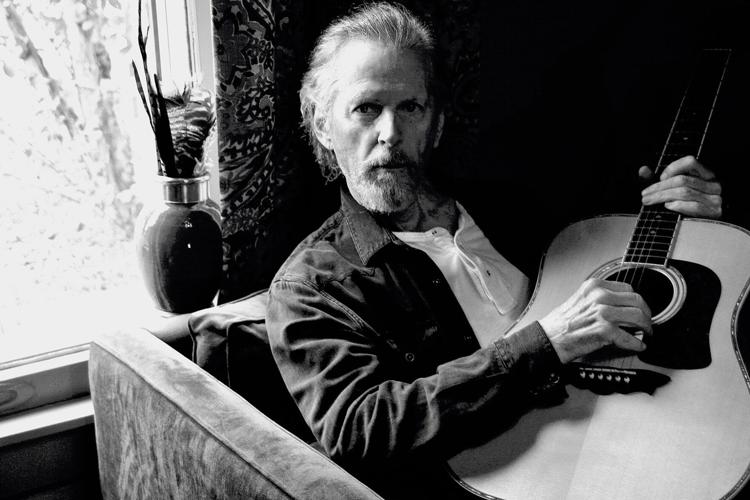
Legendary songwriter and guitarist Mac Gayden died of Parkinson’s disease April 16 at his home in Nashville. He was 83 years old.
A Nashville native, Gayden was one of the leading figures in rock and R&B coming out of the city in the 1960s and ’70s. He was a member of three of the most influential bands in Nashville history — Charlie McCoy and the Escorts, Area Code 615 and Barefoot Jerry — and also released a number of well-regarded solo albums.
“A great writer, guitar player, singer and a great friend through the years,” says McCoy. “The memory of his contributions will live forever, just like his great songs.”
Gayden was best-known as the principal writer of the pop and R&B standard and perennial hit “Everlasting Love,” which he co-wrote with Buzz Cason. U2, Gloria Estefan, The Box Tops, Odessa, Huey Lewis and the News, James & Bobby Purify and Joe Simon are among the artists who recorded his songs.
Gayden was a dynamic rhythm guitarist, but he really made his mark as a slide player, pioneering the technique of playing slide with a wah pedal. He debuted the sound on the first Barefoot Jerry album and hit the Top 40 with it on J.J. Cale’s hit “Crazy Mama.” He also played on recordings by Bob Dylan, Elvis Presley, Linda Ronstadt, Simon & Garfunkel, Kris Kristofferson, Willie Nelson, Loudon Wainwright III, Tim Hardin and John Hiatt.
After being honored as an official “Nashville Cat” by the Country Music Hall of Fame and Museum in 2014, Gayden was one of the Cats featured in the museum’s acclaimed exhibit Dylan, Cash and the Nashville Cats: A New Music City, which debuted in 2015. —Daryl Sanders

Steve Cropper
Steve Cropper
Legendary guitarist and producer, original M.G.
You could spend a day listing Steve Cropper’s monumental achievements as a guitarist, songwriter and producer and not tell the full story of his impact on contemporary pop music.
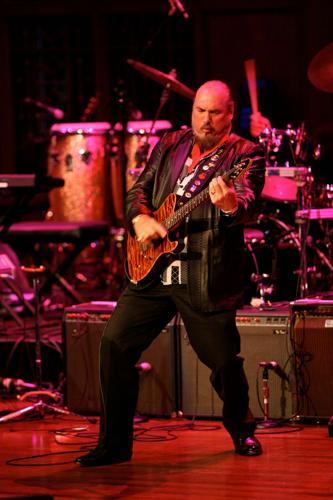
Cropper, who died Dec. 3 at 84, was a vital member of music communities, first in Memphis and later in Nashville. He began playing guitar at 14, and cited Billy Butler, Lowman Pauling of The “5” Royales and Bobby “Blue” Bland’s guitarist Wayne Bennett as prime influences. Not only did Cropper, keyboardist Booker T. Jones, bassist Donald “Duck” Dunn and drummer Al Jackson Jr. make studio magic as instrumental combo Booker T. & the M.G.’s — they also backed a host of Stax artists on immortal recording sessions and live dates. Cropper’s technically astonishing and incredibly imaginative solos and riffs enhanced classics performed by Otis Redding, Sam & Dave, Carla Thomas, Eddie Floyd and Wilson Pickett among many others, and he co-wrote classics like the M.G.’s instrumental “Green Onions” and Redding’s “Mr. Pitiful.”
While some purists groused about his participation in The Blues Brothers, those gigs with John Belushi and Dan Aykroyd helped introduce Memphis soul and its players to a new generation of fans. Cropper’s career included collaborations with Pops Staples and Albert King and producing albums like John Prine’s 1975 landmark Common Sense. One of Cropper’s frequent collaborators and best friends in his final Music City period was songwriter, producer and instrumentalist Jon Tiven, whose collaborations included 2011’s Dedicated: A Tribute to The “5” Royales and 2024’s Cropper solo LP Friendlytown.
“Our live gigs were spectacular,” Tiven recalls. “Lincoln Center in the rain, Jack Daniel’s Distillery in Lynchburg where the power went out — all quite eventful. … But every time we were in a room together it was special.”—Ron Wynn
Tramp Lawing
Improvisational genius, member of Walk the West and The Cactus Brothers
Multi-instrumentalist Michael “Tramp” Lawing died of esophageal cancer on March 28 in Henderson, Ky. He was 60 years old. His family called him Mike, but in Nashville, where he lived and worked for 20 years, Lawing was known as Tramp. He got his nickname as a teenager, sitting in on violin — his primary instrument — with a blues band at a biker bar outside Atlanta.
Lawing moved to Nashville in 1984 to pursue a career in music. He worked with country duo The Kendalls for approximately two years, then joined rising roots-rock group Walk the West. He was also a member of The Cactus Brothers, the country-rock outfit that began as a side project for members of Walk the West. After The Cactus Brothers disbanded in the mid-’90s, Lawing joined roots rockers Bonepony and recorded and toured with them for a decade. He also worked as a sideman and session player over the years with a number of artists, including Lucinda Williams, Hank Williams Jr., Deana Carter, Kevn Kinney and The Shakers.
“The beauty of Tramp was whatever needed to be played, he knew how to dial it up,” says John Goleman, his longtime friend and former bandmate in Walk the West and The Cactus Brothers. “That is what attracted me to him the very first time I saw him play.” —Daryl Sanders
Martha Marion Sharp
Songwriter, pioneering A&R maestro
Unlike many of the dreamers who come to Nashville to be a songwriter, Martha Sharp made some mailbox money. Many of her compositions that charted were pop hits recorded by pop artists. As with legions of women in those days, Sharp’s entry to the music business was as a secretary; she took that position for producer Jimmy Bowen at the Nashville division of Elektra Records in 1978. In 1983, she was promoted to the A&R department, and in 1984, she was named the label’s vice president of A&R — one of the first women to assume a VP role at a major Music Row label.
She was also the first to recognize a raw talent singing under the name Randy Ray at the Nashville Palace. Sharp signed him to the label, renamed him Randy Travis and put him on the path to superstardom. Several years later, Sharp saw Faith Hill singing backup for Gary Burr at The Bluebird Cafe and signed her to a recording contract. Sharp was also involved with the Warner careers of Highway 101, Carlene Carter, The Forester Sisters, Crystal Gayle, The Nitty Gritty Dirt Band, John Anderson, Gary Morris, Holly Dunn, Travis Tritt and the company’s other stars of that era.
In a tribute to Sharp on Instagram after her death, Randy Travis wrote: “Martha Sharp believed in me and fought to have me heard. She was a warrior for me and allowed my 40-year career to take flight soon after she came to hear me sing at the Nashville Palace. … When we spoke the week before she passed, her parting words were, ‘We sure had fun, didn’t we?’ My debt of gratitude owed to Martha Sharp can never be repaid.” —Kay West
Ben Vaughn
Warner Chappell Nashville CEO, big-dreaming music publisher
In a 2020 interview with Billboard, Thomas Rhett simply described Ben Vaughn as “a dreamer.” Rhett would know, since Vaughn signed Rhett to his first publishing deal while Rhett was still a student. Working with Rhett at multiple stages of his career was one in a long list of achievements for Vaughn, who spent a decade at publishing company Warner Chappell Nashville before he died in January. At Warner Chappell, Vaughn championed some of the most notable songwriters in the realms of country music, Americana and contemporary Christian hitmaking: Kacey Musgraves, Chris Stapleton, Zach Bryan, For King & Country, Dan + Shay, Liz Rose and more.
Prior to his award-winning run at Warner Chappell, Vaughn was executive vice president and general manager at EMI Music Publishing, making him the youngest person to run a publishing group in Nashville. Before that, he started his own publishing venture while still enrolled at Belmont. In continued praise shared with Billboard in 2020, Rhett added: “There is not a goal that is too high to attain. If I said, ‘Hey, man. It’s probably crazy to think we could get this song cut by an artist in Australia,’ Ben would be on a flight to Australia the next day to figure out how to make it happen.” —Matthew Leimkuehler
Correction: The print version of this story states incorrectly that Vaughn signed Thomas Rhett to Rhett's first publishing deal while Vaughn was still a student.
Lesly Simon
Masterful country music promoter
Lesly Simon worked her way up the Music Row career ladder, discovering new music, promoting radio airplay and supporting her artists, peers and even her competitors. She served on the board of directors for Country Radio Broadcasters and was a leader in many other industry groups. As the vice president of promotion for Arista Nashville/Sony Music Nashville, she helped the label rack up more than 40 No. 1 singles on the Billboard and Mediabase country charts. She later became general manager of Garth Brooks’ Pearl Records and Trisha Yearwood’s Gwendolyn Records.
Music Row noticed all that hard work. Simon was named to Billboard’s Country Power Players list in 2018. In 2020, after more than two decades in the music industry, she pivoted but didn’t slow down. Always a lover of good design, she launched Colgan Simon, a Florida interior design firm with her friend Tyler Colgan, and started a residential real estate division of the company. Simon died in March after seven years undergoing treatment for breast cancer. —Margaret Littman
Robert Austin Bealmear
Educator, architect, friend to jazz
Nashville jazz won’t find many personalities like Robert Austin Bealmear. Known by everyone solely as Austin, he was a skilled percussionist and an outspoken supporter of the entire arts community. Bealmear, who was 80 when he died in December 2024, was also a gifted and accomplished architect. His many projects included contributing to the design of the law school at his alma mater, Washington University in St. Louis. While a student, he’d go to class during the day and catch top acts in clubs or participate in jam sessions at night. One of his fondest memories was of the time he and his friends hosted Thelonious Monk after a performance at a party in their apartment; Bealmear recounted the experience in a 2017 interview with Student Voice at MTSU, where he taught interior design.
My greatest memories of him center on his involvement with Nashville’s improvisational community. Bealmear worked with players including John Richards, Vassar Clements and Victor Wooten, and he participated in jam sessions and hosted other events. Austin was the son of a war correspondent with the Associated Press and flexed his own journalistic muscle in endeavors like his long-running column for Nashville Musician and his radio show Jazz on the Side. He insisted on accuracy in both historical perspectives and performance assessments. No matter how much he might support or appreciate a player’s efforts, he wouldn’t hesitate to offer criticism. As his longtime friend and musical companion Kevin Madill said in Nashville Musician, “Jazz and Nashville didn’t have a better friend.” —Ron Wynn
Quitman Dennis
Saxophone virtuoso, early Nashville rocker
Saxophonist Quitman Dennis passed away Jan. 26 after a lengthy illness at age 83.
“Top of the heap,” says keyboardist Bill Aikins, a longtime friend and former bandmate. “Quitman was the best reed player that I ever played with. He was also an outstanding electric bassist.”
Dennis was born in Memphis and grew up in Nashville. He played tenor sax in a number of Nashville rock bands in the late ’50s and the early to mid-’60s, including The Sliders, The Gators and Charlie McCoy & the Escorts, with whom he learned to play electric bass. In 1968, at the invitation of engineer Brent Maher, Dennis, Aikins and a few other Nashville musicians moved to Las Vegas to become the studio band at United Recording Studios. Sessions with Bobby Darin led to Darin hiring them to be the rhythm section in his 16-piece band, with Dennis on bass and serving as music director.
In 1975, Dennis moved to Los Angeles, where he renewed his focus on saxophone and flute. During that period of his career, he recorded with a number of stars including Jackson Browne, B.B. King, Joan Armatrading, Delaney Bramlett, Dolly Parton and Mac Davis. In the late ’70s, he spent a year-and-a-half touring with Armatrading.
Dennis moved back to Nashville in 1982 and continued his session work into the mid-’90s. During that period, he recorded with Etta James, Waylon Jennings, Rodney Crowell, Little Milton, Ronnie Milsap, Dan Seals and Alabama, among others. —Daryl Sanders
Carl Dean
Businessman, longtime husband to Dolly Parton
Audiences who watched Dolly: A True Original Musical were charmed by the depiction of Carl Dean, a quiet and simple man who loved Parton long before the world caught on to her magic. It must have been emotional for Parton to watch the performance from the wings just a few months after his death.
Parton and Dean met at a laundromat in 1964 and married two years later. The pair were great friends and stayed that way throughout their 60-plus-year marriage. Dean rarely made a public appearance. The Nashville native owned an asphalt business and preferred to work on the pair’s ranch and in real estate. There’s very little public information available about Dean, but Parton reveals pieces of their relationship in her works. Dean is on the cover of Parton’s fourth album, My Blue Ridge Mountain Boy (1969). He also has a section in the Dolly Parton Experience museum, which opened in 2024 at Dollywood. The 2025 single “If You Hadn’t Been There” was dedicated to him.
“It makes me happy when he says in the show, ‘Hello, I’m Carl Dean,’ he gets applause,” Parton recently told People. “When I watch the show, it’s healing in a way. It’s almost like he was never gone. So now he’ll always be here, too.”—Hannah Herner

Ray Sisk
Ray Sisk
Songwriter, Bobby’s Idle Hour fixture
Ray Sisk was a kind, charismatic soul and a true friend to many. He had a rare gift for making people feel valued, and his presence brought warmth and light wherever he went. A talented songwriter, Ray not only created memorable music, but also lifted up countless others in our community, always offering support, encouragement and a generous spirit.
At Bobby’s Idle Hour, his absence is felt every day. We miss his laughter, his stories and the easy way he brought people together. Ray helped shape this place with his heart and his music, and those of us who shared time with him will carry those moments forever. Though he is no longer with us, we continue to honor him in the songs we sing, the friendships we nurture and the community he helped build. Ray’s memory lives on in the love he showed and the lives he touched. We miss him deeply, and we will carry on his spirit with gratitude. —Haley Pfeiffer, loyal Bobby’s patron
Travis Collinsworth
Co-owner of The 5 Spot, bassist, “the professional one”
For the past two decades, small venue and bar The 5 Spot has played a big role in making — and keeping — East Nashville a creative hub. That’s thanks in large part to co-owner Travis Collinsworth, who died of cancer in April at 47. Todd Sherwood, Collinsworth’s partner in the business since they took the reins from their then-bosses William “Bones” Verheide and Diane Carrier in 2005, describes Travis as “the professional one in our duo,” who handled things like hiring and managing staff and paying bills and taxes while Sherwood focused on booking and maintaining the sound system.
Sherwood posits, only half-jokingly, that those responsibilities might be the reason for the gruff exterior Collinsworth seemed to have until you spent a little time with him. He was an active musician, who for the past decade played bass in Jerry Garcia tribute outfit Hooteroll? during their long-standing biweekly gig at Acme Feed & Seed. Despite the constant challenges of running an indie venue, Collinsworth’s love for and dedication to making The 5 Spot part of the community was vital.
“[Until recently] we were only hiring local musicians,” Sherwood recalls. “So he would always let people go off on tour, and we’d try and do our best to make sure that they would have a job when they got back, after being gone for a week to six months or whatever. Our door staff and bartenders were all musicians, and we’d see them on Saturday Night Live and late-night shows, and we would always have the band stop and we’d turn the TVs up so we could watch everybody. And then they’d come back and they’d be sitting at the door.” —Stephen Trageser
Jill Sobule
Trailblazer, troubadour, force of nature
Jill Sobule teasingly called herself a “two-hit wonder,” referring to “Supermodel,” featured in the movie Clueless, and “I Kissed a Girl” — the latter is one of the first songs about an openly gay relationship to reach the Top 20 on a Billboard chart. She recorded it at Alex the Great in Nashville with longtime collaborators Robin Eaton and Brad Jones, with whom she would go on to write and record dozens of songs.
Busking in the street got the Colorado native a gig at a local nightclub when she was studying abroad in Spain, inspiring her to drop out of college and pursue music. When she died in a house fire in May at age 66, she was staying with friends in Minneapolis, on her way to perform in Denver. Over the course of her prolific, ever-shifting career, Sobule visited Nashville often to write and record, or just to visit old friends, showing up and moving on as she wove the musician’s life across borders.
People use the phrase “a force of nature” to describe Jill, and I get it. She crowdfunded her albums before Kickstarter and GoFundMe were around. She wrote and performed a successful one-woman musical called Fuck 7th Grade and never apologized for being her singular self. I saw her a lot growing up and remember being somewhat intimidated. The last time I saw her was about a year ago in Milan, Italy. Alone and feeling lonely, I picked a restaurant at random and sat at the bar. I heard the woman sitting next to me really laying into a guy for being condescending. It was Jill — always a force of nature. —Malcolm Moutenot
David Briggs
Keyboardist, arranger, publisher, studio owner
Keyboardist-arranger David Briggs, one of the giants of Nashville music, died of cancer on April 22 at age 82. Producer-bassist Norbert Putnam, Briggs’ longtime friend and former business partner, ranks him alongside Floyd Cramer and Hargus “Pig” Robbins as one of the three greatest keyboardists in Nashville history.
“He was an excellent keyboard player,” says Putnam. “He probably played on more country sessions than anyone but Pig.”
Briggs wasn’t limited to country, and played on many R&B and rock sessions. He first found fame in the early ’60s as a member of the original Muscle Shoals rhythm section. Then at the end of 1964, Briggs — along with Putnam and drummer Jerry Carrigan — was enticed to bring the hit Muscle Shoals sound to Nashville. That began a two-decade run as one of Nashville’s most in-demand keyboardists, a stretch in which he averaged 420 sessions a year, often as session leader. Briggs recorded with many of the biggest stars in popular music, including Elvis Presley, Roy Orbison, B.B. King, Johnny Cash, Willie Nelson, Linda Ronstadt, Dan Fogelberg, Joan Baez, Al Green, Joe Cocker and Bob Seger. He also was a member of the Grammy-nominated session supergroup Area Code 615.
In addition, Briggs distinguished himself as a studio owner and music publisher, co-founding Quadrafonic Studios and Danor Music with Putnam in the late ’60s. After they sold Quadrafonic in 1979, Briggs opened House of David studios, which he operated until his death.
Briggs was honored as a Nashville Cat by the Country Music Hall of Fame and Museum in 2011 and featured in their Dylan, Cash and the Nashville Cats exhibit. He is a member of the Musicians Hall of Fame and the Alabama Music Hall of Fame. —Daryl Sanders
Jonathan Mayers
Bonnaroo co-founder, passionate booker and record collector, friend
Jonathan Mayers was not only a co-founder of the Bonnaroo Music and Arts Festival, a cultural force that continues to shape the lives of generations of Nashvillians and millions of people from all over the world — he was also a humble, kind and generous leader and friend. He was not only a meticulous and ambitious visionary who helped bring Outside Lands in San Francisco to life — he was also an avid record collector who traveled the world in search of the rare gems that enriched his diverse collection. He researched it, chased it, collected it and lived it.
Owning these diamonds was fun, but for Mayers, the search was the main part of the joy. He was a dreamer and a bold risk-taker, unafraid to pursue ideas that others might have considered impossible. He understood what fans wanted because he was a fan first and foremost. From his early days as a Jazz Fest intern, to booking Tipitina’s in New Orleans straight out of college, to becoming one of the most influential promoters in the nation, he never lost his passion for what music and community could create together. —Ken Weinstein
Mike Borchetta
Longtime music exec
Music industry executive Mike Borchetta passed away June 14 at 84. Over his storied career, Borchetta became a titan of his field, promoting artists such as The Beach Boys, Glen Campbell and Dusty Springfield. By the time he moved to Nashville in the early 1980s to work as an independent promoter, Borchetta was already a veteran of the industry, having launched his career at Capitol Records in Los Angeles at age 19. In the late 1980s, decades into a legendary run, Borchetta was named vice president of promotion at Curb Records. At Curb, Borchetta cemented his status as a kingmaker when he took a chance on a then-unknown singer from Louisiana named Tim McGraw.
After the executive’s passing, McGraw recalled Borchetta’s decision to sign him on the spot during a once-in-a-lifetime meeting.
“I came to Nashville the day my hero Keith Whitley died — on a Greyhound bus with only the clothes on my back, a guitar and a big dream,” McGraw wrote. “About as green as they come. I was able to get a meeting with [Borchetta] while he was working at Curb Records. I will forever be grateful for his belief in me.”
Several of Borchetta’s children followed in his footsteps. Scott Borchetta, founder of Big Machine Label Group, got his start working in the mailroom of his dad’s company and helping him promote country singles. “Watching my dad, I learned what worked and what didn’t,” Scott Borchetta told The New York Times in 2011. —Bobbie Jean Sawyer

Stacy Widelitz
Stacy Widelitz
Acclaimed composer
During its 56th annual run in September, the Nashville Film Festival conferred an honor tinged with emotion: Chrystal Grainger, Tom Pino and Colleen Francis’ original song “The Weight” from the film Faithful Defenders was given the inaugural Widelitz Music in Film Award. The honor was named for my friend Stacy Widelitz, a longtime festival supporter and former board member as well as a lauded film and television composer and street photographer. He died in June at 69.
He often said in his mischievous manner, right up to the week of his death, that he had “a lucky life with no regrets.” The New York native, who moved to Nashville in 2000, first gained national attention for composing the theme to The Richard Simmons Show, which launched in 1980. Among Widelitz’s many other achievements, he co-wrote “She’s Like the Wind” with his longtime friend Patrick Swayze for the film Dirty Dancing. Widelitz was nominated for an Emmy for his work on ABC’s World of Discovery.
“Stacy truly changed my life for the better,” shares Brian Owens, former artistic director of the Nashville Film Festival. “He was my friend and mentor. Through his music, photography and kindness. I do my best to be how he saw me.” —Dove Joans
Sanchez Harley
Producer, arranger, player, entrepreneur
Sanchez “Chez” Harley helped steer gospel music toward the future in Nashville in the 1980s and ’90s. He was born and raised in Baltimore, where he stood out as a clarinetist and saxophonist in the city’s Frederick Douglass High School band. Harley came to Tennessee State University on a scholarship for his bass clarinet skills and played in TSU’s jazz ensemble and in the school’s famed marching band, the Aristocrat of Bands. In the ’70s he played and sang in Bottom & Co., a funk group that was signed to Motown Records.
After working as an arranger with producer Norbert Putnam on a series of albums that includes The Addrisi Brothers’ self-titled 1977 release, he branched out into production. His production style became one of the linchpins of modern gospel and contemporary Christian music, and he lent his touch to records by performers like Peabo Bryson, Hezekiah Walker & the Love Fellowship Crusade Choir, Shirley Caesar and Aretha Franklin. As he told writer Tim Dillinger in 2003, “I always wanted to arrange and do horns and strings, but work in Nashville for an African American was limited. I matriculated to producing to create work as an arranger.” Harley died on June 15 at age 73. —Edd Hurt
Oscar J. "Trey" Bishop III
Musician, educator, scene ambassador extraordinaire
One of my favorite things about going to MTSU in the Aughts was meeting many, many extraordinarily creative people. A big bunch of them made a home base in a house near campus, where they hosted shows (sometimes broadcast live using student radio station WMTS’ remote rig), briefly ran an underground pizza kitchen and worked on music with the various bands they’d reconfigure themselves into. It wouldn’t be right to call Trey Bishop the ringleader of the group sometimes known as Sauce Juice — these folks were way too egalitarian and collective-oriented for something like that — but his good-natured enthusiasm was magnetic and made him a great ambassador.
You didn’t have to live with Trey or his compatriots to feel like you were part of something more than a routine college happening when you came to a show or put on a burned CD that he pressed into your hand. (Trey was a central figure in groups including Dead Hippies and Baby Teeth Thieves; other bands that grew from the collective and continued after the group moved its base to Nashville included Evil Bebos, Heartbeater and The Ascent of Everest.) Trey left Middle Tennessee years ago, but according to tributes after his death in June at age 39, he kept using that spirit for good. He leaves behind his fiancée, his parents and sisters, an array of students who’d been in his sixth-grade class in Glendale, Ore., and a wealth of friends and acquaintances whose lives he made a lot brighter. —Stephen Trageser
Joshua Wolak
Singer-songwriter, bringer of Genuine Joy
It’s hard to find a musical project with a more appropriate name than Genuine Joy, the moniker Joshua Wolak used in recent years. The Michigan-born Belmont philosophy graduate had a strong connection with acoustic music, especially bluegrass, and developed outstanding mandolin chops. He toured extensively as a member of bands like the rollicking and acerbic Angus Whyte and the Irish Rednecks and folk-popsters Humming House. Later he also designed games for Ravenchase Adventures, a company that organizes custom scavenger hunts, escape rooms and more.
He drew on the strength of an astonishing variety of friends across music and arts scenes in Nashville and beyond — the release party for Resolution, his 2018 debut album as Genuine Joy, featured a string quartet, a chorus and a dance company. In 2019, he was diagnosed with glioblastoma, an aggressive brain cancer. During more than five years of surgeries, chemotherapy and radiation, Wolak kept shining his dazzling, charismatic light on friends, family and collaborators. —Stephen Trageser

James Robert Farmer performs with Λ°C at The Basement East, 5/12/2016
James Robert Farmer
A Nashville musician ahead of his time
In many ways, James Robert Farmer, known by many close to him as Bob, was years ahead of the rest of Nashville’s music scene. Farmer played guitar in Scatter the Ashes as a youngster during the early Aughts. They were a Music City post-punk band who signed with storied indie Epitaph in 2003 — something that doesn’t seem all that unusual today but was newsworthy at a time when few local rock bands toured outside the region.
He stepped into the role of frontman in Mother/Father, the band that emerged in the wake of Scatter the Ashes’ breakup. He served their complex and emotionally rich songs with vocals influenced as much by Sam Cooke and other dynamic soul singers he loved deeply as by ’80s synth-pop icons like Depeche Mode’s Dave Gahan or his experimental hero Peter Gabriel. That finely tuned voice is just one part of the legacy Farmer left when he died at age 40, but it was one of the things that would have made later musical projects like Adorations and KROVI stand out in any town at any time. —Stephen Trageser

Frank Bumstead
Frank Bumstead
Founding partner of FBMM, widely respected entertainment businessman
Over the past three decades, a large number of prominent entertainment industry entities in the Nashville area and beyond have trusted Music City firm Flood, Bumstead, McCready & McCarthy to handle their business management. Per reports, that’s included artists as diverse as Taylor Swift, Kesha, Luke Combs, Pearl Jam and the estate of Tom Petty. Frank Bumstead, who died in July at age 83, was already well-seasoned when he and his fellow co-founders — Mary Ann McCready, John McCarthy and the late Chuck Flood — came together as FBMM in 1990.
“Frank was brilliant, passionate and a role model to all of us at FBMM,” the firm’s CEO Jamie Cheek said in a release. “His expertise in investments and finance was key to FBMM’s ‘edge’ over the years and why we called him our ‘secret weapon.’ Frank was one of a kind, and we will continue to honor the legacy he instilled of hard work and dedication.”
In addition to his business savvy, Bumstead is remembered for his service on the boards of directors of multiple business and charitable organizations. Among other accolades, he was recognized by the T.J. Martell Foundation with the Frances Preston Outstanding Music Industry Achievement Award, and he received Nashville Opera’s Francis Robinson Award for significant contributions to the arts. The Country Music Association gave him the William Denny Award for a lifetime of dedication and distinguished service to the association’s board. —William Williams
Sally Tiven
Revered musician and songwriter
There are some people you wouldn’t want to be around too much, despite them being great musicians. Sally Tiven was a premiere player, but her passing in July at 68 was a huge blow to those of us who’d had the chance to spend any time with her. Teamed up with her husband Jon in playing, production and writing, she participated in several superb contemporary blues and soul recordings, including playing guitar on B.B. King’s “All You Ever Give Me Is the Blues” and bass on Wilson Pickett’s It’s Harder Now and Don Covay’s Adlib.
The Tivens met in New York in the late ’70s, and Sally became part of Jon’s group The Yankees. They married in 1979 and worked together on a host of topflight releases, including recordings by Syl Johnson, Garnet Mimms, Willie Jones, Bebe Buell and Little Milton. Sally was also a versatile songwriter; among others, Shemekia Copeland cut her “Married to the Blues,” Irma Thomas recorded “Tryin’ to Catch a Cab in the Rain,” Huey Lewis and the News did “He Don’t Know,” and Buddy Guy recorded “Heavy Love.” Sally Tiven was equally dedicated to education, and when the family moved to Nashville in 2002, she became very involved in the Nashville Adult Literacy Program, teaching those unfamiliar with English how to read, write and speak it. —Ron Wynn
Jeannie Seely
Country legend
Jeannie Seely — the forever blonde, forever bold, forever young, forever stylish, forever sassy, Grammy-winning member of the Grand Ole Opry — knew how to make an entrance. Her first song was co-written with Randy Newman while she was briefly pursuing a music career in Los Angeles. In 1965, she moved to Nashville and was hired as Porter Wagoner’s “girl singer.” She made her Opry debut in 1966 and became a member in 1967 — the first Opry member from Pennsylvania. This was when the Opry was still at the Ryman and all the female artists had to crowd into the women’s restroom backstage to change clothes and do their hair and makeup because there was no dedicated dressing room for them.
She was the first woman to wear a miniskirt on the Opry stage, and the first female member to host a half-hour segment of the program — a milestone that took an act of God to finally occur in January 1985. An unexpected snowstorm closed roads all over the city, and Seely was the only member in the building when it was time for the live broadcast to begin. She didn’t miss a beat.
She could interpret and deliver a song like nobody’s business, rival stand-up comedians with her witty repartee, and offer unique social commentary known around the Opry as Seely-isms. She knew a million stories but kept all the racy secrets. Seely’s dressing room was always open; she was a champion for women and raucous with her Opry gal pals.
Jeannie Seely also knew how to make an exit. She was 84 when she made her last Opry appearance on Feb. 22, and her last Sundays With Seely radio show on SiriusXM aired four days before her death Aug. 1. Though she didn’t quite make it to the official 100-year anniversary of the Opry on Nov. 28, she did leave this world holding the record for the most appearances on the show — that’s 5,397. —Kay West

Mickey Grimm
Mickey Grimm
Percussionist, teacher, friend
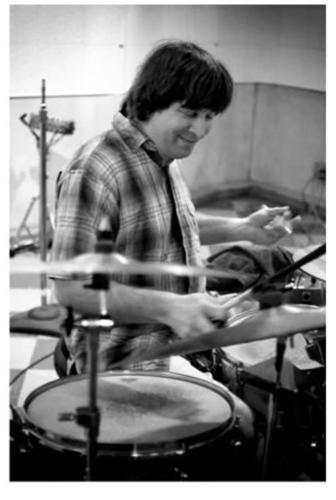
The irrepressible Mickey Grimm, one of our community’s most unique drummers, moved to Nashville in the 1980s from Evansville, Ind., and quickly began a career that lasted more than 40 years as a performer, arranger and session player. Mickey recorded and toured with hundreds of artists across all styles, including Roy Acuff, Bonepony, Amy Grant, Over the Rhine, Jill Sobule, Steve Winwood, Dizzy Gillespie — and with his wife Molly Felder and fellow musician Bill DeMain, Nashville icons Swan Dive.
Mickey captivated everyone he met with his talent, imagination and childlike sense of wonder. Over the years, Mickey and his family called three unique communities home: Nashville, beautiful Whidbey Island, Wash., and the historic arts community of New Harmony, Ind. There Mickey set the Guinness World Record in 2009 for the longest drum roll, raising money to repair the town’s clock tower!
Mickey was adored by his students, fellow players and companions. Meeting him would lighten your outlook for the day and a lifetime. He was a true eccentric, in the best Charles Dickens sense. And he was, as Dickens would say, “as good a man as the good old city knew, or any other good old city, town, or borough, in the good old world.” —Kristi Rose and Fats Kaplin
Kriss Famous
Widely traveled, widely respected musician
Kriss Famous was The Stuff, period — soulful multi-instrumentalist, sublime vocalist. R&B gesticulation over “jazz hands,” all day and forever.
As a kid, I would often see Kriss in the sadly long-gone Madison Music, a real old-school store run by the late, great bassist Sam Pugh. He was a member of local legends Past, Present, Future, led by James “Nick” Nixon. (Anita Poulton would call the store to make certain her son wasn’t out Running. Sam, laughing, would reply: “Yes, ma’am. He’s still here.”)
So many amazing working musicians would come through the store. Legends too: James Brown bassist Sweet Charles Sherrell and drummer Jimmy Otey, who also played with Little Richard. Sometimes Leon Russell and Edgar Winter. Wayne Moss! And more. These Heavies all knew Kriss. The familiarity and respect those folks showed him? They already knew, and made me want to understand.
Have you seen clips of a tuxedoed Kriss Famous soulfully singing as part of David Allan Coe’s show? Imagine what a certain demographic of Coe’s audience must have thought. He was giving them something they didn’t know they needed. I once played on the same bill with Kriss at the Black Elks Club on Jefferson — a humbling experience to begin with, given that venue’s history. We did our thing immediately following him, singing “Little Wing.” Shit!
He was working on a trilogy of spiritual jazz recordings around the time of his passing. Would love to be able to put ears on that. Kriss had recently become a grandfather for the first time, too. It saddens me that the New One won’t know him further in real time.
There was a time when Nashville celebrated its eccentrics and unique talents. Kriss Famous was both. These Ones gave us permission to be Ourselves. RIP, Raymond Ellis Holford, aka Kriss Famous. Peace to his family. Superman Junior, Hell Yeah! —Steve Poulton
Mark Volman
GOAT pop songwriter, professor, The Phlorescent Leech
“Are you ready for The Phlorescent Leech and Eddie?” It was 1972 when Mark Volman and Howard Kaylan sang that line, and the world clearly wasn’t ready. It probably still isn’t ready for the duo of Flo & Eddie. Volman, who passed away in September at 78, had gone through the music-industry wringer with his bandmate and their previous group The Turtles. That band wrote a few perfect pop songs and shaped the popular vocal styles of the ’60s and ’70s. By the time the pair became Flo & Eddie, they were operating on an art-pop level that still feels ahead of the curve. They spent the ’80s untangling an ugly legal mess that would change the course of hip-hop and shape our understanding of intellectual property.
Volman eventually earned multiple degrees and brought his depth of experience to Nashville in the new century, dropping nuggets of wisdom on a generation of undergrads at Belmont, while spending summers on all-killer no-filler ’60s revival tours called Happy Together. Volman leaves a catalog that is heavy on The Greatest Songs of All Time and long on How Is This Not a Classic deep cuts, wide with wit and kindness — a testament to the joy, beauty and hilarity at the heart of rock ’n’ roll. —Sean L. Maloney

Robby Turner performs with Jason Isbell and the 400 Unit at the Ryman, October 2015
Robby Turner
Nashville’s “Man of Steel,” a once-in-a-generation pedal-steel player
Casual readers may not recognize the name Robby Turner, but for decades they’ve heard his prodigious steel-guitar playing. Turner, a second-generation steel player raised by members of Hank Williams’ Drifting Cowboys band, contributed to some of the most celebrated acts in Nashville and beyond. He played in The Highwaymen’s backing band, joined the The Chicks on a globetrotting tour, contributed to Sturgill Simpson’s debut High Top Mountain andsat in on sessions where Chris Stapleton captured country music magic with his game-changing album Traveller. And the list only begins with these contributions. Dig deeper into Turner’s credits to hear his additions to Paul Simon’s Songs From the Capeman, Barry Gibb’s Nashville-cut duets album Greenfields, and Love Story, an album from Antioch rapper Yelawolf.
Turner also released two solo albums, including the aptly titled 1996 debut Man of Steel. He was a go-to player for Waylon Jennings and, in later years, his son Shooter Jennings, a recording artist and sought-after producer in the Americana scene. Turner died Sept. 4 at age 63. “A once in a lifetime talent and the funniest guy I ever met,” Shooter Jennings shared via X after Turner’s death. In three fitting words, he added, “What a player.” —Matthew Leimkuehler
Brett James
Prolific songsmith, beloved mentor
On Sept. 18, songwriter and producer Brett James died at age 57 when the small plane he was piloting crashed in North Carolina. James’ wife Melody Carole and her daughter Meryl Wilson were also killed in the crash.
To say James was a prolific songwriter would be an understatement. He earned his first No. 1 in 2001 with Jessica Andrews’ “Who I Am.” Many more hits would follow, including Kenny Chesney’s “When the Sun Goes Down,” Martina McBride’s “Blessed” and Carrie Underwood’s “Jesus Take the Wheel,” which landed James a Grammy for Best Country Song. In 2020, James was named a member of the Nashville Songwriters Hall of Fame. During the induction ceremony in 2021, he dedicated his award to his fellow songwriters.
James, who was also the CEO and owner of the music publishing company Cornman Music, was a dear friend to fellow artists and songwriters and an advocate for his artistic community, frequently mentoring young writers and playing in songwriter rounds. Singer-songwriter Caitlyn Smith, who signed her first publishing deal with James in 2010, called James her “mentor, champion and big brother.”
“We dreamed together, wrote so many songs together, made a record together, played dozens of rounds together, spent countless nights out laughing and singing and having fun,” Smith wrote. “I’ll forever picture him dancing with a rum in his hand.” —Bobbie Jean Sawyer
Joe Gleaves Jr.
Drummer and stage tech, loyal friend, Big Joe
Joe Gleaves Jr. passed away on June 11 at age 62 following a brief illness. Known as “Big Joe” to all his friends, Gleaves was a drummer and stage tech who was a mainstay in the Nashville metal and hard rock scenes from the early ’80s until his death. A graduate of McGavock High School, he grew up in a musical family. Both his father Joe Sr. and mother Jeannie were musicians. Gleaves played in a variety of bands over the years, most notably with the power trio Ruckus from the late ’80s till the mid-’90s, but also with lesser-known bands such as Speedlimit and Suckerpunch.
In the mid-’90s, Gleaves shifted into concert production, working for a number of production companies, including Studio Instrument Rentals and Crew One. He ran backline at Bonnaroo for many years, and worked concerts for an array of hard rock and metal stars including Metallica, KISS and Foo Fighters.
“If I was going to describe him with just a few words — big dude with a big smile and an even bigger heart,” says close friend and former bandmate Gary Sinz.
“He was just the best and most loyal friend you could ever have,” adds legendary Nashville metal guitarist Mike Simmons. —Daryl Sanders
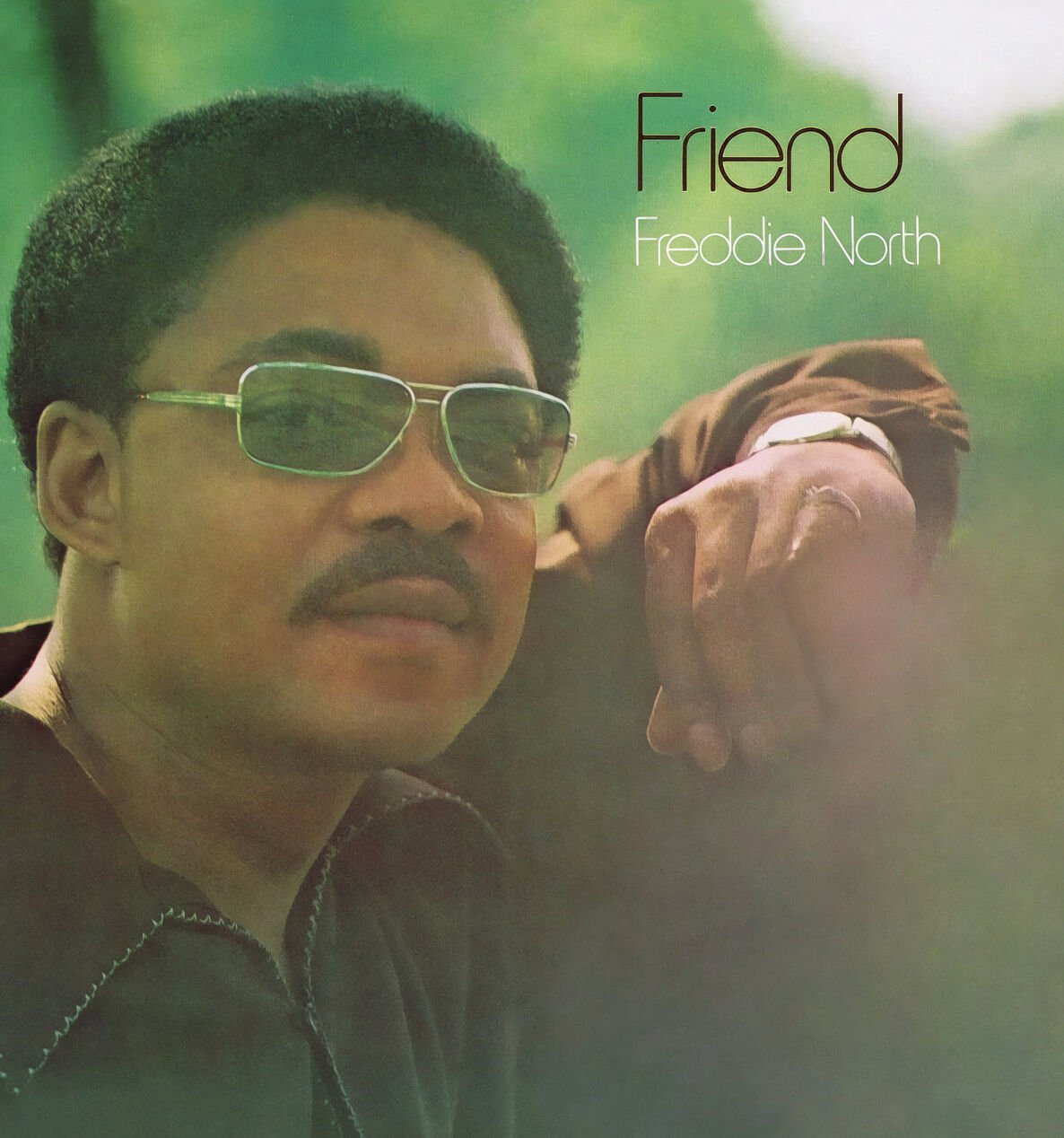
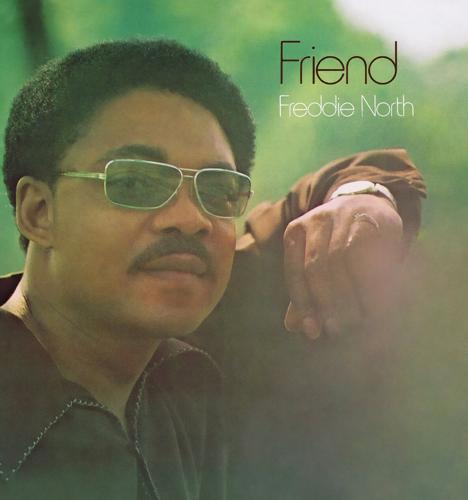
Cover of Freddie North's 1971 album 'Friend'
Freddie North
Nashville soul ace
Commercial success is often far from the best indicator of someone’s importance, and that’s especially true when discussing the vibrant Nashville R&B scene of the ’60s and ’70s. A prime example is vocalist Freddie North, who passed Oct. 15 at 86. North was a fine singer whose career started with vocal group The Rockies. There were so many outstanding soul groups and performers when North’s career began that breaking through nationally was extremely tough. Still, he was very popular on the local and regional scene. North also did a lot of vital work in the sales and promotion department for Ernie Young’s two record labels Nashboro and Excello. He would even occasionally appear on local TV show Night Train, which sadly was never able to get the syndication muscle and push that later made Soul Train a national institution.
North did enjoy one huge ’70s hit: 1971’s “She’s All I Got” has the hard-edged vocal flair of a great soul tune and the lyrical hooks and twists of a classic country song. It was co-written by Jerry “Swamp Dogg” Williams and Gary U.S. Bonds, and reached No. 10 on the R&B charts. It even cracked the edges of the Top 40 at No. 39 — thanks in part to North getting a break when Billy Sherrill delayed the release of Johnny Paycheck’s version, avoiding a radio battle.
North left the world of secular music in the late ’70s and eventually became pastor of Bethel Missionary Baptist Church near Murfreesboro before retiring in 2018. But thanks to the efforts of Michael Gray and the Country Music Hall of Fame and Museum, North got to relive his soul music exploits for a new audience in 2019, serving as a panelist for a discussion about the golden days of Excello. —Ron Wynn
Denis Solee
A modest king of jazz reeds
Many truly great artists are hesitant to boast about their accomplishments. That includes remarkable instrumentalist and educator Denis Solee, who died Oct. 15 at 83. He could deliver memorable solos with flair and soul on any reed instrument, though he once sent me a note saying he found the term “multi-instrumentalist” a bit pretentious.
A fixture in Nashville since the early ’70s, Solee played in every conceivable musical setting: symphony orchestras, big bands and small combos, as well as in commercials, TV shows and Broadway plays. A small sampling of places you could hear his brilliant playing includes The Gloryland Band and the Nashville Jazz Orchestra and various groups led by close friend Beegee Adair, as well as projects by Ray Charles, Chet Atkins, Garth Brooks, Béla Fleck, Amy Grant and Roy Orbison. Solee was also heavily involved in the Nashville Jazz Workshop, whose co-founder Lori Mechem paid tribute to him on the organization’s website.
“When Roger and I first opened the Nashville Jazz Workshop in 1998, it was Denis who started writing for all the ensembles we programmed — from Charles Mingus, Art Blakey, and Herbie Hancock ensembles to our Afro Cuban and Brazilian groups,” Mechem wrote. “His arrangements are now part of NJW’s legacy. … He actually helped build out the Neuhoff location, whether painting, constructing a new stage, or making things in his own garage that he thought we needed. It was his home, and he loved teaching and performing there. The students he encouraged and mentored received a deep, deep understanding of what it took to be a well-rounded musician and a good human.” —Ron Wynn

Riley Corcoran Hedrick
Riley Corcoran Hedrick
Co-owner of Vinyl Tap, encourager of a deep love of music
Riley Corcoran Hedrick was a true Nashville treasure. A sixth-generation Nashvillian, she grew up in East Nashville’s Rosebank neighborhood surrounded by a large, close-knit family whose laughter and love shaped her generous spirit. From a young age, she was a devoted reader, returning every year to To Kill a Mockingbird and drawing inspiration from its lessons of compassion, fairness and courage.
Her bond with her son Todd was built on music and curiosity. She took him to more than 100 concerts, encouraged his record-buying habit, and never told him to “turn it down.” That love of music became the foundation for Vinyl Tap, which Riley helped Todd bring to life. With her guidance, business savvy and endless encouragement, the store became a welcoming East Nashville hub: a place alive with records, conversation and community that reflected her warmth.
Riley also had a remarkable 32-year career with Jack Daniel’s and Brown-Forman, helping create the Jack Daniel’s Invitational BBQ Championship that draws 40,000 people to Lynchburg every October. She shared an adventurous life with her husband Dan, traveling across the U.S. and Europe, sailing in the British Virgin Islands and spending peaceful days in their wooded Goodlettsville home, surrounded by nature. She cherished her granddaughter Amelia, sharing books, music and long late-night conversations.
Riley’s sharp wit, kind heart and generous nature inspired all who knew her. Through Vinyl Tap, her family and the many friendships she nurtured, her spirit lives on, leaving Nashville richer, kinder and more joyful in her memory. —Caroline Bowman-Schneider
Bill Ivey
Key early director of the Country Music Hall of Fame, whose résumé went platinum
A bespectacled Bill Ivey arrives in Nashville in the early 1970s carrying credentials as a “folklorist.” He goes to work in the library at the Country Music Hall of Fame. Within a year, they realize what they got, and he is named director of the entire place.
Country music is about to explode. And Ivey — with the aloof air of an academic and a zest for understanding the city’s weird, small-town Southern politics and society — starts building bridges. Rough-and-tumble Music Row is connected with the chamber of commerce, bank boardrooms, the city’s newspapers and a few important Belle Meade socialites. Within years, the Hall of Fame’s artistic and cultural influence was set ablaze.
People noticed. One was the president of the United States. Bill Clinton, who was under siege by Republicans over at the National Endowment for the Arts, tapped the politically safe Ivey to become the endowment’s new chairman. The prestigious National Academy of the Recording Arts and Sciences made him chairman also. Ivey’s résumé had gone platinum.
Bill often shared his cosmically big-picture understanding of Nashville with me. He could connect the dots better than anyone. I remember one time sliding into a booth with him at the old Sunset Grill. Five martinis later, and I am not exaggerating, a notable blues singer fell into Bill’s embrace in the booth. I left, but not before watching a fair amount of the kissy-kissy action.
Note to St. Peter: Dust off the gin bottle. There was a wild man in there. —Bruce Dobie

Commemorating many of the irreplaceable figures Nashville lost in 2025



