

Author Danielle Bigsby-Matlock’s latest book features 66 poems — each one honoring a different Middle Tennessean who was killed by gun violence. She’s up to her 11th volume now. Bigsby-Matlock began writing in 2015 in an effort to keep her nephew’s memory alive after he was killed in 2010.
Her books include high-profile cases like those of Nashvillians Jocques Clemmons and Daniel Hambrick, who were both killed by Metro police officers. She remembers Vastoria Lucas, a 19-year-old killed on a basketball court in her old neighborhood in 2017, as well as the four victims of 2018’s Waffle House shooting. Her latest volume also includes the victims of the March 2023 Covenant School shooting and from last year’s shooting at Antioch High School.
“Gun violence is such a big problem in our country, and I feel like sometimes it’s painted as a race thing,” says Bigsby-Matlock. “But gun violence affects all races and ethnicities, so I don’t single out any race. I cover it all. I cover school shootings, I cover police killings, I cover neighborhood violence, I cover it all.”
The issue was already close to home, but landed even closer years after her nephew’s death. Bigsby-Matlock and her daughter were in their kitchen as gunshots rang out in their backyard — they dropped to the ground, and ultimately were not harmed. But that was the last straw. Five years ago, Bigsby-Matlock and her children moved out of the James Cayce Homes in East Nashville, about 30 miles north to Gallatin.

The short answer: nothing particularly meaningful
“There was no other choice,” she tells the Scene. “Gun violence left us no choice.”
Following the Covenant School shooting in 2023, gun violence was center stage during a special session of the Tennessee General Assembly. Despite the shooting being the impetus for the session being called, ultimately, no meaningful gun reform was passed. With gun control off the table in the state, the work of preventing more entries in Bigsby-Matlock’s books falls on the city and grassroots organizations.
Gun violence prevention work can be difficult to measure — how many incidences could have happened but didn’t? As Metro invests in more public safety programs, the city builds on the work of grassroots community leaders who have invested in the work for years, whether those grassroots leaders are in the room or not.
There were 50 gun deaths in Davidson County in 2025, and 237 non-fatal gunshot injuries, according to MNPD data. (Suicides, suicide attempts and accidental shootings are excluded from those numbers.) Overall, Nashville saw 35 percent fewer gunshot victims last year compared to 2024, and violent offenses overall fell to their lowest point since 2013, as the Nashville Banner reported.
In the past year, MNPD has ramped up its Group Violence Intervention work in partnership with the Urban League of Middle Tennessee and the Metro Public Health Department. The trio of organizations meets on a weekly basis to discuss group-involved crimes, and gives an individual warning from law enforcement along with resources from social service providers to those involved in shootings.
The program operates under the idea that a large percentage of violent crime in any major city can be attributed to a very small percentage of the population, and furthermore, just a few groups. Gangs are groups, but not all groups are gangs, explains Anthony Brooks, MNPD’s captain of alternative policing strategies.
“If this program works the way it’s supposed to work, then my office would not need to be involved at all after that, because the idea is for it to stop,” Brooks tells the Scene.
Roughly 87 percent of the people the program contacted (including those incarcerated) have not reoffended, and around 60 percent of those who weren’t incarcerated did not participate in any more crime following the visit from the program, Brooks tells the Scene.
The GVI program is part of an overarching public safety theme at Metro in the past year, which also saw the creation of the Office of Youth Safety and the Community Safety Task Force.

Rasheedat Fetuga
Rasheedat Fetuga is the founder of Gideon’s Army, a grassroots violence-intervention group. She wasn’t asked to be a part of Metro’s task force, despite being the first organization in Tennessee to introduce a community violence-intervention model back in 2018.
Fetuga isn’t bitter about this, though. There’s an important distinction between group violence intervention and community violence intervention. The former is connected to police; community violence intervention is not. She’s spent the past 15 years creating restorative justice programs in Metro Nashville Public Schools, working on programming in juvenile courts, helping with disaster relief during Nashville’s March 2020 tornado and most recently, creating Gid University and BlackOut North Nashville.
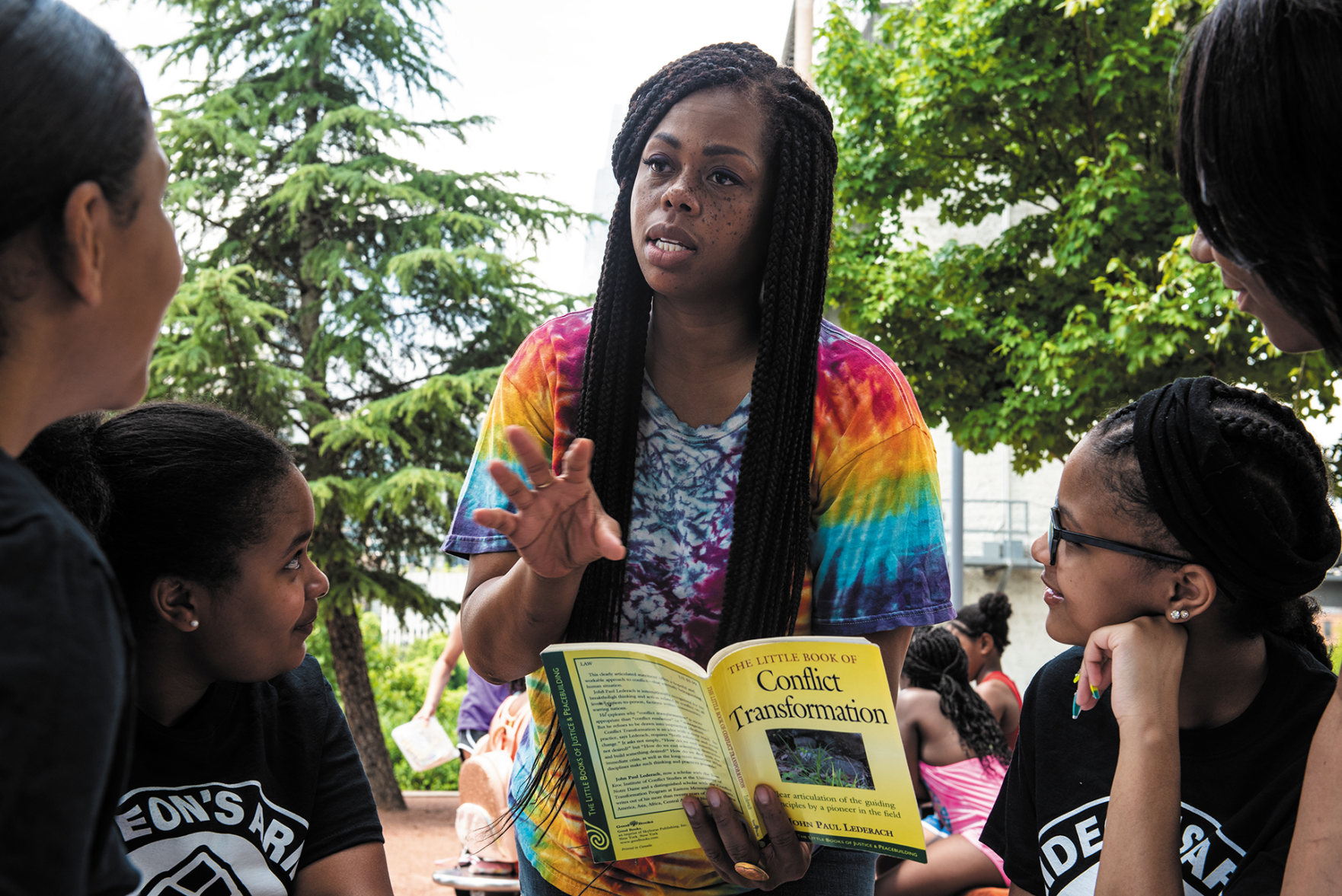
Community violence intervention centers people with lived experience, and that includes people who have had their own run-ins with the criminal justice system. Gideon’s Army has taken heat over the years for working with community members who have been convicted of crimes. (That includes coverage from NewsChannel 5’s Phil Williams that Gideon’s supporters have called a smear campaign.) Gideon’s Army’s 2016 “Driving While Black” report called out racist practices in MNPD traffic stops, which the department vehemently denied at the time. Gideon’s Army is still awaiting a $750,000 grant from the city that it was awarded in November 2022.
“If we’re looking at strategic peace building and building a just peace, it means calling out the harm caused by structural violence while also being on the ground and providing direct services,” says Fetuga. “That’s where a lot of the conflict comes, because systems don’t want to necessarily change or hear about the harm that is being caused, and people within the systems take it personal — not even understanding that for us, it’s not personal.”
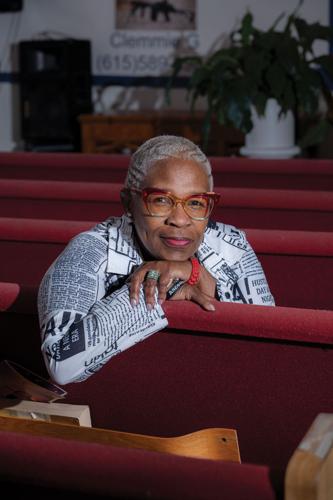
Even before Gideon’s Army there was Clemmie Greenlee, founder of Nashville Peacemakers and a prime example of someone using her own lived experience to try to steer others down a positive path — especially following the shooting death of her son in 2003. She was burned by a 2010 federal investigation, which alleged that a gang held meetings at the site of her former outreach project. She maintains that the center did outreach to gang members, but was not affiliated with them.
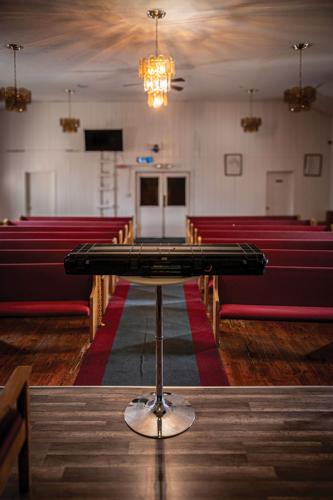
Greenlee has not gone without praise — At-Large Metro Councilmember Zulfat Suara recently brought a resolution honoring her grassroots work earlier this month. But the praise does not always translate to dollars — especially dollars with no strings attached, Greenlee tells the Scene. She’s frustrated with partners who won’t work with her in the evening, when youths most need something to do, or who insist that she bring kids to their spaces rather than meeting in her neighborhood, North Nashville. Greenlee and the Nashville Peacemakers take a no-frills approach, asking youth to join her home economics courses, or Guitars and Not Guns — a new “gang” she runs in the back room of the Rock United Ministries in North Nashville.
But Greenlee knows that with her street credibility, she could do even more. In the past, she pitched to former Mayor David Briley a $50,000 grant and 90 days doing outreach her way. She promised to lower violence by 75 percent in Nashville — not just in her own neighborhood.
“Why hasn’t nobody called me on my bluff?” Greenlee asks.

Clemmie Greenlee
“We got to quit asking all these folks who went to college and all that for four, five years — studying intervention and prevention and poverty and homelessness and gun violence and all that,” Greenlee says. “It ain’t all about the stats no more. It’s about people’s stories.”
Greenlee’s services focus on kids ages 12 to 16 — and that’s by design. Those years were hell for her, she tells the Scene. She says she quit school during sixth grade and nobody came looking for her.
“There wasn’t nobody there for me, there wasn’t nobody guiding me,” she says. “Why would I be sex trafficking at 12? Why would I have a baby at 13? Why am I put out of school? Why am I running in and out of juvenile? Why did I end up in prison at 18?”
A 2018 study by the Brookings Institute found that of people born between 1980 and 1986 in Nashville’s 37208 ZIP code, 1 out of every 7 was imprisoned in their 30s. At the time, it was the highest rate in the country.
Lonnell Matthews was born in 1979. It was his younger brother’s death by gun violence in 2006 that launched him into a life of public service. He now serves as Metro’s juvenile court clerk, co-lead of the Community Safety Task Force and co-founder of nonprofit My Brother’s Keeper Nashville.
According to MNPD data, the 37013 ZIP code in Antioch saw nine shooting deaths last year, while 37115 in Madison saw six shooting deaths. The 37207 in the area bridging East and North Nashville (including the Talbot’s Corner neighborhood) saw five, and 37211 in the southern portion of the county saw four. North Nashville saw three homicides by gun.
Matthews says while that 2018 report caused some harm, it also showed a community that had unmet needs in the midst of being threatened by gentrification and displacement.
“Let’s pay extra care and attention and be strategic and intentional on how we put resources into that community,” Matthews says. “But let’s not stereotype the people that are living in that community based on a historic report. Let’s really give them the opportunity to thrive that we give to people growing up in other communities in Nashville.”

A gun safe at the Rock United Ministries where community members can safely turn in their guns
For My Brother’s Keeper Nashville, it’s important not to just interrupt what’s known as the school-to-prison pipeline, but to create new pipelines. My Brother’s Keeper was an initiative created by President Barack Obama in 2014, focused on providing opportunities for boys and young men of color. Matthews’ Nashville branch recently hired longtime teacher Marc Anthony Peek as its first executive director using funds from the Davidson County Juvenile Court. He will lead the organization’s “cradle-to-career” continuum.
The continuum starts with kindergarten readiness, then reaching third-grade reading level, then graduating high school ready for college and career, followed by post-secondary training or education and, finally, employment. A sixth milestone is key: If a young person veers off the path with any of the first five milestones, they need a second chance to get back on track. Peek says as a young person, he struggled in school.
“I was very unkind to a lot of people, and people still stood by me,” Peek says. “One of the ways in which I say thank you to them is by doing this work, by creating these pathways, by standing in place of individuals, to be able to advocate for them, to remove barriers to their success.”
Helped along by Matthews’ leadership in the juvenile justice system, Peek sees My Brother’s Keeper as a convener. When two organizations won’t hold proverbial hands, MBK will hold hands with each of them.
“We can help people to see that there are people that are connected in all of these organizations, that are believing the same things that they believe in, and perhaps we can begin to build some bridges through those levels of communication,” Peek says.
Inside a former convenience store in North Nashville, the next iteration of Gideon’s Army is brewing. When completed, BlackOut North will offer a recording studio, games, a performance stage, a kitchen and a hot bar. It’s all run by youth, and according to Fetuga, what local youth wanted was a safe space where they could hang out in the evenings. The kids are part of and alumni of Gid University, a two-year leadership program wherein North Nashville youth affected by gun violence learn conflict resolution, social emotional skills and service leadership, and complete community service projects.
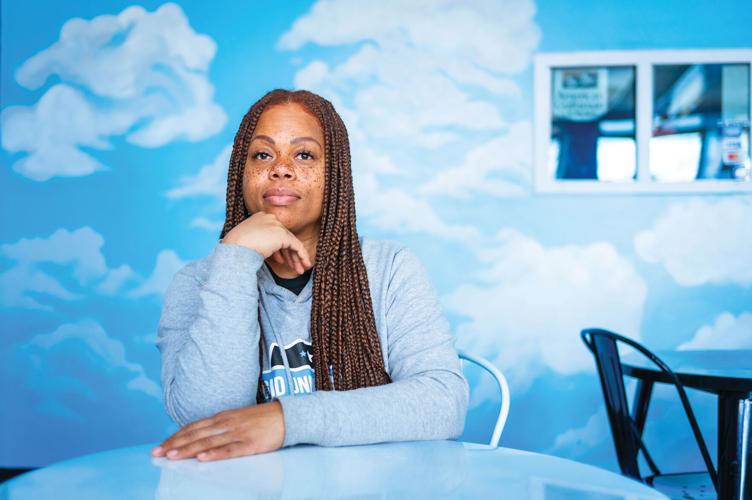
Inside a room wrapped in a cloud mural, Fetuga tells the Scene it’s time for her to build herself back up. She may be preventing a lot of loss, but she’s still experiencing loss — including the losses of young people she’s formed relationships with at Gideon’s Army. And all while being undersupported by the city, she says.
“These have been my gifts to the children of Nashville, and so now I really have to think about what is best for the children in the community, but also what’s best for me,” Fetuga says. “I don’t want to live my whole life giving and fighting, giving and fighting. It’s never been where there’s been a full embrace where I can just exhale and flourish, exhale and expand.”
Greenlee’s next step, meanwhile, is to launch a podcast called Tough Conversations. One of those tough conversations: how differently things have gone for the Covenant School families compared to the 40 or so mothers in Greenlee’s Mothers Over Murder organization — a group of mostly Black mothers who have lost a child to gun violence. Greenlee started the group in 2014 to help her sister, who had just lost her son to gun violence.
Following the Covenant School shooting in 2023, several funds were set up within a matter of weeks, and the school is on track to raise the $85 million needed for a new school building. It hurts to be treated differently, Greenlee says, and she wishes the two groups would band together to continue the advocacy work Mothers Over Murder has done over the years at the state level.
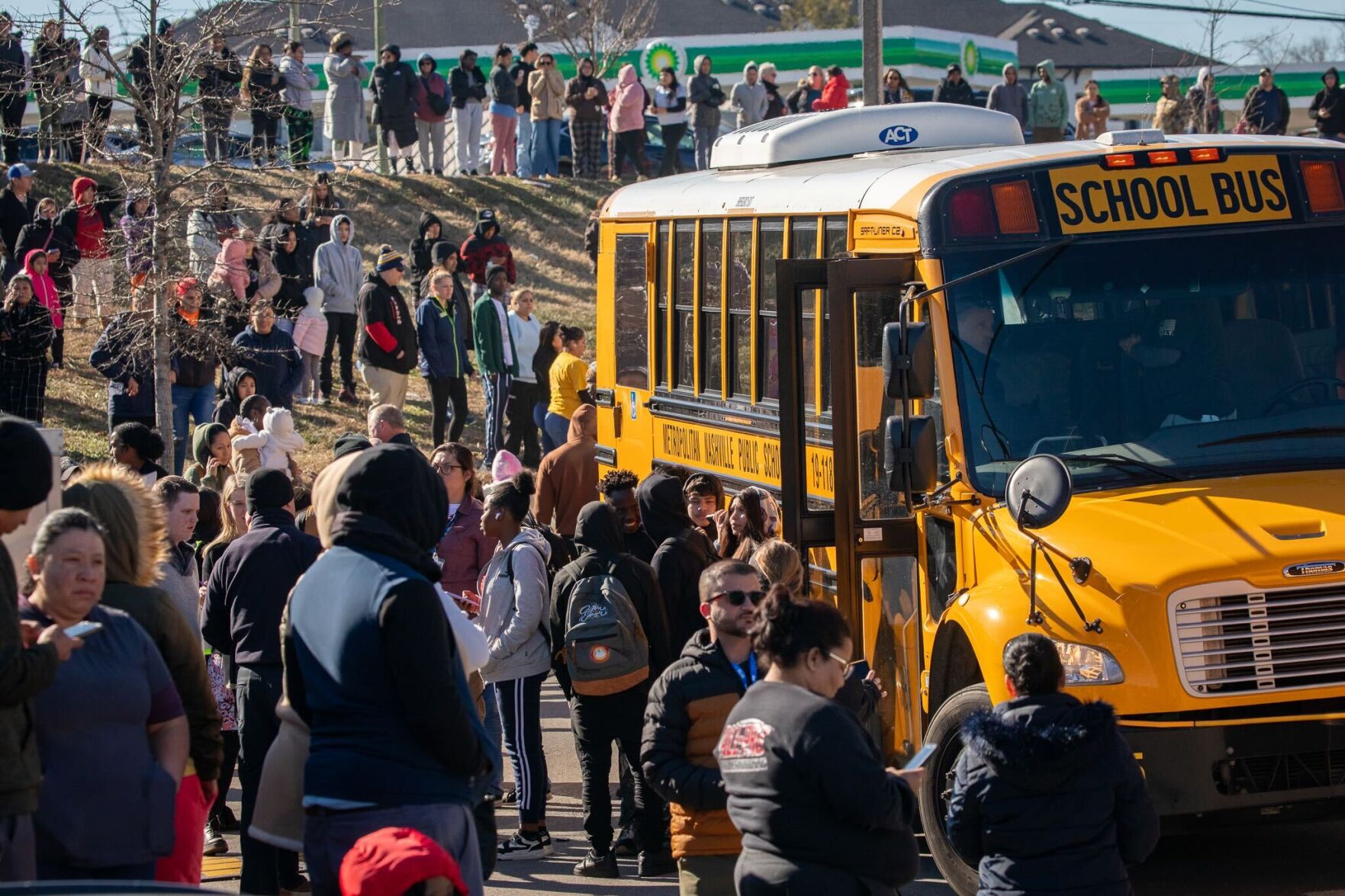
Status of school safety, gun reform uncertain as Josselin Corea Escalante is remembered
“We got to sleep in the same house that some of our kids got killed in,” she says. “One of my mothers’ kids got killed in the backyard. So what do you think she feels when she’s got to open her back door? So she doesn’t feel like she should have raised some money to move somewhere? Half the people in the project, their kids got killed in the front yard, so they got to come out that door every morning to go to work.”
Of the 50 victims of gun violence in 2025, nearly 65 percent were Black, heavily disproportionate numbers compared to Nashville’s population. The victim’s ages skewed young, with 28 of them between the ages of 18 and 30 and four under 18.
“What did [the Covenant School shooter] lack?” Greenlee asks, challenging the public reaction to the Covenant School shooting as opposed to gun violence elsewhere in Nashville. “Because every time one of us gets killed, they were on drugs, they were poor, daddy locked up. They put themselves in that position. Look how they live.”
While there are kids and communities in Nashville that need extra care and attention, longtime leaders in gun violence prevention remind us that when someone is killed, that’s someone’s child — and it’s quite simply not the victim’s fault.
“No one was born into low grades,” Matthews says. “No one was born into incarceration, no one was born into unemployment. The conditions and the environments that they grew up in set them up for being categorized that way.”
“People see it as a youth violence issue, when it’s actually structural violence that is causing the issues,” says Fetuga. “I think it’s easy to put the responsibility on the kids and individual behavior change, but we’re not addressing the root causes.”


Post a comment as anonymous
Report
Watch this discussion.
(0) comments
Welcome to the discussion.
Log In
Welcome to the discussion.
Keep it clean. Please avoid obscene, vulgar, lewd, racist or otherwise abusive language. Comments featuring hate speech or threatening or violent content will not be tolerated.
PLEASE TURN OFF YOUR CAPS LOCK.
Be truthful. Don't knowingly lie or mislead.
Be proactive. Use the “report” link on any comment that violates our comment policy.
Share with us. We'd love to hear your feedback.