

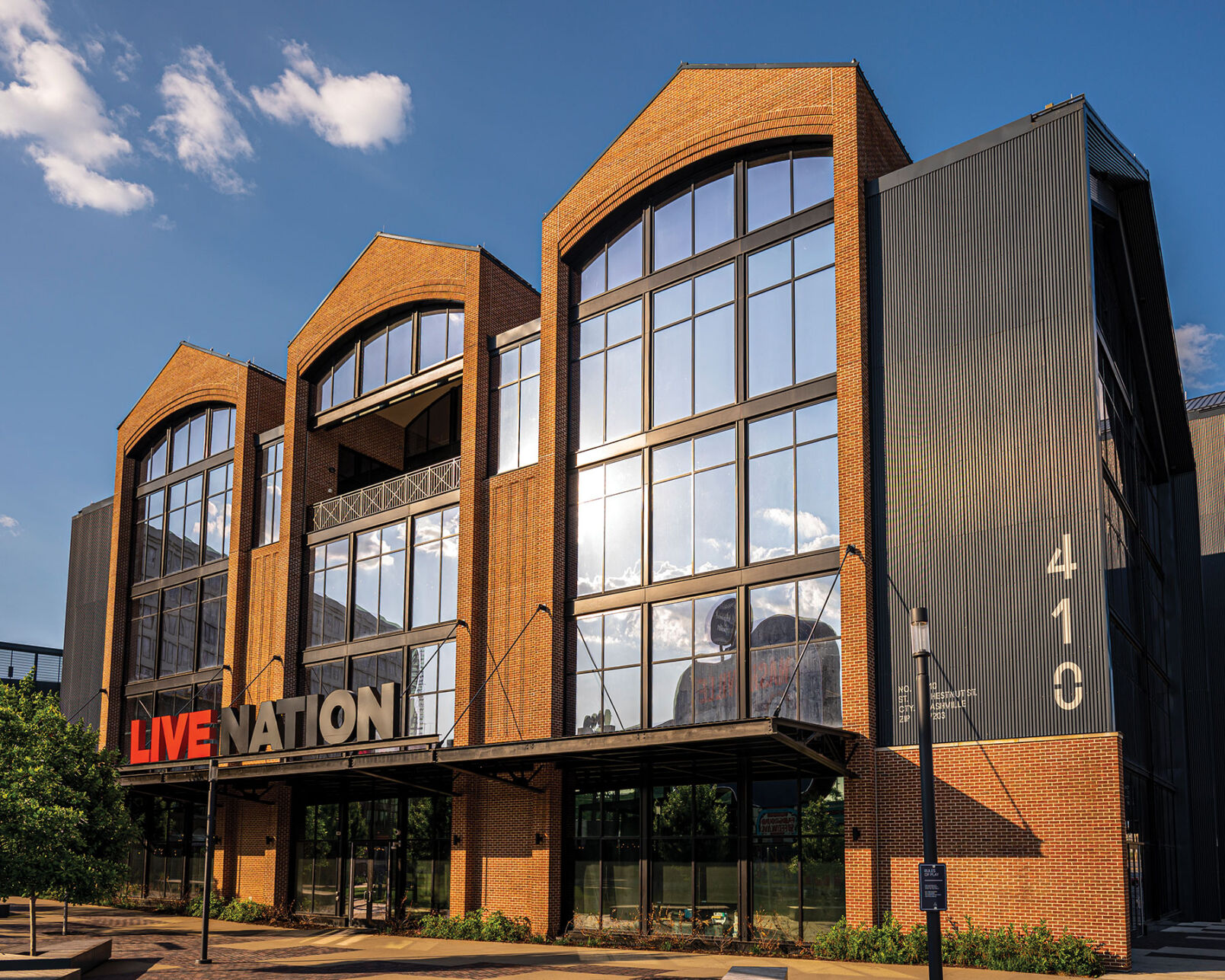
Live Nation’s Nashville office
Since early March, a lawsuit that many musicians and fans feel has been a long time coming has been playing out in the U.S. District Court of the Southern District of New York. The U.S. Department of Justice started an investigation into ticketing and touring giant Live Nation in 2022, which became public knowledge in the wake of the company’s badly botched sale of tickets to Taylor Swift’s Eras Tour. The agency found that the power concentrated when promoter Live Nation merged with ticketing company Ticketmaster in 2010 has been misused, resulting in an illegal monopoly that stifled competition and led to ever-higher prices for consumers. In 2024, the DOJ filed a suit whose recommendations include breaking out Ticketmaster from Live Nation. A majority of the states’ attorneys general, including Tennessee’s AG Jonathan Skrmetti, signed on as plaintiffs. The trial finally began Monday, March 2, presided over by Judge Arun Subramanian.

Department of Justice strikes a deal, state plaintiffs refuse to sign on, and presiding judge forces negotiation
After one week of court proceedings, the DOJ and Live Nation announced a surprise settlement on March 9. Most of the state plaintiffs, including Tennessee, refused to sign on, claiming the settlement was inadequate to address their concerns. State AGs, including Tennessee’s Skrmetti, issued strongly worded statements, as did an array of other politicians. Judge Subramanian read the riot act to Live Nation and the DOJ for working on this deal behind his back, demanding that negotiations resume and noting that the trial would continue if no agreement was reached.
During the week, a release of trial documents revealed private Slack messages between Live Nation corporate employees calling ticket buyers “stupid” and bragging about “robbing them blind.” The trial resumed March 16 and continues as of this writing. What’s important to keep in mind when considering some possible outcomes?
The states are being represented by Jeffrey Kessler, known for leading college athletes’ antitrust case against the NCAA. They presented their case first, and Bloomberg has an excellent breakdown.
The behavior outlined includes LN allegedly withholding concerts from venues that are not using Ticketmaster as an exclusive ticket provider, evidenced in both communication directly with venues and internally. Also under scrutiny are the service fees that Ticketmaster charges — up to 20 percent of the face value of tickets priced higher than $116, which comes on top of the money Live Nation earns for promoting a show — and a lucrative 2022 deal between Live Nation and venue management company Oak View Group. OVG owns seven arenas and has service contracts with some 200 others. The terms require Oak View to use Ticketmaster in venues it owns — and incentivizes the company to get its client venues to also use Ticketmaster. OVG CEO Chris Granger admitted under oath that the incentives were not disclosed properly to the client venues, though that has since been remedied. The initial contract was worth $20 million and has generated Oak View an additional $20 million in revenue.

615 Indie Live is poised to celebrate the city’s independent artists and venues this weekend
Live Nation has invested heavily in amphitheater operations and ownership in recent years, with involvement in a wide array of top-performing outdoor venues across the country. In both emails entered as evidence and his testimony, LN’s head of U.S. concerts Robert Roux made the company’s position clear: Live Nation-contracted artists will play only Live Nation-controlled venues. Going a step further, the case alleges that the company’s control over the popular amphitheater market gives it the ability to pay artists less. In an email from Roux about a 2022 tour pairing Snoop Dogg and Wiz Khalifa, he writes, “There’s no reason to pay them more because they don’t have options to play other amps.” Roux testified that this comment was actually about how other venues were not options for these artists because they wanted to play only at the Live Nation venues in question.
Ticketmaster’s practices and fees rankled artists and ticket buyers long before the Live Nation merger (see: Pearl Jam’s boycott and suit in the 1990s). Even if consumers don’t care for how LN does business — and it’s no exaggeration to say that few do, considering how easily ire for the company seems to cross party lines — they’re working to portray their activities as standard business practice, and in some cases may be seen as such. But when a company enjoys a level of industry dominance like Live Nation has, does it have a different effect in the market than when competitors have comparable resources, and should it be treated differently? That’s the question ultimately before the jury.
The Verge’s Lauren Feiner, talking with Nilay Patel on a recent episode of the publication’s podcast Decoder, discussed the trial and its reflection of changes at federal level. The DOJ filed its suit under the Biden administration, and the second Trump administration had signaled that it shared with much of the public a general distrust of and distaste for monopolistic control by big companies. To the surprise of no one, given the administration’s tendency for unpredictability, the Trump team seems to have changed course; the president himself got involved in the DOJ’s settlement with Live Nation, according to reporting by The Wall Street Journal.

Live Nation apologizes for promo for its new venue stenciled on sidewalks near The 5 Spot and Springwater
Regardless of the trial’s outcome, the evidence — backing up what fans, artists and industry folk alike have been concerned about for years — is now part of the public record, and it’ll be instructive to see how the company fares overall. Even before Live Nation’s amphitheater operations came under the microscope, local firm Opry Entertainment Group beat out LN in its bid to operate the downtown Ascend Federal Credit Union Amphitheater, and the 6,800-capacity venue is about to start its first season under OEG. Meanwhile, Nashvillians gave Live Nation an earful about a recent gaffe. The company announced an impressive inaugural lineup for The Truth, a 4,400-capacity venue it co-owns with developer AJ Capital Partners and Nashville Songwriters Association International. A few days later, a third-party vendor spray-painted promotional messages for The Truth on the sidewalk outside two longtime independent venues, East Nashville’s The 5 Spot and Centennial Park-adjacent Springwater. The backlash was strong and immediate. Live Nation issued an apology and had the ads removed.



Post a comment as anonymous
Report
Watch this discussion.
(0) comments
Welcome to the discussion.
Log In
Welcome to the discussion.
Keep it clean. Please avoid obscene, vulgar, lewd, racist or otherwise abusive language. Comments featuring hate speech or threatening or violent content will not be tolerated.
PLEASE TURN OFF YOUR CAPS LOCK.
Be truthful. Don't knowingly lie or mislead.
Be proactive. Use the “report” link on any comment that violates our comment policy.
Share with us. We'd love to hear your feedback.