

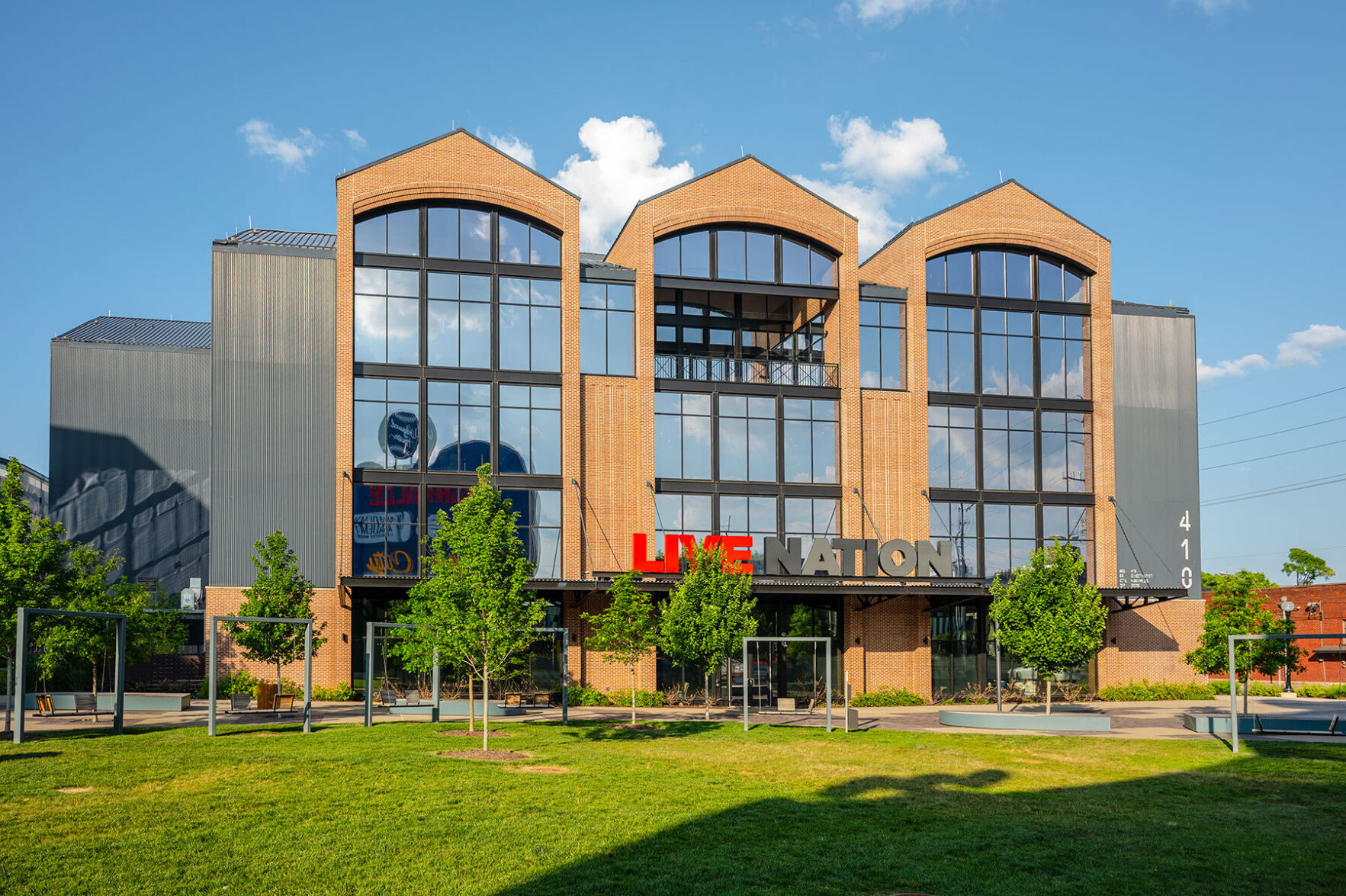
Live Nation offices in Wedgewood-Houston
Thursday of last week, final arguments wrapped up the trial of the federal antitrust suit United States v. Live Nation Entertainment — the case filed by the U.S. Department of Justice in 2024 against the massive ticketing and touring company, to which dozens of state attorneys general (including Tennessee’s AG Jonathan Skrmetti) signed on. After four days of deliberation, the jury returned its verdict Wednesday: Live Nation and its subsidiary Ticketmaster, acquired via merger in 2010, used their industry dominance to stifle competition in a harmful and illegal monopoly.

Catching up on the suit, filed by the federal DOJ and signed on to by Tennessee’s attorney general
The case was tried in the U.S. District Court of the Southern District of New York. Judge Arun Subramanian forced the DOJ and Live Nation to go back to the negotiating table after they came to a surprise settlement agreement in early March following just a few days of trial proceedings; the settlement was rejected by most of the state plaintiffs, no agreement was reached, and the trial continued. Following the verdict, according to the Associated Press, Judge Subramanian told attorneys representing both the plaintiffs and defendants to file a letter by the end of next week containing proposals for a schedule of motions as well as an outline of the remedies phase of the case.
Throughout the trial, Live Nation and its lawyers asserted that Live Nation and Ticketmaster’s actions did not make it a monopoly. “Success is not against the antitrust laws in the United States,” said their attorney David Marriott. Jeffrey Kessler, the attorney representing the states, described the company as a “monopolistic bully” based on its behavior.
“Live Nation and Ticketmaster must be broken up now,” says Stephen Parker, executive director of the National Independent Venue Association, in a statement. “Ticketmaster should not be permitted to participate in the ticket resale market. Live Nation should not be able to promote more than 50% of artists’ tours. And the damages paid to the states should be remitted to the independent venues, promoters, festivals, and fans that have suffered under Live Nation's monopolistic reign over the last 15 years.”
Lauren Feiner at The Verge points out that a breakup of the company — a suggested remedy when the suit was filed by the DOJ under the Biden administration — is still a possible outcome. Subramanian will be in charge of that decision as well as assessing damages the conglomerate owes. The figure he’ll be working with comes from the plaintiffs’ expert’s analysis, which found that Ticketmaster overcharged customers some $1.72 per ticket (averaged over millions of tickets sold during an extended period of time).
Feiner also notes that any judgment is likely to be appealed. Ethan Millman at The Hollywood Reporter writes that a ruling requiring the breakup of the company might be difficult to enforce, considering that the DOJ did not pursue that course of action in the March settlement.
The AP report also mentions Live Nation’s lawyers did not speak with reporters as they left the courthouse, except to say a statement from the company is forthcoming.
Update, April 16: Live Nation published a statement about the ruling. "The jury’s verdict is not the last word on this matter," the statement reads in part. "Pending motions will determine whether the liability and damages rulings stand. ... We remain confident that the ultimate outcome of the States’ case will not be materially different than what is envisioned by the DOJ settlement."





Post a comment as anonymous
Report
Watch this discussion.
(0) comments
Welcome to the discussion.
Log In
Welcome to the discussion.
Keep it clean. Please avoid obscene, vulgar, lewd, racist or otherwise abusive language. Comments featuring hate speech or threatening or violent content will not be tolerated.
PLEASE TURN OFF YOUR CAPS LOCK.
Be truthful. Don't knowingly lie or mislead.
Be proactive. Use the “report” link on any comment that violates our comment policy.
Share with us. We'd love to hear your feedback.