

Twenty-one candidates qualified to run for at-large seats on the Metro Council.
The campaign for at-large is unique. Because the top five vote-getters win, candidates typically remain positive, and surprising candidates can sneak into the winners’ circle.
Early voting for Metro Council and mayoral elections starts July 14, with Election Day following Aug. 3. A runoff, if needed, would come in September.
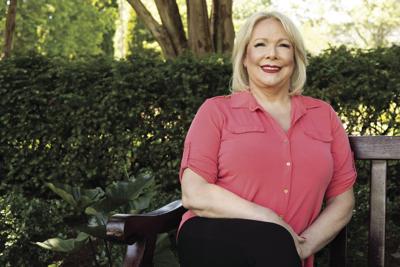
Our latest Q&A with an at-large candidate features Olivia Hill, a former supervisor at the Vanderbilt power plant.
Previously, we spoke with candidates Burkley Allen, Russ Pulley, Quin Evans Segall, Marcia Masulla, Jeff Syracuse, Zulfat Suara, Delishia Porterfield, Jonathan Williamson, Indrani Ray, Howard Jones, Arnold Hayes, Chris Crofton and Chris Cheng. This interview has been edited for length.
Why are you running for at-large versus other ways you could get involved or other positions you could run for?
At-large is best-suited for my expertise. I have almost 40 years' experience in utilities and engineering. By trade, I'm a plumber, pipefitter, welder, high-voltage electrician, diesel mechanic, boiler specialist. I even helped design the control system that's currently running Vanderbilt power plant right now. If I was to run in a district, it'd be much harder to try to fix some of the problems. People understand Nashville traffic and how much Nashville traffic has increased and slowed down. The same thing has happened to all of our utilities and our infrastructure. That's why I'm running, to try to help our underground grow at the same rate and speed as our above-ground is growing.
How can council improve some of that stuff? Is it simply more funding?
Some of the things I want to do is start implementing plans to improve our aging utilities and our infrastructure. We've got water lines out there that are 100 years old or older. I think there's incidences where they tie in to some of the older water lines, and on paper it looks like they will supply enough water, but because of the age of the pipe there's enough buildup on the inside that instead of an 8-inch line it may only pass the water as a 4-inch line because it's so old. We need to start doing some testing before we tie anything else into any lines to make sure it really can pass the required amount of water or gas or electricity. There's quite a few issues with our electrical grid throughout Nashville.
That's a hard one to do because NES is its own separate entity. If someone like me can sit and talk to the folks that understands the lingo that they're talking, we can actually make some progress toward improving our utilities. I've been talking about it the last couple of years and people say we don't have any utility issues, we don't have any electrical issues. Christmas happened and we proved how close to the ragged edge we are.
Some of the fixes can be extremely expensive, which is probably part of why previous leaders have put them on the backburner. How do you get people to pay attention to it? And how do you pay for it?
The new Bellevue project they're doing out there on Coley Davis Road, they've deemed that Coley Davis Road is in the floodplain and, as part of a fix for that, the developer is paying to raise the road above the 500-year floodplain line. As we start to grow, if we get the developers to help improve the stuff that they're tying into, that will help pay for an awful lot of it. Without them tying into it, it's sufficient to do what it's doing right now. If you add more onto that and get the developer to split the cost or pay a good portion of that, as time goes on we can improve it.
Since you've been campaigning have you gotten any mean messages or pushback from people around the state?
I've had a few letters mailed to my house, which proves they know my address. We've had several on our Facebook. But in general, it's been pretty positive. I am running this campaign on the fact that I am a qualified woman to sit at this table and do this job. I'm more qualified in utilities and infrastructure than just about anybody that's running. The fact that I am trans is just a part of who I am. It's not anything that I can change. It shouldn't be any kind of handicap. I am the first trans woman in Tennessee to ever have her name on the ballot, but that's not why I'm running. I'm running because Nashville is growing, and I want to improve our aging utilities and use my expertise to fix that.
Do you think you can work with the legislature given their stance on trans rights?
Absolutely. When I was in the military, I have had a multitude of people work for me. My last duty station I had 90-plus people that worked for me. That's 90-plus different personalities. One thing you have to learn is everybody has a voice and everybody has an opinion. Everybody feels that their voice and opinion is right. You have to give a little bit of respect to them. As a combat veteran, I put my life on the line for everybody, not just the people like me and not just the people that are white and not just the people that live in my neighborhood. I pride myself on trying to be able to get along with anybody. I usually treat people the way I want to be treated myself.
I met a woman at a restaurant and we were talking. She said, "I can't stand people who are liberals." I asked her what is it about liberals that you don't like. She said, "That Nancy Pelosi." I said, "Well that's just a person. What is it about the whole liberal body?" She started talking about trans folks and I asked her if she'd ever met one. She said no. I said, "Well you have now." I went through the whole thing of everything that happened in my transition. We go through basically full puberty. She looked and me and said, "I had no idea." I've learned that most of the hate that comes from most people is lack of education. I'm old enough to know things were a lot different in the '60s, but we've made a lot of progress. Things are different now and they're going to get better. We just have to educate people and take a little time to sit and talk with people and meet them on their level and not push and shove. We're all a little different. I think I'm a person who can get along with folks on both sides.
There was a debate a couple weeks ago about whether to fund gender-affirming health care for Metro employees. It was shot down by the benefits board. What was your reaction to that? What should be done going forward?
It really is just education. Most people see trans women as just men in wigs. They don't understand my skin is thinner, I've shrunk, I've lost all my upper body strength, I've put on weight in certain areas, I've lost muscle mass throughout my entire body, my lung capacity is three-fourths of what it used to be, my red blood cell count is almost half of what it used to be. There's been so much that has changed just because of hormones. Three percent of the people in the United States are redheaded; 2.75 percent of the people in the United States are intersex. That's someone who's born with both. The whole notion that people saying there are only two genders, there is medical proof that close to 3 percent of the people are born with some form of both. I think we have to educate people and as time goes on we can educate folks and people will be a little more open-minded.
If you're elected would you push for reviving that conversation about benefits?
I would but it's not going to be my sole focus. My main focus is utilities and infrastructure. I want it made clear that I will stand up for trans rights and the entire LGBT community, but my main focus is the betterment of Nashville.
How can your expertise on utilities and infrastructure help you legislate on other issues facing the city, whether it's transit or housing or education?
I helped Vanderbilt transition while I was running the power plant from burning coal to natural gas. At the same time, we are supplying steam electricity and chilled water to a 330-acre campus. It was the largest electrical user in Middle Tennessee. I have been in all these different situations to help improve that. That's what I've done most of my career. I think I can sit down with city leaders and developers and improve our city in ways that are equitable and good for everybody.
You've talked about partnering with private companies on housing. What would that look like?
I think affordable housing is a three-part question. Part of it is affordable housing, part of it is transit, and part of it is good paying jobs in Nashville. You put a $600,000 house in Belle Meade and that's considered affordable housing. The same house in Bellevue is not. I would love to see certain areas grow and maybe back off some of the areas that are already getting pretty dense that are having traffic issues and utility issues until we get those utilities improved to sustain the more dense growth.
It sounds like you were paying attention to that Bellevue development debate. A lot of the neighbors just don't want stuff like that near them. How do you plan to communicate with neighbors who hold those opinions about housing and development?
The biggest concern with everybody in Bellevue is the condition and size of Coley Davis Road. It's very narrow. There's no shoulder. There's no way to pull off anywhere. There's not been a lot of improvements there and there's been a lot of development there. The problem is it's a floodplain now. The things that have been built there I'm not sure should have ever been built. The new developer is coming in and going to raise Coley Davis. If we don't do anything at all, it's not safe. We have to make sure we communicate that properly with the neighbors and make sure everybody has a voice and everybody feels like they're being heard.
One of the biggest disconnects right now between some of the city council and the neighbors is they don't feel heard. If we can have more public meetings in the area and actually meet with people, because sometimes there's bad information that flows around on both sides. We just have to educate people with what's really going on and what's going to happen and what's going to improve and make sure everybody feels heard.
District councilmembers are typically more responsible for those kinds of meetings. As an at-large representative, how would you foster that communication on the front end?
I would love to have some more public gatherings to answer the questions. Sometimes things are very intuitive and sometimes things aren't. Sometimes it looks like a bad idea but it's really not.
It sounds like the racetrack deal won't happen by the end of this term. If it comes up when you're on council, how would you approach it?
I would listen more. There's the people that really love NASCAR and racing and want a racetrack. It's historic. It's been around for years. But a lot of those people that enjoy that racetrack and want to visit that racetrack don't live in that neighborhood. We have to listen to the folks in the neighborhood to find out the best equitable part for everybody. It's one of the things that happens with the homeless population, too.
People say, "I want this taken care of, but don't do it in my backyard." It's easy for people that love NASCAR that don't live in the area to say, "Well, you knew it was a racetrack when you moved there." It's one of those things where we're going to have to communicate with the public and connect with folks to hear things from both sides.
A focus the last couple years has seemed to be clearing encampments. What would you want the city's approach to be to homelessness?
When they close down and encampment and they clean up that area and they give them short, temporary housing and they don't work on the problem, then they just shift them somewhere else. They just set up camp somewhere else. They stay hidden until the camp gets big enough that the camp gets to be a problem. Then people in that neighborhood stand up and say, "We don't want it in our neighborhood." They keep shifting around. If we would take the time to listen to some of the homeless folks and really help them get a jump start and give them hope to move forward. People say people choose to be homeless or they're just mentally ill or they're just alcoholics and drug users.
I know that that's not true. I know that because in 2003 I slept in a 1987 Nissan Sentra while I was working at the Vanderbilt power plant because of some financial constraints and a couple garnishments and a divorce. I got kicked out of my apartment, and I didn't have anywhere to go. I know firsthand that not every homeless person chooses to be homeless. Sometimes we just need a hand, a little help up to get going. There's a lot of work in Nashville. There's a lot of things people can do. They just need a helping hand to show them a little light at the end of the tunnel. You can't just give them housing without giving them a career to help take care of themselves.
How would you like to see Metro extend that helping hand? Is it by funding nonprofits already working in the space?
There's some of that. We need to take some of the land use that we've got and make it into, not necessarily tiny houses, but some space that we could get some of the folks off the street. Do some training and help them get on a good path.
On the land point, do you mean a place where people can safely camp?
I'm not privy to all of the places Metro owns, but I know they own Hickory Hollow Mall. I know they own several other buildings like that that are just sitting there. If we got some people trained and could live there and do work there to help improve that, it's something I'm going to really look into. I've been looking at a couple different areas. I know Houston has reduced their homeless population by like 25 percent. I've been trying to find the best possible way to do that. It's something we have to work on to help the homeless people instead of just moving them out of the encampments and moving them from one side to another. It's like taking money out of your left pocket and putting it in your right pocket and feeling like you've gotten $20 richer.
Are you supporting anyone for mayor?
To be 1,000 percent honest with you, I haven't made up my mind. I have a top four. I've been to a lot of the forums, and it almost seems sometimes like they've got a script. They all have the same topics and every new forum a new person talks about a new thing, but they're all passing around the same answers.
You won't tell me your top four will you?
I probably shouldn't.
Then how do you want the mayor to interact with council?
I want somebody who's open-minded, who can help Nashville really grow in the way that it needs to. We have to tackle utilities and infrastructure. We have to really tackle transit. We're behind the eight ball now and we need to hit the ground running and start working on transit now. I want somebody that's willing to work with council and get some real good things done.
Do you want there to be a transit referendum this term?
I think there should be. We've got to have transit. We're beyond talking about whether we need it.
How can you avoid the failures of the last referendum?
We've got to get a good plan and we've got to make sure we share that plan with everybody in Nashville. We have to be transparent about everything that's going to happen and how we can grow this and make sure people feel like they have a voice. If we'll just spend a little time with folks and say this is a good idea and here's why and listen to their concerns and make some adjustments if we need to. In the past, we've made plans and said, "Here, let's do this." Some of them were good ideas and some weren't. We're beyond a time of saying whether we should or we shouldn't. We just need to do it and find a good way to do it.
How do you think Metro should replace the community oversight board?
That's one I'm really trying to avoid. I think we need a community oversight board, but I think the way the current one was set up was basically set up to fail. They need to put people on that board that really truly understand the processes of being a police officer and how those things go. From everything I'm hearing, it sounds like they were backlogged and didn't have enough time to work through all the things they had on their plate to do. I like the idea of keeping an eye on our police officers and making sure they're doing right. I like the idea of them being able to do their job and keep us safe without being restricted. That's a tough one.
Do you think there's a role for Metro to play in subsidizing development of new child care either for Metro employees or for the general population?
I know, as a parent, when my kids were much younger, child care was as expensive as the mortgage. I know it's gotten even worse now. But that's not my expertise and that's an area that I'm trying to shy away from. I'm really trying to concentrate most of my efforts into utilities and infrastructure, homelessness and transit. I will help support anybody who has a good idea to help improve that because I know what a heavy cost burden that is to young families.
Is there anything Metro is spending too much on?
When I started meeting with a lot of different departments, I've learned that most of the departments do not communicate with each other. NDOT is not talking to public works. Public works is not talking to Metro Water. And Metro Water is not talking to NDOT. None of those are talking to Piedmont and NES. Right now, if you or I had a problem, we'd go to Hub Nashville and that would get routed to the person that takes care of it. Problem solved. But right now, if they're going to tear up 46th Avenue to put in a new gas line, Piedmont tears up the road, puts in the new gas line, calls NDOT to come pave it, and then NDOT comes to pave it. Then six months later Metro Water decides they're going to put a new water line down that road. They come and tear up the road and they put a water line in and they call NDOT and NDOT comes and paves it. And then they're going to come in three months after that and put in a new storm drain. They're tearing the road up, they call NDOT, and then they come and fix it.
If they would have said something all together, a couple of those could have been held off for three months, a couple of those could have been moved up three months, and then tear up the road and gas, water, storm drain could be done at the same time. If we did that one thing alone, just to get all the departments to talk to each other, we could save millions. If we did that we could take some of that money and put it right back into improving our aging utilities.



Post a comment as anonymous
Report
Watch this discussion.
(0) comments
Welcome to the discussion.
Log In
Welcome to the discussion.
Keep it clean. Please avoid obscene, vulgar, lewd, racist or otherwise abusive language. Comments featuring hate speech or threatening or violent content will not be tolerated.
PLEASE TURN OFF YOUR CAPS LOCK.
Be truthful. Don't knowingly lie or mislead.
Be proactive. Use the “report” link on any comment that violates our comment policy.
Share with us. We'd love to hear your feedback.