
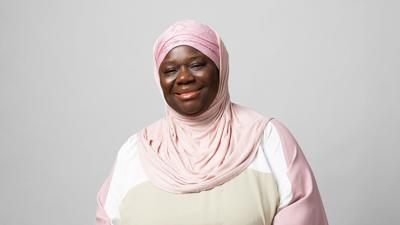


Zulfat Suara
Twenty-one candidates qualified to run for at-large seats on the Metro Council.
The campaign for at-large is unique. Because the top five vote-getters win, candidates typically remain positive, and surprising candidates can sneak into the winners’ circle.
Early voting for Metro Council and mayoral elections starts July 14, with Election Day following Aug. 3. A runoff, if needed, would come in September.
Our latest Q&A with an at-large candidate features Zulfat Suara, seeking a second term as an at-large representative.
Previously, we spoke with candidates Burkley Allen, Russ Pulley, Quin Evans Segall, Marcia Masulla and Jeff Syracuse. This interview has been edited for length.
Participatory budgeting was a big priority for you when we talked in 2019. That has come to pass. Do you think it's been successful?
Any time you start a new thing, there's always room for improvement. I'm glad we got it started. The fact that we actually got it to happen, the fact that Fabian [Bedne] was able to work through it, I think is a great thing. I think it's working. I think it's helped a lot of neighborhoods. But there's always room to make it better.
A lot of people seemed to be surprised by your vote in favor of the Titans stadium deal. How did you decide to support that?
The Titans vote was one that was very hard for me. I was physically sick. Because I understand why people are frustrated. I understand why people are mad. The condition in Nashville is still not the best it could be. People are still struggling. If I cannot make ends meet and I'm going paycheck to paycheck, how do you justify $760 million for a stadium? I get that. But the issue at hand is not whether we are going to do business with the stadium or not, because we are already doing business with the stadium. If we don't do anything we will continue to do business with the stadium. The position comes to, do we renovate or do we build a new one? In making that decision, I had to look at three things. The first thing is I look at the cost. Some people said [renovations would be] $1.8 billion. I think that's ridiculous. It's not. The Titans put forward a number that was $600 million. I looked at how much it costs to renovate a stadium, and it's between $600 and $800 million. You can know without a doubt that it's going to cost us about $600 to $800 million to renovate it. When you're looking at how much it would cost to build, it's not $2.1 billion. Part of it is coming from the state, part of it is coming from the Titans. The amount that Metro [agreed to] is $760 million. For me, when I look at the cost, the costs are similar.
The second thing I did was look at how we paid for this. Right now, we're paying for it with [general obligation] bonds. If we continued with the old lease, we would continue to pay for it with G.O. bonds. And how do we pay for G.O. bonds? With property taxes. That means people that live here will continue to pay for it. With the new deal, yes we're going to be using taxes, but we're using mostly hotel taxes. That is people visiting. Locals don't stay in a hotel all the time. Maybe they do it once in a while, but not all the time. This amounts to shifting who pays for it to the people who are visiting Nashville, mostly, and it takes the burden off the people that live here. People said, "Why don't you use the money to pay for schools?" We cannot. It doesn't work like that. What it allows us to do is, when we stop using property taxes to pay for the bond, the money we save we can put that in the schools.
The last thing that was part of my analysis was the liability that goes with it. With the new deal, it's $760 million. There's a clause in there that says if there's cost overrun, the Titans will pay for it. We know how much it's going to cost us. With the renovation, when you try to start fixing something the cost will go up. We could start with $400 [million], but we never know where it would end. In five years, the NFL comes and says we need to change the electrical and mechanical stuff, that would still be on us.
When I look at all of that, the one that's actually good for the people of Nashville is the new deal. It allows us to not use property taxes. It allows us to not be open-ended. It allows us to now use the money we save with the property taxes for things we need to do. If we walked away from the new deal, we're not walking away. We'd still be stuck with the old one. It's not a question of we don't want to do this. We're already doing it, unfortunately.
Why was it so hard to make any changes to that once the mayor and the team presented it? Why is it so hard for the council to be engaged on the front end of negotiations?
When I look at the amendments that are put on the table, if it's an amendment that enhances it, that makes it better, I vote for it. I speak up in support of it. If it's one that would kill the deal, I would not. Remember that if you kill this deal, you're going back to the old one. Nobody can tell me that the old one is better than the new one. I understand the frustration about the timing. Every time there is a deferral, I vote for deferral. Every time there's a vote for let people speak, I vote for people to speak. If we can make it better, we continue to look for ways to make it better.
Due to the sales tax element of the deal, is it possible to develop the East Bank in a way that benefits residents?
When you look at the finances for the stadium, the bulk of what is there is from the hotel tax. The sales tax is a part of it, but it's not the biggest. As we talk about East Bank, that's a different conversation. The way it's been touted before was that this was going to be something that would work for the people, this was something that would have affordable housing, this was something that would have transportation, this was something that would make sure union workers were part of the development. We need to hold the administration and the Titans accountable and make sure it does happen.
How do you hold them accountable?
Everything has to come through us. If there's going to be affordable housing, that would be financed through council. I plan to continue talking to the next mayor. I plan to continue talking to the Titans if I can, to continue to make sure that we're very vigilant about what's going on. Every vote is a new conversation about where we are.
How much of the East Bank development is predetermined by the need for some sales tax revenue to go to the stadium?
You have to have sales tax revenue from the area, that is true, but someone cannot come and say “no you can't put housing because it does not generate sales tax revenue.” The top [funding] tier is the hotel-motel tax. That's where most of the money is coming from. Even if it does not generate the sales tax, which I hope it will, if it does not, they will still be able to pay. When you go to financing people for revenue bonds, you cannot base it on sales tax from a community you haven't built yet.
Why did you abstain on the Belle Meade Plaza rezoning vote?
When it comes to the Belle Meade Plaza, I had a lot of people that said they don't want it. I had people that said they wanted it. That was why I decided to abstain. There were arguments on both sides. On district stuff, if it's overwhelmingly no, then I'll speak up. But if it's both sides, I will abstain.
Why did you back Sara Beth Myers for D.A.? Did you think Glenn Funk was not doing a good job?
No, it wasn't that. I do not know a lot about Glenn Funk. But I do know about Sara Beth Myers. Time after time, I've seen how Sara Beth gets thing done. When the vandalism happened at the Murfreesboro mosque, she was one of the team that was in charge of it. I have a personal relationship with Sara Beth and I've seen her work. I will say, I did not like how Glenn Funk handled the Justin Jones stuff.
Wasn't that all dropped?
They were all dropped eventually, but situations where you have one person charged 14 times and the rest of the people, nobody else was charged. I didn't like how it went down. But it was more what I've seen with Sara Beth.
You were among the councilmembers who called for getting rid of MNPD Chief Steve Anderson in 2020. Do you think the new chief, John Drake, is doing well?
It's better. They're doing more community outreach. There's still a lot to be done with the police department. For example, the state just voted to get rid of the [Community Oversight Board]. I would have thought the police chief and the police department would speak in support of it and try and fight for it. I wish there was a better working relationship between the COB and the police department. There's a lot to be done in the Black and brown community. I think he's trying. He's putting things in place. But it can be better.
Have you seen continued threats and harassment since your 2019 campaign ended?
Things are way better. When I first got on council, I was still very nervous. I get packages that other people don't get. I get emails that other people don't get. There were still people thinking I don't need to be there. The emails and the bad packages have stopped, and they actually stopped very early on. As I go around on the trail this time around, I have not encountered any of that. Maybe they also learned from the last time that their attack probably could have even got me elected. It allowed more people to know about me. I think there were people donating to my campaign just because of that.
Do you think we should have a transit referendum soon?
Definitely.
What should it look like?
I have no idea. I don't know everything. I can talk budget all day, I can talk housing, I can talk education. Transportation, all I know is that I don't like traveling to some parts of the city. When I get in my car, I get frustrated with the traffic. We need to do better. For a city that is growing, to not have public transit that is reliable, that works well, doesn't make any sense. I know we're doing some little things with WeGo, and that's great. If we can make it more reliable, we should do that. We need to start looking at connectivity. I just know what we're doing now is not working and we have to do better.
Are you endorsing anyone for mayor?
I'm staying out of the race.
What do you want to see from the eventual winner?
The deal that was crafted for the stadium, that was a good deal that took us from the old lease and put us in the new one. Can we craft something that would be for housing, that would be for transportation? How does the next person think outside the box about issues that are impacting Nashvillians? I hope the next mayor and the next council can think of better, bigger ways to get it done.
There was some legislation earlier this year related to Metro's fund balance and restricting how it can be deployed. You had some reservations about not wanting to box the city in. Can you explain that hesitation?
When I first got on council, one of the first budget amendments I did was $7 or $8 million. That was the year we didn't have any money and the comptroller was on our neck. There was nowhere to find it and I took it from the fund balance. I know the budget chair and the finance director were not very happy. I don't know how you save money when you have an emergency. The savings is supposed to help you when you need something, and taking care of the people is the primary thing that we do. What if something happened and we need to use it? The policy is good to have, don't get me wrong. We don't want the comptroller coming back. I think it's good to have this policy but there should always be a way out if there's an emergency, and I think we have that in there.
During the Oracle deliberations, you had an amendment that said the intent is to divert half of eventual revenue from that to affordable housing. Do you think language like that is strong enough to accomplish those goals?
It is. We cannot bind future councils. I cannot tell how future councils will behave or what they will do. But I don't want to wait for future councils that may or may not think about it. The conversation is happening now. We're not spending enough in housing.
That's more of a long-term goal with the Oracle money. But what should the council do on housing in the next four years?
The Barnes Fund funding at $30 million every year was part of the housing task force recommendation. It's a good one and we want to make sure every year we ensure we get that $30 million at least. If we can get more we should go for more. Another bill I filed is the eviction right to counsel bill. How do we protect our residents? The eviction right to counsel is a two-year pilot that says we will do education, we will do outreach, but we will also provide attorneys to Nashvillians that are about to face eviction. Studies show when people are facing eviction, the landlord has an attorney, the tenant does not. Oftentimes, the judgment goes in favor of the landlord, because the tenant cannot protect themselves. This is another thing we're doing right now that is keeping people in their homes. Those type of programs I want to continue. I did a bill that says 20 percent of the Barnes Fund should go to small developers. This helps us diversify the type of housing we have. Small developers will not do big [projects] but they will do something in their neighborhood. The churches can look at the parking lot and decide, "We want to put housing for our pastor and our parishioners." That is housing. Different types, different ways. We have to continue to keep thinking outside the box. I hope one day soon the state will let us do inclusionary zoning.
In 2019, I asked you what a successful term would look like. You said if people are saying “we’re all vested, we all belong, we’re all thriving,” it would have been a success. Have you accomplished that?
No. I'm not trying to make excuses, but the last four years was no fun. We've had to face things we did not plan for. It's not a regular four years, from COVID to the bomb to the storm to the tornado. We've done some things, but I know for a fact that it doesn't matter what we've done if people don't feel it. We can always say we have the highest-paid teachers in the state, which we do. That is an accomplishment. The problem is that, when we made the teachers the highest paid in the state, the inflation and cost of living went up, and that money is not enough. The deciding factor about whether we were successful or not is not us, it's the people. And the people are not feeling it. We need to keep working on it. It's not for lack of trying. There are some things we wanted to do that the state would not let us do. We need to start thinking bigger and bolder.
What are you looking for as the license plate reader pilot comes to a conclusion?
The license plate reader is a very tough thing for me. I understand that it helps us with stolen vehicles. One mistake can cost somebody their life. I just want to make sure we're protecting the people. My resolution about the license plate readers has always been about the safety, the data, the security and not being able to use it to discriminate against people, and I still have those concerns. I'll see where the pilot goes. I'm still not in support of license plate readers.
What more work could be done by the city to help incentivize child care development?
I have five kids, so I know what that means. I'm very much in support. When I had my kids, I was a stay-at-home mom. Part of the reason was because day care was very expensive. I could afford to stay at home because I had a husband who was working. Not everybody has that. I've lost staff because of child care. If I could put a day care center next to my office, I would do it, because they are very good staff and they want to work. Whatever we're doing on child care I support and I think we should do more.





Post a comment as anonymous
Report
Watch this discussion.
(0) comments
Welcome to the discussion.
Log In
Welcome to the discussion.
Keep it clean. Please avoid obscene, vulgar, lewd, racist or otherwise abusive language. Comments featuring hate speech or threatening or violent content will not be tolerated.
PLEASE TURN OFF YOUR CAPS LOCK.
Be truthful. Don't knowingly lie or mislead.
Be proactive. Use the “report” link on any comment that violates our comment policy.
Share with us. We'd love to hear your feedback.