

Metropolitik is a recurring column featuring the Scene’s analysis of Metro dealings.
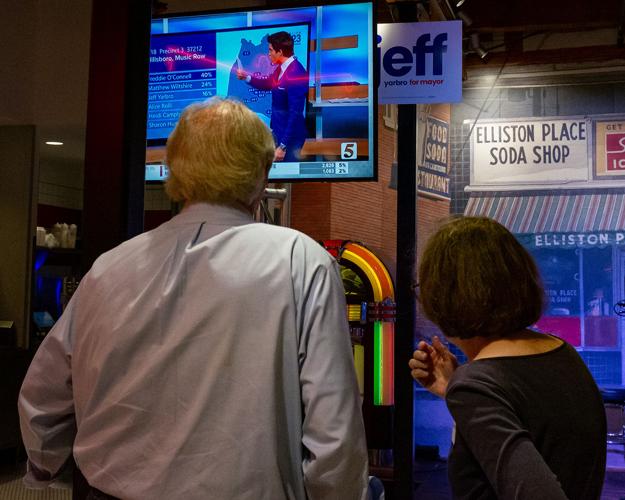
The Metro government will look very different by the end of September. Election night on Aug. 3 brought a series of upsets, confirming what polls and politicos gestured toward during an extended campaign season: Establishment backlash has become the defining force in Nashville politics.
Savvy candidates — the ones who survived past Aug. 3 — pieced together the moments that have animated citizens (i.e., voters) over the past few years. Seemingly unrelated episodes like the marathon public comment period during budget season in June 2020, Mayor John Cooper’s 2020 property tax hike, stinking trash routes abandoned by city waste contractor Red River in 2021, and Metro’s $2.1 billion sweetheart deal with the Titans for a new stadium all became, in retrospect, chapters in the same story for winners like Freddie O’Connell, Alice Rolli and Angie Henderson. All three argued, successfully, for regime change.
Henderson, a district councilmember from the southwest edge of Davidson County, made Metro history by narrowly deposing incumbent Vice Mayor Jim Shulman. Shulman, a genial council veteran, earns the distinction of being the first incumbent vice mayor since Metro’s consolidation to unsuccessfully defend his seat. As the council’s presiding officer and architect of its many committees, Shulman was anything but impartial, detractors say, harboring grudges and playing favorites in the chamber. Shulman’s even demeanor cracked when he scolded a roomful of Nashvillians waiting to give public comment on the city budget in June 2020. Unless Metro’s No. 2 is replacing the sitting mayor — as David Briley did after Mayor Megan Barry’s resignation in 2018 — the vice mayor rarely makes news. Suddenly a politically activated subset of Nashville not only knew Shulman, but had strong feelings about him. While Henderson’s colleagues have complained privately about Shulman since 2019, the public misstep may have soured his reputation among enough people to give her an opening. She took it.
Next door to Henderson’s council, the mayor’s office will have a new chief. Matt Wiltshire, Heidi Campbell and Jeff Yarbro, all considered runoff favorites at different points in the race, fell away in the last few weeks of campaigning. O’Connell established himself as the field’s Metro expert and the candidate best positioned to reorient city priorities, leaning on his two-term record representing downtown as the Metro Council’s District 19 representative. He hammered the Titans deal, which he voted against a few months ago, reminding voters of the city’s fundamental commitment to provide basic services to its taxpayers. He will get back to basics, he promised, like trash collection and transit funding, and cut out the frills.
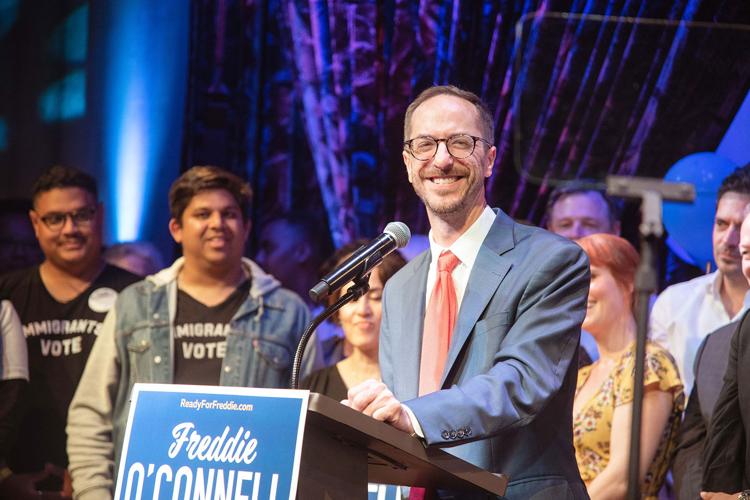
“I want you to stay,” he told a packed room at the Hutton Hotel on election night. Months ago, the earnest appeal became his campaign’s calling card.

Freddie O'Connell election watch party
Before a long list of thank-yous and the required runoff reminder that the work is not over, O’Connell led his audience in chants of “More ’Ville, less Vegas,” another catchphrase that captures his essential promise to get the city back on the right track.
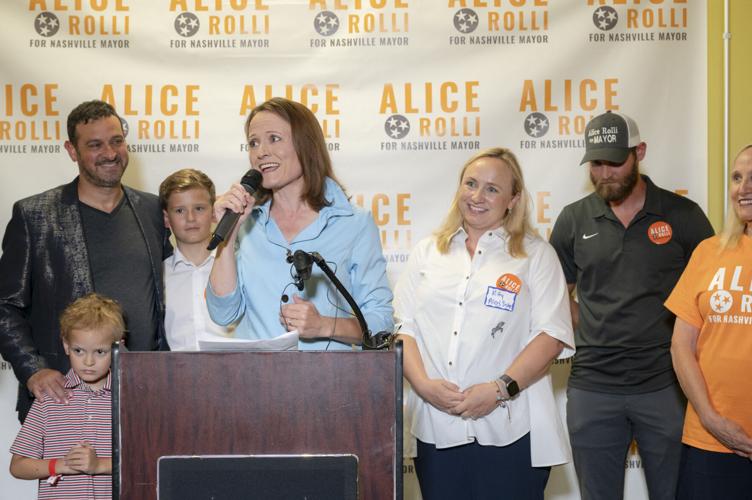
Across town, Rolli kindled a similar fire in her audience at Coco’s Italian Market. Like O’Connell, she built a following attacking the way things have been done, a pathology she blamed on Democratic ideals and the Metro Council.
“Do we want more of the same?” Rolli asked her crowd. “Do we believe that letting the city council run the city is a good idea?” Each question elicited an emphatic “No!”
Her solutions — stronger policing and lower taxes — are ready-made conservative talking points that lack O’Connell’s understanding of Metro bureaucracy. Crime has dropped dramatically in the past couple of decades. The city is actively recruiting police and expanding their tools, including pay raises, while the Metro Nashville Police Department struggles to stay fully staffed and fumbles the rollout of license plate readers. Rolli hopes to solve MNPD’s turnover problem with campaigns of public support for the department and pay raises, a significant fiscal note that will come from a stunted budget. Raising the property tax rate has been a sobering chore for nearly every Metro mayor, ignored at the peril of Metro’s bank account. Barry didn’t, a gamble that hamstrung Metro’s finances a few years later; Cooper convinced voters he wouldn’t, but did when COVID hit, earning the city top marks for its strong financial position. During the campaign and on election night, Rolli maligned the city for shaky finances.
The two will butt heads for the next five weeks. In a city that leans to the left, early polls favor O’Connell. Both are already sprinting to raise and spend money ahead of the runoff vote on Sept. 14, with early voting kicking off Aug. 25.
At East Nashville’s Wilburn Street Tavern, District 5 Metro Councilmember Sean Parker called his race 15 minutes after polls closed. With his comfortable reelection in one of the city’s most important urban districts — seismic shifts have already begun in D5, a direct result of the city’s push to develop the East Bank — Parker, who came into the council in 2019 as an avowed democratic socialist, proved that legislative priorities like bike-ability, walkability, inclusionary zoning, and independent neighborhood businesses matter more than labels. Along with returners like district Councilmembers Kyonztè Toombs, Emily Benedict, Erin Evans, Russ Bradford, Sandra Sepulveda and Courtney Johnston and Councilmember At-Large Zulfat Suara, Parker will become one of the principals in a fresh-faced legislative body.
“It’s a 40-person body,” Parker told the Scene on election night. “You can’t do anything by yourself.”
Joined by a dozen friends, Parker led an election-night bus tour. His route, which favored progressive candidates like Delishia Porterfield, Aftyn Behn and O’Connell, turned into a victory lap. Behn, an organizer and activist with a particular focus on health care access, knocked off former Metro Councilmember Anthony Davis in her state House primary race, a special election to replace Democrat Bill Beck, who died in June. Porterfield narrowly missed out on a guaranteed at-large seat, finishing with more votes than any other candidate headed to the runoff. O’Connell’s victory party was electoral proof of an emerging political axis in the city focused on issues like public transportation, affordable housing, reversing city spending on tourism, ending corporate incentive packages and outspoken support for immigrants who have settled in the city.
Voters in Goodlettsville replaced sitting councilmember Zach Young with Jennifer Frensley Webb, the conservative daughter of wealthy car dealer Bob Frensley. Apart from Shulman, it was the only incumbent knockout of the night. In South Nashville, Alexa Little nearly took out incumbent Ginny Welsch. In District 9, progressive newcomer Stephanie Montenegro came within 35 votes of Tonya Hancock. Come September, 18 districts will have new representation. Districts 4, 11 and 29 all head to September runoffs.

Alice Rolli's election night watch party
With over 10 percent of the vote, Suara was the only at-large candidate to win outright on election night. Others — including at-large incumbent Burkley Allen — will vie for the four remaining countywide seats in the eight-person runoff. Allen, Porterfield and newcomer Olivia Hill all finished in strong positions, clearly separating themselves as candidates in the 21-person field.
Depending on the final district and at-large runoffs, a majority of the Metro Council could be new legislators. It could also be mostly women and have a presence of nonwhite lawmakers that more closely reflects the city’s demographics as a whole, led by a new vice mayor. Either O’Connell or Rolli will come into office having promised big institutional changes. Years of disruptive change have left the city desperate for new hopes. Like so many candidates said on election night, the harder work is still to come.



Post a comment as anonymous
Report
Watch this discussion.
(0) comments
Welcome to the discussion.
Log In
Welcome to the discussion.
Keep it clean. Please avoid obscene, vulgar, lewd, racist or otherwise abusive language. Comments featuring hate speech or threatening or violent content will not be tolerated.
PLEASE TURN OFF YOUR CAPS LOCK.
Be truthful. Don't knowingly lie or mislead.
Be proactive. Use the “report” link on any comment that violates our comment policy.
Share with us. We'd love to hear your feedback.