
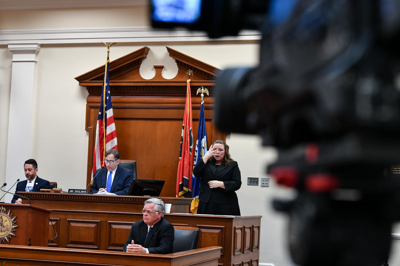


Mayor John Cooper's 2020 State of Metro address in March
Mayor John Cooper is proposing a 32 percent property tax increase as the city faces dried-up revenue streams during the coronavirus shutdown.
Cooper intended to present his budget plan for the next fiscal year at the end of March, but he delayed delivery for a month as his administration scrambled to determine how big a hole the virus might leave in the city’s budget. He went ahead with his planned State of Metro address late last month, though, when he said that property taxes would “sharply increase.”
The mayor on Tuesday submitted his plan — the first since he was elected last year — to the Metro Council, which can approve the budget or replace it with one of their own. Cooper’s spending plan would cut discretionary spending, like grants that go to arts and other nonprofit organizations, in half. Without the property tax increase, the mayor said, mass layoffs of Metro employees would be necessary.
"There is no other way," he said.
The property tax increase, which amounts to $750 for a home assessed at $300,000, would raise $332 million in additional revenues for the city next year. Cooper noted that Nashville's property tax rate still would be lower than Tennessee's other large cities, and lower than the rate in recent years in Nashville, before it was reduced as a result of property value increases. The spending plan includes more than $200 million in cost savings that include freezes on employee pay raises and other management actions already underway.
Metro Council Budget Chair Bob Mendes says amendments or a substitute budget are likely.
"A rate increase was inevitable," says Councilmember Mendes, who has pushed for one in past years. "I'm glad to see we are finally taking that reality seriously."
With a property tax hike likely in the cards, Metro officials have extended the deadline for seniors and others who qualify for tax-freeze programs until July 1.
Early in the pandemic, Cooper instituted a hiring freeze and looked into possible employee furloughs. But the mayor said the cost avoidance would not be enough to sustain the revenue hit.
The revenue losses will affect both the current budget year and the one that begins in July. Cooper asked department heads to cut millions of dollars from the current budget year, including $100 million from Metro Nashville Public Schools. State law prohibits local governments from reducing school spending year-over-year, and MNPS makes up about half of the city’s annual budget.
“While we know it is an unprecedented and difficult year, for too many Metro employees, every year in Nashville has become a difficult year, no matter how the economy is doing,” says Brad Rayson, president of the local SEIU chapter that represents some Metro employees. “It is important for everyone to understand that before the crisis hit, our vital city services were already stretched thin. … We appreciate Mayor Cooper’s work to find additional revenues in the budget and his decision to address the underlying structural revenue problem caused by the historically low property tax rate.”
Cooper estimated the total revenue hit during a 16-month period would approach $500 million.
The situation could worsen even beyond what Cooper called the already “unprecedentedly devastating” hit to Metro revenue. If the return to normal takes longer than expected, the administration estimated an additional $20-40 million in lost revenue, and a second spike in COVID-19 cases in the winter could cost the city more than $100 million.
The mayor called the spending plan “the most difficult budget in Metro history” and cautioned against holding out hope that the federal government would swoop in and bail out the city.
“There is no cavalry coming to the rescue,” Cooper said.



