
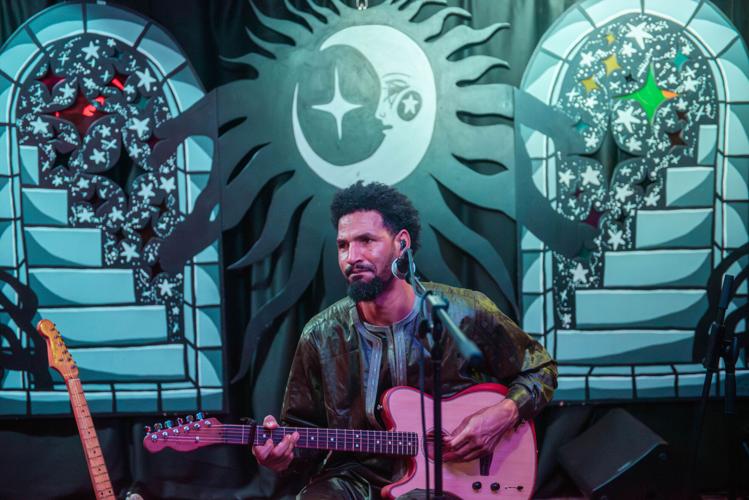


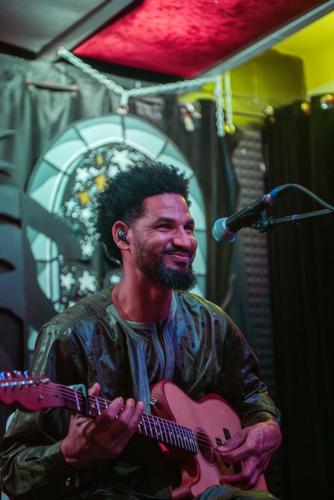
Mdou Moctar at Drkmttr, 5/13/2026
As Wednesday drew to a close, a cool breeze blew the sweet scent of earth warmed gently by the sun — the perfume of a gorgeous spring evening — across East Nashville, caressing windchimes and tickling garbage can lids. Outside all-ages nonprofit venue Drkmttr, a construction crew set up bollards down the middle of Dickerson Pike, and the sequential flash of their safety lights lit a path toward downtown like the entrance to a carnival ride. A little while later, the jackhammering started.
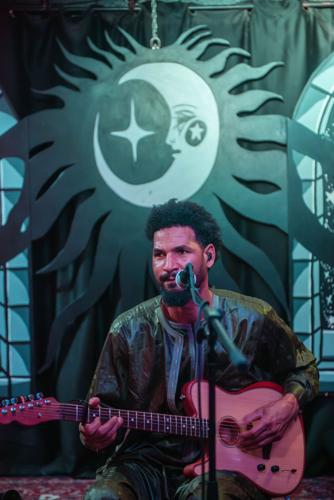
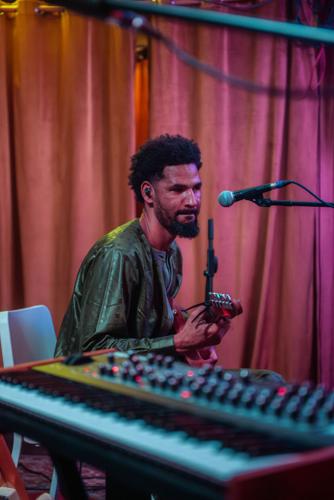
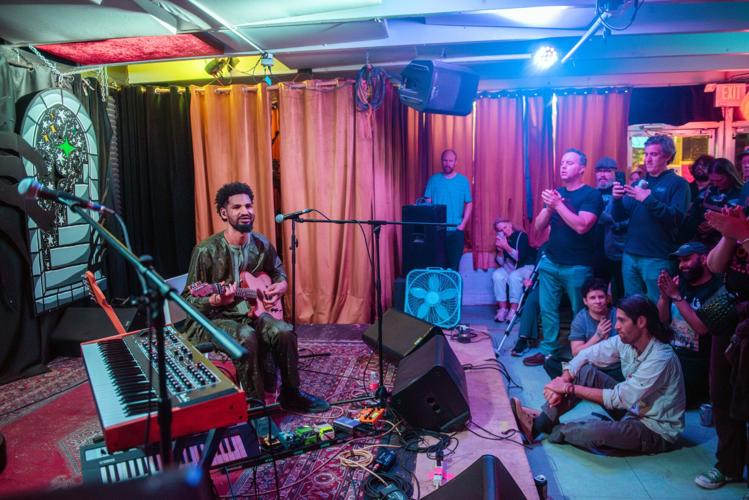
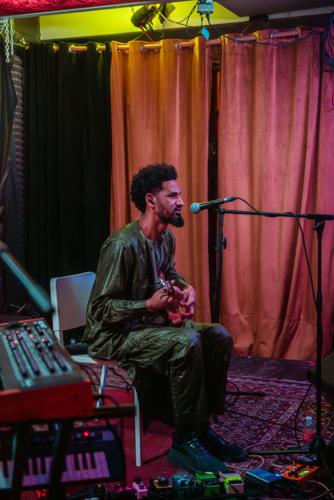
But it didn’t do as much as you might expect to disturb Mdou Moctar’s solo performance. Though the Tuareg guitar wizard from Niger was performing without the three members of his backing band (who have been melting faces on the road under the name Takaat, including at a Nashville stop a few months ago at Random Sample), he was by no means quiet. Moctar also enlisted the sizable audience to keep time for him, and pretty soon the sounds of tormented asphalt vanished beneath layers of drones and quicksilver melodies, all shifting with and against the hypnotic beat.

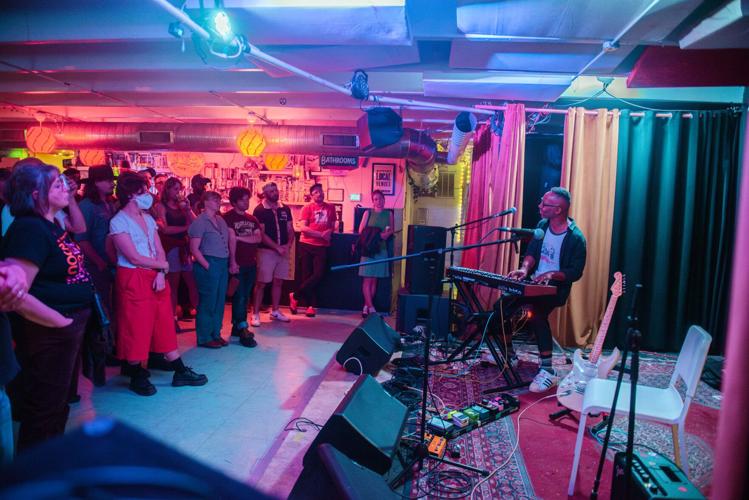
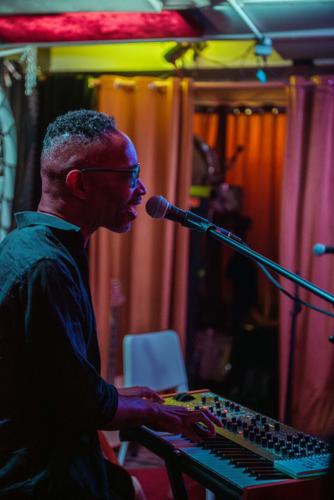
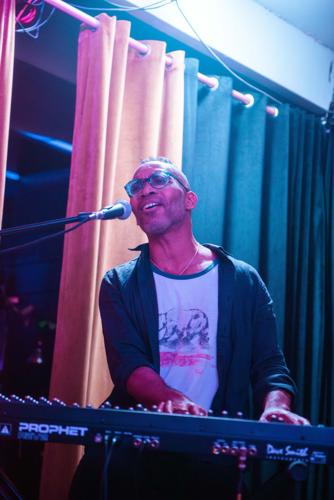
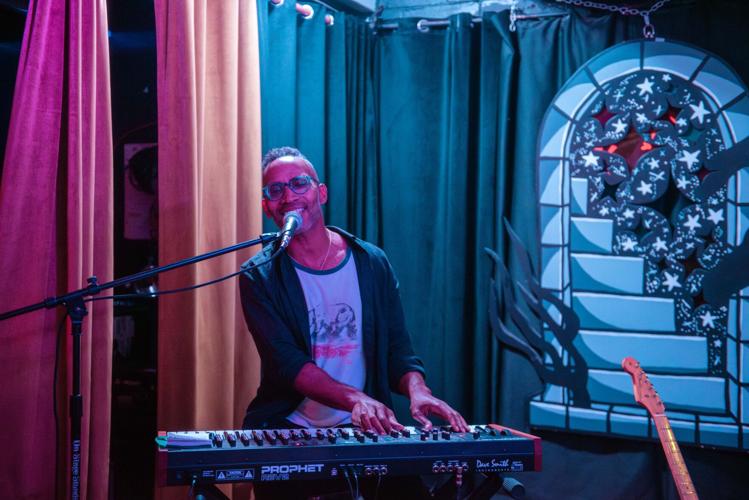
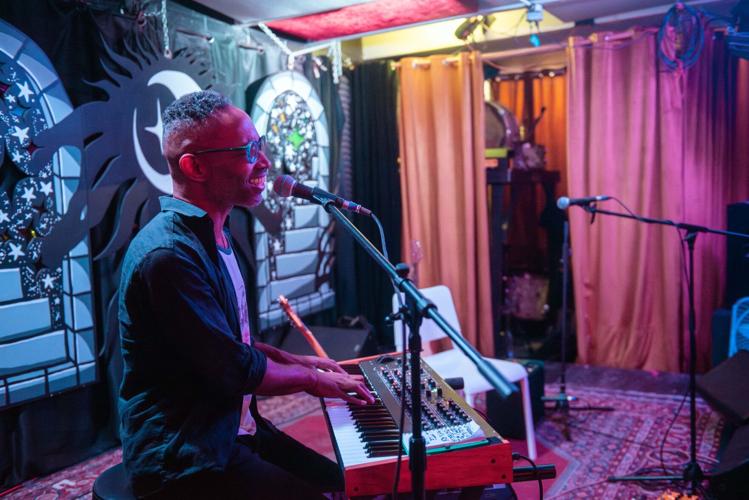
Quincy McCrary at Drkmttr, 5/13/2026
Preparing hearts and minds for this communal happening was Atlanta singer-keyboardist Quincy McCrary, who you might recognize as a onetime member of Jack White’s band. McCrary reminded us it was Stevie Wonder’s birthday; he was in a soulful mood, and you could readily hear the influence of the GOAT of GOATs in his technically dazzling performances delivered without fuss, playful arrangements drawing on gospel and soul, and judicious use of wild synth textures in addition to his electric piano sound. These characterized McCrary’s original songs like “Another Day” (a protest against hate and brutality from Cornerstone, his 2019 album as Qemistry) as well as his selection of covers. Those included Sam Cooke’s sadly extra-relevant “A Change Is Gonna Come,” Jimi Hendrix’s wistful love song “Little Wing” and Mr. Wonder’s own “Knocks Me Off My Feet,” introduced with a special shoutout to the masterpiece Songs in the Key of Life.
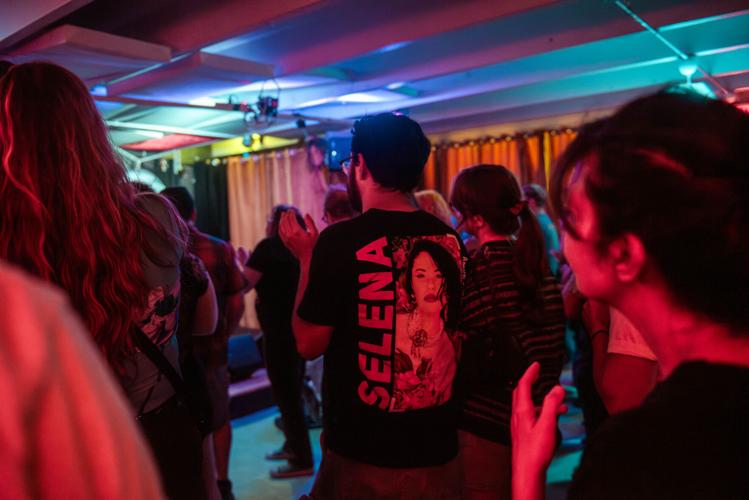
No changeover was needed since both artists had compact setups, and following a brief break, Moctar took the stage to substantial cheers. He gave his thanks and explained that he needed us to be part of the band since it was a solo show. Speaking for myself (though I imagine a lot of us were in the same boat, except for that one guy who brought his own hand drum), I was prepared to just spend the night sitting at the master’s feet while he unraveled the mysteries of the guitar universe. Still, I was game to clap, but this was more than garden variety, is-everyone-still-awake-out-there crowd participation. Moctar drew us directly into his performance, letting us experience some of what it’s like to internalize the intoxicating pulse of desert blues. And he was definitely paying attention. At one point, we lost the beat; laughing, Moctar asked us to start the song over again with him.

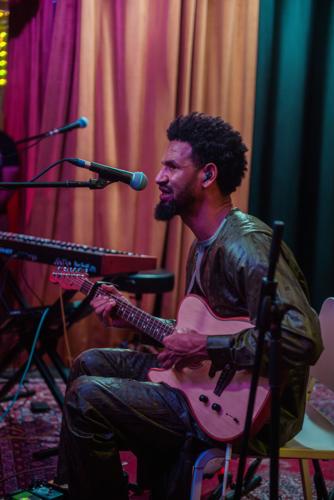
Mdou Moctar at Drkmttr, 5/13/2026
At the top of his set, he played an acoustic-electric guitar fed through his stack of effects pedals into a small amp. The sound was nonetheless massive, with the combination of delay, flanging and gain right on the edge of feedback blending into a thick texture that sometimes felt like listening to a guitar on tape being played backwards. Using a deceptively light touch for such nimble music, he worked with the sound like a skilled rider works with a horse (or in the case of the Tuareg people, a camel). Toward the end of the night, he plugged in his trusty Stratocaster and sharpened the sound up a bit, and for his encore, he fired up a drum machine and went into full-throttle Agadez wedding party mode.
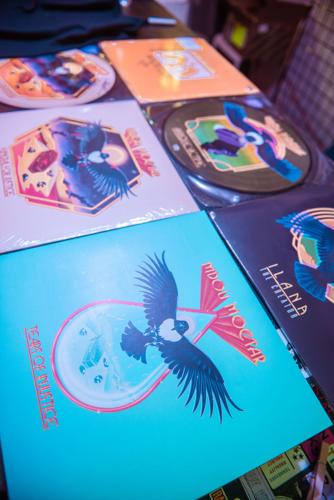
Moctar’s music keeps evolving, and last year’s Tears for Justice (his most recent release) is an acoustic reimagining of the album before that, 2024’s very electric Funeral for Justice. Look up the translations of the lyrics and you’ll find the songs offer sharp commentary on the lasting damage European colonialism did to Niger, how Tuareg culture is threatened by modernization and more, in addition to songs about love and other aspects of life. Except for anyone at the show who memorized the songs or spoke fluent Tamasheq, we had to rely on the tone of Moctar’s singing and playing for an indication of what a given song was about. But even that act of listening differently, done together with a room full of mostly strangers, felt important at this time when social division — increasingly in the form of naked racist or homophobic hate — is treated as political capital and wreaking havoc practically everywhere you turn. It’s a beautiful thing we were lucky to get to do together, even if just for an evening.
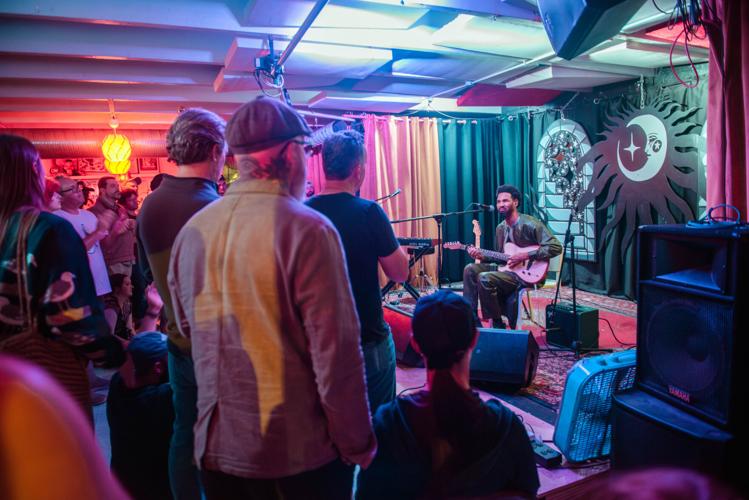

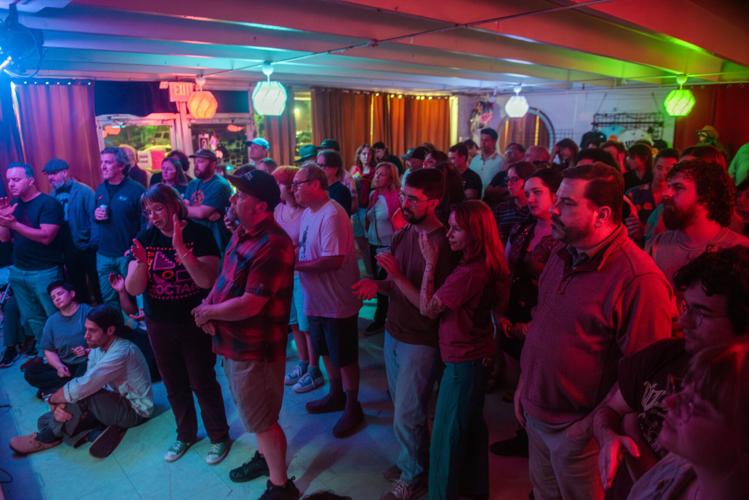
The Spin: Mdou Moctar at Drkmttr, 5/13/2026
With Quincy McCrary
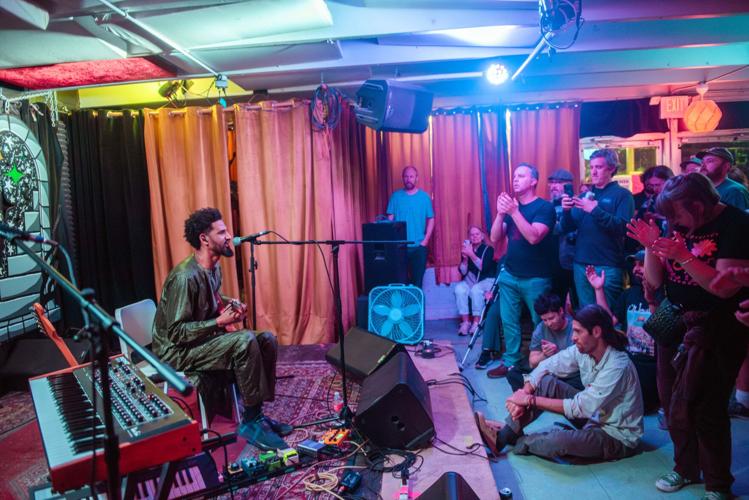
Mdou Moctar at Drkmttr, 5/13/2026





Post a comment as anonymous
Report
Watch this discussion.
(0) comments
Welcome to the discussion.
Log In
Welcome to the discussion.
Keep it clean. Please avoid obscene, vulgar, lewd, racist or otherwise abusive language. Comments featuring hate speech or threatening or violent content will not be tolerated.
PLEASE TURN OFF YOUR CAPS LOCK.
Be truthful. Don't knowingly lie or mislead.
Be proactive. Use the “report” link on any comment that violates our comment policy.
Share with us. We'd love to hear your feedback.