
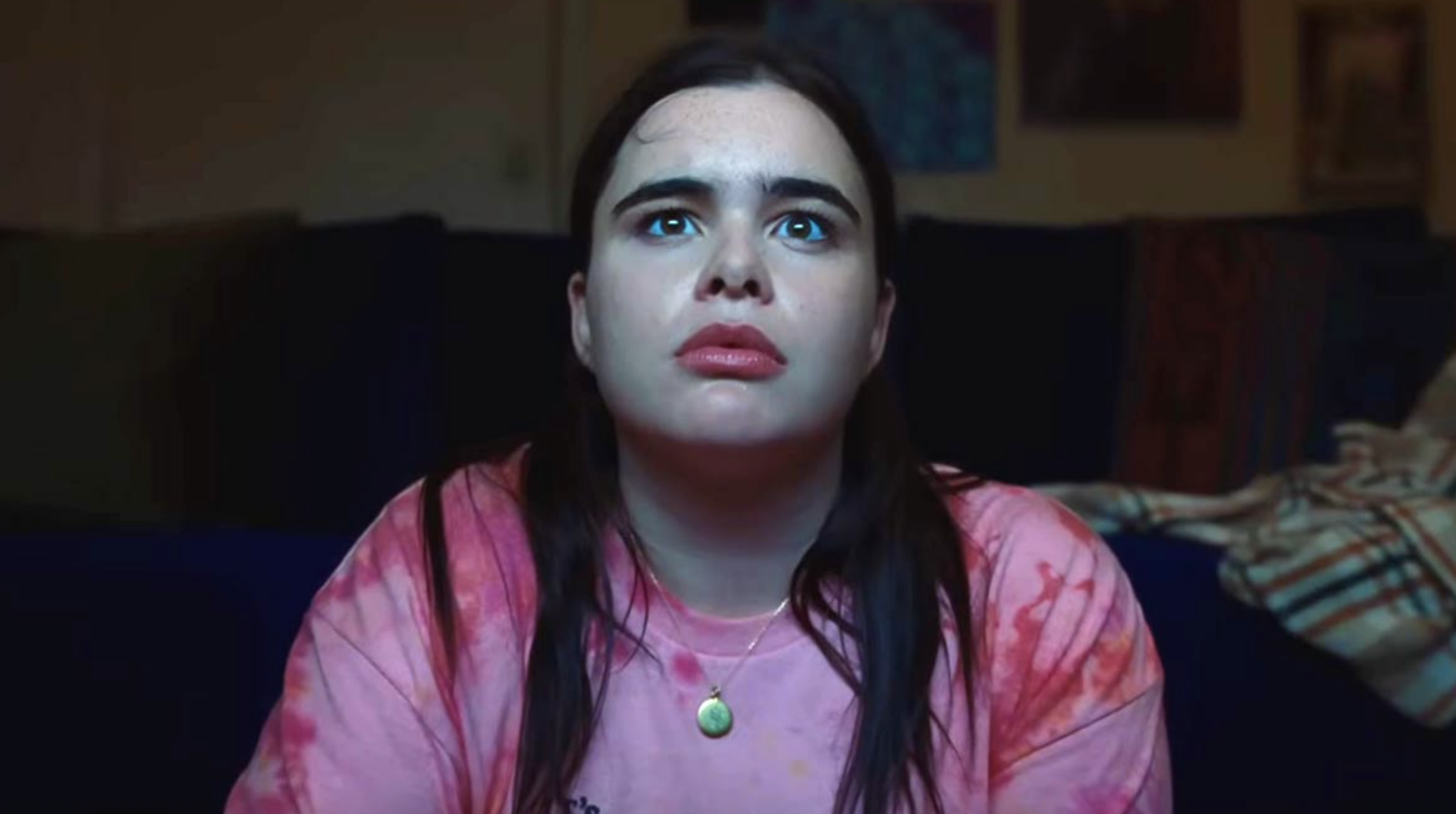

There is a certain point at which irony starts to fail you. And for me that point was watching this particular film, on the evening of April 7, about fascists exploiting technology and personal data records to foment executions for the purposes of gaining maximum attention. And though this exegesis/remake/rethinking of the legendary Mondo Movie artifact Faces of Death was written and filmed before the 2024 election, its connection to what almost happened in Iran is inescapable. It isn’t a stretch; it’s hardly even a shrug to get from there to here, when you think about the work that has been done to desensitize us as a species.
No one mentions that the difference between the original Faces of Death and the modern era of death clips is that, for quite some time, you had to seek this sort of thing out. The chances of encountering such a thing accidentally were infinitesimally small. But now ... not so much. The age of Budd Dwyer and Daesh beheading videos has been upon us for a while now.
Kino is the hottest new social media/video platform, and it has quite a large staff devoted to staying on the cutting edge of things. Day in and day out, you’ve got folks whose job is to evaluate submitted videos and determine if they are acceptable for the public. Violence (to a certain extent) is fine, while videos teaching about proper naloxone administration or how to put on condoms get removed (for drug use and sexual content, respectively). It’s basically the aesthetics of the MPA, but carried out in nondescript Florida cube buildings by people who get paid not to ask too many questions. “Give the people what they want” is a line that recurs in the film, more often than it honestly needs to, though each character who says it is coming from a different place.
Margot (Euphoria’s Barbie Ferreira) is committed to her job as a content evaluator. She’s been on the business end of the social media video game in the past, so she’s got a sensitivity for the kinds of horror that can slip out into the ether and take hold. And when she starts finding intricate videos based on vignettes (and including narration extracted) from 1978’s Faces of Death, she doesn’t immediately clock them as actual snuff — it’s the blend of the banal and the baroque that makes her take notice.
By the time she realizes that someone out there in Jacksonville is undertaking an unholy serial murder project, it may already be too late. But the big question — another aspect of this screenplay from CAM and How to Blow Up A Pipeline filmmakers Daniel Goldhaber and Isa Mazzei that is way too relevant because of the recent weaponization of judicial and executive process — is what happens when an attempt at whistleblowing becomes part of the publicity campaign for something truly malign? What happens when there’s no such thing as negative attention anymore?

The eco-thriller deploys an ensemble cast and opens this week at the Belcourt
There’s a preponderance of icky in the digital air that the film smartly focuses on in its first half, a procedural that shares DNA fragments with the legendary works in the Films About Snuff canon (think Red Rooms, The Art of Dying and Emanuelle in America). The specifics of Margot’s work seem to be dialoguing with two arthouse sleepers, Atom Egoyan’s 1991 feature The Adjuster and Prano Bailey-Bond’s 2021 film Censor, and the path between justice and madness she finds herself on is pitched right through the middle of the 1999 Nicolas Cage vehicle 8mm with a dabble of Strange Days. Ferreira gives her all, in a horror performance rooted in spaces that aren’t that often explored in depth. From the supporting cast, Sharp Objects’ Aaron Holliday gets a couple of scenes (and Julio Torres hair) to make an interesting impression as Margot’s roommate, Josie Totah (from the gone-too-soon Saved by the Bell reboot) takes the mean girl influencer archetype and makes it connect, and Charli XCX delights in being an antisocial burnout who believes in vaping and sandwiches and not another goddamn thing.
Unfortunately, where the film kind of trips on its own objectives is in its second half, when the mad killer (Stranger Things’ Dacre Montgomery) steps in and becomes a main character. It’s not really a mystery as to who he is (and honestly, points to Mazzei and Goldhaber for recognizing the fear-based, mercenary vibe of cellphone stores and the experience they offer these days) or what he’s doing (and he’ll tell you at several points himself, in case you’re not picking up on where things are coming from and heading to). But it diminishes a lot of the tension that had been building up to that point.
The film does manage to spin a couple of different, unexpected kinds of tension on the back end. It’s just that Montgomery isn’t very good in this part. He needs to be the boogeyman, Clavicular, bobo Hannibal Lecter, Mark Lewis, Patrick Bateman and Susan Louise Lorincz all at the same time. And while he admirably delivers on the new trope that genuinely evil people get styled like they’re part of DOGE (see also the surprisingly delightful and trippy Pizza Movie), there’s only a couple of moments where this Arthur Spevak really becomes something memorable.
But when you sum it all up, this is a film that has something on its mind, and it’s aiming to be something more than you might expect from a movie steeped in the iconography and legacy of something like Faces of Death. (It’s becoming really apparent that the legacy of the 2020s in horror cinema is that it’s the ’80s all over again, and being queer is a death sentence. And the problem with this current moment in horror is that it doesn’t matter if you’re doing it for the lulz or if you’re trying to point out that this is a fucked-up thing to go back to, because it reads the same on screen either way.) It’s spry and has a few shocking turns, it’s the most realistic Florida movie since Zola, and Ferreira really puts it all on screen. I’m really interested in how it’s going to play for the contemporary youth, the ones who’ve grown up with every possible atrocity just a click away.
There’s a moment in an episode of the animated show Duckman when the titular character asks his children what they’re watching, and the response is “the Faces of Death Channel. All day, all night, all snuff.” And sure, that’s an edgy, pre-Internet 2.0 mid-’90s joke. But damn if it didn’t see something coming on the horizon, defining the future in a throwaway moment that grows way too accurate with each passing day.



Post a comment as anonymous
Report
Watch this discussion.
(0) comments
Welcome to the discussion.
Log In
Welcome to the discussion.
Keep it clean. Please avoid obscene, vulgar, lewd, racist or otherwise abusive language. Comments featuring hate speech or threatening or violent content will not be tolerated.
PLEASE TURN OFF YOUR CAPS LOCK.
Be truthful. Don't knowingly lie or mislead.
Be proactive. Use the “report” link on any comment that violates our comment policy.
Share with us. We'd love to hear your feedback.