
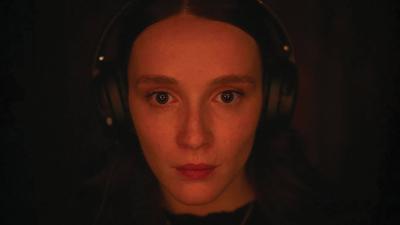

If what they say about Ludovic Chevalier is true, then he’s one of the worst people alive. If this man — the accused criminal at the center of Red Rooms — is the person responsible for the torture, assault and murder of three teenage girls for the highest bidder in the nastiest corners of the internet, how do you even conceive of such actions as something a human being could do?
If you wanted to, you could describe the invention of photography as a way for humanity to claim some dominion over death. Shortly after its inception came the first images of death and atrocity, and that darkness has only become more present as technology and the ability to share has grown easier. It doesn’t matter if you don’t want to see it, because there’s so much being tossed around in the collective data stream that it keeps popping up. Somehow, we ended up living in a Faces of Death culture, and it never seems to get any better.
While it’s not fair to say that everyone involved in cryptocurrency or NFTs is evil, everyone involved in this kind of snuff-on-demand has adapted to these new and unregulated forms of commerce, to the surprise of no one. Pascal Plante’s new film Red Rooms is very interested in this aspect of modern life. There’s a little bit of 8mm here, and Emanuelle in America, and Benny’s Video — but Plante isn’t interested in pushing the envelope of fake snuff. All the evidence of these horrors is kept in the audio realm, leaving the mind to dig into the depraved.
Here’s a question for fans of true crime, not just as regards the specifics of this film, but the genre in general: Are you drawn to it because you want to solve a mystery, because you want to learn from the tragedies of the past in order to recognize the present, or because you want to learn how to get away with it? That’s not to suggest that there’s something malicious in being a fan of true crime. But it’s always good to understand why something appeals to you. And our protagonist Kelly-Anne (Juliette Gariépy) is her own kind of mystery. She’s not proclaiming Chevalier innocent due to procedural errors or because of conspiracy theories, and she’s not in the courtroom to show support to the families of the victims. “I was curious,” she tells a reporter when asked why she’s attending the proceedings — though curiosity doesn’t explain why she’s finding holes-in-the-wall near the courthouse to sleep in to ensure she can get in for the next day’s testimony.
Clementine (Laurie Babin) is an archetype we recognize; she’s fired up at the system, at what she perceives is the obvious scapegoating of a man who couldn’t possibly be what the government claims. She has no resources except boundless passion, and she has a charm that works even on Kelly-Anne, with the two becoming colleagues of a sort. And if Kelly-Anne is the elegant and inscrutable screen, Clementine is an unfiltered and immediate response to whatever she experiences. She’s alive, in the moment and all messy edges.
Kelly-Anne, professionally, is built on physical presence. Modeling is still as concrete a job as one can have, and this grounds her in the tactile, even as her virtual poker winnings seem just as much a part of who she is — or at least how she’s living. She’s not an easy personality to understand, and she keeps her cards, literally and figuratively, close at hand. She’s like a Paul Schrader protagonist, going through a private trial of her own even as she is drawn further and further into the circumstances of the Chevalier trial. Gariépy delivers one of the greatest performances of the decade. Kelly-Anne is handy with tech, enough to where she’s cultivated and built her own AI personal assistant (after an abortive first go when the system, left to its own devices, became racist with no value for human life). She knows how to use the [Stewart and Roald voice] “dark web” to find the things she needs, and she’s drawn to what is unfolding in this Montreal courtroom, and we see from the very beginning that the future holds a collision.
There’s not a specific Québecois French phrase for “dark web” or the titular Red Rooms, and it feels like a subtle indictment hanging in the air that these concepts are so rooted in mercenary economics that only the English language could define. Red Rooms is an emotionally conflicted journey that will take up space in the back of your skull long after the film is over, as classy as one can get with a dip into this unspeakable kind of horror. Though the movie isn’t exploring material all that different from a prime-time police procedural, it is engaging with the horror — and the rot that it represents — to an extent that TV simply wouldn’t bother. Not for everyone, to be sure, but gutsy and visceral in unexpected ways.



