


Horror movies frequently reflect on our most existential fears, as individuals and as a society. But they also often expose us to unsettling images and uncomfortable ideas, helping to drive those fears — it’s only fitting that so many horror movies are about horror movies themselves. Even if your tolerance for terror and trauma is high, there’s probably some haunting on-screen image that has wormed its way into your brain, plaguing your thoughts and infecting your dreams.
Metatextuality and reference have been the stock-in-trade of scary Hollywood movies since at least Scream, but horror’s self-reflective turn has intensified over the past decade with the development of what’s been described as “elevated” horror — movies from Get Out to Hereditary to The Babadook that use the genre to very explicitly explore meaty themes and social issues, often directed at a more arthouse-going, Oscar-oriented audience that might not normally take horror seriously. The new horror film Censor, from emerging Welsh filmmaker Prano Bailey-Bond, is — as its title suggests — very self-consciously about the content of horror movies.
Enid is a film censor in 1980s England, tasked with viewing all the bits of horror movies that are deemed too dangerous for general audiences to see. At that time, thanks to the emergence of the VCR, the U.K. was flooded with a wave of so-called “videonasties,” cheap and generally incredibly violent horror movies distributed directly to video, and eventually deemed a public menace by politicians. As flashbacks are quick to inform us, Enid is still grappling with the trauma of her sister’s disappearance as a child, and there’s an implied link between her desire to protect the eyes and minds of moviegoers and her failure to save her sister.

She’s fastidious and thorough in her work, but one day, everything goes wrong. A man has committed a grisly murder that’s uncomfortably close to a scene that Enid didn’t cut from a film she recently reviewed. As one thread is pulled, Enid’s entire reality begins to unravel; she’s assigned a film with uncanny parallels to her own childhood trauma, and becomes convinced that an actress is actually her still-missing, presumed-dead sibling. There are clear parallels to films like Brian De Palma’s Blow Out and Peter Strickland’s Berberian Sound Studio, both of which are about horror film technicians driven mad in part by the images they’re forced to view over and over again, but a little bit of The Ring too — much of the momentum is driven by Enid’s meticulous reviewing of ghostly videotapes.
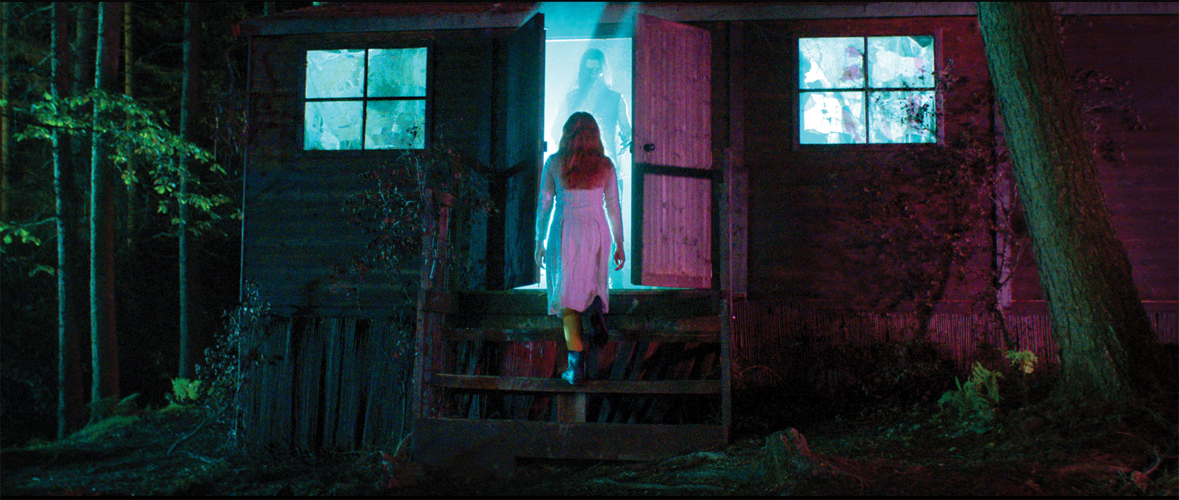
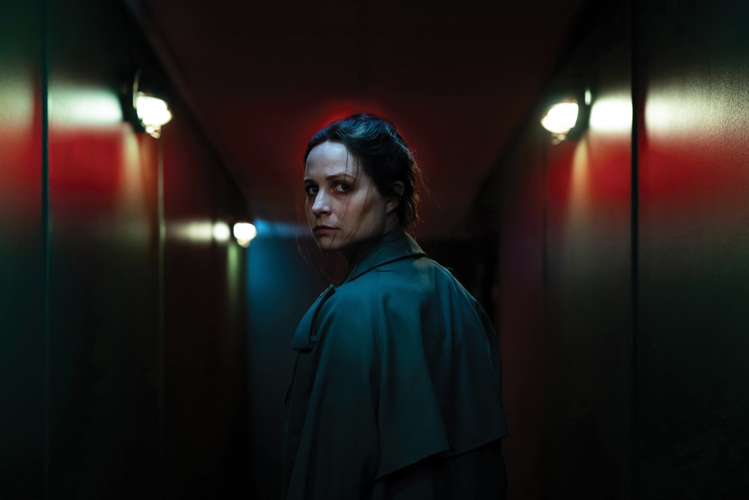
Censor does intersperse footage from real videonasties, but for most of its runtime, it has little to do aesthetically with the films that inspired it. The camera is generally guarded, a little stern, with a pronounced color palette that recalls the relative elegance of Dario Argento’s Suspiria more than Z-grade, direct-to-video nightmares. It’s a largely guarded and clinical film, psychological in motivation and sparing in its scares, but Censor suddenly makes a pivot to a kind of garish, plastic violence more evocative of videonasties. Without revealing too much, you might just say the cutting Enid does as a censor suddenly becomes much more real — the film’s ending is polarizing, but at least deserves credit for going for broke more than the film’s previous 70 minutes do, unrestrained and imaginative enough to suggest Bailey-Bond’s potential as a filmmaker.
In some moments, Censor feels like it genuinely wants to reckon with the violence of genre movies; in others, it blatantly takes the piss out of those who’d blame societal ills and structural issues on violent movies. Though it’s hard to miss the satirical motivations of its commentary, Censor is ultimately still a film about someone who loses their mind because they watch too many scary movies. Its world is one in which film sets are graveyards, directors are manipulative masterminds, and actors do real violence — maybe it’s the nightmarish delusion of a mad conservative who is too convinced of media’s ability to drive us to action, or maybe it’s just a muddled, unclear movie. Censor might be colorful on the surface, but thematically, it’s like a staticky tape of pure white noise.



