
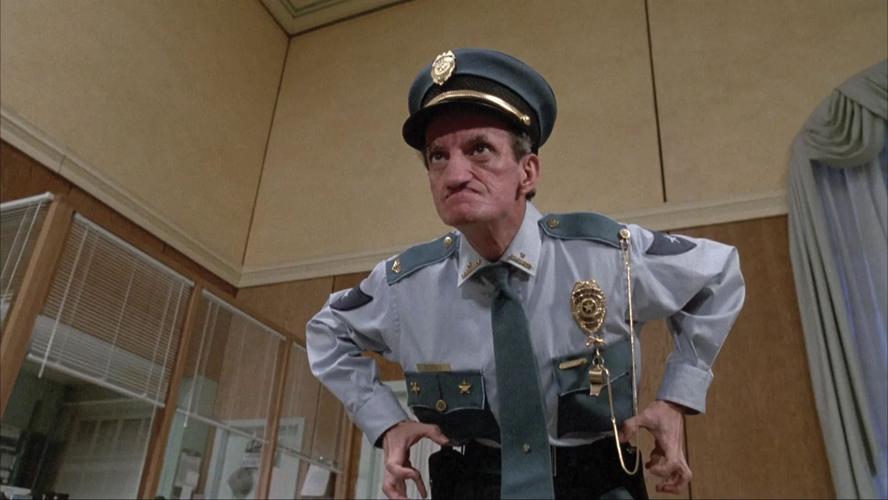

Martin Jerome "Jerry" Strobel
WSM radio manager, ball player, Pappy
During his 30-year tenure with the Grand Ole Opry — from 1970 through 2000 — Jerry Strobel did everything except sing onstage, though it was often said by those familiar with his clear, bright, classically trained tenor that one of the greatest voices at the Opry was in the wings or backstage. Among Strobel’s positions were media and communications, promotions, operations and eventually Opry House manager. During baseball season, the small television in his office was always tuned to a game, and other fans of the sport knew they could wander back there to catch an inning or two.
Strobel’s love of the game began while he was growing up in Germantown, blocks from minor league park Sulphur Dell, where he and his younger brother Charlie could often be found when they could scrape up the quarter admission. When he wasn’t at Assumption Catholic Church doing everything from painting walls to assisting with mass, Jerry was playing ball. He often joked, “If it rolls or bounces, I can play it.” The Father Ryan graduate went on to Vanderbilt, joined the baseball team and became one of the original Vandy Boys.
A gregarious man rarely seen without a smile on his face, Strobel loved events that brought people together. He was a founder of Oktoberfest (Nashville’s oldest festival) and Fan Fair (now CMA Fest). A natural people person, Strobel was well-suited to marry into another well-known Nashville Catholic family — the Holzapfels. Strobel’s wife Pat was one of 15 children; the couple had six children and 17 grandchildren, to whom he was simply Pappy. —Kay West
Michael Kilbane
Journalist, TV veteran, reliable friend
On the afternoon of June 3, 2025, they pushed a half-dozen tables together in the center of Dalts for the biggest gathering of Nashville TV veterans in years. We were there to raise a glass and speak tribute to Michael Kilbane, someone the viewers never would have recognized — yet they all owe him a mighty debt.
On the flow chart, Kilbane was an assignment editor. But that title doesn’t begin to explain his vital role. He had a Rolodex as deep as the Atlantic, and an understanding of Nashville history and culture that could have translated into a Ph.D.-level course. Kilbane would connect the dots on news stories before anyone else was even beginning to look at relationships, conflicts or potential corruption. And he could get people to talk, a priceless talent for which there is no substitute. The greatest words you could hear from Kilbane on the phone or on a barstool were, “I think I’ve got a story for you.”
After stints at WSMV and WKRN, he took his talents to Diamond P Sports, and for the last 18 years of his life, Metro Nashville Network (aka Channel 3). Vanderbilt fans knew him by name as an usher at all sorts of sporting events. Even the NFL counted on Kilbane’s reliability and precision. He wore the orange sleeves at Titans games that signaled to referees to go to commercial break. Michael Francis Kilbane “went to break” on May 26, 2025. At 62, he was far too young to die, but I know for sure that he had truly lived. —Demetria Kalodimos
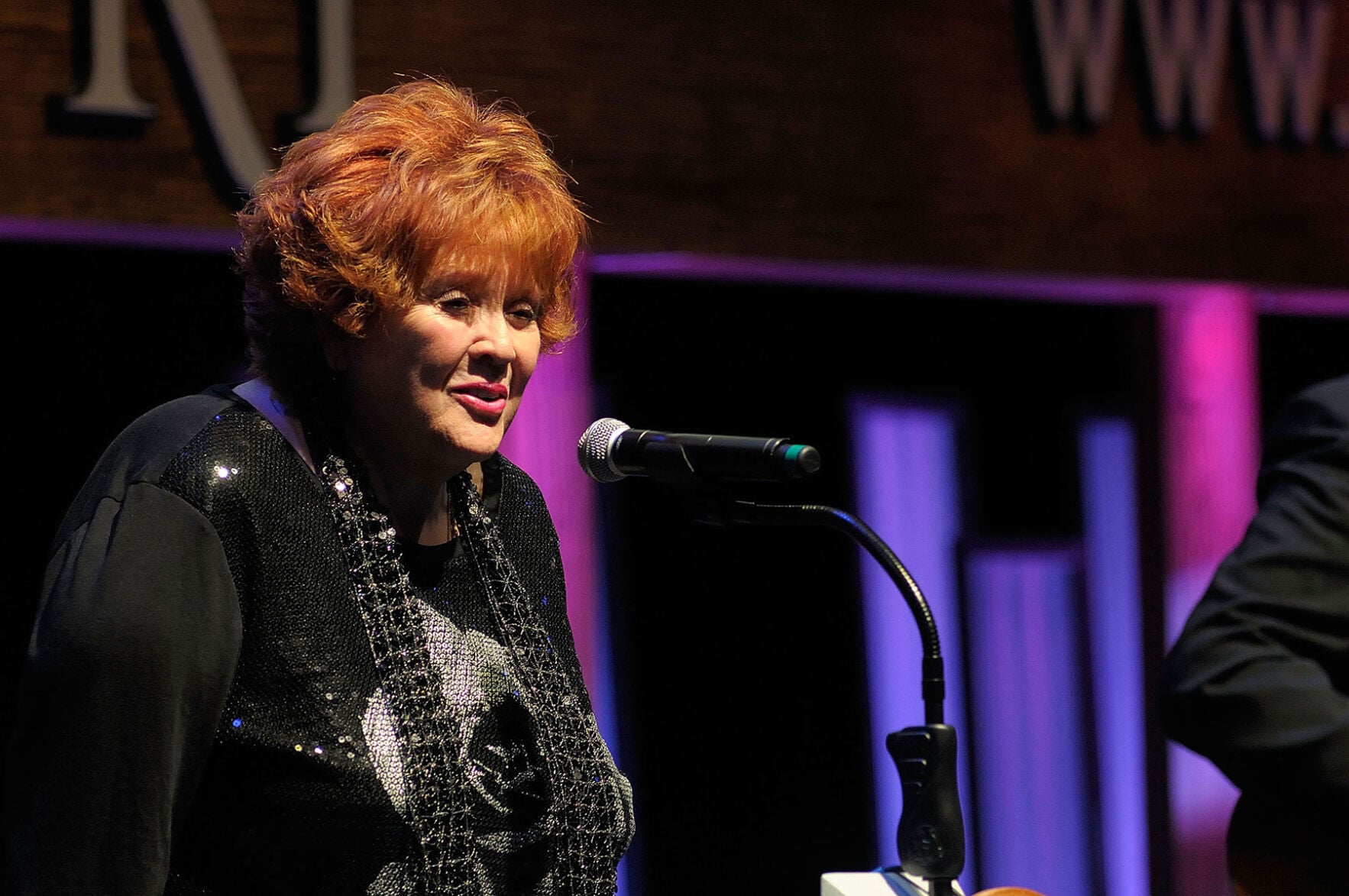
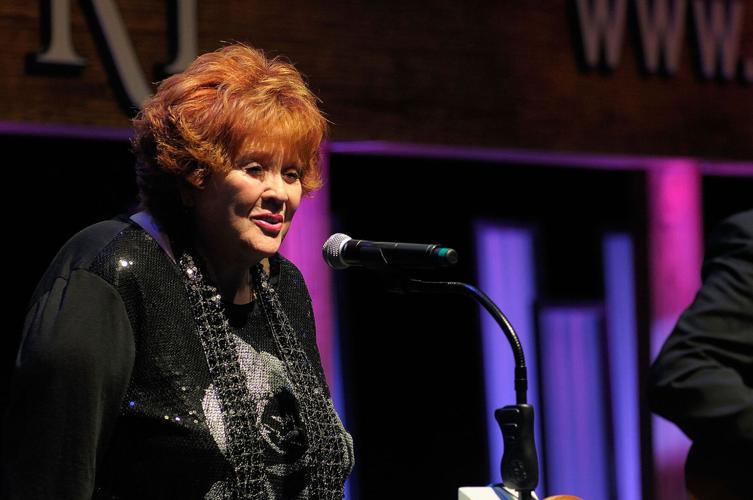
Lulu Roman
Lulu Roman
Entertainer, singer, Hee Haw star
Lulu Roman appeared on the first episode of Hee Haw when CBS launched it in 1969 as a country counterpart to Rowan & Martin’s Laugh-In. And she appeared on its last when the syndicators finally gave it up in 1993. She wasn’t on every episode in between: After a 1971 drug arrest, she was dropped from the cast. But she got clean, found Jesus and convinced the producers to let her return to the Kornfield in 1973. Brash and brassy at times and with perfect deadpan timing at others, memorable in supporting roles and bold enough to carry the lead, she was the kind of versatile cast member sketch shows love to have.
An orphan who went unadopted, Roman struck out on her own as an adult, developing a nightclub act in which she was billed as “The World’s Largest Go-Go Dancer.” She was very popular in Dallas, where she worked in clubs owned by Jack Ruby. She was spotted by Buck Owens, who became a friend, and it was Owens who pushed for her inclusion in the Hee Haw cast.
In her later years, Roman added gospel singing to her repertoire, and she recorded with many of country’s leading lights (including Dolly Parton). She was inducted into the Country Gospel Hall of Fame in 1999. Roman died in April at age 78. —J.R. Lind
Christine French Cully
Literacy advocate, editor-in-chief of Highlights
For many years, copies of Highlights magazine were found in the waiting rooms of every pediatrician’s office, keeping anxious parents and feverish children occupied long before eyes were glued to tiny screens. During her decades with the company — starting in 1994 — Christine French Cully rose to editor-in-chief and steered the beloved and venerable publication into modern times. She guided the company’s expansion from one magazine to three, launching High Five, a publication designed for preschoolers, and Highlights Hello, a magazine for babies and toddlers.
Cully personally oversaw the company’s longstanding tradition of answering every letter received from a child — more than 35,000 annually — and in 2021, she authored the book Dear Highlights: What Adults Can Learn From 70 Years of Children’s Letters.
She moved to Nashville in 2018, where she provided literacy tutoring to public school children in Nashville. —Kay West
James Carlyle “Jim” East
Father, writer, newspaperman
Jim East brought wisdom and experience from a bygone era. A dyed-in-the-wool print journalist, he moved between newsrooms in Virginia, Louisiana and California before finally landing in Tennessee. Here he covered the city with broad range at the The Tennessean, retiring from the Nashville paper in 2002. His pen stayed active in Franklin, where East kept writing for Franklin’s Review Appeal and the Williamson Home Page.
He loomed large as a keeper of old-school media discipline, accuracy, honesty and commitment, and reserved special attention for his dog Patches. East died in February at 81, leaving behind a son and extended family. —Eli Motycka
Dolores Seigenthaler
Singer, radio personality, wife of John Seigenthaler
Before she became Mrs. John Seigenthaler in 1955 — in those days, married women were typically identified by their husband’s name — she was Dolores Watson, a popular vocalist of stage, radio, recording and nascent television. Born in Kentucky and raised by her mother in Georgia, she pursued a professional singing career from a young age. Winning the Southern Radio Queen Contest, she came to Nashville in 1946 to sing with Owen Bradley’s dance band at the Club Plantation. Hired by WSM radio in 1948, Watson — described by Nashville Banner entertainment columnist Red O’Donnell as a “comely carooneress” — was the featured singer on WSM’s Sunday Down South, broadcast nationally on NBC Radio. In 1950, WSM launched Nashville’s first television station, and she was on its daily morning show The Waking Crew and Sunday night’s Music City USA, and remained in high demand for radio shows.
In 1953, a cub reporter for The Tennessean was assigned to cover a Centennial Park bandshell Father’s Day concert where Watson was performing. John Seigenthaler was so taken with Dolores Watson he finagled a blind date. It wasn’t until later he discovered how blind it was — Watson thought she was meeting a Tennessean photographer, not a reporter. Despite having recorded “Better Dead Than Wed” for Decca Records in 1950, Watson agreed to a second date; the courtship led to marriage. She continued singing until the birth of their son, future newsman John Michael Seigenthaler, and she wound down her career to raise him. She was ever by her husband’s side as he built a legendary career in journalism, and her classic beauty, grace, elegance and radiant smile endeared her to all she met, all over the world. After John’s death in 2014, she brought the same warmth to her volunteer work with Room In The Inn and Ladies of Charity. —Kay West
James Pratt
Reporter, storyteller, breaker of news
I remember James Pratt this way — dressed in a baggy gray suit, along with a nice shirt and tie and worn penny loafers, hanging out in a press conference in the very back row, not asking anything. The reason he’s not asking is because he’s the very reason for the press conference — either on his own, or with a byline shared with another good Tennessean reporter, he has authored a top-of-the-fold piece about the person featured at the press conference that has caused them to come and explain. Pratt has nothing more to ask. He knows who’s done what.
This was repeated time and again.
It was his reporting on the failure of the Butcher banking empire in the ’80s and the shenanigans of Nashville Mayor Bill Boner shortly afterward that brought him most acclaim. He began at the paper as a copy editor, but as they say, cream rises. After his time at The Tennessean, Pratt went to work for Sen. Jim Sasser in D.C., jumped over to be comms director for the Senate’s budget committee, spent some time at the well-connected Ingram Group, and then founded his own government relations firm.
My most distinct recollections of James came while I was a reporter at the Nashville Banner, competing against him. We weren’t supposed to fraternize with the enemy, but he was such a great guy who loved to tell a story that ended with a big laugh. He took it all seriously, but at another level he loved to make fun of it all. He had a great mind, and when you saw his byline, you could do nothing else at that moment but read what he’d written. —Bruce Dobie

Bill Byrge
Bill Byrge
Character actor, comedian, friend of Ernest
The Ernest P. Worrell acting troupe rivals the regulars of Scorsese and the Coen brothers when it comes to character-actor uniqueness. One of the key members of the Worrell ensemble, longtime Nashvillian Bill Byrge, died in January at age 92.
Born in East Tennessee’s Campbell County, Byrge — better known to movie fans as the nearly silent Bobby — spent most of his life in the Nashville area. After appearing alongside fellow beloved Music City funnyman Gailard Sartain in the “Me and My Brother Bobby” series of local commercials, Byrge landed a role in the short-lived children’s sketch series Hey Vern, It’s Ernest! From there, Byrge was formally inducted into the Worrell family, making small but always memorable appearances in four of Jim Varney and company’s Ernest movies. —Logan Butts
Candance “Candy” McCampbell
Reporter, editor, business pioneer
The eldest of eight siblings, Candy McCampbell was an aunt to many. A 1968 alumna of the University of Tennessee, she served as editor of the school newspaper there. Having started her career at The Tennessean just out of college in 1969, she became a trusted adviser to legions of young journalists and peers as the most tenured professional in the organization.
McCampbell could perform most every task at the paper, including writing features and personal finance stories and editing the city and real estate sections. She ultimately became The Tennessean’s first business editor. She was proudest of helping break the news in 1985 that the Saturn Corp. would open a car-manufacturing plant in Tennessee.
McCampbell was a trailblazer for women journalists and is remembered as someone who took her work very seriously without taking life too seriously. Thirty-three years in journalism was enough for McCampbell, who would go on to volunteer her time at Second Harvest Food Bank and the Frist Art Museum information desk. —Hannah Herner
Jack Corn
Photojournalist, educator, husband
Jack Corn was a documentarian, spending more than 70 years using photography to capture everything from Appalachian coal mining to country music. A U.S. Air Force veteran, Corn received early training from the Air Force photo school at Lowry Air Force base in Denver. In 1953, he began work as a staff photographer for The Tennessean, where he worked for 23 years, eventually becoming chief photographer. During his time at the newspaper, Corn photographed twin boys born without a test for phenylketonuria (PKU). As a result of his photo story, Tennessee lawmakers passed legislation requiring that all babies undergo PKU testing at birth.
Corn dedicated much of his career to educating future generations of photographers. He spent two years teaching photography at Nashville State Technical Institute (now Nashville State Community College). He spent 11 years working in the photojournalism department at Western Kentucky University, then joined the staff at the Chicago Tribune as a consultant for the photo department, later becoming director of photography.
He contributed freelance work for a variety of publications, including The New York Times, Newsweek, U.S. News & World Report, The Philadelphia Inquirer and the U.S. Information Agency as well as hundreds of textbooks and anthologies. He garnered numerous local, national and international accolades for his work.
Corn died in July at 96 years old at his home in Millersville, Tenn. He is survived by his wife of 73 years, Helen Floyd Corn. — Julianne Akers
Dennis Wile
Photographer, father
Dennis Wile grew up in Baltimore, but he moved to Nashville to attend Vanderbilt University. At Vanderbilt, he was a member of the Phi Kappa Sigma fraternity, and he graduated with a degree in French. After graduation, he taught school as part of the VU program in Marseille, France, where he studied photography at Université de Luminy — perhaps taking after his father, who was a field photographer in World War II.
When Wile returned to Nashville, he continued photography — a pursuit that lasted for the next 50 years. His work included portraits, among them notable Tennesseans like William Eggleston and Johnny Cash. His photography appeared in the most high-profile publications in the world — Vogue, The New York Times, GQ and National Geographic among them.
In his later years, Wile lived at the senior residential facility Leah Rose. With the assistance of his daughter Jen, Wile photographed and interviewed residents of Leah Rose in 2024. Wile is survived by his children Geoffrey Wile and Jennifer Wile, his grandchildren Katie and Charlie, and his brother Geoff Wile. His work remains online on his Instagram account (@denniswilephoto). —Laura Hutson Hunter
Lane Wright
Actor, director, dedicated member of the theater community
Nashville’s theater community lost one of its greatest champions when Lane Wright died suddenly in August at the age of 69. A native Nashvillian, Wright graduated from Lipscomb University in 1977 and went on to earn a master’s in theater from the University of Memphis. Over the next 40-plus years, he performed with virtually every company in the area, and also directed a number of notable productions.
Standing 6-foot-7, Wright didn’t exactly blend into a crowd. And yet his kind and gentle spirit made him a safe and comforting presence in any room. A dedicated keeper of local theater history, he maintained a meticulous archive of playbills and news clippings. When Phil Perry — his best friend of more than 50 years — died in May, Wright put together a thoughtful celebration that revealed as much of his own legacy as that of the man being honored.
“Lane wasn’t someone you only saw when he was onstage,” says Nashville theater artist and activist Shawn Whitsell. “He was always showing up in the audience. He understood the importance of lifting up and celebrating his peers. He was as deeply committed to supporting the Nashville theater scene as an audience member, as he was as an actor and director. Whether I was onstage at TPAC with a big cast of well-respected actors or doing my one-man show at the Darkhorse, Lane was there. He did that for so many. It wasn’t just because he loved theater, but because he believed in us. Our theater community is missing a gem.” —Amy Stumpfl
Phil Perry
Beloved actor, loyal friend
A beloved pillar of the theater community for more than three decades, Phil Perry passed away in May at the age of 69 following a brief illness. Originally from Dayton, Ohio, he graduated from Lipscomb University in 1977 and would spend the next 30-plus years pursuing his passion for the arts. He was among the founding members of the Nashville Shakespeare Festival and performed regularly with Nashville Children’s Theatre, Chaffin’s Barn Dinner Theatre, Nashville Rep, Actors Bridge Ensemble, Boiler Room Theatre and more. Fellow actors remember Perry’s kindness and unfailing good humor, which set the tone for many a rehearsal room. But while known for his sweet disposition, he wasn’t afraid to cut loose. (A 1993 production of Cintra Wilson’s XXX Love Act remains the stuff of local theater legend.)
Perry and his devoted wife Lee Ann Dixon left Nashville in 2017, moving first to Fernandina Beach, Fla., and later to Dalton, Ga. But Perry maintained close ties to Nashville, and especially with his best friend of more than 50 years, Lane Wright — who followed Perry in death just a few months later.
“What always struck me about Phil onstage was his way of bringing that sweet-faced and even-keeled ‘everyman’ to every show he did,” says Nashville stage veteran Brian Webb Russell. “He was an outstanding ensemble member and team player — always present, always focused, always on top of everything. But this was also true offstage. The words most often used to describe Phil were kind, gentle, pleasant and affable. I truly don’t think I’ve ever heard anyone say anything disparaging about the man, and that’s a rarity for the often-lofty personalities you’ll encounter in the theater.” —Amy Stumpfl
Kim Fowler
Music publicist, friend
Before she was diagnosed with early-onset Alzheimer’s in 2017, Kim Fowler was known for her bright smile and warm, self-effacing charm. In her years as a music publicist at Sugar Hill Records, as well as Universal Music Group via Mercury Nashville, she worked with everyone from Shania Twain to Dolly Parton. In 2007, she founded her own management company, Two Dog Media.
She spent her final days at The Barton House Memory Care in Nashville. A GoFundMe account organized by her siblings quickly raised more than $50,000 as her friends and music industry colleagues assembled around what they knew would be her final days.
Kim died on Sept. 18. She is survived by her sister Paige, her brother Shawn, and a legion of friends and supporters who will always remember her warmth and sharp wit. As Shawn wrote in a Facebook post just after her death, “It’s been a long goodbye for many years, but it doesn’t make it any easier.” She was 58. —Laura Hutson Hunter
Dawna Kinne Magliacano
Comedy scene pioneer, visual artist
Nashville is home to a thriving comedy scene, and up-and-coming performers have Dawna Kinne Magliacano to thank for much of its success. Magliacano moved to Nashville from New York City in 2000. She soon set up Tuesday night shows at Zanies featuring an improv comedy troupe called The Skeleton Crew, made up of local stand-up comedians and thespians. The weekly show maintained a residency at Zanies for nearly a year and garnered a loyal local following, creating an accessible platform for new comedians in a scene that largely catered to long-established acts and veteran performers. During this time, Magliacano took young comics under wing. She guided them through the ins and outs of the industry, whether it was touring, having headshots taken or writing bios.
“Without her, Nashville comedy would not be what it is today,” local comedian Chad Riden said in an Instagram post shortly after Magliacano’s death in October.
A lifelong artist, Magliacano later transitioned into visual arts full time. She spent her days crafting in various mediums including sculpture, painting, quilting and printmaking. Along with her husband Joe Magliacano, she opened Acorn Haven Studios in Rutherford County, hosting workshops and open studios for artists of all skill sets. —Julianne Akers
Tom Turnbull
Ceramicist, teacher
Tom Turnbull was born to be a potter. His father, James Turnbull Sr., founded Standard Ceramic Supply Co. in Pittsburgh just a few years before Tom was born. Tom enriched this background by studying under potter Charles Counts, who was a student of both Appalachian folk art and the German Bauhaus movement. Tom returned to Pittsburgh for a time before finally settling in Nashville, where he founded Mid-South Ceramics in 1986. That community eventually evolved into The Clay Lady’s Campus, which remains a vibrant part of Nashville’s artistic community.
Tom died in June at age 73. He is survived by his siblings Joanne Turnbull and Jim Turnbull, as well as his three grandsons. His work remains archived at turnbullpottery.com. —Laura Hutson Hunter
Skip Cauthorn
Musician, politico, communicator
It’s a rare gift to turn talking into a livelihood; Skip Cauthorn made the most of his gift. Journalist, press secretary, public relations pro, speechwriter, entertaining co-worker — these were the many sides of a man central to Nashville’s media landscape in the 2000s and 2010s. Cauthorn was a musician too, and a general lover of music, specifically the city’s own brand of guitar-driven country and bluegrass.
Cauthorn worked at The City Paper before diving headfirst into politics, spending almost a decade steering state Capitol dealings as the Tennessee General Assembly press secretary for leading state Democrats during the then-Gov. Phil Bredesen’s administration. Cauthorn’s respect for an independent press won him esteem in newsrooms and press offices, summed up by his personal philosophy on journalism and life: “Don’t lie, don’t hide and be nice.”
He died in Nashville in October at age 52, survived by his parents, brother and nephews. —Eli Motycka

Commemorating many of the irreplaceable figures Nashville lost in 2025



