




Dorothy “Dot” Dobbins
Trailblazing attorney, social justice advocate, beloved Germantown resident
Dot Dobbins, the second of seven children of an ordained minister/editor father and educator mother, didn’t become a lawyer to get rich, but rather to sharpen the skills she would need to devote her life to social justice — especially issues that affected women. That spark was lit during the great upheavals of the ’60s and ’70s. Upon graduating from Southern Methodist University in 1969, Dobbins worked for a year in welfare services in Dallas and then became a resident adviser to disadvantaged teenage girls in a Job Corps program in New Jersey.
Entering Vanderbilt Law School in 1971, she was one of a dozen women in a class of 150. What further distinguished her was her fierce commitment to serving those in need. She started working for the Legal Aid Society the summer after her first year at Vanderbilt, and after passing the bar, she was a staff lawyer for the nonprofit for 13 years, heading the family law unit. Dobbins was especially attuned to domestic violence and worked with the YWCA to establish the city’s first domestic violence shelter. Serving as general counsel for the Tennessee Department of Human Services from 1987 to 1990, she counted as one of her proudest achievements the passage of uniform child support laws in Tennessee.
She entered private practice with former law school classmate Irwin Venick in 1993 and continued her work in the public sector. Retirement in 2015 freed her for more time to volunteer, particularly with the Alternatives to Violence Project. She was a founder and valued member of Germanton Commons co-housing community.
Walking her dog in the neighborhood, she was struck by a vehicle and killed. Five months later, family, friends and neighbors gathered to plant a bald cypress tree in the Memorial Garden of Morgan Park, near the site of the accident, to honor her enduring impact on Nashville. —Kay West
William Cooper
Lawyer, brother, “stickler for the law”
He was the Cooper who never ran for office. His two brothers were mayor and congressman — their father was governor — but William mainly practiced law in Nashville.
William was not political, and that’s a compliment. He was achingly sincere and a brilliant student, though he struggled to relate to other people. He would say, “You can call me Bill, but my friends call me William.” He might have been mildly autistic, but being born in 1952, such a diagnosis was exceptionally rare at the time.
He immersed himself in litigation, hobbies, Sunday school class and the stock market. He was a stickler for the law. Super supportive of his brothers’ political careers, he kept every newspaper clipping. He wrote letters-to-the-editor when they begged him not to.
Magna cum laude at Harvard, he attended his 50th reunion last year with a bad cough. Afraid it was COVID, he learned it was stage 4 lung cancer. He had never smoked.
Attorneys like William are hard to love, but he was a small foundation stone of our government of laws, not of men — even when they were his brothers. —Former U.S. Rep. Jim Cooper
Barbara Kurland
“Mother of Second Avenue,” mayoral candidate, business owner
Barbara Kurland may not have won her election when she ran for Nashville mayor in 1971 — the first woman to do so — but some locals call her the “mother of Second Avenue.” She came to Nashville with her husband Shelly in 1964 when he started a position at Peabody College. He went on to be a session musician and arranger for many titans of country music.
Barbara’s campaign held two major objectives: federally mandated busing, and desegregation in public schools. These points were enough to make her the least popular candidate, not necessarily because of gender. And though she never ran for office again, the Metro government accomplished her goals within the following year. After her short-lived career in politics, she opened businesses in Franklin and Nashville. The New York native also enjoyed a good show or art exhibit, but her heart extended especially toward dogs. Kurland died in February at 95 years old.
In the obituary she wrote herself, she calls her children “her major contribution to the world,” citing their work for charities, unions and social causes. “If I never did anything to save the world,” she wrote, “at least I produced the people who will take over and do it.” —Ria Skyer
Charlie Southgate
Grandfather, fix-it man, “Music City MacGyver”

Charlie Southgate
“Charlie Southgate, in many people’s estimation, is still a wizard,” wrote the late Scene editor-in-chief Jim Ridley in 2010. “At 66, he’s among the last of the mechanical savants who can fix most any kind of vintage motorized apparatus, using knowledge seemingly absorbed and transmitted through his grease-blackened fingertips.”
In that profile, Ridley deemed Southgate, the owner of East Nashville’s Inglewood Machine and Cycle, the “Music City MacGyver.” Southgate, who died in June at age 81, was beloved for his deep and unmatched knowledge of motorcycles, but also for his enduring generosity. Friends and family describe a man who regularly refused payment for services, his workshop strewn with countless tools and papers, phone numbers scribbled wherever there was a bit of space for writing. He was also thrifty, frequently reusing the same Captain D’s coupon and refurbishing old parts and tools for new uses.
In a written tribute, his grandson Nick describes a talented, championship-winning racer who settled into a prolific career building and repairing motorcycles. Longtime friend Bubba Boswell puts it plainly: “Most notably, he had a profound affection for the people of Nashville.” —D. Patrick Rodgers
Robert Connelly
“Firefighter’s firefighter,” thrill-seeker, family man
Bobby Connelly was addicted to action. Whatever he was doing, he gave it his all — running marathons, biking, skydiving, coaching, rappelling and, most of all, saving lives and fighting fires. The native Nashvillian had just turned 22 when he joined the Nashville Fire Department in November 1959, one month before his son Mike was born. He put out his last fire on Jan. 31, 2013, and retired that February.
In those 53 years of service, he climbed the ranks from firefighter to assistant engineer to engineer to captain and, in 1999, to district chief. He was posted at several halls around the county, but his favorite was the busiest and most storied: The Bottoms on Fourth Avenue South, where he did his rookie training. The Schermerhorn Symphony Hall now sits on that property; District 9 moved up the hill to a newly built hall on Second Avenue South, from where Connelly made his last call.
During his tenure, the “firefighter’s firefighter” could always be found at the hottest part of any fire, his helmet and jacket black with soot. He was the model for the sculpture of the firefighter in the city’s 9/11 memorial, and in 2014, Station 9 was renamed the Bobby Connelly Station. As fully and fiercely as Connelly fought fires, he loved even more fully and fiercely. One of his outgoing messages on his phone was, “If someone hasn’t told you today they love you, I love you.” He meant it.
During the last two weeks of his life at hospice center Alive, more than 100 people a day came to visit, and at the end of each day, he’d say, “That was such a great day.” At Connelly’s memorial service, his daughter Connie told the packed sanctuary at Judson Baptist Church his last words were, “I love you with all my heart.” The song he insisted be played in its entirety, to the last soaring note, was Whitney Houston’s recording of “I Will Always Love You.” There wasn’t a dry eye in the room. —Kay West
Dr. Harold Jordan
Mental health professional, advocate, VUMC’s first Black resident
It wasn’t so long ago that Vanderbilt University Medical Center hired its first Black resident — that trailblazer was Dr. Harold Jordan in 1964. Jordan knew he wanted to be a doctor from a young age, but his follow-through was better than most, especially considering the barriers he’d have to break to achieve that dream. He followed in the footsteps of his great-grandfather, a Meharry Medical College graduate and the first Black doctor in Troup County, Ga. Jordan also attended Meharry Medical College after earning his undergraduate degree from Morehouse College and served in the Tennessee Army National Guard and the U.S. Army Reserve.
Jordan met his wife Geraldine, then a nursing student at Meharry Medical College, while the pair were hiding during a bomb threat to the Rev. Martin Luther King Jr.’s speaking engagement at nearby Fisk University. The two got engaged outside of her dormitory and went on to have four children — two sons and two daughters.
During his career, Jordan held esteemed positions as the first Black commissioner of the state’s mental health department (now known as Tennessee Department of Mental Health and Substance Abuse Services) and the head of Meharry’s psychiatry department for 18 years. VUMC has a lecture series focused on diversity and inclusion each year bearing his name. He’s also the inspiration for the Harold Jordan Center, a state-run facility serving people with intellectual disabilities facing criminal charges. —Hannah Herner
Jane Fildey Tugurian
VUMC staple, miniature schnauzer owner, “tiny but mighty”
Before she turned 6 years old, Jane Fildey had spent nearly three years with her sister and parents in a Japanese prison camp in the Philippines, a dire consequence of her father’s work as a missionary in China. Little could faze her after that, and she was forever known as a force to be reckoned with.
Back in the States, the family settled in Oberlin, Ohio, where Jane graduated high school and college. She moved to Nashville in 1966, a single mother of two young children. She began her 43-year career at Vanderbilt in the Dean of Men’s Office in Kirkland Hall (now the Office of Student Life), continued at the Economics Department and the graduate school of management (now the Owen School of Management) and culminated at the Vanderbilt University Medical Center. She was executive assistant to three consecutive vice chancellors of health affairs — Dr. Vernon Wilson, Dr. Ike Robinson and Dr. Harry Jacobson — but it was widely known at the medical center that despite the titles, tiny-but-mighty Jane Tugurian ran the place. From organizing world-class events to helping people navigate the hospital to the installation of a balloon arch at Children’s Hospital, she got it done.
Along with three generations of family and a multitude of friends, she is survived by Marlene Dietrich, the last in a long line of miniature schnauzers. —Kay West
Arville Wheeler
Pediatric hematologist, educator, tennis player
As a pediatric hematologist, Arville Wheeler was not someone parents hoped to see. But his gentle spirit made scary experiences more tolerable. The blood disorder specialist was a mainstay for many years at Overall and Strayhorn in Nashville, now known as Old Harding Pediatric Associates. Prior to that, he earned his B.A. and medical degree from Vanderbilt University and served a stint in the U.S. Air Force. He performed his residency at Cincinnati Children’s Hospital and went on to complete a fellowship training in pediatric hematology there. He later worked in partnership with the children’s hospital at Vanderbilt, focusing on pediatric patients with blood disorders while serving as a mentor for medical students and residents.
Wheeler was born in Kentucky and grew up in Massachusetts. He and his wife Beth married in 1957, and the two were something of a science power couple. Beth worked at the Davidson County Medical Auxiliary and the Cumberland Science Center (now Adventure Science Center), where she created the Health Learning Lab. The pair also loved tennis, and Arville played the sport with his friends well into his 80s. Beth and Arville had three children, eight grandchildren and six great-grandchildren. —Hannah Herner
Ron Sanford
Event producer, LGBTQ activist, beloved friend
“That’s how we put on Pride, was dollar by dollar by dollar,” LGBTQ activist and event producer Ron Sanford told the Scene in 2021. “And that’s how we took care of our sick. If we — our own people — would not have come in and done the things that we did, there would have been thousands and thousands more that died.”
With his longtime friend Mark Middleton — better known as legendary local drag queen Bianca Paige — Sanford founded the Bianca Paige Awareness Network (later the Bianca Paige Foundation). Through the foundation, the duo raised money for organizations dedicated to LGBTQ outreach as well as HIV/AIDS research and treatment. Middleton died in 2010, but Sanford soldiered on in his advocacy work, spearheading the effort to rename Carney Street, now known as Bianca Paige Way.
In recent years, Sanford lived in the Dominican Republic, where he owned and ran Punta Cana’s Paradise Garage, a gay club “where Punta Cana’s most beautiful women are men.” He fell seriously ill this fall, but — according to a friend who organized a GoFundMe campaign on Sanford’s behalf — he hesitated to share details, as he didn’t want his friends to worry on his behalf. He died in November, joining his friend Bianca as a late legend in Nashville’s queer community. He was 62. —D. Patrick Rodgers
Alicia Searcy
Fashion lover, nonprofit founder, inclusivity advocate

Alicia Searcy
Alicia Searcy’s impact on inclusive fashion will long be felt in Nashville. Born in the ’60s to a French father and Cuban mother, she was a proud New Yorker, a quick-witted, unapologetic lover of fashion with signature purple hair who self-described as “hell on wheels” (a reference to her wheelchair). Born with cerebral palsy in a time when people with disabilities were either underrepresented or institutionalized, Alicia was determined to be heard.
She formed the nonprofit Fashion Is for Every Body in 2016 with her friend Krystle Ramos. The organization seeks to expand inclusion, accessibility and awareness of all body types while building confidence through the transformative power of fashion. The annual runway show has become a staple in Nashville’s fashion scene and features top designers dressing professional and amateur models of all ages, sizes, gender identities, races, sexual orientations and physical abilities. Alicia also partnered with students at Vanderbilt to write a guidebook for future designers to utilize, ensuring her mark on Nashville’s accessible fashion continues.
Alicia is survived by her husband of 35 years, Clint Searcy. She was an observant Wiccan, visual artist, journalist and phenomenal cook. But at her core, she was an activist. One the world will greatly miss. —Rachel Carter, executive director of Fashion Is for Every Body
William “Ridley” Wills II
Philanthropist, prolific author, Nashville historian
Nashville lost one of its great chroniclers this year with the death of William “Ridley” Wills II. His absence reverberated through the city’s literary and philanthropic circles, where he devoted his time, talent and treasure to the countless nonprofits he and his wife Irene championed.
A seventh-generation Nashvillian, Wills attended the now-shuttered Parmer School and graduated from Montgomery Bell Academy. At Vanderbilt University, he played on the Phi Delta Theta intramural football team before joining the swim team, where he became a standout athlete and ultimately team captain. After earning his degree, he served two years in the U.S. Navy. When his tour ended, he returned to Nashville and joined his father, Ridley Sr., at the National Life and Accident Insurance Co.
Wills built a successful career there before pivoting toward what became his true calling: writing. His love of Nashville and its history fueled a prolific four-decade literary career. He produced, on average, a book or pamphlet each year, beginning with a lifelong collection of Nashville postcards. His first book, The History of Belle Meade: Mansion, Plantation, and Stud, became an immediate success. He followed it with works including Old Enough to Die about the Bostick family; Tennessee Governors at Home; Gentleman, Scholar, Athlete: The History of Montgomery Bell Academy; and many others.
A devoted philanthropist, Wills led major capital campaigns for the Belle Meade Historic Site and Montgomery Bell Academy. He served on numerous boards, including the Tennessee Historical Society, the National Trust for Historic Preservation, the Downtown Presbyterian Church, the Montgomery Bell Academy Board of Trust, the Cumberland Museum and Science Center, and the YMCA of Middle Tennessee.
He leaves behind a city shaped by his generosity, his curiosity and his unwavering commitment to preserving Nashville’s stories. —Janet Kurtz
Marjorie Hutchison
Fortnightly Club head, piano player, teacher
For nearly 75 years, thousands of sixth-grade boys and girls of a certain demographic participated in a peculiarly Nashville tradition known as the Fortnightly Club. Founded in 1935 by Hank Fort, the rite of passage taught ballroom dancing and socialization skills one evening every other week for several months. It’s doubtful that many from the classes of the ’80s and afterwards used their foxtrot expertise, but no girl will ever forget the boys’ sweaty hands, and no boy will forget the extreme height differentials at that awkward developmental stage.
Margie Hutchison took over the Fortnightly Club in 1967 and ran it for 43 years. She was practically born for the role — taking piano, ballet and tap lessons since she was 5 years old, accompanying the choral group and all school assemblies at Hillsboro High School, where she was also captain of the cheerleaders and prom queen her senior year. She had a lifelong career with children, teaching kindergarten at Westminster Presbyterian and later at St. George’s. She played the piano for pageants and at plays for all the classes, and taught private piano lessons for children and teens at home. During her tenure leading Fortnightly, some of the earlier traditions — notably the dance cards — were retired, but the dress code (dresses for girls, coat and tie for boys) never wavered, and the waltz was taught until the last. —Kay West
Annette Eskind
Philanthropist, education champion, inaugural Board of Education member
The loss of Annette Schaffer Eskind in July shook the philanthropic community of Nashville. Raised in Boston, she became a force for education after benefiting from extensive education herself. She earned a graduate degree from Boston University’s School of Social Work and later pursued a master’s, during which she met her future husband, Irwin Eskind.
After Irwin completed his residency and military duty at West Point in 1956, the couple moved to Nashville. With two young sons, Annette quickly recognized the city’s lack of public kindergarten options. She pushed for change, and her advocacy drew the attention of Metro’s first mayor, Beverly Briley, who appointed her to the inaugural Metro Nashville Board of Education. Eskind played an active role serving in numerous other public services such as the Nashville Board of Parks and Recreation, Alive Hospice’s advisory board, Nashville Repertory Theatre, the Nashville Ballet, the Council of Jewish Women, Alive Hospice, the League of Women Voters, the W.O. Smith School of Music and the Bill Wilkerson Speech and Hearing Center. She also helped found the Tennessee Performing Arts Center.
She and Irwin also championed numerous Vanderbilt University initiatives, including the creation of the Annette and Irwin Eskind Family Biomedical Library and Learning Center and the Vanderbilt Eskind Diabetes Clinic. Annette was also the recipient of numerous civic awards for her contributions to Nashville’s welfare. —Janet Kurtz
Morgan Baine
Sober living leader, Healing Housing’s “heartbeat,” Phoenix Recovery founder
Morgan Baine dedicated her career to addiction treatment. The work hit close to home since she herself had benefited from such programming. After living as a resident in a Healing Housing home in the Nashville area, she spent five years working for that organization, which has three sober living homes and 28 beds as well as a Franklin-area outpatient program. She was described as the “heartbeat” and “walking encyclopedia” of the program.
During her tenure, Baine also opened Phoenix Recovery, a 10-bed sober living and recovery program for women. Phoenix Recovery abides by the ethos of “loving accountability,” which combines compassion with responsibility. Baine died at the age of 31, leaving behind a 13-year-old son and her fiancé, Logan Terry.
Healing House received thousands of dollars in support following Baine’s death. Terry, who also works in the addiction recovery space, plans to open a sober living home for women and children in Baine’s honor. —Hannah Herner

David Bodenhamer
David Bodenhamer
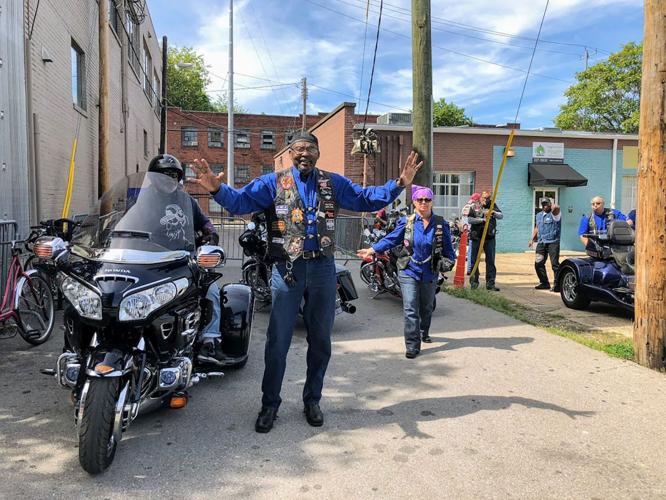
Room In The Inn pillar, biker, recovery leader
Through his tenure at Room In The Inn, David Bodenhamer filled many official roles, and even more services of hospitality, mentorship and support. He came to the campus in 2009 to work at the Guest House, a partnership with the Metro Nashville Police Department to welcome the publicly intoxicated as an alternative to jail. It was there that Bodenhamer — himself on a journey of recovery — found his ministry, offering a place to heal and hope to take it not one day, but one minute, at a time.
As he segued through different positions, he led recovery meetings, helped run the education program as it expanded, became a strong presence in the day center — often the first person to open the door in the morning — and quietly resolved many conflicts. He frequently shared his musical gifts, and as a passionate biker, he organized a Homeless Benefit Ride with his Soul Seekers Motorcycle Ministry. Not only did he forge hundreds of friendships from all walks of life, he also met his beloved wife Kelly at Room In The Inn. After Bodenhamer’s death, staff and guests gathered in the Room In The Inn building to enjoy his favorite food (strawberry shortcake) and tell stories, play music and share memories of his generosity. —Kay West
Susan O. Binns
Addiction recovery services pioneer, community leader, mentor
Susan Binns started one of Nashville’s first sober living communities for women. At one time, YANA (You Are Never Alone) recovery houses had five locations and housed 40 women.
She brought lived experience to her role, having been sober since her 1979 stay at rehab center Cumberland Heights. Shortly after leaving Cumberland Heights, she began working in addiction treatment, and she later earned her licensed alcohol and drug abuse counselor certification. Binns also helped found a self-policing organization for sober living houses, the Tennessee Alliance of Recovery Residences.
Described as blunt, brash and direct, Binns was a mentor to many in their own sobriety journeys. She threw a party to celebrate her 40th year of sobriety in 2019. In all, she helped start 13 treatment programs or sober living houses in Nashville and earned a lifetime achievement award from the Tennessee Association for Addiction Professionals in 2024. —Hannah Herner
Erin Walsh Daunic
Youth worker, inspiring friend, chief development officer of STARS Nashville
As news of Erin Daunic’s death spread through Nashville, it was as if someone in every corner of the city wept — so deep and wide was her reach throughout the city that the New England native had called home since receiving her master’s degree in education from Vanderbilt. Her entire career was serving youth, starting with the Boys & Girls Clubs of Middle Tennessee, then kids in recovery at Community High School, and finally the last 16 years of her life as the chief development officer at STARS Nashville.
Daunic created friendships, built relationships, sparked joy and inspired action among her colleagues and those of her husband, sportscaster Willy Daunic. She connected with everyone: her children’s friends, the parents of her children’s friends, teachers and coaches, neighbors, owners of businesses she frequented, artists, musicians, athletes and even random strangers, including her Lyft driver she invited to one of her “epic” Thanksgiving dinners.
Spontaneous, emotional, funny, touching tributes were penned and posted on social media, referencing her effusive personality, ebullient spirit, genuine empathy, positive energy, abiding and unconditional love of her family, incomparable hostessing, rock-solid loyalty and love of baseball. One friend noted there was not an empty seat or dry eye in the OZ Arts building, where her celebration-of-life service was held. Another pointed out on Instagram the beautiful synchronicity of Daunic’s passing on the feast day of Mary Magdalene, a day when the world “attunes their hearts and attention to her life, lived in service to helping others awaken to their own magnificent light!” —Kay West
Sarah Best
Attorney, teacher, Vanderbilt grad
Clarksville native Sarah Best is remembered for her sharp intellect and the impact she had on her students at Pearl-Cohn High School. The Vanderbilt graduate was working as an associate at law firm Wilkinson Stekloff in Washington, D.C., at the time of her death on Jan. 29. Best was on board American Airlines Flight 5342 when it collided with a U.S. Army Black Hawk helicopter shortly before 9 p.m. above the Potomac River, killing 60 passengers and four crew members. Best was 33.
She graduated as valedictorian from Northeast High School in Clarksville in 2009 and enrolled in Vanderbilt, graduating summa cum laude with a double major in neuroscience and classical languages in 2013. She then taught high school for several years in Middle Tennessee before attending the University of Pennsylvania Law School, where she graduated summa cum laude and was a senior editor of the University of Pennsylvania Law Review. —Noah McLane
Rosemarie Kalil
Weight Watchers leader, motivator, lecturer
Over her 45 years helming Weight Watchers of East and Middle Tennessee, Rosemarie Kalil is responsible for the shedding of thousands of pounds, an achievement that began with her own 70-plus-pound weight loss following the births of three children. Enthused by the Weight Watchers program and inspired by founder and fellow New Yorker Jean Nidetch back in 1963, Kalil became one of WW’s most successful weight management lecturers in Long Island. She was recruited to lead programming in the South and in 1968 moved her family to Tennessee, becoming director of Weight Watchers Nashville.
Before widely available internet access, in-person weekly meetings were the rule, and the weigh-ins (conducted privately) were key to accountability. But whether members lost, gained or had reached a plateau, Kalil and her boundless enthusiasm, energy and sense of humor made the meetings in the little building on Thompson Lane fun, and she kept her people motivated. No one wanted to disappoint Rosemarie. I know firsthand: After two pregnancies resulting in two babies in less than two years, I was one of her people. I lost nearly 20 pounds and gained a lifelong appreciation for Rosemarie Kalil. —Kay West
Charlie Harris
Writer, father, “You Are So Nashville If …” all-star
“You are so Nashville if you’ve developed a hierarchy of every Kroger in town.” “You are so Nashville if your governor doesn’t have a stance on [insert issue] at this time, but he would like you to watch this video of him riding a tractor.” “You are so Nashville if they 12South’d your Five Points, so you 86’d yourself from the area.” These are just three of native Nashvillian Charlie Harris’ many, many submissions to the Scene’s “You Are So Nashville If …” contest over the years. One of his entries, in 2018, even landed on the cover as our first-place submission.
Harris died in June at age 42 after a battle with cancer, leaving behind a wife and a young daughter. A talented food writer who later transitioned into the legal field, Harris is described by his loved ones as “one of the world’s more introverted extroverts,” known for his love of themed parties and Halloween costumes and his unimpeachable taste in books, food and music. His friends also speak of his kindness and gentleness: “He was inclined to satire,” his obituary notes, “but not to cruelty.” —D. Patrick Rodgers
Virgina Trimble Ritter
Victims’ rights advocate, tireless justice seeker, mother of Marcia Trimble
Virginia Trimble, a 36-year-old middle-class Green Hills housewife, became Nashville’s most famous mother on Feb. 25, 1975, when her 9-year-old daughter Marcia disappeared while delivering Girl Scout cookies in the neighborhood. Marcia’s body was found 33 days later on Easter Sunday; it was another 33 years before Jerome Barrett was identified as the perpetrator and convicted of her murder.
The search held the entire city suspended in hope and fear. Parents and children never forgot those days, nor Ritter’s tireless work for justice. Her torment identified Ritter the remainder of her life, but she turned the unspeakable tragedy into a calling as a victims’ rights advocate, reaching out to other families with missing or murdered children. In 2015, former Gov. Bill Haslam presented Ritter with the Powerhouse Award from the victims’ rights nonprofit You Have the Power.
Upon Ritter’s death, the Metro Nashville Police Department posted a tribute: “Virginia Trimble’s kindness, support and closeness to generations of MNPD homicide investigators will not be forgotten.” Former MNPD Chief Mickey Miller, who famously described the crime as when “Nashville lost its innocence,” served as an honorary pallbearer at Ritter’s funeral. —Kay West

Jennifer Alexander
Jennifer Alexander
Poet, The Contributor vendor, friend
One of the last disagreements I had with my friend and longtime Contributor vendor and writer Jennifer Alexander was over food stamps. She’d amassed more cash on her EBT card than she would ever use. She offered to take me shopping for necessities, and was angry that I’d declined. Jen had not been homeless for a couple years; she’d had an apartment, and while it wasn’t perfect, she was stable.
I told myself I refused because I respected Jen’s opinion so much that I feared even her critique of my shopping cart. Honestly I wasn’t at a point in my life where I should’ve been turning down free food or kindness. But I told myself Jen couldn’t know that. She had a sharp, critical eye and saw symbolism in everything. Everything she created, whether an intricate cross stitch or a poem, was painstakingly put together. She assumed and expected the same of other artists and writers — and she’d scoff when my interpretation of a given book or work didn’t match her expectation.
At Jen’s memorial service in early October, a couple dozen folks gathered at her sunflower-adorned gravesite at Hills of Calvary Cemetery to say a few words. She’d passed a couple weeks prior at age 74 after a liver cancer diagnosis and brief time in hospice. She had requested to be cremated and laid to rest at Hills of Calvary alongside the city’s indigent burials, joining other former Contributor vendors and people who lived on the streets. She chose “Funkytown” by Lipps Inc. for the service’s processional music.
Jen was an award-winning poet, a somewhat absent mother for various reasons, a prolific artist and crafter, and a lover of baseball. She adored The Contributor, where she published poetry and sold newspapers, and Open Table Nashville, where she had close friends who walked with her in times when she needed it most. Her son Joshua Frost was the only child of five she remained connected to in late life, and while it was an unsteady relationship, he says he is grateful that she found a way to cope with the things life threw her way. He says finding any way to connect with her was “always worth the fight.”
A few in attendance had met Jen only once or twice. A member of a food pantry described Jen purchasing hundreds of dollars in groceries when it was struggling. A neighbor said Jen offered her a trip to the grocery store while she was pregnant. Each attendee came to pay their respects to a woman who, not having known them at all, had reached out and offered to buy them groceries.
In days after, I realized I had missed my opportunity to accept her kindness along with her judgment. It can be tough to field criticism from our friends, but take this advice: It’s not that hard to just let your friend buy you groceries. —Amanda Haggard
James “Buster” Depue
Longtime cook at The Gold Rush and Nations Bar and Grill, keeper of the bean roll
There was an era of Nashville’s music scene when if you went to hear live music, you were on the Rock Block (aka Elliston Place). And as sure as you were to drop into the Exit/In, you were sure to walk across the street and order a bean roll at The Gold Rush.
Legend has it, the keeper of the bean roll was James “Buster” Depue, who died just before his 61st birthday earlier this year. Depue was longtime cook at The Gold Rush and oversaw the evolution of the bean roll from a relatively modest-size dish to something late Scene editor Jim Ridley once called “a burrito the size of a bean-filled tube sock.” In October 2024, Depue estimated that he had made between 475,000 to 525,000 bean rolls in his lifetime. After The Gold Rush closed in 2019, Depue went to work at Nations Bar and Grill. On Friday nights his new employer would offer the bean roll as a special and a nod to The Gold Rush crowd, who loyally followed Depue west. On Facebook he posted: “I was the last one to walk out [of The Gold Rush], the last one to lock the door when it closed. [It] broke my heart, crushed my world. I carry on the legacy of the original bean roll.” —Margaret Littman
Craig Fishburn
Charismatic man on the scene, beloved friend
Entering Maryville College as a freshman in the fall of 1982, I ran fortuitously straight into Craig Fishburn, who I couldn’t then have known would become one of the really important people in the story of my life. Craig was born and raised in the Nashville of the 1960s and ’70s, but he could just as easily have inhabited the frontier era of Andrew Jackson and John Donelson. A proud denizen of Flatrock, Craig was the real Nashville deal — a whiskey-bent scholar, heretic priest, hippie philosopher and genteel Southern madman.
He could be found nightly for years holding court at The Gold Rush, and later the Red Door and other South Nashville bars, expounding on a wide range of topics with eloquence, wit and insight over Maker’s Mark and iced tea. The host of many a legendary party and the Neal Cassady for many a Grateful Dead road trip, Craig was charismatic, obstinate and occasionally volatile, but a loyal and generous friend whose passing feels epochal. Throughout the years, the mountains he loved always beckoned, and he spent his final days back in Maryville, Tenn., where our friendship began. He was unforgettable and irreplaceable, and he casts a long shadow. —Robert Logue
Unhoused Nashvillians
Homelessness outreach nonprofit Open Table Nashville provided the following list of 126 names of unhoused Nashvillians who have died in 2025 as of Dec. 5. It includes people who were homeless at the time of death as well as those who might have been temporarily or permanently housed but also had a history of homelessness. Some information, like full names or ages, may have been unavailable. The Annual Homelessness Memorial takes place Dec. 20 at Riverfront Park and may include additional names and updated information.
Maurice Adams, 59; Jennifer Alexander, 74; Linda Amos, 75; Jimmy Andrews Jr.; Jimmy Dean Ashworth, 55; Beth Bacon, 72; Raymond Bain, 67; Andrew Barksdale, 45; Shelley Denise Bass, 40; Harry Beard, 74; Cortez Bell II; Jovan Blackman, 37; Thomas Bolton, 70; Yvonne Decarlos Bostic, 55; Jerry Bowen; Larry Wade Boyd, 70; Sherrod Burnett Sr., 58; Gary Campbell, 74; John A. Carter, 50; David Church, 65; Racheal Marie Clark, 30; James Lloyd Clark, 74; James Curie Clifford, 61; John Coleman, 48; Evonne Cornwell, 60; Mark Crites/Kilgore, 56; Jerry Crutcher; Patricia Davis, 57; James Denton; Darlene DeRosa, 65; William Diviney, 68; John Doe; Sherry Donoho; Marion Duerkson, 60; Lamelle A. Evans, 53; Lamelle A. Evans, 53; Travis Finch; Debra Flynn, 68; John Franklin, 59; Cartel K. Galloway, 21; David Galloway, 69; Darin Gassaway, 30; Teresa Glenn, 60; Missy Gouch, 39; Brenda Gregory, 72; Rocky Harper, 61; David Harris, 78; Christopher Harrison; Wiliam Henry Head Jr., 56; Douglas Henson, 69; Christopher Herbert, 40; Angelica Hernandez, 36; Richard Higgins; Randall Hogan, 67; Mark Holt, 55; Randy Honea, 66; Ricky Hudgens, 68; Billy Glynn Huffman, 73; Tadarius Hunt, 30; DeeAngelo Hunter, 48; Steven Hymes, 42; David Jacobsson 60; Christopher Jenkins; Laron Johnson, 54; Joe Johnson, 65; Natasha Jones, 44; Patrick Killian, 64; Charles Kimbro, 89; Kelton King, 43; James Earl King, 56; Dennis Ledford, 53; Dean Levinsohn, 69; Greg Lewis, 69; Curtis Livingston, 44; Brent Lovely; John Manasco, 78; Nicholas Marrone; Bobby Mayes; Jesse James McAdoo III, 66; John McKinnie Jr.; Curtis McNeil; Jennie Meadows, 68; Gary Melton, 65; Ricky Merryman; Donald Milburn; Tamika Mitchell; Deonte Morris; Otis Murphy; Marilyn Ann Musser, 63; Author Nall, 45; Johnda Nottingham; Christopher Owen; Michael “Scottie” Parker, 65; Donald Parker; Edward Parsons, 68; Jack Phillips Jr., 64; Charles Walter Pope, 60; Taylor Powell, 29; Labar Pratt; Contessa Previtera; Wendall Quarles, 63; Greg Rivers, 45; Aaron Robison; Susan Rocha, 70; Dana Roland; Thurston Rucker, 57; Jerry Salazar; Julie Savoy, 53; Brian Smith; Valenna Spikes, 44; Anquenette Stanton, 46; Ray Stevens, 61; David Suddeth; Brenda Taylor, 62; Johnnie Taylor, 30; Inez Turley, 66; Alice Turner, 72; John Welch; Jessie Whitworth, 43; Joseph Williams; Zachary Williams, 48; Joseph Williams, 40; Willie Paul Windom, 56; Leslie Woodard Taylor III; Diane Yates, 68; Alex “Detroit.”

Commemorating many of the irreplaceable figures Nashville lost in 2025



Post a comment as anonymous
Report
Watch this discussion.
(0) comments
Welcome to the discussion.
Log In
Welcome to the discussion.
Keep it clean. Please avoid obscene, vulgar, lewd, racist or otherwise abusive language. Comments featuring hate speech or threatening or violent content will not be tolerated.
PLEASE TURN OFF YOUR CAPS LOCK.
Be truthful. Don't knowingly lie or mislead.
Be proactive. Use the “report” link on any comment that violates our comment policy.
Share with us. We'd love to hear your feedback.