
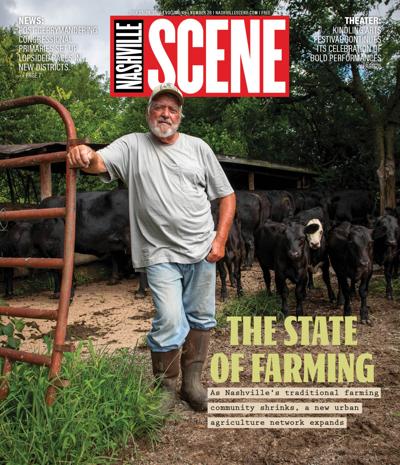

Due to conditions including high resource costs, tariffs, federal funding cuts, corporate dominance and inflation, American farms are in a state of crisis. According to Farm Aid, these ever-tightening factors “are bringing many farmers, and the rural communities they support, to a breaking point.”
And agriculture isn’t just a major industry in Tennessee at large — it’s an important piece of Nashville’s culture and history. (Speaking of which, have you ever noticed the tobacco plant on Nashville’s official city flag?) Consumers are growing more aware of the importance of sourcing food locally thanks to issues like environmental impact and food safety, but our local growers are facing more challenges than ever.
In this week’s cover package, we take a three-part look at the state of farming in the greater Nashville area. Reporter Emily R. West examines Nashville’s rapidly shrinking traditional farming community, while reporter Julianne Akers looks at how The Nashville Food Project’s agriculture network is supporting urban farms. Meanwhile in Williamson County, reporter Hannah Herner talks to the family behind a Black-owned Century Farm that is pivoting to a new business model. Read on for more. —D. PATRICK RODGERS, EDITOR-IN-CHIEF
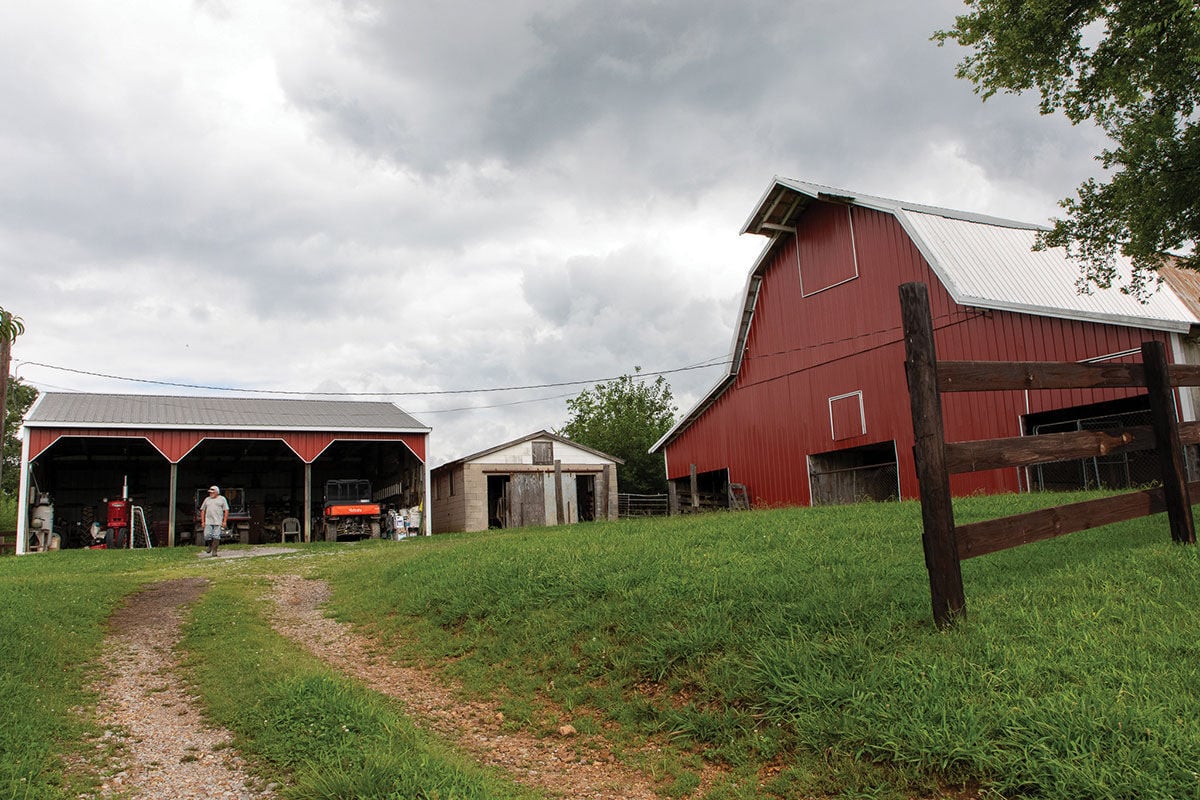
Davidson County has lost 30,000 acres of farmland to development since 2010

The Nashville Food Project is building a new kind of agriculture network across Davidson County
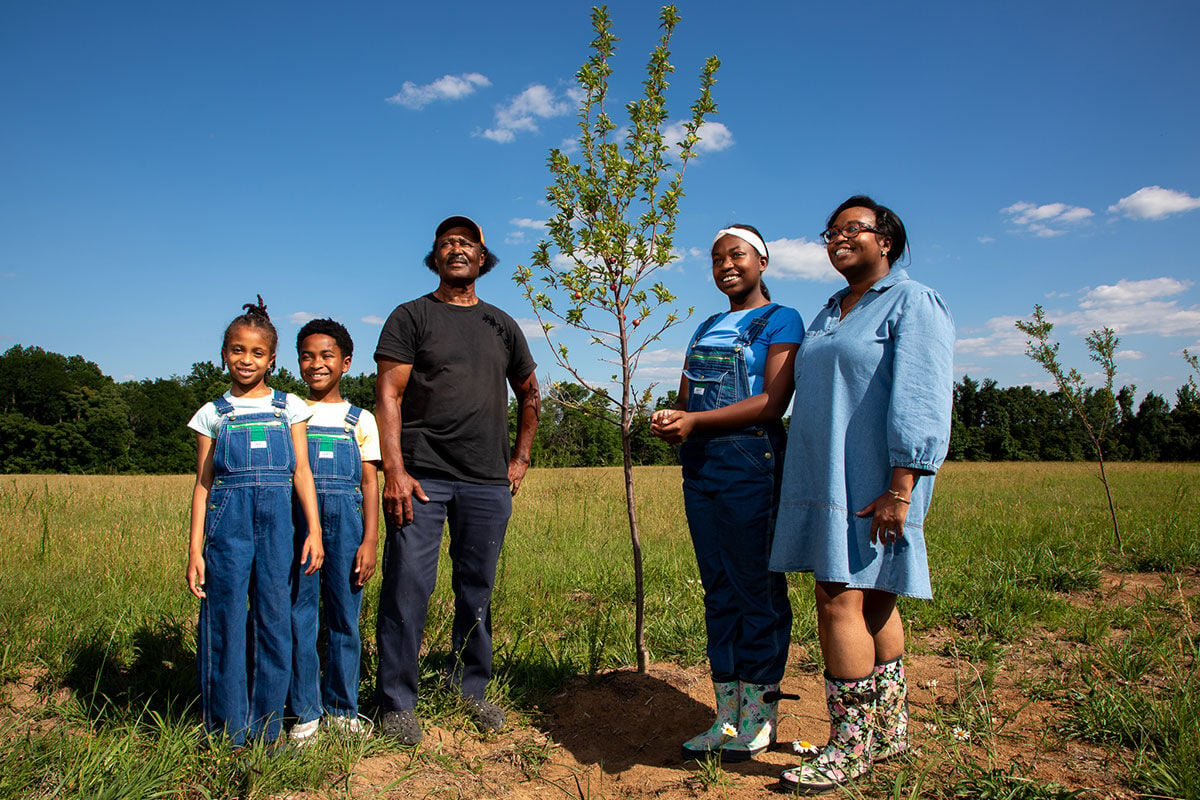
The Black-owned Century Farm in Williamson County is planning a 2027 public opening

Farmer Bob Strasser



Post a comment as anonymous
Report
Watch this discussion.
(0) comments
Welcome to the discussion.
Log In
Welcome to the discussion.
Keep it clean. Please avoid obscene, vulgar, lewd, racist or otherwise abusive language. Comments featuring hate speech or threatening or violent content will not be tolerated.
PLEASE TURN OFF YOUR CAPS LOCK.
Be truthful. Don't knowingly lie or mislead.
Be proactive. Use the “report” link on any comment that violates our comment policy.
Share with us. We'd love to hear your feedback.