

Following gerrymandering led by a Republican supermajority in the state legislature, Nashville is now, congressionally speaking, a red city despite its voters leaning blue.
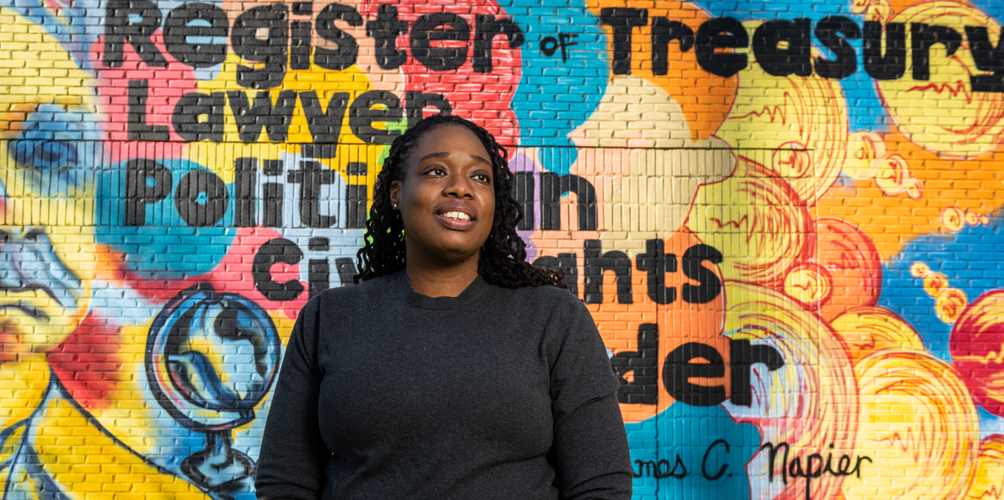
In the 7th Congressional District, Nashville community leader Odessa Kelly lost to Republican incumbent Rep. Mark Green of Clarksville. Backed by the same group that has supported members of “The Squad” — a group of progressive Democratic House of Representative members including Alexandria Ocasio-Cortez and Ilhan Omar — Kelly ran on a campaign centered on the needs of everyday Nashvillians and uplifting the working class. Despite her 22-point loss in the redrawn 7th, the momentum she managed to build indicated that while there’s a lot of work to be done, progressive politics are not necessarily a lost cause in Tennessee.
“I knew it was going to be an uphill battle, but damn it, someone has got to be able to go out and speak truth to power and give an accurate, expert explanation of what is happening to the millions of working-class individuals across the state of Tennessee,” Kelly tells the Scene.
Kelly was born and raised in Nashville and has worked in Metro Parks as a community recreation leader. She co-founded community engagement and social justice nonprofit Stand Up Nashville, is the mother of two teenagers and is openly gay, a rarity for congressional candidates in the South.
Rather than throwing up her hands and going home, she took the midterm results as a sign that there’s more work to be done. After taking some time to recuperate, Kelly is already turning her eye toward issues within the city — in our interview, she mentions the rapidly progressing Titans stadium deal. Back in 2018, Kelly and Stand Up Nashville helped negotiate a deal with Nashville SC to include community benefits in the development of the soccer team’s stadium, Geodis Park.
“Not much of what happened was surprising,” says Jason Freeman, a local labor leader and former Democratic Party official who worked on Kelly’s campaign. “Whatever type of candidates you’re going to have running in Tennessee, there are just some fundamental things that we have to work on if we’re going to be competitive. We don’t know the political makeup of Tennessee because 1 in 5 African Americans are disenfranchised from voting. We have among the most restrictive voting provisions in the country.”
Freeman is the political director for SEIU Local 205, a union representing public- and private-sector employees across Tennessee. He says voting is the bare-minimum requirement for being a participant in democracy, and that in order to see any real political change, people who are voting need to get more involved with their communities.
“We have to have far more people engaged in the process in order to turn out their friends, their neighbors, their community members,” he says. “We have to not be afraid to talk to people we don’t know, and have conversations with them.”
In the lead-up to the midterm election, Republican politicians turned their focus toward opposing transgender health care and rights, an issue for which Nashville has become a battleground. Following election night, the Republicans in the state legislature introduced their first bill of the 2023 legislative session — which doesn’t even start until Jan. 10. The bill aims to ban gender-affirming treatment for minors.
“The right wing is very engaged in the culture-war stuff,” says District 5 Metro Councilmember Sean Parker, who also worked on Kelly’s campaign. “And when that culture war directly targets my neighbors, my constituents, my loved ones? I don’t have any choice but to stand up and respond to that. I’d rather be working on housing issues. I’d rather be working on having quality job opportunities for people. But if you’re coming to trans folks, I’m going to do my best to insert myself in your way.”

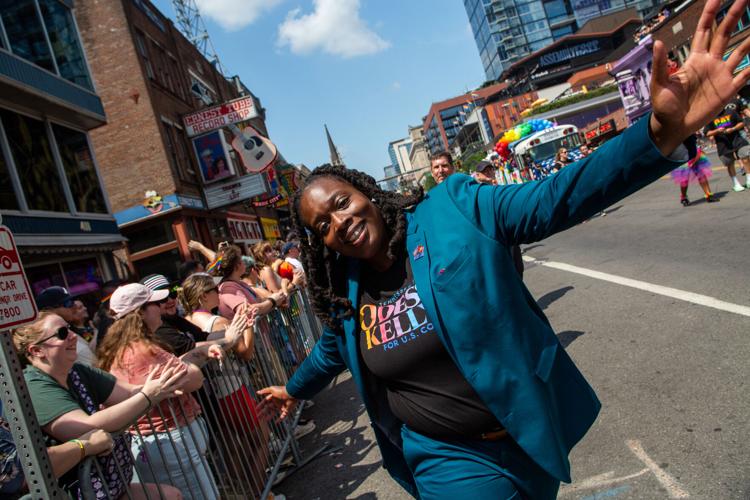
Odessa Kelly in the Nashville Pride Parade, June 18, 2022
While issues such as housing insecurity and labor affect a large number of everyday Tennesseans, attacks on trans health care and drag shows tend to make splashier headlines. They also drive a wedge between people who would likely benefit from many of the same policies.
“When we keep people living in a state of desperation, or living check to check and only have the capacity to see what’s in front of them in the moment to move to the next day, we take away any capability for us to really have the time to take in the things that are happening around us,” says Kelly. “When these types of things happen, what we don’t pay attention to are the 20, 25, 30 other bills that are actually destroying quality of life for everyday, normal working-class individuals in the state of Tennessee.”
Parker attended the counter-protest to right-wing pundit Matt Walsh’s anti-trans protest back in October. He says during the protest, conservative figure Robby Starbuck — who, ironically enough, is from California — turned to the counter-protesters and said, “Get those moving trucks ready, because this is not the state for you.” But Parker feels differently.
“Growing up, folks would jokingly say, ‘Tennessee, to stay or flee,’ ” he says. “And obviously I stayed; all my friends and family stayed too. And the notion that just through all this hateful legislation and attacks on marginalized people, they’re going to get rid of anybody that disagrees with them? It’s just not going to happen. And it’s just going to lead to a bunch of misery in the meantime.”



Post a comment as anonymous
Report
Watch this discussion.
(0) comments
Welcome to the discussion.
Log In
Welcome to the discussion.
Keep it clean. Please avoid obscene, vulgar, lewd, racist or otherwise abusive language. Comments featuring hate speech or threatening or violent content will not be tolerated.
PLEASE TURN OFF YOUR CAPS LOCK.
Be truthful. Don't knowingly lie or mislead.
Be proactive. Use the “report” link on any comment that violates our comment policy.
Share with us. We'd love to hear your feedback.