
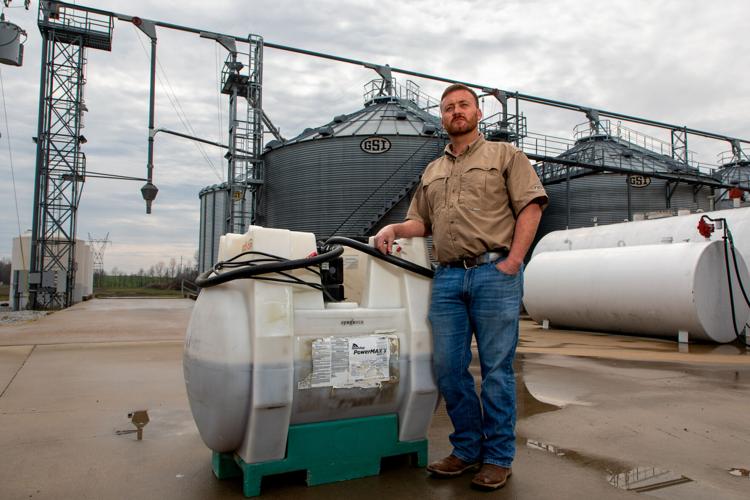
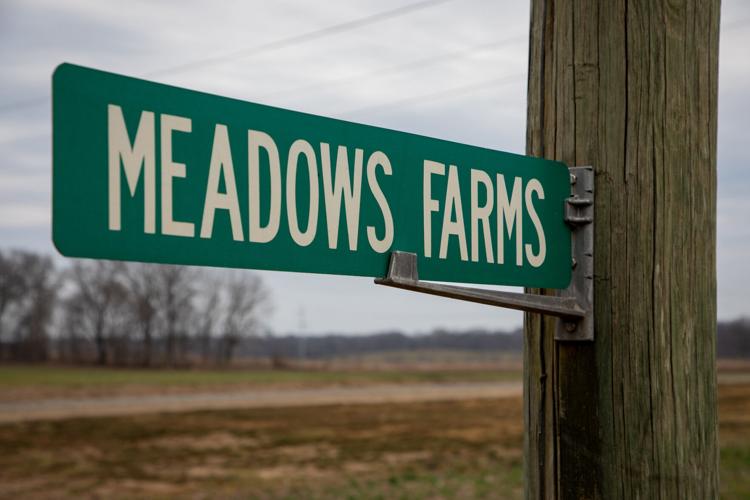

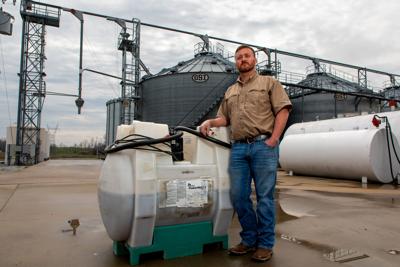
It’s rainy outside, and there’s not a lot of work Alan Meadows can accomplish mid-Monday in early March.
Meadows sits in his workshop, anxious — with his cat Kitty perched on the table across from him. It’s not the weather or how the upcoming growing season will affect his 4,000 acres that’s on his mind, but the Tennessee legislature.
Glyphosate is a chemical colloquially known as Roundup, a weed-control substance long used in the row-crop fields of Tennessee, and it’s been up for debate for two years. A bill at the Tennessee General Assembly would provide liability protection to pesticide and weed-killer companies. But right now, House Bill 809/Senate Bill 527 is stalled, with Republican lawmakers uncertain they can provide solace for farmers regarding the product so widely used. Farmers worry lawsuits over the product will prevent them from using the chemical in Tennessee.

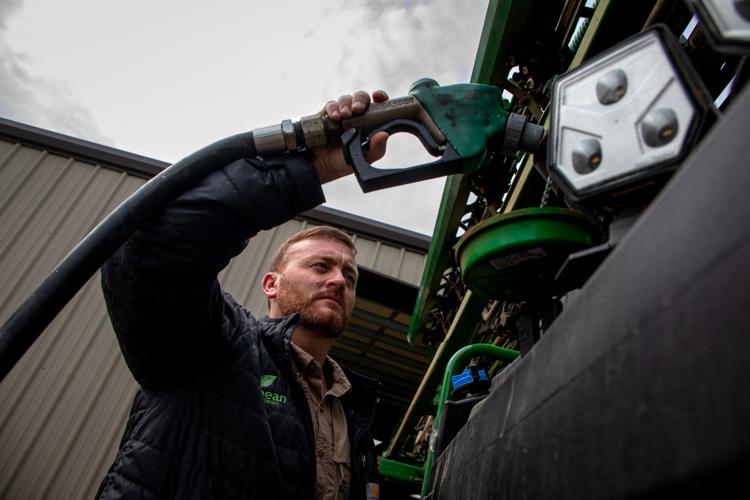
“You know, it’s critical for me as a producer to have access to certain tech and pesticides: glyphosate,” says Meadows, whose family has been farming in Tennessee since the 1800s. “It’s one of the most critical uses for farming. It’s the foundation of every path across my fields. It’s a broad-spectrum weed killer and something we have used for many years. It’s critical for me to keep access to tools like that.”
Rep. Rusty Grills (R-Newbern) has had trouble running this bill in the House, to the point that he’s not sure it will get accomplished this General Assembly cycle. Since it’s an election year, Grills would have to push the measure through before the House gavels out, or have to bring it back for a new fight in 2027 — assuming he’s reelected.
Grills and Sen. John Stevens (R-Huntingdon) got the measure passed in the Senate in 2025. Right now, the label for Roundup doesn’t tell users it could potentially cause cancer — This legislation continues to allow an individual to sue a pesticide manufacturer for alleged harm the pesticide caused, but limits their ability to hold manufacturers liable for failing to warn of a risk when the label was approved by the EPA. (The World Health Organization’s cancer agency has ranked glyphosate as a possible carcinogen, while the U.S. Environmental Protection Agency has said it is “unlikely to be a human carcinogen.”)

Alan Meadows
“At this point, the path forward for the legislation remains uncertain,” Grills says. “We are continuing to engage with farmers and other stakeholders to find the best way to address the concerns raised. We cannot allow a situation where manufacturers stop offering the products farmers rely on to protect their crops. If we begin losing access to new technologies and modern farming tools, we risk putting American farmers out of business and could ultimately make our country more dependent on foreign nations for our food supply."
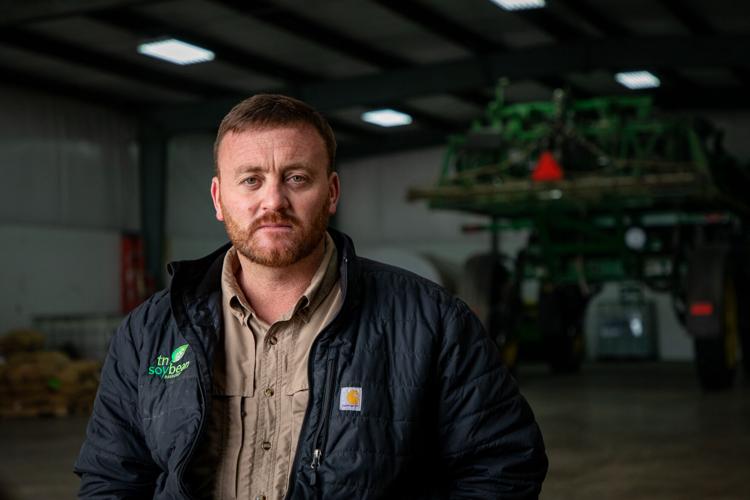
Which leaves the fifth-generation farmer in a tough spot. As a member of the Tennessee Soybean Association, Meadows has made his appearance inside the state Capitol in Nashville, hoping lawmakers will listen to him and the hundreds of others across the state who say they rely on the chemical.

Meadows says they have reached this crossroads in part because society doesn’t believe in science anymore. He says members of the Make America Healthy Again movement — an extension of Health and Human Services Sec. Robert F. Kennedy Jr.’s agenda — were causing problems for the bill’s movement through the House. When asked during a recent Nashville visit if he was actively opposing the bill, Kennedy said he had nothing to do with it.
“I am very frustrated,” Meadows says. “I would tell you that our voice isn’t being heard. Because if it had, we would have seen action taken already. It got pushed back a year, and I think if our voice was being heard, it would be law. It’s not rocket science. It’s very straightforward. It’s been proven time and time again. I feel like, in general, the farmer’s voice isn’t what it used to be. There’s just not as many of us as there used to be.”
State Sen. Stevens says an executive order from President Donald Trump could also be a solution to the General Assembly’s problem. He says 1950’s “Defense Production Act” addressed the domestic production of elemental phosphorus and glyphosate at the federal level. Because that action moves the issue into the national-security arena and provides a federal framework for ensuring supply, he says the legislature has taken a step back to evaluate what role, if any, the state should continue to play.
“I understand and respect the concerns that have been raised about accountability and public health,” Stevens says. “Those are valid issues, and they deserve careful consideration. My position has always been that we can support our farmers and our food supply while also ensuring companies operate responsibly and transparently. The pause in the House gives us time to continue that conversation and look for the right balance.”
When asked about the measure by the Scene, Gov. Bill Lee — whose family is made up of generational farmers — says he’s not sure about the legislation either. He says he hasn’t read the language of the bill and would need to read it before weighing in.

Alan Meadows
Even so, Lee mirrors Stevens' comments about striking the right balance between public health, science and farming.
“I think that agricultural products are obviously crucially important for our industry, and the protection of the public from products that are potentially harmful for them is crucially important,” Lee says. “So finding that right balance is where we want to be. I don't know what this bill does as it relates to balance, but that's the goal, right? [The goal] is effective tools that are safe for the public, and that's what we should look to do.”
As of publication, it’s not clear when the bill will reach another committee. Much to Meadows’ dismay, the legislation sits idle in the House.
Hamilton Matthew Masters contributed reporting.



Post a comment as anonymous
Report
Watch this discussion.
(0) comments
Welcome to the discussion.
Log In
Welcome to the discussion.
Keep it clean. Please avoid obscene, vulgar, lewd, racist or otherwise abusive language. Comments featuring hate speech or threatening or violent content will not be tolerated.
PLEASE TURN OFF YOUR CAPS LOCK.
Be truthful. Don't knowingly lie or mislead.
Be proactive. Use the “report” link on any comment that violates our comment policy.
Share with us. We'd love to hear your feedback.