
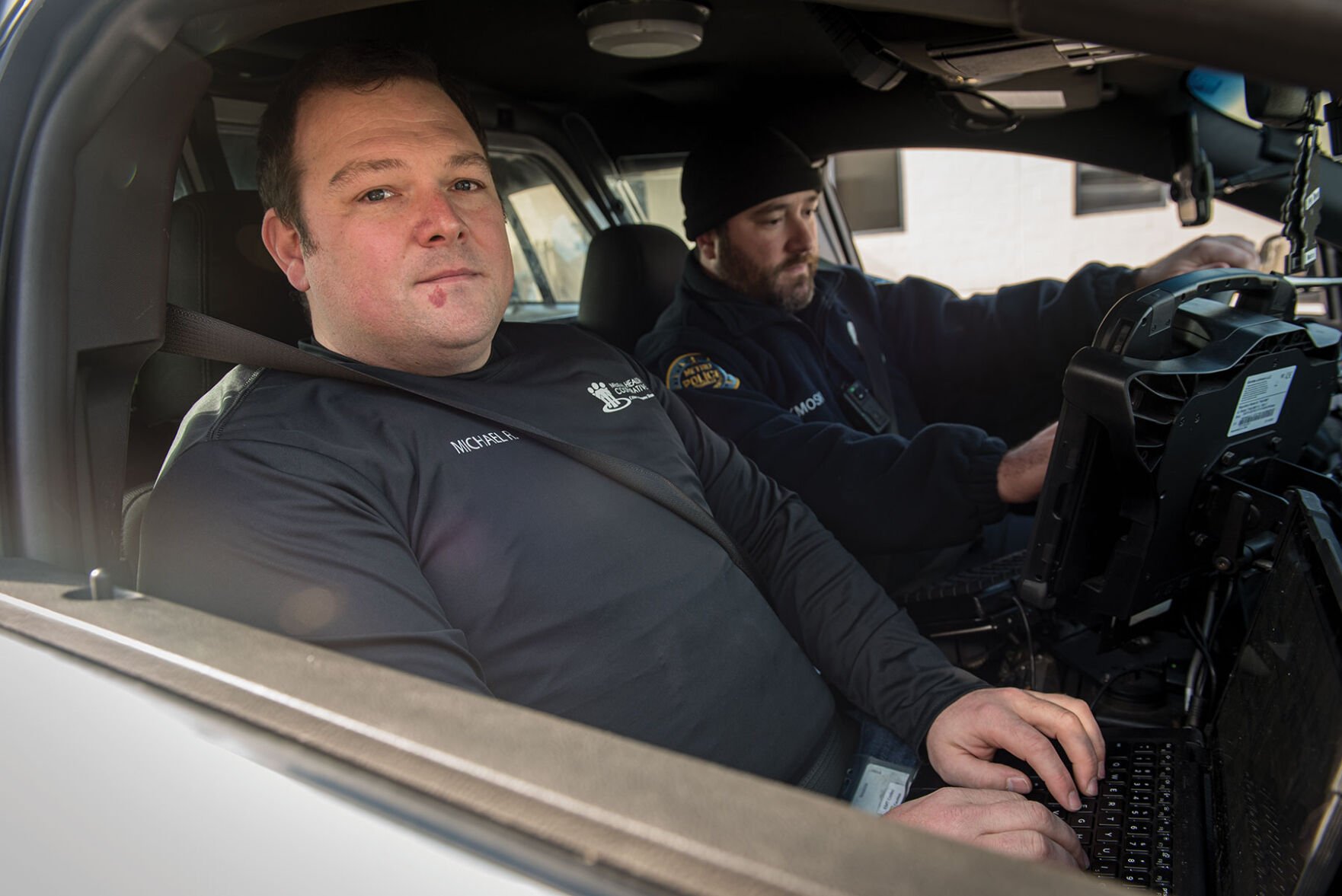

As Partners in Care enters its fifth year and Responders Engaged and Committed to Helping (REACH) rounds out its third, Michael Randolph says there are more than enough mental health calls coming through 911 to keep him busy.
The director of co-response services at Mental Health Cooperative tells the Scene that as many as 80 percent of 911 callers sent their way are coming into contact with the programs for the first time. In addition, anyone who has an interaction with PIC or REACH is contacted by a follow-up specialist who helps connect them to resources including housing, food and substance abuse treatment.
“I’m really encouraged by that data, because it shows that these are people that traditionally haven’t been served by the mental health system,” Randolph says. “I think we’re seeing more of the people who maybe were getting on the way to being in a traditional mental health crisis, but not quite there yet. Now we can go and talk to them earlier and intervene.”
REACH, a co-response program between paramedics at the Nashville Fire Department and mental health clinicians at Mental Health Coop, began offering 24/7 services with two vehicles that serve the entire county earlier this month.

Teams of paramedic and mental health professionals responded to 618 calls during pilot phase
The Metro Nashville Police Department’s co-response model, Partners in Care, is still operating just five days per week from 6 a.m. to 1 a.m. According to Capt. Anthony Brooks, head of alternative policing strategies for MNPD, the next step will be to expand to weekends, with a goal of implementing the expansion in July 2026. More than 300 patrol officers are trained to take part in Partners in Care, but Mental Health Coop needs to hire at least 10 more clinicians.
“We haven’t had as much of a challenge hiring staff [as] we anticipated, but it does take time, because it’s very nuanced work,” Randolph says. “We’re training people to go into these really intense situations and identify: ‘Is this a mental health crisis? Is this substance use? Do they need social services, resources like food boxes or the electricity turned on, or do we need acute psychiatric care? How do we do a risk assessment for suicide?’”
According to the latest quarterly report — which accounts for July 1 through Sept. 30, 2025 — Partners in Care responded to 1,068 calls. The statistics remain stable year over year, with the program serving a similar number of people with similar outcomes in 2025 compared to the same period of 2024. Around 36.4 percent were transported to the emergency room, 29.7 percent were provided with resources but stayed put, 5 percent refused resources, 4.9 percent were transported to inpatient care, and 4.8 percent were transported to the Mental Health Coop’s Crisis Treatment Center. Around 4 percent of Partners in Care calls resulted in arrest.
“There might be someone who has an outstanding warrant,” Brooks says. “It might be a more serious felony charge, even if it’s not a current outstanding warrant; it might be domestic-related. Most of the time when an arrest is made, it’s going to be on something that an officer actually had limited discretion on.”
The goal is to train all patrol officers on crisis intervention. For now, 600 of 1,700 total officers are trained — and 300 to 400 of those are patrol officers
While 76 percent of Partners in Care calls come through 911 or the Department of Emergency Communications, around a quarter of the calls are initiated by the officers themselves when they arrive on a call they believe would be better served by the program.
But police violence during mental health crises still happens. In July 2024, Metro police killed a man in Bellevue while he was reportedly having a manic episode. That event took place outside of PIC’s hours.

Body-cam footage shows the shooting of Max Van Sickle came when he ran toward police with a knife. Where were Partners in Care?
Also during this year’s July-through-September period, REACH saw 414 calls — a jump from the 222 calls received in the same period in 2024. Still, 32 percent of this summer’s calls ended in an emergency room transport — a decrease from 36 percent the year prior. However, only 9 percent were through an ambulance, representing a drop from 14 percent ambulance transports in Q3 of 2024.
One of the overarching goals of REACH is freeing up ambulances and emergency room beds. While the emergency room was still the destination for calls around a third of the time in the most recent quarter, using REACH vehicles rather than an ambulance is still a win. And sometimes that’s a required first step before more intensive mental health treatment, explains EMS District Chief Chad Tidwell. It saves an ambulance bill for the patients too.
Not offering Sunday service alone meant 300 or so eligible calls were missed from January through November, Tidwell says — and that makes the program ripe for growth. The department hopes to add an additional vehicle in the future.
“So far we’ve seen, obviously, our numbers increase, which is what we were hoping to see,” Tidwell tells the Scene. “We’re definitely catching more of those REACH-appropriate calls and decreasing that gap in service that we were missing before we had them operating overnight and on Sundays.”



Post a comment as anonymous
Report
Watch this discussion.
(0) comments
Welcome to the discussion.
Log In
Welcome to the discussion.
Keep it clean. Please avoid obscene, vulgar, lewd, racist or otherwise abusive language. Comments featuring hate speech or threatening or violent content will not be tolerated.
PLEASE TURN OFF YOUR CAPS LOCK.
Be truthful. Don't knowingly lie or mislead.
Be proactive. Use the “report” link on any comment that violates our comment policy.
Share with us. We'd love to hear your feedback.