
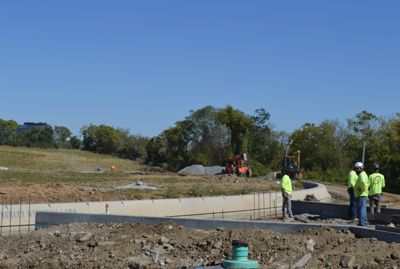

Fort Negley Park is finally a construction zone.
Hard hats and safety vests crowd the baseball diamond at the old Greer Stadium. A few blocks down Chestnut Street, the Nashville Sounds’ once-iconic guitar-shaped scoreboard is repurposed outdoor art at Live Nation’s corporate office. Real estate development has transformed the entire neighborhood — now a hub of luxury shopping and dining studded with a Michelin star — after failing to capture Fort Negley in a saga that sparked city conversations about race, history and the rapid physical changes replacing old land with new construction.
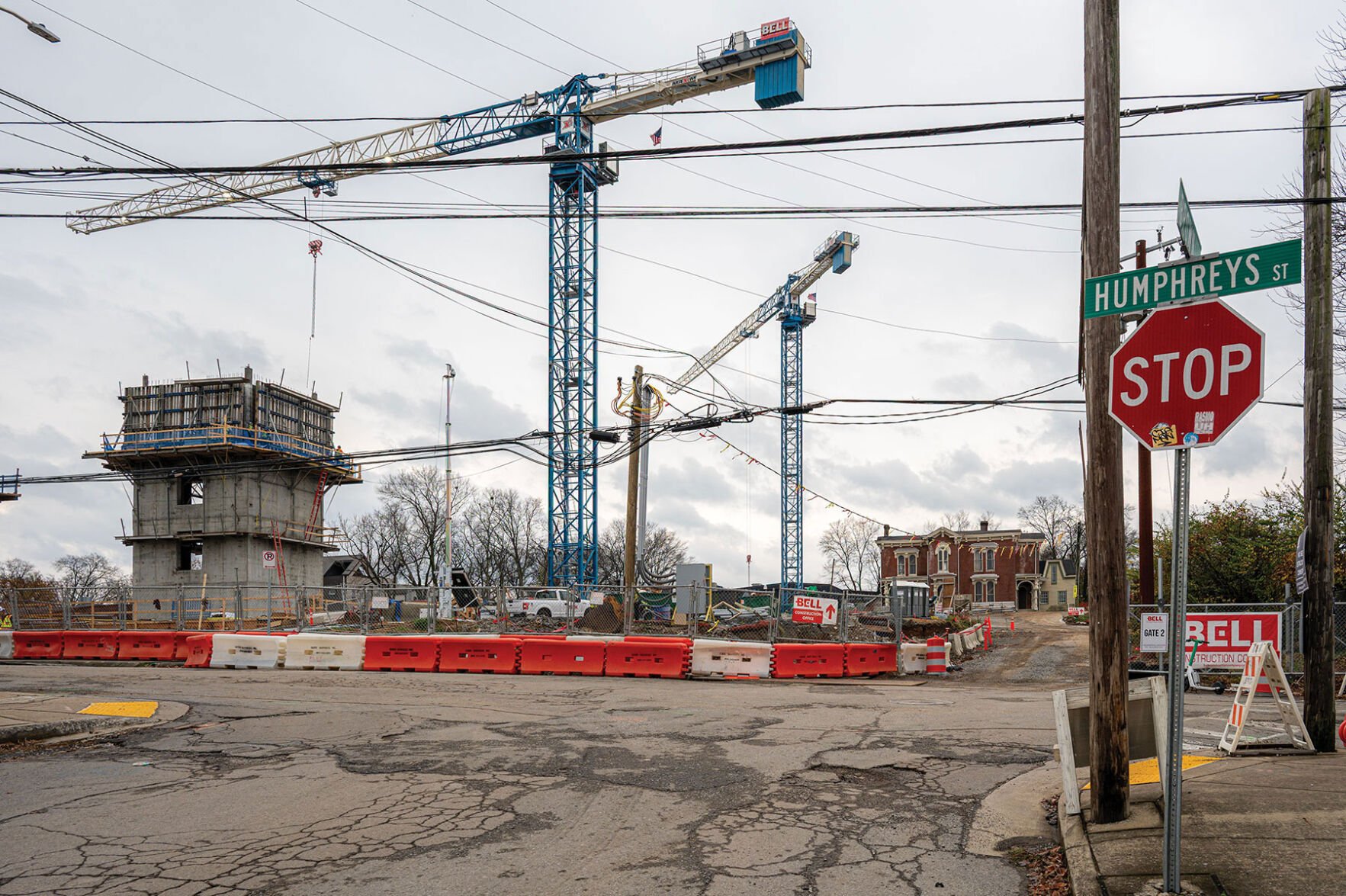
AJ Capital has turned the area into a construction site. Will a neighborhood emerge?
Fort Negley Park will open early next year on 66 acres, a decade after preservation-minded opponents helped derail development plans at the site under then-Mayor Megan Barry. Commercial investors pulled the project in January 2018 after six months of backlash and debate over the Civil War battlement and its surrounding campus. Blowback from the city’s controversial lease agreement renewed city interest in Fort Negley, built for the Union Army atop St. Cloud Hill by runaway slaves, enslaved people and free Black laborers.
Barry commissioned an archaeological survey that found “not piles of bodies, but a lot of evidence that the layers of dirt that would contain bodies were still there,” according to longtime Scene contributor Betsy Phillips, injecting a debate about public land use with serious humanitarian concerns. In 2019, the battlement was designated a UNESCO “Site of Memory” for its significance to enslavement in the United States.
Workers now build the vast park around Fort Negley officially planned in 2022 under then-Mayor John Cooper. A vocal, often oppositional councilmember at-large during Barry’s term, Cooper parlayed broad public resentment against developing Fort Negley into his own rise to the mayor’s office. Cooper appropriated $17.5 million for the project during his term. Today, Ben Eagles, an executive from Cooper’s mayoral administration, leads influential booster group Friends of Fort Negley Park.
“It’s the beginning of a conversation and an end to the debate over the future of the fort,” says Learotha Williams, a TSU history professor heavily involved in the preservation effort who also serves as the official historian of Davidson County. “We had formidable adversaries in this — developers and their supporters, with deep pockets. We were successful as historians, as preservationists, who transformed this place into something that had not even been considered before. It’s the end of one chapter and the beginning of another. As we learn more, our interpretations will become better and more precise.”
Handling history became the sensitive center of the 2010s' Fort Negley controversy. The new campus takes on that task. Williams sees a dual-purpose space that can be both memorial and recreational with freedom as the common thread across uses and history; he expects more archaeological work to follow. The 2022 master plan calls for an “open-air museum” that expands its scope far beyond throwing frisbees and dog-walking.

The developer found the remains at its Chestnut Hill development site last year
“Fort Negley is much more than a Civil War relic,” reads the 81-page document. “It represents the hope of freedom, the injustice of enslavement, the still-felt effects of urban renewal, and a continued struggle for social and environmental equity within a rapidly changing urban environment.”
The park’s official groundbreaking was in February, but construction has amped up significantly in recent weeks. Designs center on the park’s Memorial Lawn, whose gently curving title stone can be seen from Chestnut Street, itself an active construction zone as city workers rejigger the road to make room for bike lanes. The big picture envisions the corridor as an entrance gate befitting the area’s era-spanning architecture, crafted primarily by heavyweight developer AJ Capital throughout Wedgewood-Houston’s extended glow-up.
“One of the most dramatic and visible aspects will be the view from Chestnut, because for all these years it's been fenced and overgrown,” Cyril Stewart, an architect and former Friends of Fort Negley Park president, tells the Scene. “The park will be open from Chestnut into the park, and you'll be able to see all that's happening.”



Post a comment as anonymous
Report
Watch this discussion.
(0) comments
Welcome to the discussion.
Log In
Welcome to the discussion.
Keep it clean. Please avoid obscene, vulgar, lewd, racist or otherwise abusive language. Comments featuring hate speech or threatening or violent content will not be tolerated.
PLEASE TURN OFF YOUR CAPS LOCK.
Be truthful. Don't knowingly lie or mislead.
Be proactive. Use the “report” link on any comment that violates our comment policy.
Share with us. We'd love to hear your feedback.