

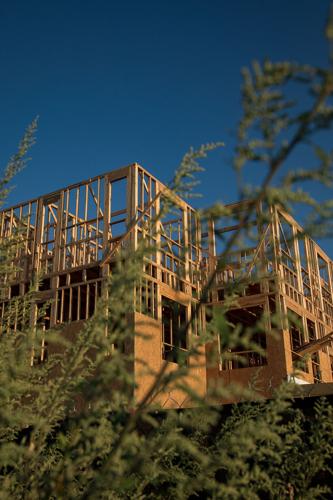


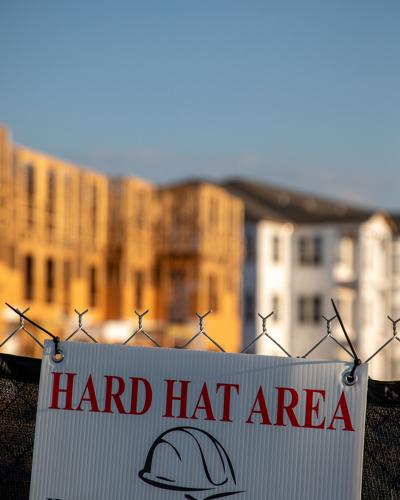

Apartments under construction in Smyrna
Before Jesus (pronounced hey-SOOS) pulls into a gas station on his way to work, he often drives past it and circles back.
He’s looking for ICE.
Jesus — who asked the Scene to use an assumed name to protect his identity — is 32. He came to the United States when he was 5 and grew up here. After his father was deported, Jesus returned to Mexico with him before eventually coming back to the U.S. He has washed dishes, cooked in Italian kitchens, done construction and, most recently, launched a landscaping business. Because the work takes him across Middle Tennessee, he spends much of his day behind the wheel with tools in his vehicle.
Lately, the typical day has acquired another layer of calculation. If a truck at a gas station looks like it might belong to Immigration and Custom Enforcement agents, he keeps driving.
“Every day is hard,” Jesus says. “It’s like a silent war.”
Recently, a customer asked Jesus to help him find someone to clean his Franklin property. Jesus knows several people who ordinarily would have taken the job in a heartbeat — but no one would make the drive. They were too afraid.
“Why don’t Mexicans want to work anymore?” Jesus recalls the man asking.
“Bro,” he remembers thinking, “are you listening to what you’re saying?”
There is a distinction between workers disappearing and workers becoming afraid to appear, and Nashville may be in the early stages of discovering just how economically significant that distinction can be.
For much of the past decade, the city’s housing dilemma was easy to summarize. Nashville was growing rapidly. Housing prices climbed beyond the reach of longtime residents, and the question was how quickly the city could build. Now the region confronts a less familiar question: What happens to a city built on construction when the labor required to build becomes harder and harder to find?
The problem is timing. Housing takes years to plan and build, so the apartments opening today reflect decisions made months or years ago. The effects of a labor disruption now may not become visible to renters until much later.
At this writing, Nashville hardly looks like a city on the edge of a market-rate apartment shortage. In the second quarter of 2026, average effective multifamily rents were down 2.8 percent from a year earlier. Stabilized occupancy stood at 92.3 percent, on par with St. Louis, Kansas City and Oklahoma City, with more than 11,700 apartments under construction across the Nashville market. The region, in other words, has apartments coming out of its ears, even as housing affordable to lower-income Nashvillians remains in desperately short supply.
At the start of the development process, however, the numbers look different. Over the past year, multifamily starts fell from 7,575 units to 5,695, according to second-quarter 2026 data from MMG Real Estate Advisors, which tracks multifamily development and transaction trends. Over the same period, the market absorbed 8,512 apartments while developers delivered 6,645.
Nashville is still seeing new apartments come online. Fewer projects, however, are breaking ground. Interest rates remain high, financing is tight, and capital markets can determine whether a project gets built at all. After years of extraordinary expansion, some slowdown may simply represent a return to normal.
But into that shrinking pipeline comes another variable: labor.
“We’ve been talking about the challenges from a labor and staffing perspective long before immigration enforcement became so aggressive,” says Sergio Barajas, executive director of the National Hispanic Construction Alliance. “This is exacerbating the issue.”

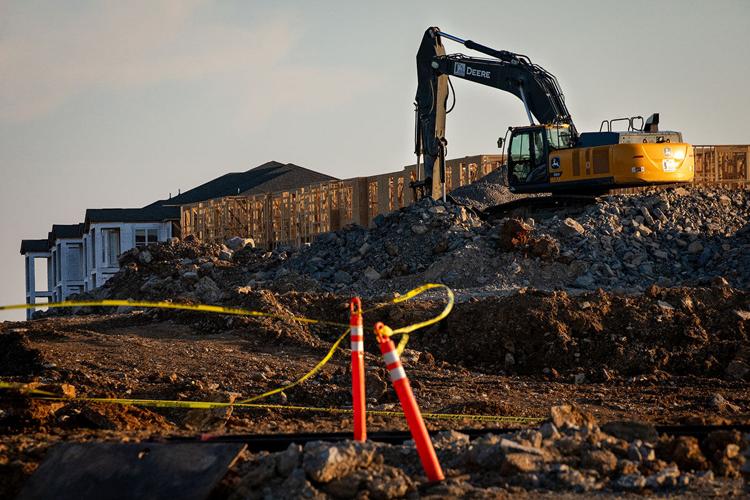
Construction site in Smyrna
The foreign-born workforce is not the same thing as undocumented labor, but undocumented labor is especially concentrated in construction. In 2024, foreign-born workers accounted for 12.4 percent of employment in the Nashville metropolitan area. Among those workers, 18.4 percent worked in construction, compared with 6.1 percent of native-born workers.
In May 2025, a weeklong ICE operation in Nashville resulted in 196 arrests, according to the Department of Homeland Security. From May 21 through Oct. 15, ICE made another 3,742 arrests across Tennessee, according to a Prison Policy Initiative analysis of federal data. Each worker, contractor and real estate agent interviewed for this story says they knew at least a few — and in some cases 20 or more — people who had since been deported or detained.
This year, Elizabeth Cox and Chloe East released a National Bureau of Economic Research working paper examining places that experienced sudden increases in ICE arrests during the second Trump administration. Because government surveys do not record legal status, the researchers used demographic characteristics to estimate which workers were likely undocumented.
In areas experiencing enforcement surges, Cox and East found, employment fell 1.4 percent among likely undocumented immigrants who remained in the country and roughly 2 percent in industries where undocumented workers are disproportionately represented — including construction. A KFF/New York Times survey cited by the researchers found that 40 percent of likely undocumented immigrants said they or a family member had avoided work because of immigration concerns.
Conventional economic theory offers a simple script, which is to remove an unauthorized worker, create a vacancy and raise the wage until someone takes it.
Cox and East found little evidence of that sequence actually taking place. Employment among U.S.-born men also declined in areas experiencing increased enforcement, with no sign that wages rose enough to draw them into affected trades.
Researchers Troup Howard, Mengqi Wang and Dayin Zhang found a similar pattern in their study of Secure Communities, a federal immigration enforcement program used from 2008 to 2013. They found that increased enforcement led to less homebuilding and higher prices. Residential construction fell 5.7 percent, about 80 fewer homes a year in an average-size county, while new-home prices rose 4.5 percent. U.S.-born workers replaced only about 40 percent of the workers lost in lower-skilled jobs, and employment also fell in higher-skilled jobs.

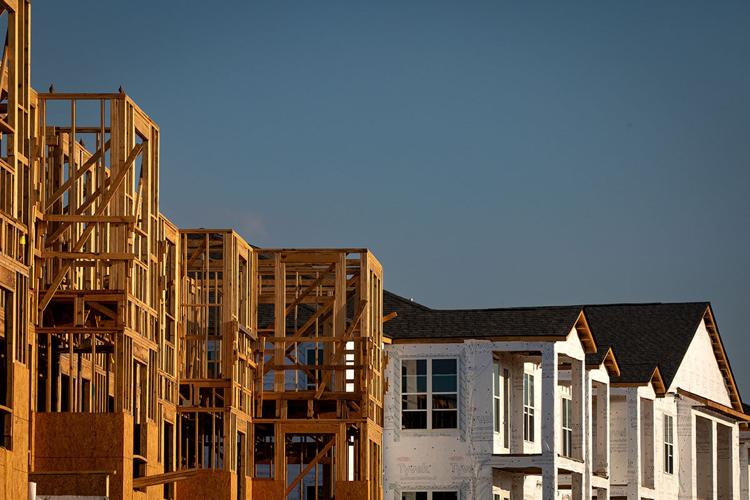
Apartments under construction in Smyrna
Speaking to the Scene, Professor Howard emphasizes that the calculations are complex and that the study does not prove the same thing is happening in Nashville today. Interest rates, financing and other local factors also affect construction, he says, and the effects of one immigration enforcement program may not be the same as another.
Tim Lanier, a carpenter and longtime general contractor who remains active in Middle Tennessee construction, says immigration enforcement has compounded a skilled-labor shortage that predates the current crackdown. At the height of his contracting business, he employed around 25 people — roughly half of them Hispanic. Much of the trade is learned informally over years, he tells the Scene, and a worker with a decade of experience cannot be replaced by handing a hammer to a willing volunteer.
“It’s hiding in plain sight, and it’s a big issue,” Lanier says. “After our couple of raids, every construction site was shut down, and people didn’t leave their homes. We need more workers, 100 percent.”

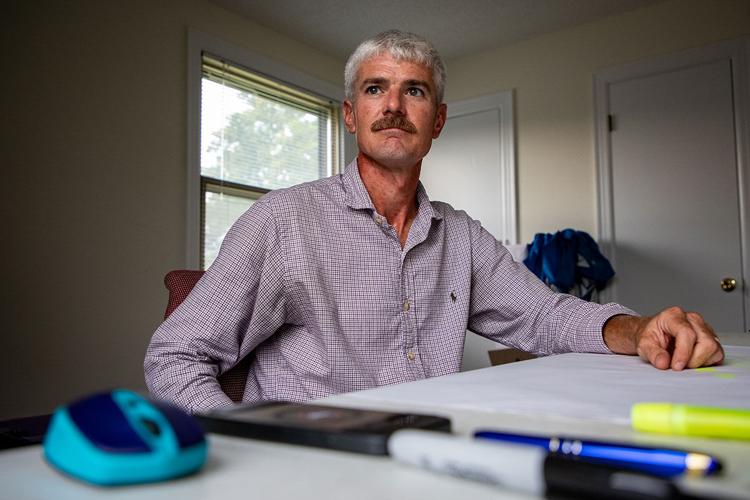
Tim Lanier
Barajas and others interviewed for this story say crews in exposed trades — including roofing, framing and exterior work — can thin dramatically after immigration enforcement activity, or even rumors of it. Some subcontractors have removed company signs and logos from their trucks, hoping to attract less attention on the road.
“When people disappear from job sites, the work doesn’t shift to someone else,” Barajas says. “It stops.”
The effects are not evenly distributed across construction. A general contractor and a concrete worker interviewed for this story say large commercial projects, including downtown sites, are less likely to rely on undocumented labor and have tighter access controls, making them less exposed to immigration enforcement.
That matters most for lower-priced housing, where margins are thinner. Luxury developments may be able to absorb or pass along higher costs. Affordable projects have far less room to do so.
Sarah Beth Paul, a Nashville real estate agent, sees a version of this divide in the resale market. Buyers shopping at $500,000 and above can generally absorb repairs, she says. Below that threshold, even immediate painting, landscaping or power washing can become financially impractical.
For years, she depended on contractors who could handle that work affordably. When those workers are unavailable, sellers either wait or turn to larger companies that charge more.
“It’s either impossible to find anyone, or it’s too expensive,” Paul says. She has also watched workdays evaporate when rumors of immigration sweeps circulate. The worker loses wages, the contractor loses time, and the seller and buyer wait.
Renters may not feel the consequences for years. If developers start thousands fewer apartments now and demand continues to grow, the shortage becomes visible only later, after today’s inventory has been absorbed.

Construction site in Smyrna
For immigrant families, the consequences are immediate. The Mexican nationals interviewed for this story say they understand ICE targeting people who commit serious crimes; what troubles them is the feeling that simply being Mexican brings baseline suspicion.
Jesus has started studying how white landscapers dress and changing his own clothes to blend in. When people mistakenly think he’s Arabic, he admits feeling relief — at least they haven’t identified him as Mexican.
Others try to make themselves invisible at home. One worker the Scene spoke with keeps the television barely audible, afraid a noise complaint could bring ICE to the door.
“We can’t have a TV on past 8 p.m.,” says Juan, another source who’s asked to be referred to by an assumed name. “We are trying to make ourselves as small as possible.”
He continues: “My children are American citizens, and going back [to Mexico], I would lose it all. My job. My tools. My life.”

Juan holds his wife's hand in their Nashville apartment
Anne Boatner and Maggie Behringer of the Nashville Hispanic Bar Association Foundation — which will soon be renamed Renters’ Rights of Tennessee — say attorneys frequently hear from immigrant families after a primary breadwinner has been detained. A household can go from paying rent on time to facing eviction in a single afternoon.
“Landlords have a fear that they have to ‘check papers’ under the law, and the raids have been a turning point,” Behringer says. “There’s now a kind of permission structure.”
Behringer notes that threats to report tenants to federal authorities have spiked since the May 2025 raids, creating coercive leverage against vulnerable renters.
“ICE is now being used as a form of extortion,” Boatner adds, describing how some landlords use deportation threats to bypass standard eviction procedures or avoid addressing unlivable conditions.
Despite having claims under discrimination and housing laws, many clients remain too afraid to seek justice. “What was frustrating was that these cases are winnable,” Boatner says, “but plaintiffs are often not comfortable being represented or appearing in court.”
There is another, less visible layer to the vulnerability, a kind of identity-based exploitation. Advocates who work with immigrant communities say abuse can come from within those communities as well, from people who share a language, nationality or background and who understand, perhaps better than anyone, exactly how much a victim may have to lose by asking for help.
Luis, whose name has been changed to protect his identity, is a 35-year-old roofer from Honduras who has worked in construction for about a decade. He says people who’ve hired him have used the threat of immigration enforcement to avoid paying him. Luis says this year alone, customers in Gallatin, Franklin and Murfreesboro have withheld nearly $10,000 that he was owed for roofing, framing and other construction work.
When Luis pressed for payment, he says, some threatened to call ICE. Others paid him with checks that bounced. He received three such checks this year, totaling between $3,000 and $4,000. Altogether, he estimates unpaid work and bad checks have cost him roughly $13,000.
In a typical year, Luis says he grosses between $30,000 and $35,000, while spending several thousand dollars of his own money on supplies and tools. This year, he expects to gross about $18,000.
Luis came to the United States about a decade ago after leaving Honduras — under threat of death, he says.
“Somebody was trying to kill me,” he says. “You know, poor people …”
He trails off.
His experience is personal, but the circumstances he fled are not unusual. The United Nations Refugee Agency estimates that more than 247,000 Hondurans were internally displaced by violence between 2004 and 2018. Extortion, territorial control by criminal groups, targeted threats and forced recruitment were among the drivers.
For Luis, there is a brutal irony. He fled one country because he feared being killed. In Tennessee, he now finds himself threatened with being sent back there by people who owe him money.

Juan adjusts ladders mounted on his work truck outside his Nashville apartment
Supporters of aggressive immigration enforcement make a straightforward case: Construction should not depend on unauthorized labor. Force employers to compete in a legal labor market, the argument goes, and wages and working conditions will improve, automation will increase, and more American workers will enter the trades, even if housing costs rise during the transition.
The Department of Homeland Security defended the May 2025 Nashville operation — which ushered in a period of intensified immigration enforcement that continues today — primarily as a public safety measure. “DHS is a law enforcement agency, and it will continue to enforce the law and work with all state and local partners so that Americans do not continue to be victimized by criminal aliens,” the department said following the operation.
In written responses, Marcela Escobari, research vice president for global economy and development at the Brookings Institution, says the assumption that displaced workers will be readily replaced overlooks what often happens when workers disappear suddenly. Rather than raise wages until someone takes the job, employers may simply produce less. Construction is particularly vulnerable, because crews are specialized and interdependent. A framing crew that loses several workers in a sudden way does not necessarily build more slowly. In some cases, construction all but stops.
Escobari says immigration enforcement can reduce not only the supply of workers but also the demand needed to sustain production. She points to evidence that states with the largest increases in immigration arrests in 2025 saw consumer spending fall by 1.7 points.
History offers another example. When the agricultural-worker initiative the Bracero Program ended in 1964, one of the goals was to improve wages and employment for domestic farm workers. Growers responded in part by mechanizing instead. Subsequent research found no significant increase in farm wages or employment.
Over time, Escobari says, firms may raise wages, reorganize production, automate parts of the work or otherwise adapt to having fewer workers. But those adjustments can be uneven, slow and costly, and the evidence so far does not show that they are offsetting the near-term job losses associated with increased enforcement.
Brookings is now updating its findings with data covering 2025. Escobari says the forthcoming analysis continues to find significant job losses caused by ICE enforcement surges in key cities.
The timing is critical: Tennessee continues to gain residents. Census estimates show the state added 42,389 people through domestic migration between July 2024 and July 2025. At the same time, state law passed this year requires every county sheriff to enter into a 287(g) agreement with federal immigration authorities by Jan. 1, 2027 — under which designated local officers can carry out federal immigration enforcement functions under ICE supervision. Whatever chilling effect Nashville has experienced so far is occurring before that statewide mandate fully takes effect.
State Rep. Aftyn Behn (D-Nashville) argues that those two policy goals — housing affordability and aggressive immigration enforcement — are fundamentally at odds.
“The homebuilders in my district are seeing the writing on the wall,” Behn says. “What is the breaking point?”
None of this guarantees an immediate housing crisis. The decline in apartment starts may mostly reflect interest rates and tight lending, and the extraordinary construction wave that reshaped the region may simply have run its course. Contractors may adjust. Wages may rise. Today’s apartment surplus could cushion demand for years.
But Jesus sees the problem from the ground level. When he can’t make a job, customers call.
“If I don’t go the day I am supposed to go,” he says, “the person is like, ‘Are you coming?’”
Then he reframes the question.
“What happens when we’re not here?”
Earlier in his conversation with the Scene, he had captured the contradiction even more simply: “My labor is wanted, but I’m not wanted.”
For a region that spent the past decade worrying about whether it could build fast enough, Nashville’s next housing challenge may be harder to spot. It begins when the people required to build it stop showing up.




Post a comment as anonymous
Report
Watch this discussion.
(0) comments
Welcome to the discussion.
Log In
Welcome to the discussion.
Keep it clean. Please avoid obscene, vulgar, lewd, racist or otherwise abusive language. Comments featuring hate speech or threatening or violent content will not be tolerated.
PLEASE TURN OFF YOUR CAPS LOCK.
Be truthful. Don't knowingly lie or mislead.
Be proactive. Use the “report” link on any comment that violates our comment policy.
Share with us. We'd love to hear your feedback.