

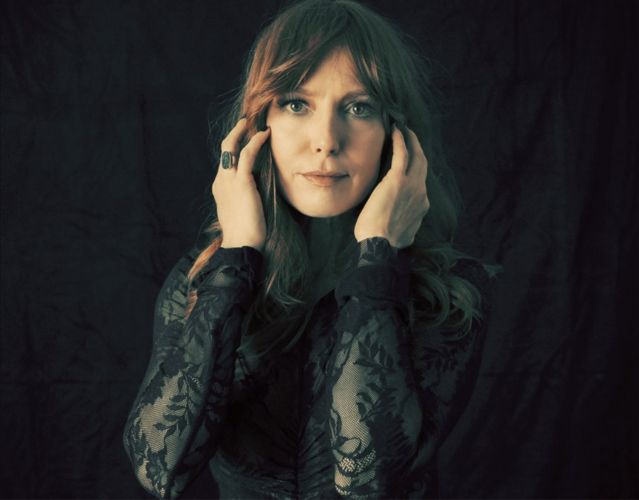


Alicia Witt
At age 7, currently Nashville-based artist Alicia Witt found her first acting role playing Alia Atreides, the unearthly child in David Lynch’s 1984 Dune adaptation. It began a lifelong creative bond: Lynch cast her again as the teenage Gersten Hayward in Twin Peaks, and brought her back for the 2017 reboot, Twin Peaks: The Return.
Witt, who starred as Ruth Harker in Osgood Perkins’ 2024 film Longlegs, credits Lynch with encouraging her long-term transcendental meditation practice. She also says that through meditating after his death last year, she’s received insights from him that play a direct role in her new album Between Heaven and Earth.
Out Aug. 28, the record is a tribute to Lynch that blends mystical, piano-led jazz ballads and acoustic folk stylings from The Civil Wars’ John Paul White. Ahead of a release party at Grimey’s, Witt caught up with the Scene about the record and David Lynch’s influence. Our conversation has been edited for length and clarity.

The film's Nashville-based co-star will participate in a Q&A tonight at the Belcourt
What are some lessons you learned from David Lynch?
Well, because he came into my life when I was so little, it’s hard for me to differentiate which lessons I learned that didn’t come from him. I remember the moment of meeting him for the first time. I remember him walking in, and just instantly feeling that he was a kindred spirit. So I suppose that’s one of the obvious lessons. I think I learned in that moment that you can find kindred spirits anywhere.
I think of Dune as not just the first movie I made. ... With David at the helm, I understood what it should feel like. The way he respected all actors and all people — every crew member — and remained passionately confident about what his vision was. He would always describe it in this spiritual way. That has carried with me my entire life: this understanding that when you’re making music or playing a character, it doesn’t have to be described in a way that is technical. It should instead be described by how it feels.
When we meet your Twin Peaks character Gersten, she’s a child who’s trying to comfort a family in grief. There’s a beautiful full-circle element there with this album.
I hadn’t thought of that connection. That’s really beautiful. Yeah, because Laura Palmer’s parents are like family to us. They are our family, as well as my own parents, who are grieving and shaken by the loss.
I think of this album not so much as an antidote to the grief of him being gone, [but] as the utterly magical phenomenon that’s been his presence, in not just my life but many people’s lives since he has passed. I would say with absolute certainty we don’t just vanish when we’re gone. The things that I feel David has done since he’s been gone are really incredible.
What are some of those things that you feel his influence in?
What’s most specific is advice he’s given — personal advice, as well as advice having to do with how to bring creative endeavors into the world. In some instances on the album, like the last song, “Director,” those [lyrics] are all things that he said to me.
Is transcendental meditation also a part of your creative practice?
Yes, it is. He never tried to push it on me or anyone that I’m aware of. He just led by example. He had been practicing TM since long before I first met him in 1983, and he did it like clockwork twice a day, until the moment he died, and I had not been as consistent about it. About a month before he passed away, I started doing it like clockwork, and I realized I was going to do it like that now for the rest of my life. It felt like it suddenly clicked in for me.
My biggest regret is that there were at least three different times I went to write him an email. I was living in Nashville and didn't see him unless I was in L.A. ... And I wanted to write to him and say, “David, you were right.”
Do you think maybe he knows?
Oh, absolutely. I am certain he knows. In fact, I felt him touch my shoulder when I went home to meditate, when I got the news that he had passed away. I knew that he was there. It is in TM that he has shown up. It's never been in dreams or waking visions.

Alicia Witt
You mentioned the closing track, “The Director.” Can you tell me more about this song in particular?
The idea started arriving to me to create an album in unabashed tribute to him. After I attended his memorial, which was in February last year, and these insights continued to come through TM, I suppose I trusted it a bit more. I mean, I knew what I was experiencing, but talking to others at the memorial who were also receiving insights from him, I realized this is a very real thing.
I did meditate, and I found myself reaching out to him in spirit to help me to channel him into something that would do justice to him. And the music arrived … and I realized at least these things he was saying were not only personal advice, and they weren’t only music advice. It was advice about how to move forward in my own life.
That day, in the studio, we had already recorded four days. I had the engineer leave the microphones running. I started recording it, and some of those words kept on changing as I recorded. And then I did it, and I knew it was done. I felt certain that I had done honor to David and conveyed what he was trying to tell me. I never listened back to it. I didn’t even have headphones on.

David Lynch: A Retrospective will take place March 7-19 at the Belcourt
Was there anything else sonically that was on your mind in terms of creating the world of the album?
I was clear: This isn’t an Angelo Badalamenti [album]. That’s an artist that David collaborated with, that gave a specific life to the music inside of so much of David’s work. But this wasn’t to do with that. It’s to do with what he means to me, and what that place between heaven and earth sounds like.
We didn’t ever think what genre it was or anything like that. We just thought, “What does each song need?”
It sounds like it was pretty intentional, differentiating from what people might think a David Lynch tribute album would sound like.
That’s exactly right. It’s interesting, though. … David's work, to those who didn't know him, had the effect of making people feel less alone. So part of bringing that group together was finding people that felt his work had mattered to them as well. I imagine if people liked the music that was used in some of his movies, they might like this music, even though we didn't intentionally think of that shape.
And I imagine that Angelo, in working with David, was very in tune with that place of pure awareness, and he was channeling his interpretation of that thing that David emanated — created in his work. So it makes sense that they have something in common with each other, right?



Post a comment as anonymous
Report
Watch this discussion.
(0) comments
Welcome to the discussion.
Log In
Welcome to the discussion.
Keep it clean. Please avoid obscene, vulgar, lewd, racist or otherwise abusive language. Comments featuring hate speech or threatening or violent content will not be tolerated.
PLEASE TURN OFF YOUR CAPS LOCK.
Be truthful. Don't knowingly lie or mislead.
Be proactive. Use the “report” link on any comment that violates our comment policy.
Share with us. We'd love to hear your feedback.