
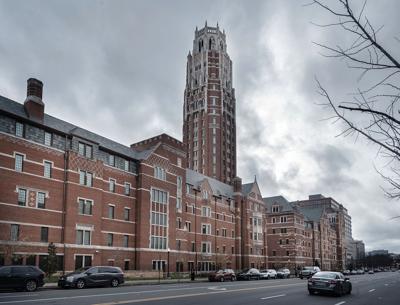

Vanderbilt University will take a major first step in February as it seeks to redevelop 40 acres off West End for a new “innovation neighborhood.” At a community meeting on Thursday about the project’s potential impact on area traffic, university representatives shared that they plan to bring a broad rezoning in front of the Metro Planning Commission next month, paving the way for 20 years of development.
Documents filed in November gave the public a first look at the specific plan (SP) rezoning sought by the university for a triangular slice of property between school athletic facilities and West End Avenue. The so-called innovation neighborhood follows schools like Cornell and Harvard universities in staking real estate where institutions court corporate investment for shared research and business interests.
The preliminary SP plan (find it below via PDF) could allow Vanderbilt to build up to 35 stories in some areas, like the corner of West End and Natchez Trace — currently a Wendy’s. In the 1970s, Vanderbilt claimed much of this land by litigating a controversial application of eminent domain over residents’ opposition.

The school reports a decrease in student and faculty drivers — but neighbors say overflow parking is still an issue
“At 25 or 30 years, at full buildout, we’re looking at traffic almost doubling — that gives you a frame of mind of vehicles moving in and out of the space long-term,” Eben Cathey, working on community relations for the university, told a room of neighborhood residents Thursday. “ That's not gonna happen overnight. This is gonna be an incremental process where we're checking in regularly to make sure we're able to service the density that's gonna be here.”
The traffic study predicts that more traffic will further stress nearby roads, including a key intersection at West End and 31st Avenue, which received an “F” rating by consultants. Renderings show extensive sidewalk and green space improvements within the district.
The Metro Planning Commission’s opinion on the rezoning will be the first major hurdle for the project. Whether the SP is granted, and under what conditions, are among the few legal constraints that the public can put on the district’s ambitious vision. Vanderbilt has not yet won over Councilmember Tom Cash, though he attended Thursday’s traffic study discussion.
“I’m not ready to support it in its current form,” Cash tells the Scene. “There’s a benefit to the SP process — the community can offer input. I definitely don’t think we’re there yet for consensus for approval. Some of this is about height, some about uses, and we don’t totally know exactly what the SP will look like. But also, we all know a big parking lot is not the best use of space.”



Post a comment as anonymous
Report
Watch this discussion.
(0) comments
Welcome to the discussion.
Log In
Welcome to the discussion.
Keep it clean. Please avoid obscene, vulgar, lewd, racist or otherwise abusive language. Comments featuring hate speech or threatening or violent content will not be tolerated.
PLEASE TURN OFF YOUR CAPS LOCK.
Be truthful. Don't knowingly lie or mislead.
Be proactive. Use the “report” link on any comment that violates our comment policy.
Share with us. We'd love to hear your feedback.