

Among other things (obviously), 2021 was marked by an ongoing effort from certain sectors to paint a truer portrait of the Civil War. A group of Black and white pastors in Franklin, for example, spearheaded an effort — appropriately called "Fuller Story" — that culminated in the unveiling of a statue of a United States Colored Troops soldier on the square. And blessed be, the (ahistorical and ugly) Nathan Bedford Forrest monstrosity that once overlooked Interstate 65 is now languishing in a storage shed somewhere.
Hey, we're still not there yet, but it feels like we are taking steps to crumble away the goofiness of Lost Causism that plagued the teaching of history for far too long — a version of the story of the South that lied to white folks to their detriment and contributed to the oppression of Black folks. It's a philosophy that wasn't really to anyone's benefit except scaredy-cats, liars, charlatans and manufacturers of traitorous-flag memorabilia.
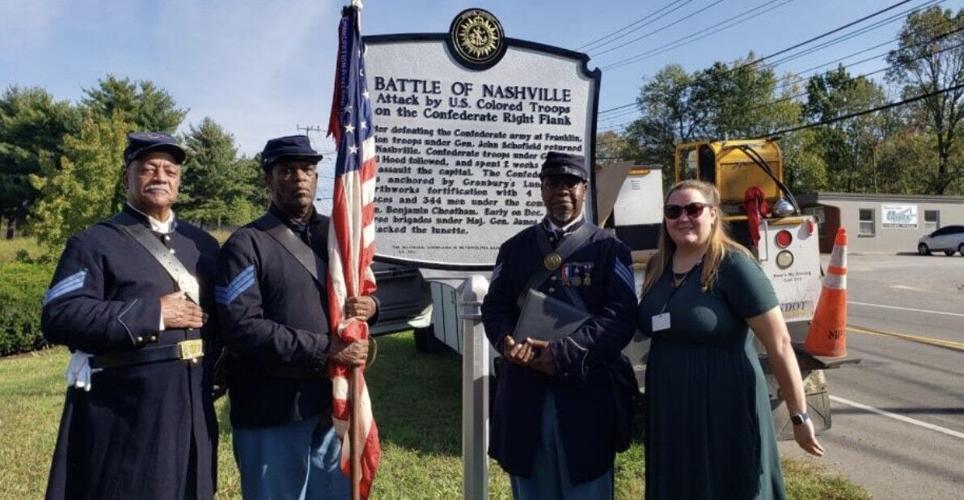
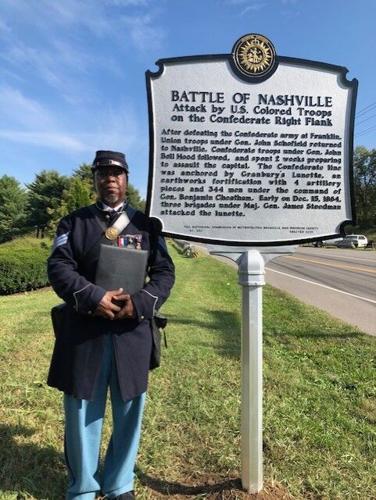
In any event, late last year — a few weeks before the 157th anniversary of the Battle of Nashville in December — the contributions of the USCT in the battle were memorialized with a historical marker. Finally.

To summarize the military situation: John Bell Hood, who never met a battle he couldn't lose, wanted to pursue Sherman. Sherman was like "No" and just kept trucking to Savannah, so Hood decided he'd come up to Tennessee and take advantage of a geographically divided Union army and seize control of Nashville, which had basically been under Union control since five minutes after secession. Hood's plan was to chase John Schofield's army from southern Middle Tennessee, defeat it, and then swing on up to Nashville to take on a depleted force under George Thomas. Hood finally caught Schofield in Spring Hill, but a series of, frankly, hilarious miscommunications with his field commanders (which may or may not have been exacerbated by Hood not getting much sleep, eating too much and being quite drunk) allowed Schofield to slip off to Franklin. Hood, mad and potentially hungover, tried to attack Schofield there — that didn't work, and he got a bunch of his own generals killed. Unsatisfied, Hood decided he'd go to Nashville, as a treat, and try to wear down Thomas and now Schofield with the ultimate goal of ... boring them to death, maybe? Who knows! The Union had been building defensive works since taking Nashville early in the war, so if this seems like yet another piece of foolishness on John Bell Hood's part to you, you're on to something.
So here's where the USCT comes in. Eight regiments had been part of Gen. James Steedman's division for most of the war, but Steedman's troops — including the USCT personnel — hadn't seen much battle action, mostly garrisoning forts and guarding rail lines. That made them unusual for the Union troops who were mostly battle-tested, contrasting with Hood's crew, which was mostly dead. Nevertheless, the USCT was tasked with attacking Granbury's Lunette, named for Gen. Hiram Granbury and defended by Granbury's Texas Brigade (but not the general himself, because, you guessed it, he died at Franklin). This was the first time USCT soldiers would face Confederate soldiers in battle.
Militarily, it was a tough one for the USCT. They suffered heavy losses and failed to take the lunette. Ultimately, Nashville was a comprehensive victory for the Union, and the Confederacy was pretty well done for in the Western Theater, allowing Grant et al. to focus on Lee in the east, and we know the rest.
However, the action at the lunette on the Confederate right was important nonetheless. The USCT showed the Black soldiers could fight just as well and bravely for freedom and their country as white ones. As Frederick Douglass said, "Let the Black man get on his person the letters U.S., an eagle on his button, bullets in his pocket, and a rifle on his shoulder, and no one can deny his right to citizenship."
Local historian Gary Burke serves on the board at Friends of Fort Negley, as well as the board at Stones River National Battlefield in Murfreesboro, and is a member of the Sons of Union Veterans. He sent along the photos you can see here of the new Battle of Nashville marker, which can be found on Polk Avenue in South Nashville, near where the road intersects with the rail line.



