





On Tuesday evening, Metro Councilmember Sandra Sepulveda plans to introduce a new bill that could raise Nashville’s standards for awarding construction contracts, emphasizing workplace safety and fair payment and compensation.
“We've been working on this for about a year, and we came to the table with several unions and several worker groups, and we’ve heard it all,” says the District 30 councilmember. “We've heard wage-theft stories, we've heard lack of sanitary facilities. … We've heard people who aren't trained. We've heard about retaliation.”
The proposed legislation seeks to incentivize contractors who show an investment in training employees, providing health benefits and maintaining clean workplace safety records. Companies meeting such standards will receive higher marks when the procurement board begins scoring bidders for construction contracts. Other factors, like participating in apprenticeship programs, would also be considered.

Councilmember Sandra Sepulveda
At the same time, companies that incurred federal or state violations within the past three years will have a more difficult time securing such work — raising the bar for what the city calls a “responsible bidder” for Metro contracts.
Under the bill, the procurement board that oversees such contracts would also be expanded to include a representative from the labor community and the Human Relations Commission. Sepulveda says the additions will help make the board more equitable.
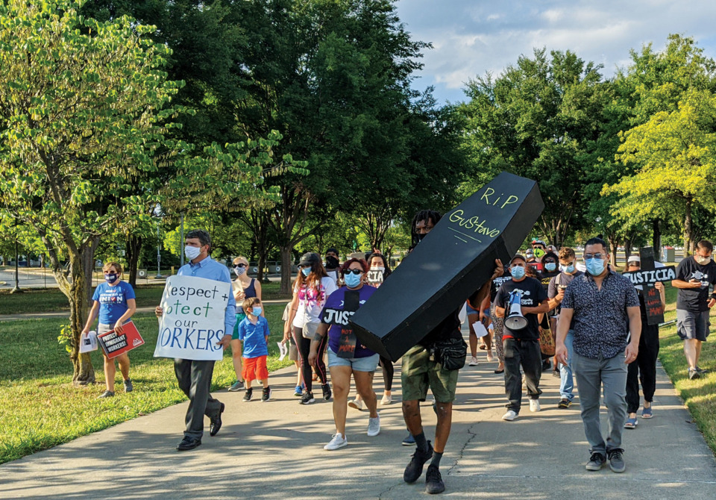
The legislation is being introduced on what would be the 17th birthday of Gustavo Ramirez, a teenager who died in a construction site accident in June. The incident highlighted long-standing accountability issues in the city’s booming construction industry. Ramirez died by falling from scaffolding, which raised safety and training concerns in a city that sees higher fatalities than other cities experiencing similar growth.
Additionally, early confusion about which company would be held responsible for Ramirez's death highlighted the confusing web of contractors and subcontractors at Nashville construction sites.
“It's important that we advocate for people just like Gustavo who didn't have that protection, and didn't have their contractors and their bosses looking out for their safety,” says Sepulveda. She later adds: “We're calling for more of a paper trail because when Gustavo died we saw that … it was hard to get in contact with the subcontractors.”
The Tennessee Occupational Safety and Health Administration fined two subcontractors, Cortes Plastering and Stover & Sons, for Ramirez’s fatal fall.
Many subcontractors in Nashville are also associated with wage theft and widespread worker misclassification, the latter of which can affect compensation benefits for on-the-job injuries. These business entities leave little evidence behind due to a lack of written contracts, and the owners often skip town or dismantle the business to avoid paying fines.
The bill also calls for employees to complete 10 hours of OSHA safety training, and for adequate and sanitary bathroom facilities. Additionally, any temporary employee who works more than 30 days must be offered employment.
While the new standards would only affect Metro-funded projects, Sepulveda hopes the city will set an example for the private sector as well.
“We're going to make sure that we try and … set a standard for everyone across the board," she says. "And at the end of the day, I think it would benefit not just the city, but also the state.”
Concerns about the state shutting down such standards exist, but Sepulveda maintains that the focus is on incentivizing new practices rather than setting up new requirements stricter than the state allows. The bill enjoys the support of pro-labor groups, like the Laborers' International Union of North America and working-class community organizers Stand Up Nashville.
“This is the correct next step to take,” says Odessa Kelly, executive director of Stand Up Nashville. “Our government has some of the largest purchasing power in the city. So that means that that is an opportunity for us to bring pathways out of poverty, to build these sustainable communities that we have dreamed about.”

Gustavo Ramirez
Ramirez’s family is also heartened by the legislation.
“This bill definitely provides more oversight for safety and responsibility and kind of catches up some of the industry to some of those new safety standards,” says Jenifer Enamorado, Ramirez’s older sister. She also notes that the bill could “help other families in the future.”
Enamorado hopes the legislation is received as a way to show Nashville workers that they matter, and that consequences for construction companies go beyond “just a small fine and continuing on with business.”
“I would just ask … our representatives, when they have a chance to review the bill to not look at it so much as it’s making things harder, but instead that it’s making things safer,” says Enamorado. “That our workers who literally build our cities, our schools, our roads, they deserve — their families deserve — the peace of mind that they matter more than a deadline. That we want them to come home at the end of the day.”
Sepulveda, Enamorado and labor advocates will speak at a press conference at 2 p.m on Tuesday, ahead of the Metro Council hearing. It can be livestreamed at Stand Up Nashville's Facebook page.



Post a comment as anonymous
Report
Watch this discussion.
(0) comments
Welcome to the discussion.
Log In
Welcome to the discussion.
Keep it clean. Please avoid obscene, vulgar, lewd, racist or otherwise abusive language. Comments featuring hate speech or threatening or violent content will not be tolerated.
PLEASE TURN OFF YOUR CAPS LOCK.
Be truthful. Don't knowingly lie or mislead.
Be proactive. Use the “report” link on any comment that violates our comment policy.
Share with us. We'd love to hear your feedback.