

Fifty-eight-year-old Billy Ray Swaner was walking along the sidewalk near the intersection of East Trinity Lane and Gallatin Pike on May 4 when he stumbled into the roadway. He was hit and killed by a semi.
Swaner, who was unhoused and frequently worked as a vendor with local street paper The Contributor, is one of 14 pedestrians who have died from vehicle crashes on Nashville streets in 2026, according to nashfatalcrash.com. Two bicyclists, six motorcyclists and 21 people in vehicles have also been killed in fatal crashes this year.
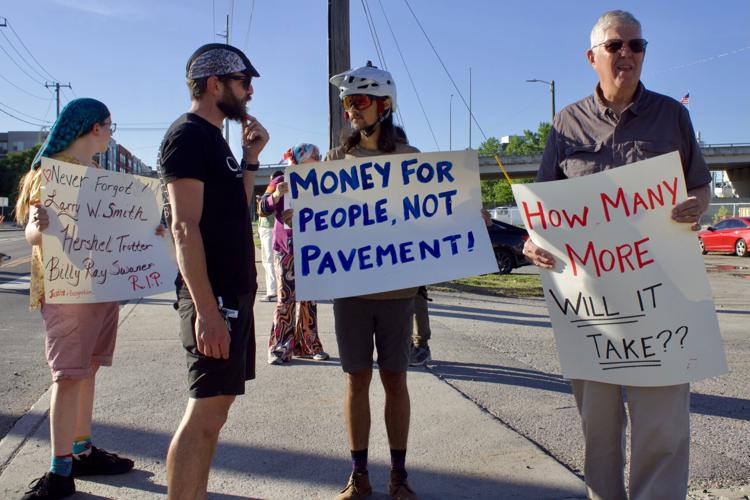
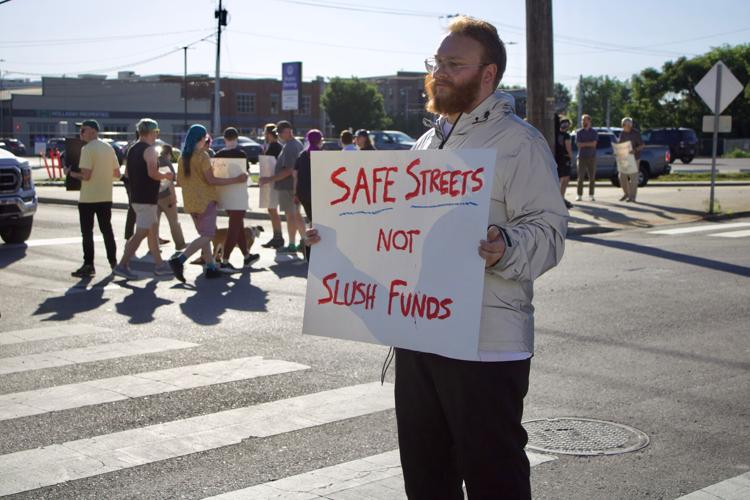
A group of local organizers gathered Monday to acknowledge the string of deaths and advocate for increased action to strengthen safety on Nashville’s streets. Several dozen protesters convened at the intersection of Second Avenue North and Junior Gilliam Way, where 52-year-old bicyclist Larry Smith was struck by a truck and killed on April 29.

Seven pedestrians killed in four weeks as projects remain delayed or deferred in city bureaucracy
The attendees blocked the intersection for roughly 30 minutes early Monday evening, yielding only to bicyclists and WeGo buses. Frustrated drivers honked and yelled at the protesters before eventually reversing their vehicles and leaving for a different route.
Monday’s protest comes as this year’s Metro budget hearings commence. Under Mayor Freddie O’Connell’s proposed fiscal year 2027 budget, approximately $8 million would be reallocated from the city’s Vision Zero program, Metro’s five-year street safety initiative seeking to reduce the amount of roadway deaths to zero. Those dollars would be put toward other Metro projects.
Charlie Weingartner, who created the Nashville Fatal Crash Map and serves as chair of Metro’s Vision Zero Advisory Committee, attended Monday’s protest and said he’s frustrated with the potential funding cut and what he says is a lack of speedy action taken by Metro following roadway deaths.
“We're out here today bringing advocates together in an actionable way to showcase the city that we're kind of over the ambivalence to fatal crashes for pedestrians and cyclists,” Weingartner told the Scene. “We aren't rising to our Vision Zero commitment that we made, and we need to be doing better.”

Funding for housing and schools, grocery tax cut eyed in mayor's FY 2027 Metro spending plan
He is pushing for more taxpayer dollars to be spent on quick-build projects to create safer intersections instead of using Vision Zero funds on extensive paving projects that don’t include enhanced safety for the roadways.
“We need to recommit to our goal of Vision Zero,” added Weingartner. “And instead of just talking the talk, and … putting plans together that say we're a Vision Zero city, we need to walk the walk, and we need to actually make these changes at a much greater speed, because people are dying every day.”
Protesters waved signs with messages like “Bike Lanes Save Lives” and “You Own a Car Not the Street.” One sign was scrawled with the message “Freddie O’ Has Got to Go,” a nod to some Nashvillians' frustration with the mayor’s approach to pedestrian safety. This follows O’Connell’s announcement of a reelection bid last week, in which he emphasized transit issues and the successful passage of the 2024 Choose How You Move transit referendum.
"The mayor’s Choose How You Move program makes the largest investment in roadway safety in our city’s history," mayor's office spokesperson Alex Apple tells the Scene. "NDOT's Vision Zero program hasn’t been cut by $13 million. Approximately $8 million in operating surplus funds allocated in 2023 were reallocated, a common practice for unspent dollars. No Vision Zero projects are on hold, and all current projects are moving forward, as planned. All projects with completed design are moving to construction. The reallocated dollars were intended for future 2027-2028 construction phases and will be requested through future capital spending plan cycles."
Metro Councilmember Jacob Kupin attended the protest, where he told the Scene he’s concerned about the amount of roadway deaths in Nashville and hopes to increase funding for transit issues as the council considers the budget in the coming weeks.

Protesters advocate for safe streets in downtown Nashville, May 11, 2026
“We heard that Vision Zero funding is being potentially cut in this budget, which in my opinion is the wrong direction to go,” Kupin says. “I think that the [Bicycle and Pedestrian Advisory Commission and Vision Zero Advisory Commission] need to have teeth, and they need to have funding for rapid response. I think that there's a need when [a pedestrian death] happens to quickly make that intersection safer.”
Caroline Lindner, a staff member at The Contributor, told the Scene she remembers Swaner as “always positive, always sweet, always saying ‘I love you.’”
As city funding conversations begin, Lindner hopes Metro will take into consideration its role in helping the unhoused community.
“I just want [Metro] to realize that we have all sorts of civilians in Nashville,” Lindner said. “Ones that have voices, ones that don’t. Ones that have homes, ones that don't. But we all need to be safe and pay attention, put more money into things, put more money into benefits, into projects that help our neighbors that need help.”



Post a comment as anonymous
Report
Watch this discussion.
(0) comments
Welcome to the discussion.
Log In
Welcome to the discussion.
Keep it clean. Please avoid obscene, vulgar, lewd, racist or otherwise abusive language. Comments featuring hate speech or threatening or violent content will not be tolerated.
PLEASE TURN OFF YOUR CAPS LOCK.
Be truthful. Don't knowingly lie or mislead.
Be proactive. Use the “report” link on any comment that violates our comment policy.
Share with us. We'd love to hear your feedback.