
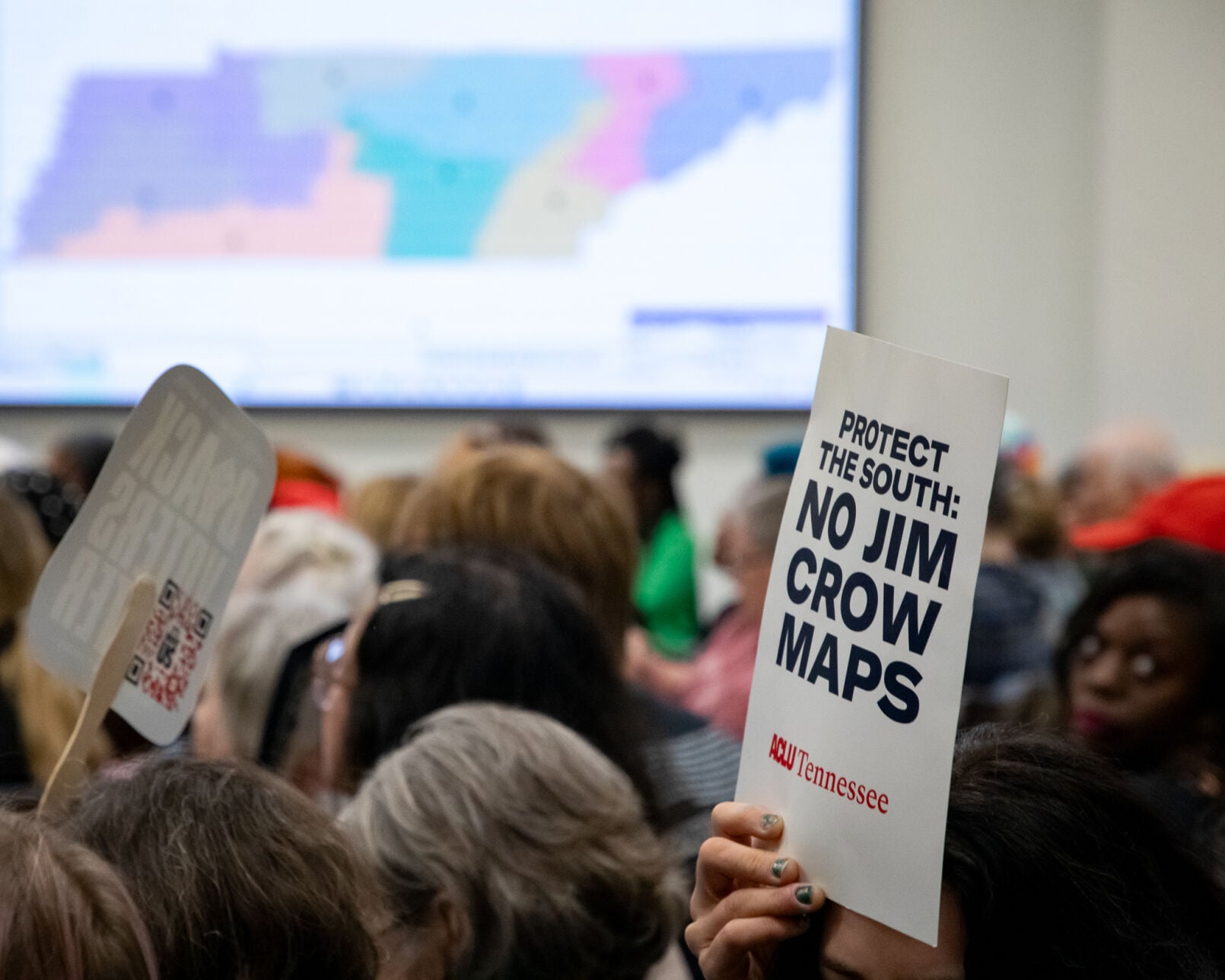

A three-judge panel heard arguments Thursday morning from the NAACP and the state of Tennessee in one of several challenges to a new map that splits up Memphis’ majority-Black congressional district. The court adjourned without issuing a final ruling, which is expected soon, as congressional campaigns are ongoing in newly drawn districts across Tennessee.

Suit focuses on bills removing state law prohibiting congressional district changes between census years
Attorney Anthony Ashton fought a two-front legal battle for the storied Black advocacy organization in front of Chancellors Anne Martin, Tony Childress and James Gass. The first issue was plaintiffs’ standing — who suffered what injury by the state’s special session on redistricting, and whether that qualifies for a court challenge. Ashton argued that plaintiffs Devante Hill, a qualified candidate in Tennessee’s 5th Congressional District, and state Rep. Jesse Chism (D-Memphis), whose district was affected by the Memphis redraw, suffered directly from actions taken by the state.
In order to redistrict between census counts, state legislators had to clear the way of legal obstacles, including a statutory ban on mid-decade map-drawing. The NAACP’s constitutional challenge against Gov. Bill Lee, Tennessee elections coordinator Mark Goins and other state defendants focused on the scope of the governor’s 230-word special session proclamation. Ashton alleged that state lawmakers have made elections more difficult and more confusing, violating the governor’s proclamation directive to “facilitate 2026 congressional elections.”
“'Facilitate' means to help make easier, or make sure it’s brought about,” Ashton argued, framing the special session as outside the scope of the governor’s proclamation. “If something would happen regardless, you’re not facilitating it. If you’re not making things easier, you’re not facilitating it.”
State defendants brought in private attorney Taylor Meehan from Chicago, a partner at firm Consovoy McCarthy with strong conservative bona fides. Meehan clerked for U.S. Supreme Court Justices Clarence Thomas and the late Antonin Scalia, both architects of constitutional originalism, and has an active Federalist Society profile as a featured speaker and event moderator. The hire indicates that Tennessee Attorney General Jonathan Skrmetti wanted a lawyer comfortable with the underlying constitutional territory in recent cases like Louisiana v. Callais, the Supreme Court opinion joined by Thomas that enabled Memphis’ redistricting by dismantling Section 2 of the Voting Rights Act of 1965.
Meehan focused on the governor’s proclamation language, offering a simpler reading of “facilitate.” In the state’s view, all the accompanying statutory tweaks done by legislators served the purpose of holding this year’s votes.
“All of these changes were necessary to facilitate — or hold — the 2026 congressional elections,” Meehan responded in defense of the redrawn map. “The state cannot facilitate — or hold — an election without knowing what candidates would be running in what new districts, just as the state could not facilitate — or hold — a swim meet or track meet without knowing what athletes would be running in what events and in what lanes.”
Meehan even framed the new laws as providing candidates with greater choice, rather than inflicting injury, between possible districts. Chancellor Martin pushed back on that.
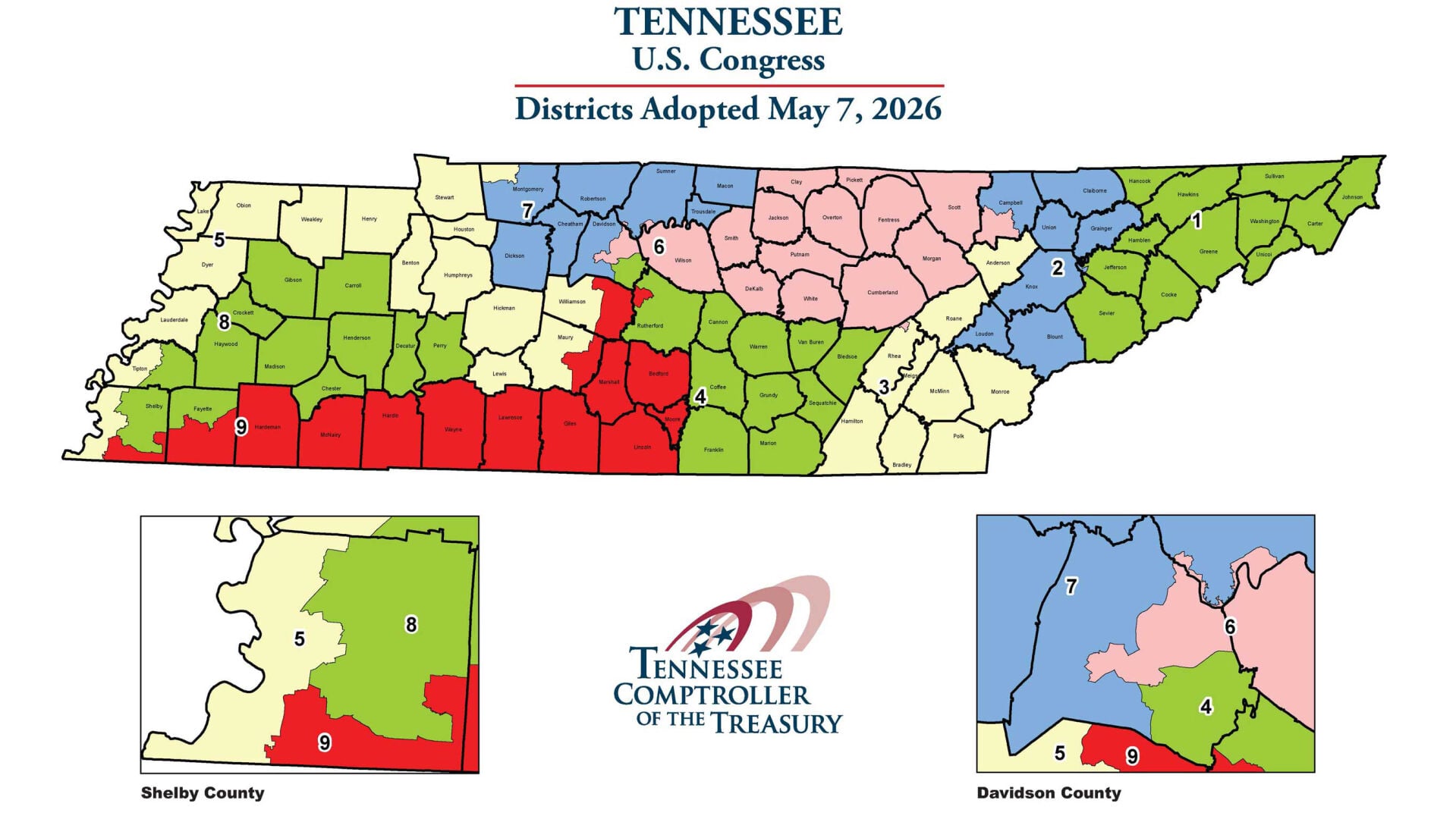
Amid fierce Capitol protests, Memphis loses majority-Black congressional district and Republicans gain midterms advantage in quick special session
“When you plan to run, you do things like figure out where your votes are, what you have to spend money on to get voters to support you, what the makeup is of the district,” Martin said. “The analyses [Hill] did as a candidate about his chances and so forth have now all been upended.”
Whereas Martin was skeptical of the state, Chancellor Childress pushed back on the NAACP’s arguments, particularly about plaintiffs’ standing. Meehan also, at times, drew from recent failed court challenges like Harris v. Lee, a 2025 challenge from local Memphis officials and Tennessee state senators to Gov. Lee’s deployment of the National Guard last year. Meehan also referenced another recent case from Francie Hunt, a plaintiff whose failed challenge to Tennessee’s 2022 redistricting stemmed from her limited standing. While they were rallying cries for opponents at the time, these unsuccessful challenges have accumulated case law that is already making future challenges more difficult.
The third judge, Chancellor Gass of Sevierville, asked no questions of either party. Based on Martin’s skepticism of defendants and Childress’ skepticism of plaintiffs, Gass may be the deciding vote for a forthcoming decision.



Post a comment as anonymous
Report
Watch this discussion.
(0) comments
Welcome to the discussion.
Log In
Welcome to the discussion.
Keep it clean. Please avoid obscene, vulgar, lewd, racist or otherwise abusive language. Comments featuring hate speech or threatening or violent content will not be tolerated.
PLEASE TURN OFF YOUR CAPS LOCK.
Be truthful. Don't knowingly lie or mislead.
Be proactive. Use the “report” link on any comment that violates our comment policy.
Share with us. We'd love to hear your feedback.