





This year’s legislative session is slowly but steadily drawing to a close, and some of the session’s hot-button legislation — like expanding school vouchers and immigration crackdowns — will soon head toward final votes.
As lawmakers finish crafting the upcoming fiscal year’s budget, prison reform, health care and additional state oversight over the Music City Loop remain on lawmakers’ minds.
Here’s a recap of this week’s action at the Tennessee General Assembly.

After tucking a citizenship requirement into a public school funding section of the bill, Republicans have refocused on voucher expansion
House to Vote on Voucher Expansion
A bill to expand Tennessee’s statewide school voucher program is set for a key vote on the House floor April 13. The bill would increase the number of vouchers offered under the Education Freedom Scholarship program to 35,000. The legislation no longer comes with a measure that would track the immigration status of students who accept the vouchers — a provision that was recently added and later removed.
Democratic Caucus Chairman John Ray Clemmons (D-Nashville) said during a Thursday press conference that he doesn’t believe Republicans currently have the votes to expand the school voucher program. Clemmons said he thinks the short-lived tying of the bill to the immigration reporting bill was an attempt “to corner their own members into having to vote for [vouchers].”
White House-Crafted Immigration Package Bills Advance
Several bills seeking to crack down on immigration, part of a wide-ranging legislative package brought forth by Republicans — and tailored with the help of the Trump administration — made key advances in the legislature this week.

Verification, reporting requirements part of proposed bills filed
House Bill 1704, which would make it a crime to be an undocumented person in Tennessee, passed in the Senate and is on its way to Gov. Bill Lee. If signed into law, the legislation would make existing as an undocumented person a misdemeanor and take effect July 1.
A bill that would require courts to cooperate with the U.S. Department of Homeland Security and federal immigration agents “acting in the enforcement of federal immigration law” passed this session’s final meeting of the Senate Judiciary Committee on April 8. The bill will also open the door for punishing judges if they “obstruct lawful operations.” Senate Bill 1952 passed 7-2 despite the bill’s sponsor, Sen. Paul Rose (R-Covington), acknowledging that judges who violate the law already face potential scrutiny by the Board of Judicial Conduct.
Rose said the bill would simply “make it more explicit.” Sen. Kerry Roberts (R-Springfield) went to bat for Rose, adding, “This just makes it abundantly clear.”
Another bill would impose a sales and use tax on money originating in Tennessee and being transferred outside of the United States. House Republicans blocked debate on the bill, which was opposed by Democrats. It will be considered before the Senate Finance, Ways and Means Committee on April 14.
State Oversight of Music City Loop Heads to Floor Votes
The state is one step closer to having additional oversight of The Boring Company’s Music City Loop. Legislation to further state officials’ control over the airport-to-downtown tunnel project passed in both chambers’ Finance, Ways and Means committees and is now on its way to floor votes in both the House and Senate.

As The Boring Company tunnels forward, we explore the company’s track record, the tunnel’s environmental impact and the politics surrounding the project
The Republican-sponsored bill, known as the “Subterranean Transportation Infrastructure Coordination Act,” would create two state governmental entities tasked with overseeing underground transportation projects in Tennessee: the Governor's Infrastructure Coordination Council and the Subterranean Transportation Infrastructure Coordination Authority. Each entity would be made up of state officials or appointees selected by the governor and speakers of the House and Senate.
The council would be charged with coordinating a review of the project among state departments and agencies. Meanwhile, the authority would be responsible for resolving disputes, hearing appeals and other “powers necessary to facilitate the construction, operation, and maintenance of a transit project,” including condemning public land owned by local governments.
Opposed by Democrats, the legislation has contributed to continued political tensions between the state and Metro Nashville over the Music City Loop. Many Metro councilmembers, who passed a symbolic resolution opposing the project, see the bill as an additional form of state overstep into city issues. (See also: the current legal battle over the Metro Council’s size.) The bill will be considered on the House floor on April 13 and is awaiting placement on an upcoming Senate calendar.
NES Board Representation Bill Moves Forward
A previously killed and now revived bill that could expand representation on the Nashville Electric Service board to multiple counties advanced in House and Senate committees this week.
The legislation, sponsored by Rep. Clark Boyd (R-Lebanon) and Sen. Brent Taylor (R-Memphis), would allow counties with more than 3,500 ratepayers who are part of a municipally owned electric company but don’t reside in that municipality to have a seat on the company’s board. The county mayor would appoint the member, requiring approval by the county commission.
The bill could also affect the electric service boards in Knoxville and Chattanooga and has been opposed by some Democrats who say it’s another form of state takeover of local government. The legislation has received pushback from Republicans as well.

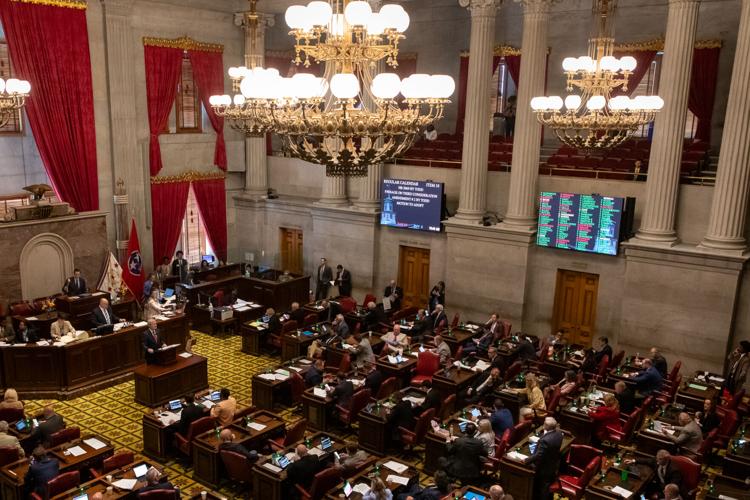
The state House chamber, April 2026
Sickle Cell Testing, Fertility Clinic Certification Advance
A bill that requires the Tennessee Department of Health to test for the presence of the sickle cell trait in each newborn in the state passed both chambers this week and is headed to the governor’s desk. In recent years, doctors at local hospital TriStar Centennial led clinical trials for gene-editing therapy that relieves symptoms of the blood disorder. About 1 in every 365 Black babies is born with sickle cell disease.
Fertility clinics would need additional certification through the state under a bill that passed the Senate this week. The original version of the bill also included limits on genetic testing, though that portion of the legislation was later amended out. In vitro fertilization advocates have expressed concern about genetic testing limits, as well as other legislation regarding fetal personhood.
Prison Reform Bill En Route to Governor
The "Proximity Placement and Family Visitation Incentive Act” is headed to the governor after it received approval from the House on Wednesday. The bill, sponsored by Rep. Harold Love Jr. (D-Nashville) and Sen. Raumesh Akbari (D-Memphis), will require the Tennessee Department of Correction to conduct a study on the impact of family visitation on incarcerated people. The department will be required to report its findings to the Tennessee General Assembly by Jan. 31, 2027.
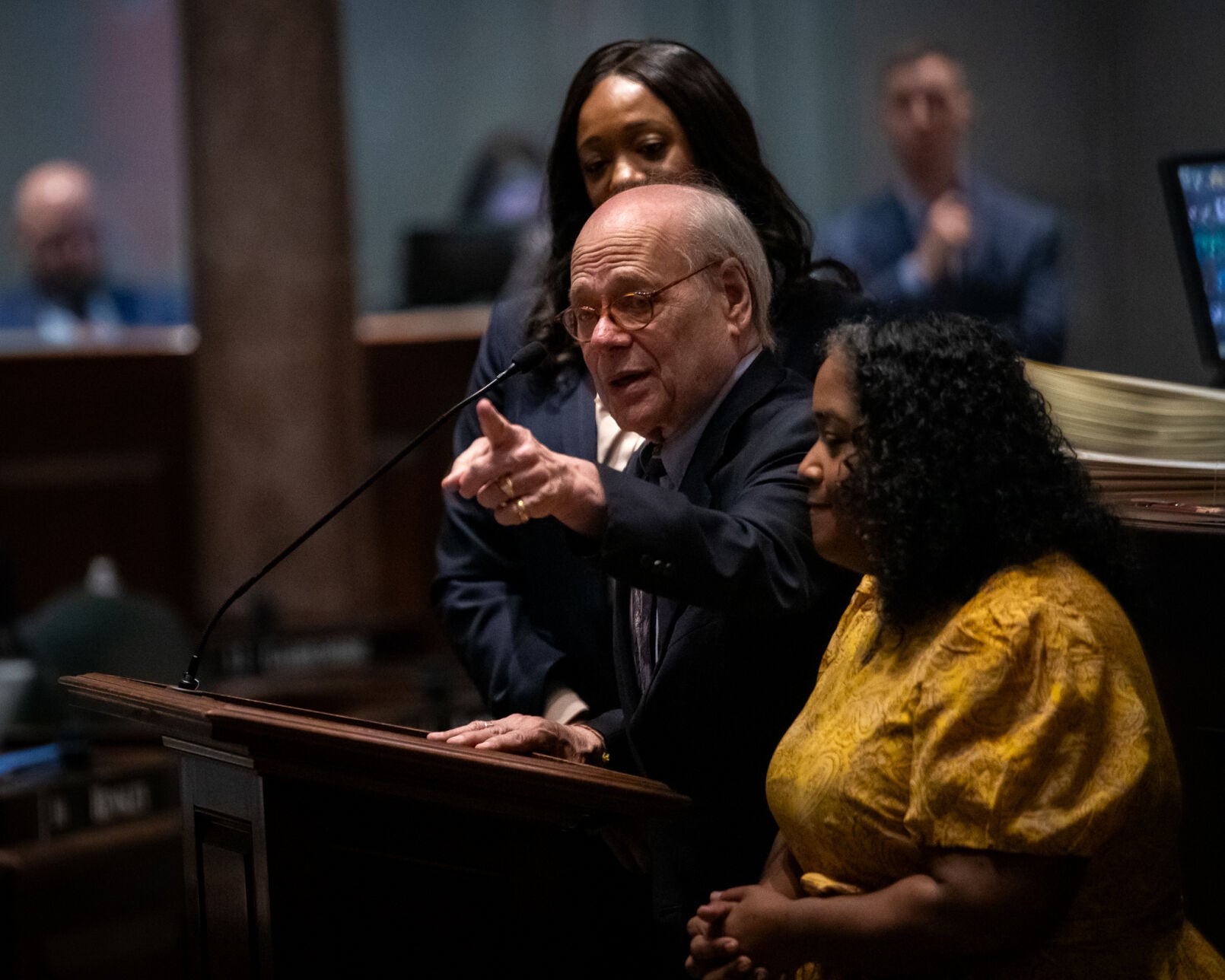
Democratic U.S. Rep. Steve Cohen, flanked by state Sen. London Lamar (left) and Minority Leader Raumesh Akbari on the Senate floor, April 9, 2026
U.S. Rep. Cohen Makes State Senate Appearance
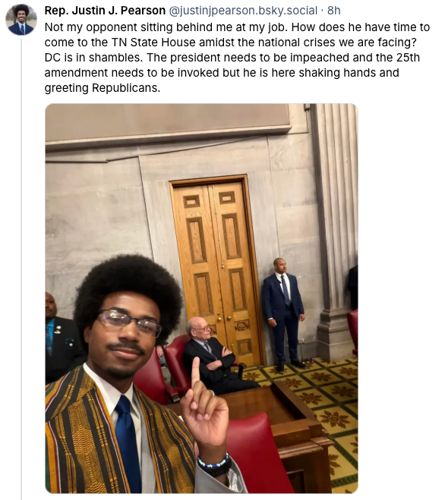
Democratic U.S. Rep. Steve Cohen, a former state senator, visited the Capitol on Thursday. He issued brief remarks to the Senate before heading over to the House, where he greeted some lawmakers on the floor — all while being trolled online in real time by his Democratic primary challenger, state Rep. Justin Pearson (D-Memphis).

An April 9 post on Bluesky by state Rep. Justin Pearson



Post a comment as anonymous
Report
Watch this discussion.
(0) comments
Welcome to the discussion.
Log In
Welcome to the discussion.
Keep it clean. Please avoid obscene, vulgar, lewd, racist or otherwise abusive language. Comments featuring hate speech or threatening or violent content will not be tolerated.
PLEASE TURN OFF YOUR CAPS LOCK.
Be truthful. Don't knowingly lie or mislead.
Be proactive. Use the “report” link on any comment that violates our comment policy.
Share with us. We'd love to hear your feedback.