



With the Tennessee General Assembly’s 2026 session expected to wrap next week, lawmakers are hunkering down to get their bills across the finish line. Meanwhile, the governor signed a symbolic resolution designating June as “Nuclear Family Month” and praising “God’s design for familial structure.” From passing school voucher expansion to approving the $58 billion state budget and limiting campus protests under the so-called “Charlie Kirk Act,” here’s what happened at the Capitol during the session’s penultimate week.

Senate narrowly votes to conform to House bill and expand Education Freedom Scholarship program to offer 35,000 vouchers
School Voucher Expansion Heads to Governor
The Republican-backed effort to expand Tennessee's school voucher program, which uses public dollars to fund scholarships for students to attend private schools, narrowly passed in the General Assembly this week and is headed to Gov. Bill Lee’s desk.
Despite receiving opposition from both Democrats and Republicans, the expansion bill passed in both the House and Senate this week and sets up the state’s Education Freedom Scholarship program to offer 35,000 vouchers for the 2026-27 school year — less than Gov. Lee’s initial proposal of 40,000. Each scholarship will be roughly $7,500 and will be awarded based on an order outlined in the bill, giving top priority to students who received a voucher during the previous school year. An additional provision of the bill requires public schools to provide a Social Security number for students who disenroll to attend a private school under the EFS program, or risk losing state disenrollment funding typically given to schools — an effort that follows Republican attempts to track the immigration status of K-12 students.

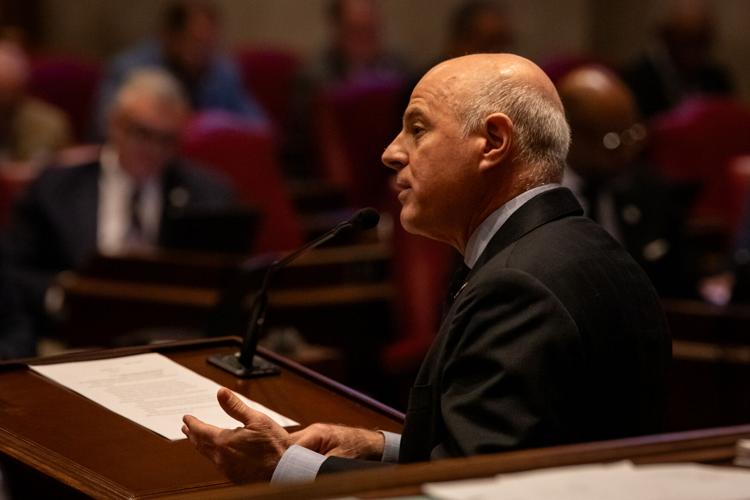
Rep. Gino Bulso speaks on the House floor, Feb. 19, 2026
House, Senate Pass ‘Charlie Kirk Act’ to Restrict Campus Protests
The House passed the “Charlie Kirk Act” in a 74-21 vote on Monday, restricting certain protests at public universities and colleges.
The bill was sponsored in the House by Rep. Gino Bulso (R-Brentwood), who pitched the bill as a requirement for schools to adopt and enforce a “statement of academic freedom” — which he said would require discipline to be taken against students who disrupt invited speakers, including with violence. It was introduced in the aftermath of the September assassination of right-wing activist Charlie Kirk at Utah Valley University. Bulso said the bill builds on the state’s 2017 “Campus Free Speech Protection Act.”
The bill would also prohibit students and “members of the university community” from disrupting a speaker in an organized protest, including — as discussed on the House floor — staging a walkout, a common form of student protest at some Tennessee high schools.
The bill also specifically defines obstructions and interferences as including “making noises with the intent of drowning out an invited speaker or hindering the audience from hearing the invited speaker,” or obstructing someone’s view with their body, signs or other objects. The bill also prohibits “physically obstructing an invited speaker or an audience member from entering or attending an event.”
The bill passed in the Senate on March 26. If signed into law, it will go into effect on July 1.
$58 Billion State Budget Approved
The Senate and the House completed their only constitutional requirement on Thursday: passing a balanced budget.
The $58 billion budget passed along party lines — 26-5 in the Senate and 83-12 in the House. Lone Republican Rep. Monty Fritts (R-Kingston) voted against the budget alongside House Democrats. Fritts is currently running for governor.
"The priorities that the governor has put on the budget do not align with either the [Tennessee] Constitution or what I think is best for Tennessee," Fritts tells the Scene.
Democrats in both chambers presented amendments to change some of the budget’s funding allocations. Republicans effectively cut debate on the 20 Democratic amendments in the House, voting each one down.
The supermajority party continues to tout its fiscal responsibility.
"Tennessee's success story continues because we have refused to follow the path of tax-and-spend policies of other states,” says bill co-sponsor House Majority Leader William Lamberth (R-Portland) in a release. “Instead, we have committed ourselves to limited government, accountability and creating greater opportunities for our citizens. I'm proud of the House and Senate's collaborative work to deliver a balanced budget that meets today's needs while honoring our obligations to future generations."
A hallmark effort of the budget praised by Republicans and Democrats alike: $137 million from the general fund for TennCare hospital buybacks, though some Democrats still questioned parts of the funding sources.
State Oversight of Music City Loop Passes
The state will soon have increased oversight of the Music City Loop airport-to-downtown tunnel project, which is currently being constructed by the Elon Musk-owned Boring Company.

State vs. Metro power struggle persists as state and local leaders fight for control over tunnel project
Both the House and Senate passed the "Subterranean Transportation Infrastructure Coordination Act," which establishes both the Governor’s Infrastructure Coordination Council and the Subterranean Transportation Infrastructure Coordination Authority. The council will be made up of commissioners from various state departments and other executive branch officials as deemed fit by the governor. The body will be responsible for coordinating a review of the project among state departments and agencies.
The authority meanwhile will hold the responsibility of resolving disputes, hearing appeals and “exercising the powers necessary to facilitate the construction, operation, and maintenance of a transit project,” according to the bill text. The authority would be composed of members appointed by the governor and speakers of the House and Senate.
The legislation has met strong opposition, mostly from Democrats, who view it as a method of stripping Metro Nashville of control over the project.
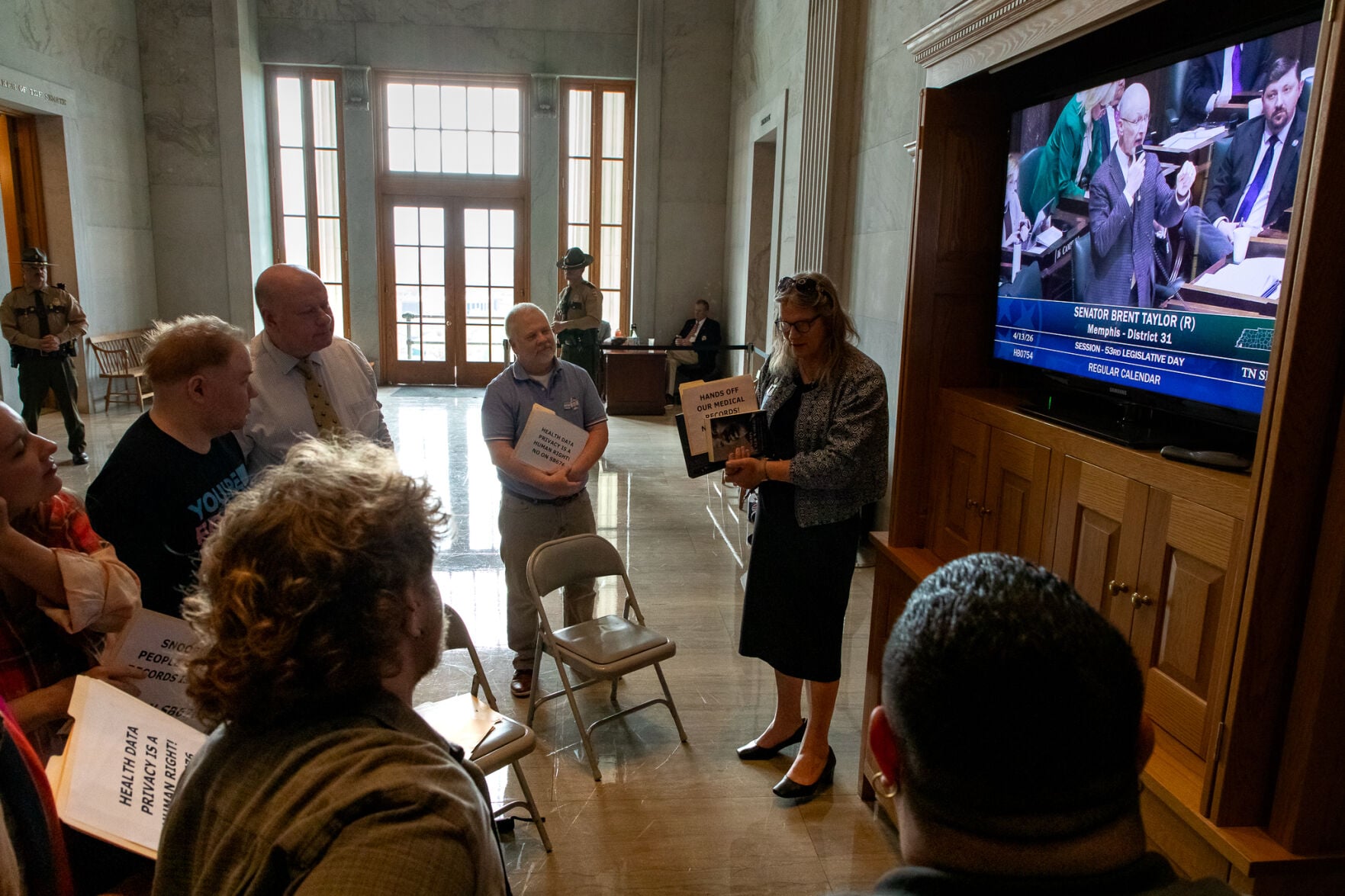
Bill co-sponsor calls gender-affirming care a 'fad' but removes county information requirement at request of protesters
General Assembly OKs Transgender Surveillance Bill
On Monday, the Tennessee General Assembly passed a bill that would require health care providers and insurance companies to submit records on transgender patients and their treatments, with the Tennessee Department of Health set to create a public report on the data. While bill sponsors promise the data would be de-identified, transgender advocates have expressed concern about being targeted for additional surveillance, especially given Tennessee’s history of anti-trans legislation.
‘Tennessee Live Music Support Act’ Fails in Committee
The House Finance, Ways and Means Committee voted down the “Tennessee Live Music Support Act,” which would have required 5 percent of sales from third-party ticket resellers to go toward the state’s recently created Tennessee Live Music and Performance Venue fund. The money would have been allocated to capital improvement grants for independent music venues across Tennessee. The vote failed 11-15 after previously garnering bipartisan support in the Senate Commerce and Labor Committee, where it advanced 8-1.
Black Maternal Health Week Recognized
This week was Black Maternal Health Week, an effort headed up by Sen. London Lamar (D-Memphis). Tennessee is ranked last in the country in maternal mortality rates according to the March of Dimes’ latest report card. Black women are nearly three times as likely as white women to die from pregnancy-related causes.

Legislators seek to tighten regulations on family influencers and AI health care, loosen for child care
This year, Lamar passed a resolution urging TennCare to cover doula care, one of her longtime legislative priorities. She also brought a bill that would require emergency departments to provide care to pregnant women at emergency departments, which is still making its way through the legislature. In addition, Lamar’s Senate Bill 1565 seeks to establish a program that would help cover burial costs for mothers who suffer a stillbirth.
"Black Maternal Health Week exists because Black mothers are dying at preventable rates,” Lamar says in a statement. “The data is clear. The disparities are real. And in Tennessee, the problems are compounded by closed maternity wards, restricted access to care, and now cuts to health care funding that keeps safety-net hospitals open. … Every mother deserves the tools she needs to deliver a healthy baby. Every family deserves to come home whole. We will keep fighting until that is the reality for Black women in Tennessee."
Also this week, Republican-sponsored legislation passed that would allow pregnant people with a certified high-risk pregnancy to qualify for a disabled driver placard. The legislation passed in both the House and Senate and is en route to the governor.



Post a comment as anonymous
Report
Watch this discussion.
(0) comments
Welcome to the discussion.
Log In
Welcome to the discussion.
Keep it clean. Please avoid obscene, vulgar, lewd, racist or otherwise abusive language. Comments featuring hate speech or threatening or violent content will not be tolerated.
PLEASE TURN OFF YOUR CAPS LOCK.
Be truthful. Don't knowingly lie or mislead.
Be proactive. Use the “report” link on any comment that violates our comment policy.
Share with us. We'd love to hear your feedback.