

The Tennessee State Capitol
Lawmakers in the state House have released an opinion exploring the possibility of rejecting more than a billion dollars in education funding as part of a joint committee of the state House and Senate. Neither the House nor the Senate report suggests rejecting the federal education funds outright, though both provide recommendations about how Tennessee could respond to the requirements attached to funds moving forward.
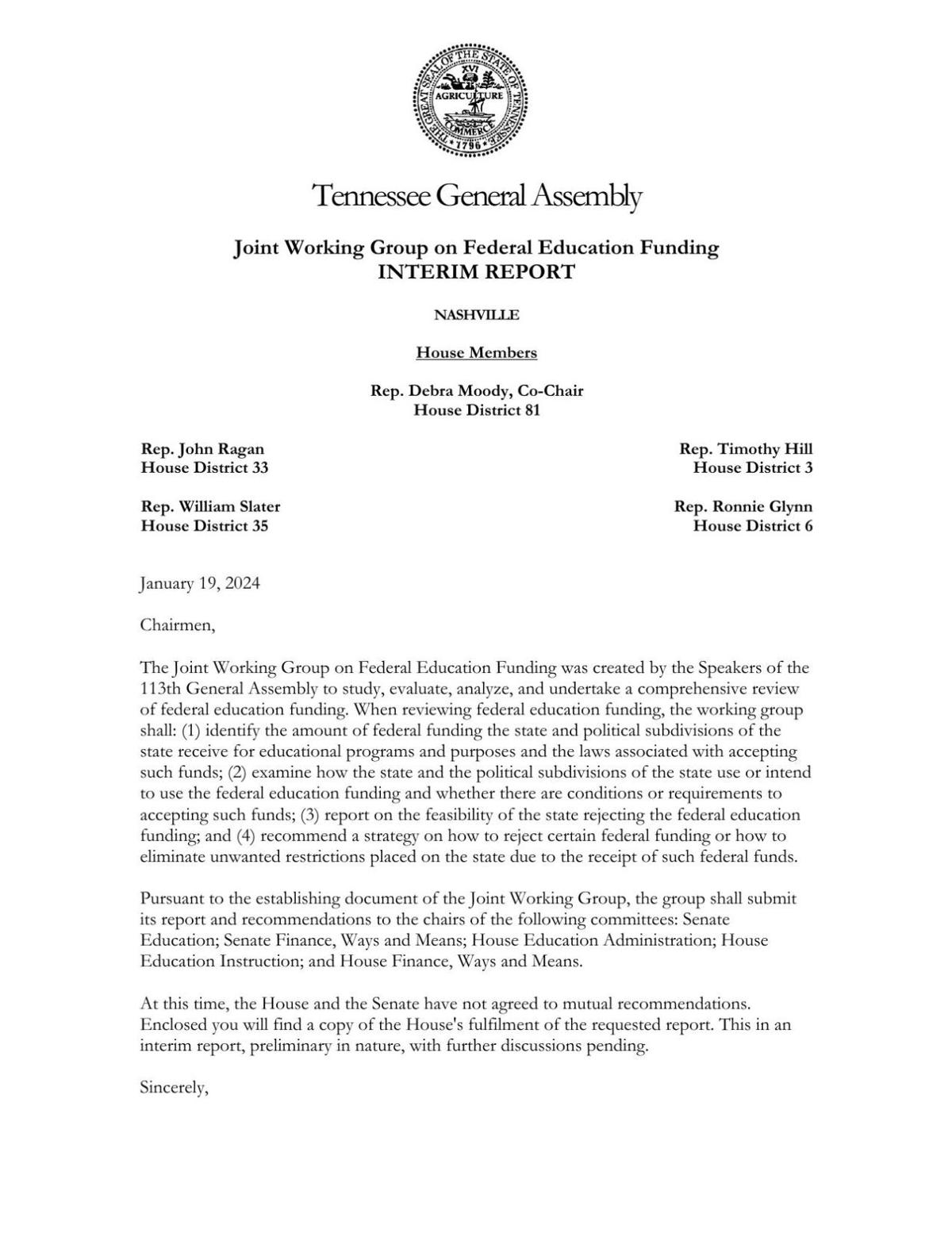
House Speaker Cameron Sexton (R-Crossville) and Senate leader Randy McNally (R-Oak Ridge) called for the joint House and Senate working group last year. Senate members disagreed with the recommendations of their colleagues in the House, which resulted in two different versions. The Senate’s report was released on Jan. 9, with the House’s submitted 10 days later. A letter accompanying the House report called its findings “preliminary in nature, with further discussions pending.” Rep. Ronnie Glynn (D-Clarksville) refused to sign the report, citing opposition to the idea of rejecting federal education dollars.
The House’s report, like the Senate's, lays out how much funding the state receives from federal entities — nearly $1.3 billion in 2024, around 10 percent of the state education budget — and the requirements attached to it. Federal education funding comes via various programs. The largest sources include the Every Student Succeeds Act (formerly known as the Elementary and Secondary Education Act) and the Individuals With Disabilities Education Act. The former provides funding meant to address educational inequities for economically disadvantaged students, English learners and more; related obligations include reporting, accountability and assessment requirements. The latter supports students with disabilities and requires states to provide a “free appropriate public education” through individualized education plans, among other measures. The U.S. Department of Agriculture also contributes a large share of federal funding to provide free meals to qualifying students, though it has nutritional guidelines that must be met.
Acknowledging that “there are more questions than definitive answers" because this has never been done before, and several federal requirements could still exist in the absence of federal education funding, neither report suggests replacing these funds with state dollars. Instead, they both recommend exercising flexibility within federal laws, requesting waivers from certain requirements, attempting to reauthorize federal education laws and involving legislators in grant processes for the Tennessee Department of Education.
During a November hearing, the House side of the committee (but not the Senate) heard from the Center for Practical Federalism and right-wing think tank the James Madison Institute. Representatives from both groups expressed skepticism regarding the Federal Department of Education and its requirements. A synopsis of these hearings was included in the House’s report. Additional recommendations not included in the Senate’s report include calls for a fiscal impact analysis around federal education funding and presentations on related expectations and rules relevant to the Tennessee Department of Education. The recommendations also call for yearly hearings about federal testing requirements and a report about food waste in Tennessee — a matter that came up often during the hearings.