
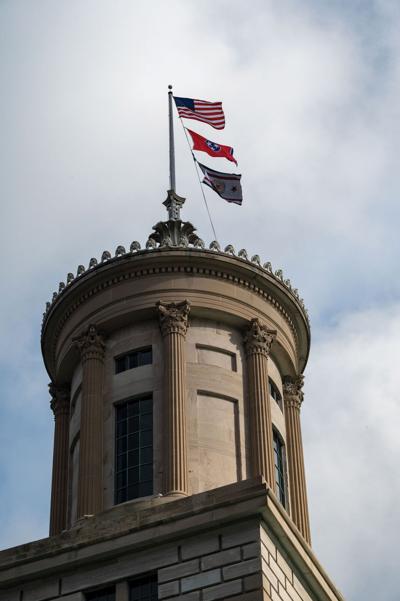


A joint task force called by Republican state leaders to consider rejecting more than $1 billion in annual federal education funding wrapped its final scheduled meeting Wednesday afternoon. In the task force's second week, members heard from representatives of Tennessee’s Office of Research and Education Accountability and the Tennessee Department of Education — including Tennessee’s new education commissioner Lizzette Gonzalez Reynolds.
“Many federal requirements are also codified in Tennessee state law, and the issue of accepting or rejecting federal funding is a complicated one, with numerous legal implications and uncertainties,” Reynolds told the committee Tuesday.
Lawmakers also heard from speakers representing two out-of-state think tanks: the Center for Practical Federalism, which is a part of the State Policy Network, and the James Madison Institute, a think tank dedicated to “free markets, limited government, and economic liberty.”
A bipartisan group of local parents expressed concern that they were not allowed to testify before the working group, and held a press conference Wednesday to express their concerns around the possibility of rejecting federal funding.
“Nothing that I have heard so far has specifically described how this body and the governor plan to make up the difference if these federal funds go away, and that they can guarantee that my son will continue to get at least the same level of support as he does now,” said Eleese Meschery. “This is terrifying as a parent of a special needs child. I know that these federal funds have helped my son thrive in a tangible, meaningful way, and that will impact the rest of his life.”
The Scene reached out to the U.S. Department of Education, which confirmed that it wasn’t invited to present to the working group despite claims from Senate co-chair Jon Lundberg (R-Bristol) that the department had declined an invitation to do so.
“Our students need more — not less — to support their academic recovery and address the youth mental health crisis,” says a Department of Education spokesperson via email. “This political posturing will impede the basic education of young people throughout the entire K-12 school system and limit opportunities — particularly for students most in need — to access tutoring and academic support, afterschool and summer programs, school counselors, mental health professionals, and other assistance. Any elected leader in any state threatening to reject federal public education funds should speak with their local educators and parents about the detrimental impact it would have on their community’s education system and their students’ futures."



