
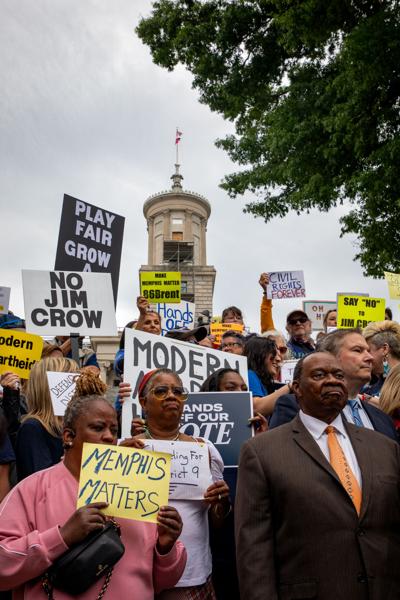


Protesters and elected officials rally outside the state Capitol, May 5, 2026
A three-judge panel appointed by the state's Supreme Court ruled against the NAACP Tuesday, upholding redrawn congressional maps passed earlier this month by the Tennessee General Assembly.
The Black civil rights organization, joined by state Rep. Jesse Chism (D-Memphis) and candidate Devante Hill, sued to block the new districts, claiming the state had acted outside its legal purview during this month's special session by clearing a statutory ban on mid-decade redistricting. Taylor Meehan, a private attorney whose firm has notched several conservative court wins in recent years, defended Gov. Bill Lee and others sued for enacting the new districts.
The NAACP suit is among multiple court challenges that include a suit by 9th Congressional District U.S. Rep. Steve Cohen and other candidates who were drawn into other districts. Since his seat was gerrymandered by state Republicans, Cohen — an incumbent Democrat — has bowed out of the race.

Court challenge to Memphis gerrymander focuses on standing and the meaning of the word 'facilitate'
Chancellors Anne C. Martin and Tony Childress, joined by Judge James Gass, quickly concluded that the NAACP challenge failed along several lines. A bevy of unsuccessful challenges by Democrats to state executives, including Harris v. Lee from earlier this year, produced recent case law that worked against the petitioners. First, the court dismissed several plaintiffs for lack of standing.
“NAACP Tennessee, Petitioner Sweet-Love, and Representative Chism have failed to satisfy the constitutional standing requirement of a distinct and palpable injury,” reads the court’s final order, issued May 26. “While it is a close call, under this unique set of circumstances and events, the Court concludes that Petitioner Hill has satisfied this requirement.”
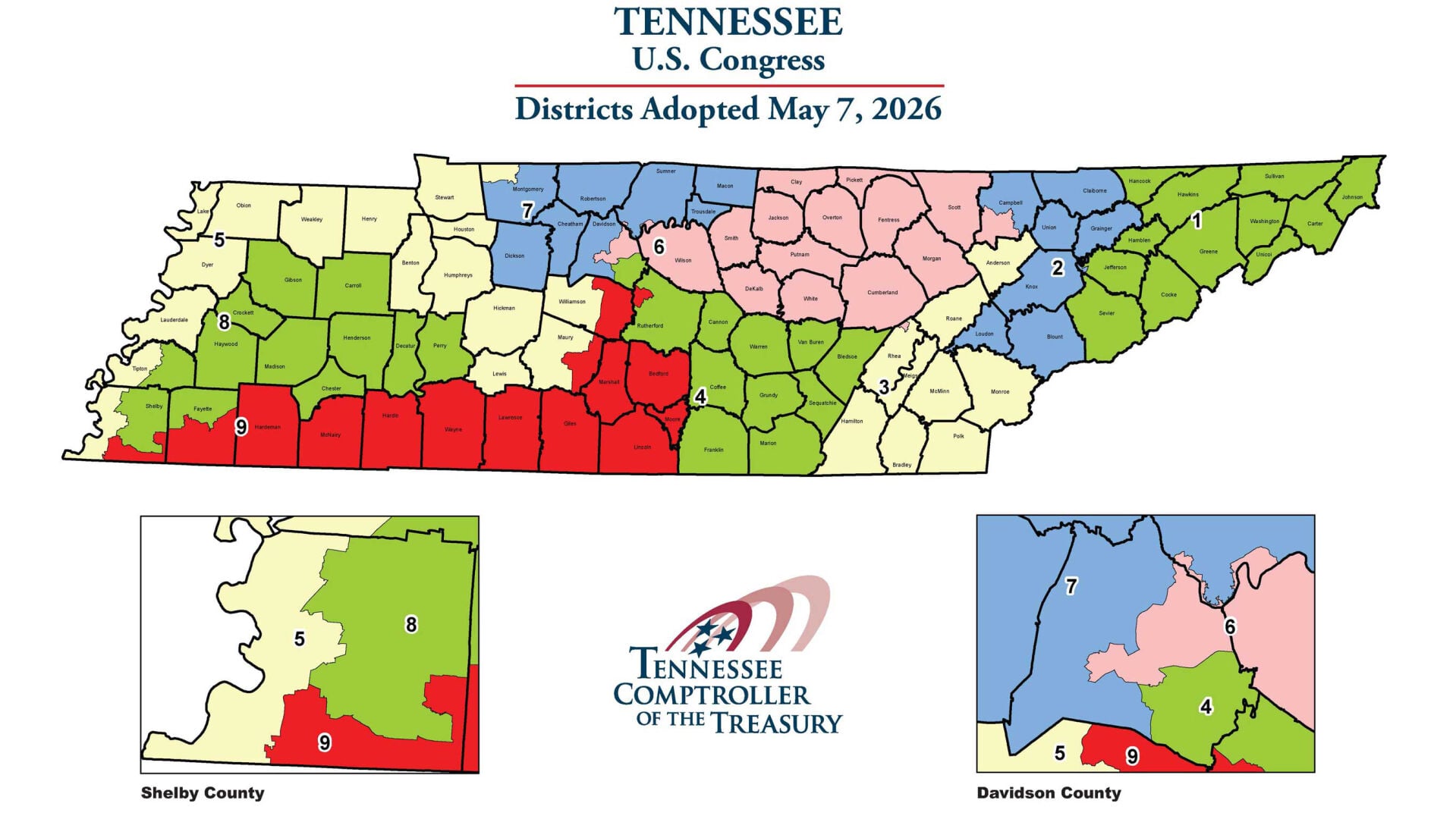
Amid fierce Capitol protests, Memphis loses majority-Black congressional district and Republicans gain midterms advantage in quick special session
Hill, a qualified candidate in Tennessee’s 9th Congressional District, demonstrated that he had spent unrecoverable resources rendered moot by redistricting. The rest of the NAACP’s argument rested on a narrow interpretation of Gov. Bill Lee’s special session proclamation, which instructed the legislature to “facilitate” 2026 elections. Plaintiff lawyers argued that the district changes, and abolition of a statutory ban on mid-decade redistricting, did not fall under a reasonable definition of the word “facilitate.” The ruling dismissed this argument out of hand.
“The Court believes bills to repeal a prohibition on redistricting and to ease various election requirements such as the residency requirement, qualifying deadlines, and notice requirements are fairly contained in the language ‘making statutory changes that are necessary to effectuate changes to the composition of Tennessee’s congressional districts and to facilitate 2026 congressional elections.’”
All three judges signed the ruling, which comes five days after a short hearing.



Post a comment as anonymous
Report
Watch this discussion.
(0) comments
Welcome to the discussion.
Log In
Welcome to the discussion.
Keep it clean. Please avoid obscene, vulgar, lewd, racist or otherwise abusive language. Comments featuring hate speech or threatening or violent content will not be tolerated.
PLEASE TURN OFF YOUR CAPS LOCK.
Be truthful. Don't knowingly lie or mislead.
Be proactive. Use the “report” link on any comment that violates our comment policy.
Share with us. We'd love to hear your feedback.