

Advocates from community organizations Stand Up Nashville and The Equity Alliance hosted a press conference Monday criticizing the city’s lack of transparency and community involvement in a recently publicized Oracle development deal. Speakers at the event, which took place at the proposed site of the project, also raised concerns about the potential impact the tech giant’s move could have on Nashville’s working-class citizens, and asked how many of the 8,500 jobs promised by the company will actually go to Davidson County residents.
“I don’t have an issue with Oracle — I have an issue with us and how we put these deals together,” said Odessa Kelly, executive director of Stand Up Nashville, a coalition of unions and community groups. Kelly is also running for Congress against incumbent Rep. Jim Cooper.
Kelly recently penned an op-ed for The Tennessean listing 20 questions she and her organization had about the Oracle deal, some of which she brought up in Monday's conference.
“What is the specific plan to ensure this development does not deepen the housing affordability crisis and displace vulnerable residents in the surrounding neighborhoods?” asked Kelly.
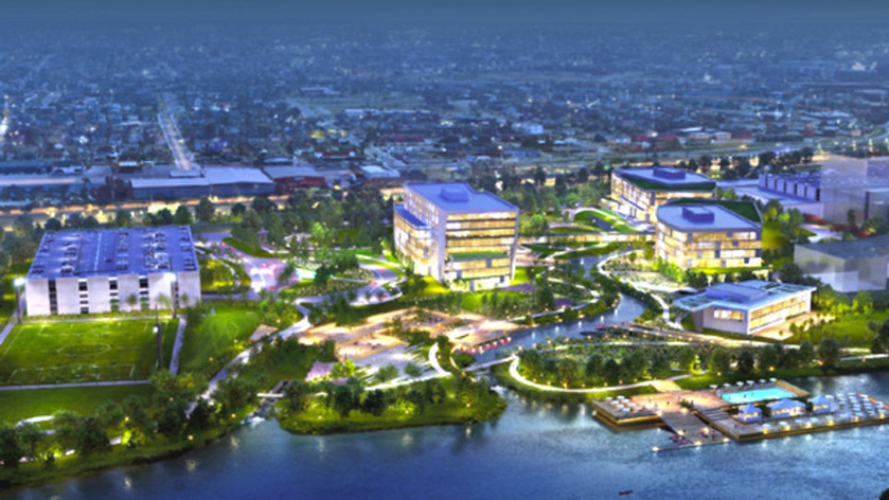
Under the current proposed project agreement, Oracle would fund $175 million for public infrastructure updates to the River North site, which Metro would reimburse over time.
Charlane Oliver of The Equity Alliance, a nonprofit devoted to raising Black political power and civic engagement, raised concerns about how the deal will impact Black Nashvillians. “Black residents more than any other demographic have felt the negative impacts of what deals like Oracle bring to our rapidly changing neighborhoods,” she said.
Oliver also raised questions about the deal the city is working out with the tech company — questions she says stem from a lack of community involvement.
“How do we know this is a good deal?" Oliver asked. "How was the valuation of the $175 million public infrastructure investment calculated?”
Councilmember Sean Parker of District 5 — where Oracle would be located — noted that the Oracle development would reshape the area dramatically. “This area at present is home to a lot of decent blue-collar jobs, and that is also an important opportunity in Nashville,” he said of the waterfront space in East Nashville.
Parker said many of the constituents he spoke to mentioned the affordable housing crisis. “As the city has boomed, the twin crises of affordability and displacement haven’t been addressed,” he said, noting that the Metro Council's attempts to address these issues face preemption from the state. (The state legislature recently flexed this muscle to by gutting a Metro bill that would have improved safety standards for construction sites.)
Martha Carroll, a minister and member of Nashville Organized for Action and Hope, also spoke about housing. She pointed out that more than 3,000 public school students are experiencing homelessness in Nashville.
Tequila Johnson, a co-founder of The Equity Alliance and member of Metro's Industrial Development Board, said at the conference she would move to defer the vote to approve of the plan — a vote scheduled to take place tomorrow. Johnson said she wanted to defer the vote in order to give Oracle enough time to answer questions and give the public time to voice their opinions.
“I believe that Oracle is a good company," said Johnson. "But as Ronald Reagan said, ‘Trust, but verify.’”
Johnson said she was “appalled” that she and her fellow Industrial Development Board members were given only two weeks to make a decision on such a massive redevelopment, and said there's too much about the project she doesn’t know yet. “We need more time, not just to demand accountability from Oracle, but so my peers can demand accountability and responsibility from me.”
In a statement to NewsChannel 5, Mayor John Cooper’s office says: “Councilwoman [Zulfat] Suara has a proposal to declare Metro’s intent to spend a significant portion of property tax revenues from Oracle’s investment — an estimated $9 million a year — on affordable housing. Mayor Cooper fully backs the Councilwoman’s proposal.”
Proponents of the Oracle deal point out that the company has a history of working with historically Black colleges and universities and vocal allyship with LGBTQ communities. The company recently signed on to a letter denouncing anti-LGBTQ legislation passed in states like Tennessee. (Whether such actions actually lead to political change is of course a different matter of debate.)
A recording of the press conference can be found on Stand Up Nashville's Facebook page.
The Industrial Development Board will meet Tuesday at 10 a.m. to vote on the development. On May 4, the Metro Council is scheduled to vote on a resolution to activate the plan.



