


Amy Dinkel has seen a lot in her nearly 20 years as a school social worker. She works with students at Waverly Belmont Elementary School, J.T. Moore Middle School and Hillsboro High School, and over the course of her career, she’s endured the lows and celebrated the highs with her students. One of those students is a girl we’ll call Lydia.
A couple years ago, Lydia and her mother were evicted from their apartment, and because they were unable to find affordable housing, they were were left homeless. Lydia and her mom are far from alone in their experience — the National Center for Homeless Education reports that there were more than 1.35 million homeless students in districts across the country in the 2016-17 school year.
Homelessness is an issue for thousands of students in Nashville — last year, the Homeless Education Resource and Outreach Program for Families in Transition identified 3,433 students in Metro Nashville Public Schools who fit the definition of homelessness as outlined in the federal McKinney-Vento Act. The 2019-20 school year started on Aug. 5, and already the HERO Program has identified 1,951 students as eligible for support.
“We clear everyone off our list when school ends each May,” says Catherine Knowles, homeless liaison for MNPS and director of the HERO Program. “We are hopeful that housing situations improve over the summer. Most school years, we’ll go from zero kids on Aug. 1 to 1,700 to 1,800 by the end of the month.”
Knowles says the McKinney-Vento Act’s definition is a bit broader than what most might assume. McKinney-Vento — legislation that protects the right of students who are experiencing homelessness to go to school — defines homelessness as the lack of a fixed, regular and adequate nighttime residence. That covers families staying in shelters, hotels or motels, on campgrounds or in other public spaces not meant for permanent habitation. Knowles says the McKinney-Vento definition also extends to families who are forced to live with non-immediate relatives.
Dinkel says for many students experiencing homelessness, a low grade on yesterday’s spelling test doesn’t make it to the top of the list of concerns. These students often experience frequent disruption in their education, high stress and traumatic experiences associated with not having a fixed residence, sleep deprivation and a lack of social and emotional belonging.
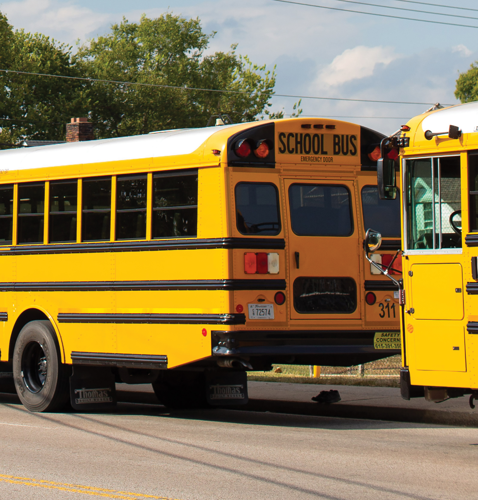
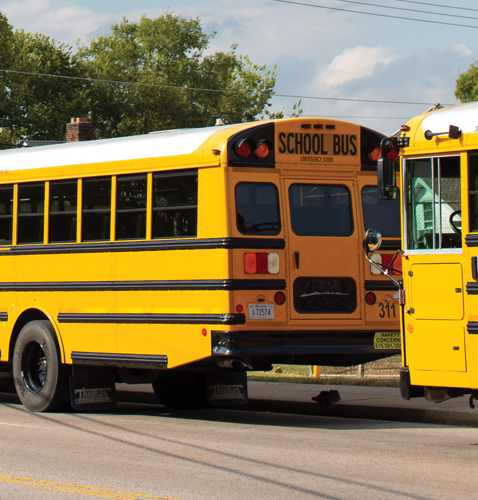
The HERO Program provides eligible MNPS students with enrollment assistance, educational support services, community referrals and emotional support in the school setting. But perhaps the biggest focus of the program is on transportation. Knowles says there are two options for students who qualify for HERO — a student can request to stay at their school of origin, and the HERO staff will arrange transportation, or a student can enroll in the zoned school for their temporary address.
“Research shows that every time a student changes schools, they fall three to six months behind,” Knowles says. “Because of that, a big piece of what we do is arrange special transportation so students can stay in their one school no matter where they live. Our transportation department will break down the route and figure out how we can get the child from their housing address back to their school of origin, or if a family has a car of their own, we can provide mileage reimbursement. The most important thing is never to make assumptions about what’s going to be best for a student or family.”
Tammy Thompson handles transportation coordination for the HERO Program. She says she starts calling families of students who were previously eligible to allow for a quick transition.
“Kids want to be there for the first day to get to know their teacher and a new classroom, and we want to make that happen,” Thompson says.
Dinkel says she is currently working with a family of seven that qualifies for the program. The family became homeless a year-and-a-half ago and moved in with a relative. But that situation fell through, and now they’re living in a hotel.
“The students have been able to stay at their schools for the last year-and-a-half, and that’s provided a lot of stability for them,” says Dinkel. “The school knows their situation and is very sensitive to it. They’re able to provide counseling so [the children] don’t have to retell their story not knowing how long they’d be able to stay at that school. If we didn’t have the program, they wouldn’t be able to stay at their schools. They would have already changed at least three times, and kids spend more time at school than at home, so having that constant is really important.”
Thompson is personally familiar with the need for stability. As a foster mom of 19 years, she says she has seen firsthand what a lack of constancy can do to a student.
“I have seen the effects of the changes on the children that are just going through my home,” says Thompson. “When my kids come in, it’s always a different situation, but there’s still so much of it that’s the same. These kids are having to move from one home to another, and any sense of stability they have, they lose it. So many of our kids here in Nashville are experiencing this, and as long as Nashville is growing, there are going to be more and more needs. I just tell the parents to call us and let us know how we can help — because we will.”
After a year-and-a-half working with Lydia, Dinkel says just a couple of weeks ago she was able to celebrate a memorable moment with her student. Lydia’s mom called and said the two were moving into a home of their own in a few days.
“To hear her say they were moving in for sure, it was just pure joy,” says Dinkel. “She called me a few months ago and told me it was a possibility, that she was doing her research and looking around to find something, but now it’s real for them. We’re looking for furniture and sheets and towels, and we just ordered a microwave. We’ve got air mattresses on the way. They’re starting from scratch, but they’re so happy. She hadn’t told [her daughter] yet because she wanted to be sure it was going to happen, but [Lydia] finally told me yesterday, ‘We got a house!’ She was so excited.”
Dinkel says that for all the special transportation, school supplies and educational support students experiencing homelessness receive through HERO, the impact of the program goes far beyond the classroom.
“I had one student that had very serious medical issues that became homeless, and his mom could only find housing in Clarksville living with a friend,” Dinkel says. “Through the program, we were able to provide mileage reimbursement so he could stay in his school, and that student actually graduated this year. He reached out to me and told me about the college program he’s in now. He’s doing really well. His story — and Lydia’s story, and countless others — are stories that HERO made possible.”



