

Actor, director and writer Mario Van Peebles got an early lesson in the realities of independent filmmaking while watching his legendary father Melvin Van Peebles fight for survival with his landmark 1971 production Sweet Sweetback's Baadasssss Song. Only two theaters originally agreed to show Van Peebles' movie, famously "Rated X by an All-White Jury." But the intercession of The Black Panthers helped ensure its wider distribution to communities where black audiences could see it.
As a 13-year-old production assistant on the set — with an explicit cameo as the young Sweetback to boot — Mario observed the elder Van Peebles' struggles. Yet he was also hooked by the power and appeal of cinematic storytelling.
"I learned a big lesson rather early from him about the business," Mario Van Peebles recalls. "He said if you're going to make a movie, be sure that you make something that you personally like and believe in. Don't be concerned about critics or any of these other people, because if you don't believe in what you're doing, then there's no way you're going to make something that will convince others to believe in it."
Now a veteran actor and director himself, Van Peebles will be in town for the world premiere of his new film Black, White and Blues Saturday night at the Nashville Film Festival. In addition to the 7 p.m. debut screening, there will also be a reception afterwards at 9 p.m. in the VIP Tent on the Green Hills Cinema 16 site.
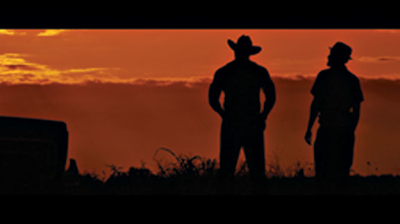
Filmed in Nashville with stars Morgan Simpson, Michael Clarke Duncan and Tom Skerritt and lots of local crew, Black, White and Blues spotlights the struggles of aspiring blues musician Bailey (Simpson, who also scripted), trying to find his way personally and professionally. It's a tale of redemption and triumph, and at the same time a musical tapestry blending blues, soul and country.
Movies about white novices learning the blues from black teachers are nothing new — just look at Crossroads (or don't). But Black, White and Blues plays with that formula in interesting ways. Although Clarke's character is a mentor to Bailey, his own musical love is country — something that the director believes reflects the fluid nature of most people's musical tastes, including his own.
"I really love all types of music, and was drawn to the fact that the film includes examples from blues and soul and country and shows you how similiar all these styles are in terms of how they speak to the heart," Van Peebles says. "It was a well-written script and a good idea and had a story that I felt had some weight and power to it."
The biggest challenge to filming in Nashville, the director says, was getting a diverse crew.
"That's something that's very important to me on any project," Van Peebles says. "If I'm doing a film and I see it's mostly a black crew, then I'll ask for some Latinos, Asians and whites. If I go in and see it's the other way, then I'll ask for more diversity in that direction. I want a variety of viewpoints and experiences on set because that way you get varied perspectives on what you're doing."
Variety is one of the hallmarks of Van Peebles' career. As an actor, he appeared on The Cosby Show, played Malcolm X in Michael Mann's Ali, and had a juicy featured role last season on FX's legal drama Damages. As a director, his varied resume includes crime drama (his fine debut New Jack City), a Western (Posse), political drama (Panther) and even a close-to-home biopic (BAADASSSSS!, his tribute to his father's heralded achievement). He's even directed an episode of the current concluding season of Lost.
This eclectic roster mirrors Van Peebles' unconventional life story, which includes getting an economics degree from Columbia, working as a business analyst for New York Mayor Ed Koch's administration, and even becoming a male model before opting for a full-time acting and directing career.
"With my background I learned about everything that's involved in a film, including the funding," Van Peebles says. "One of the things that not everyone wants to get involved in when it comes to the acting business is the money part. But another thing that my father's always drilled into my head is that show business is much more about the business than the show. If you've got a great idea and a good project, but you can't get it funded, then it doesn't really mean a whole lot. If you don't understand how the financial structure works with Hollywood, you won't accomplish much — especially if you're doing independent film, where everything is tied in to what you can do with the money that you have available."
Van Peebles says he's grown tired of "just coming on someone's show and filling a spot or doing something that's kind of bland." Instead, he says he's been seeking more socially oriented projects, among them a documentary that examines the views and feelings of black men. He's also pursuing a reality series with an ecology backdrop — a subject, he says, that's as urgent today as the social conditions his father railed against were in the late '60s and '70s.
"There was a time when doing a project where you have some black folks and some white folks holding hands and everyone singing and getting along was a novel thing," Van Peebles says, "and I'm not by any means trying to knock the civil rights movement or downgrade how important that was in terms of improving things in this country. But we're at a point now where we better be thinking about not only how do we get along as human beings, regardless of who we are and where we come from, but how do we do it in a way that doesn't destroy the earth? If we don't come to grips with that, then we'll not only ruin ourselves, we'll permanently devastate this planet and ruin things for our children and the generations behind them."



Post a comment as anonymous
Report
Watch this discussion.
(0) comments
Welcome to the discussion.
Log In
Welcome to the discussion.
Keep it clean. Please avoid obscene, vulgar, lewd, racist or otherwise abusive language. Comments featuring hate speech or threatening or violent content will not be tolerated.
PLEASE TURN OFF YOUR CAPS LOCK.
Be truthful. Don't knowingly lie or mislead.
Be proactive. Use the “report” link on any comment that violates our comment policy.
Share with us. We'd love to hear your feedback.