



Rep. Jeremy Faison on the first day of the 2026 legislative session
When it came to healthcare, it was the usual suspects at the Tennessee General Assembly this year. Reproductive issues took center stage, and Republican leaders took another swing at transgender people, seeking to track their gender-affirming procedures. Even so, several pieces of legislation to protect Tennesseans passed this year.
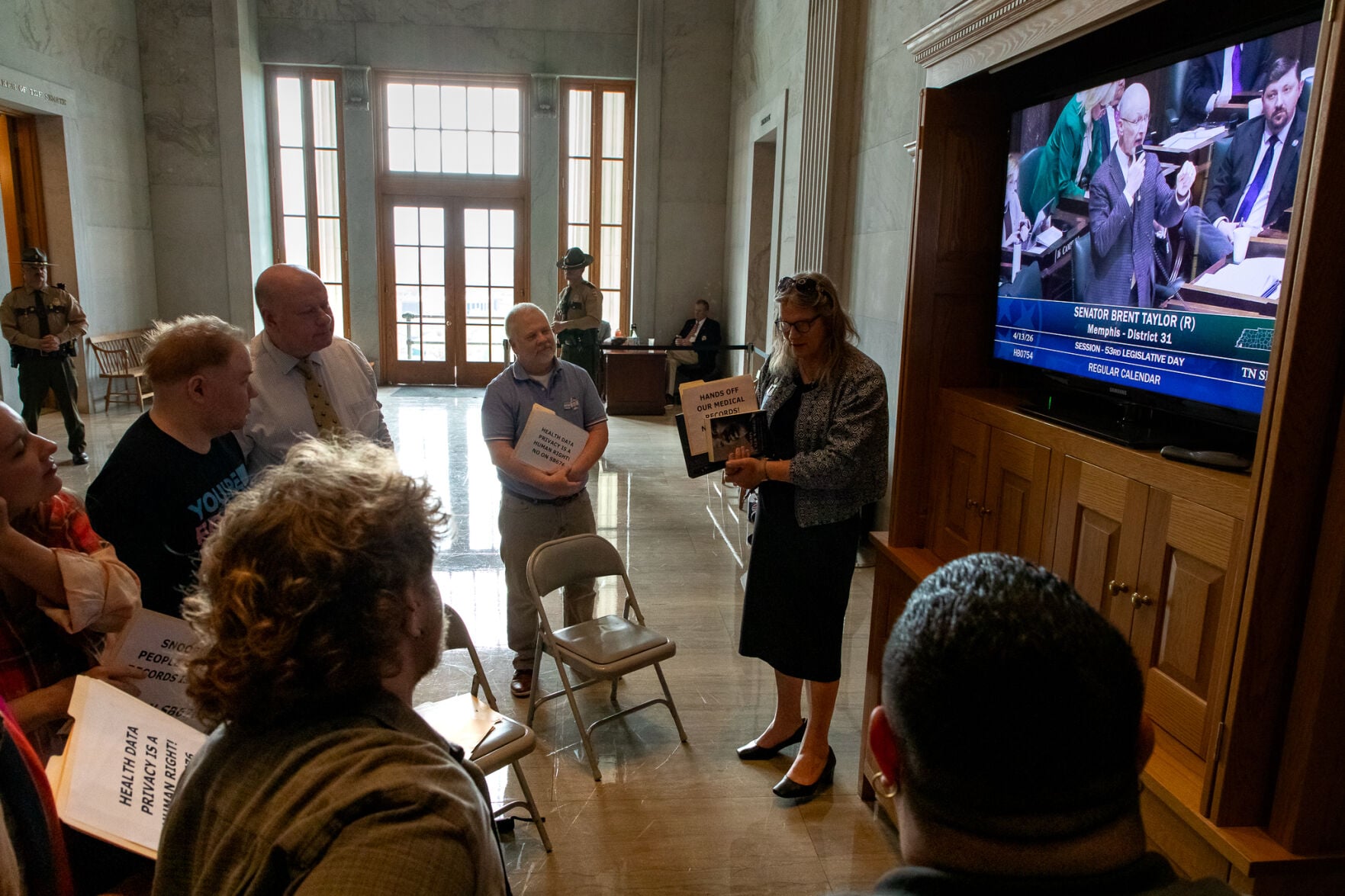
Bill co-sponsor calls gender-affirming care a 'fad' but removes county information requirement at request of protesters
The “Human Life Protection Act,” a bill that would have allowed a pregnant mother to be charged with homicide if she receives an abortion, spurred perhaps the most heated debate. The bill from sponsor Rep. Jody Barrett (R-Dickson) was quickly shot down by his Republican colleagues in committee, and a slew of out-of-state pastors and “abortion abolitionists” turned up at the Capitol to lead protests. Even Republican legislators who support the state’s strict abortion ban said they do not support punishing the mother, and instead have directed their ire at healthcare providers.
Despite protests from transgender advocates, House Bill 754/Senate Bill 676 passed, mandating an aggregate report on a public website listing the number and nature of gender-affirming treatments across the state. House sponsor Rep. Jeremy Faison (R-Cosby) called gender-affirming care “as dumb as frontal lobotomies,” and Senate sponsor Sen. Brent Taylor (R-Memphis) called it a “fad.” Bill sponsors promise that patients’ identifying information will not be shared.

Advocates bristle at fetal personhood legal ramifications, as well as government oversight in testing, certification
While many conservative Christians involved with in vitro fertilization may believe life begins at conception, they don’t want it codified in state law — that’s due to fear of legal repercussions if embryos are accidentally destroyed during the IVF process. Fetal personhood policies and limits on genetic testing for embryos were ultimately amended out of legislation this year; additional certification requirements for IVF clinics and a rule to follow national genetic testing standards remained.
The state of Tennessee already bans the use of abortion pills, but freedom of interstate commerce and shield laws in other states allow Tennesseans some access to the pills via mail. Rep. Gino Bulso (R-Brentwood) made an attempt to crack down on abortion advocacy groups for distributing the drugs mifepristone and misoprostol, but his legislation ultimately failed.
Sen. London Lamar (D-Memphis), who routinely focuses on maternal health issues, was successful in passing a resolution encouraging TennCare to cover doula care this year. She also shepherded legislation ensuring that pregnant women get care when they arrive at the emergency room in active labor. Lamar’s efforts to forgive medical debt were shot down, however, and a bill to establish a program providing funds to offset burial costs for women who experience a stillbirth petered out. But a successful bill from Rep. Harold Love Jr. (D-Nashville) and Sen. Raumesh Akbari (D-Memphis) will require the Tennessee Department of Health to test for the sickle cell trait in each newborn.
Akbari was also successful in passing legislation to allow people to get a 12-month refill on contraceptives. Nashville Democrats Sen. Charlane Oliver and Rep. Aftyn Behn introduced the “Maternal Health Care Protection Act,” a bill written by Planned Parenthood of Tennessee and North Mississippi that was ultimately shot down. The legislation sought to counteract the “Medical Ethics Defense Act,” which went into effect in 2025 and allows medical professionals to deny care that conflicts with their “conscience.” This follows reports from a Tennessee woman who says she was denied a sterilization procedure and another who was denied care from an OB-GYN because she was unmarried.
Kratom — an addictive chemical that can mimic the effects of opioids — is now banned in Tennessee. The ban was brought in honor of Matthew Davenport, a 20-year-old from Chattanooga who died from a kratom overdose.
It will be a class-D felony to drug someone’s drink under a bill passed this year. HB2302 also requires bars to provide drink-testing devices. Previously, it was not a crime to drug another person’s drink — people could only be tried for crimes following the drugging.

We recap what the state legislature did — and didn’t do — this year at the Capitol



Post a comment as anonymous
Report
Watch this discussion.
(0) comments
Welcome to the discussion.
Log In
Welcome to the discussion.
Keep it clean. Please avoid obscene, vulgar, lewd, racist or otherwise abusive language. Comments featuring hate speech or threatening or violent content will not be tolerated.
PLEASE TURN OFF YOUR CAPS LOCK.
Be truthful. Don't knowingly lie or mislead.
Be proactive. Use the “report” link on any comment that violates our comment policy.
Share with us. We'd love to hear your feedback.