
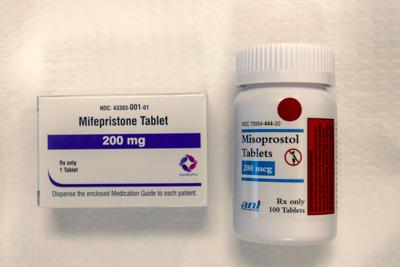

Sending abortion pills by mail is already illegal in Tennessee — the “Tennessee Abortion-Inducing Drug Risk Protocol Act” of 2022 made it a class-E felony to mail or deliver abortion-inducing drugs. The problem, at least in the eyes of Rep. Gino Bulso (R-Brentwood), is that no one has been prosecuted under that law.
Bulso, a self-described “culture warrior,” sponsored this session’s House Bill 5, which passed the House on March 26. The legislation aims to hold “out-of-state abortionists financially responsible” for sending pills into the state, Bulso said on the House floor. The legislation creates a $1 million civil liability for wrongful death for groups that distribute abortion medication (mifepristone and misoprostol) to Tennessee patients.
“Our hope and expectation is that no one will ever need to bring a wrongful death action on behalf of an unborn child killed with out-of-state abortion pills, because our hope is that the passage of this bill will deter those out-of-state abortionists from sending abortion pills into Tennessee in the first place,” Bulso said on the House floor in late March. “That’s our major goal here.”

House scheduled to vote on proposal Thursday
Tennesseans are still able to get abortion pills through the mail, as protected by the U.S. Constitution’s interstate commerce clause as well as shield laws — which protect people in 22 states from being extradited and tried in Tennessee for providing abortions or gender-affirming care. People seeking abortion pills can also legally travel across state lines to visit a clinic or take a telehealth appointment while in another state before traveling back to Tennessee to take the pills.
The bill’s Senate version is set to be heard on the Senate floor on April 9. If it passes, the legislation will not change much operationally, but it will open up a path for a federal lawsuit. The wrongful death charge can be brought in federal court, making shield laws moot. Physicians and mail carriers cannot be charged under the bill, making abortion advocacy organizations the target. There are already three pending federal lawsuits, filed by Republican-led states, seeking to curb access to mifepristone at the federal level.
Because of legal concerns, abortion advocacy organizations Abortion Care Tennessee and Mountain Access Brigade cannot tell people directly where to access abortion pills. But according to Jules Edwards — the executive director of both organizations, which recently merged — they can instead display that information on their websites. Edwards says the orgs are not recommending self-managed abortion, but rather seeking to fight misinformation about the drugs.
“[The legislation] is intended to create a chilling effect for the person having the abortion by making them think that they don't have options, or that they're doing something criminal by ordering abortion pills online,” Edwards says.
Under both 2022’s “Tennessee Abortion-Inducing Drug Risk Protocol Act” and this year’s HB 5 (should it pass), pregnant people who take the pills cannot not be prosecuted. However, there have been national cases in which people were met with criminal charges for taking abortion pills, though the charges were ultimately dropped. A bill that would have allowed pregnant people to be charged with fetal homicide if they got an abortion failed in the Tennessee General Assembly earlier this year.

Packed house of Christian leaders shows support for fetal personhood bill; maternal care legislation also fails
Taking abortion pills is not a risk-free activity, Edwards says, but it’s effective and safe in most circumstances. Using both mifepristone and misoprostol is up to 98 percent effective, while taking misoprostol alone has 85 percent efficacy because the regimen has to be followed exactly, Edwards explains. The drugs, which open the cervix, are also used in labor and delivery and in managing naturally occurring miscarriages.
“When the [Dobbs v. Jackson Women’s Health Organization] decision came down, there was a pretty large narrative around, ‘People are going to have back-alley abortions, people are going to die from trying to have an abortion at home,’” Edwards says. “That's not the case.”
Tennesseans are still getting abortions. In 2024, 10,020 residents traveled out of state to obtain an abortion, according to data from the Guttmacher Institute. In addition, 5,840 patients terminated pregnancies with medication obtained through telehealth appointments.
Edwards says the number of people reaching out to Mountain Access Brigade, which operates a hotline, has grown threefold in the past year alone. Meanwhile, out-of-state clinics that receive quarterly grant funds to cover procedures through Abortion Care Tennessee typically run out within the first month, they say.
“We are doing everything we can to do the bare minimum for the people who need us,” says Edwards, “and we're not able to really scratch the surface of what people need from us. But we try our best.”



Post a comment as anonymous
Report
Watch this discussion.
(0) comments
Welcome to the discussion.
Log In
Welcome to the discussion.
Keep it clean. Please avoid obscene, vulgar, lewd, racist or otherwise abusive language. Comments featuring hate speech or threatening or violent content will not be tolerated.
PLEASE TURN OFF YOUR CAPS LOCK.
Be truthful. Don't knowingly lie or mislead.
Be proactive. Use the “report” link on any comment that violates our comment policy.
Share with us. We'd love to hear your feedback.