
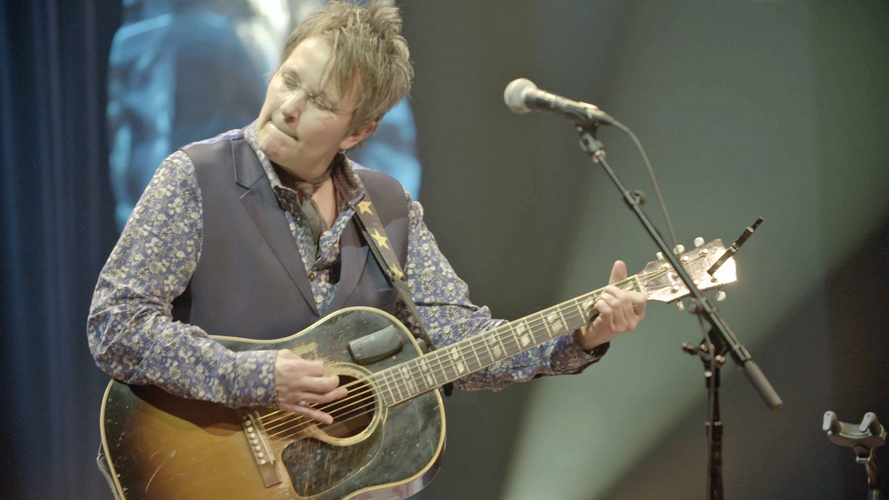


Mary Gauthier in 'Invisible'
One of the wonderful things about country, folk, blues and other musical traditions that have flourished in the South is the space they make for exploring the rich lives of ordinary people. Some people, however, have yet to be fully embraced in that space. OutHaus Films’ forthcoming documentary Invisible: Gay Women in Southern Music tells the stories of 12 women who have spent their careers grappling with an industry where a pervasive, pernicious anti-LGBTQ bias has largely kept them in the margins.
“We had to earn their trust,” says producer Bill Brimm, whose film is still in the works. “A couple of my friends that are in it, I asked them — they said, ‘Yeah, sure.’ But, you know, to actually get in front of a camera and talk about their sexuality and their careers, it was brave of them to be able to do that.”
If you follow country music, folk or the big-tent Americana genre, you’ll recognize artists in the film. Dianne Davidson and Mary Gauthier, for instance, are revered and masterful singer-songwriters. Others who are featured, like Jess Leary, Kye Fleming and Cheryl Wheeler, have written hit songs for Tim McGraw, Ronnie Millsap and Garth Brooks. Leary has performed on tour with Brooks, Faith Hill and Reba McEntire. Many of the women featured in Invisible have had what you’d call professional success, in one way or another, but the price has been steep.
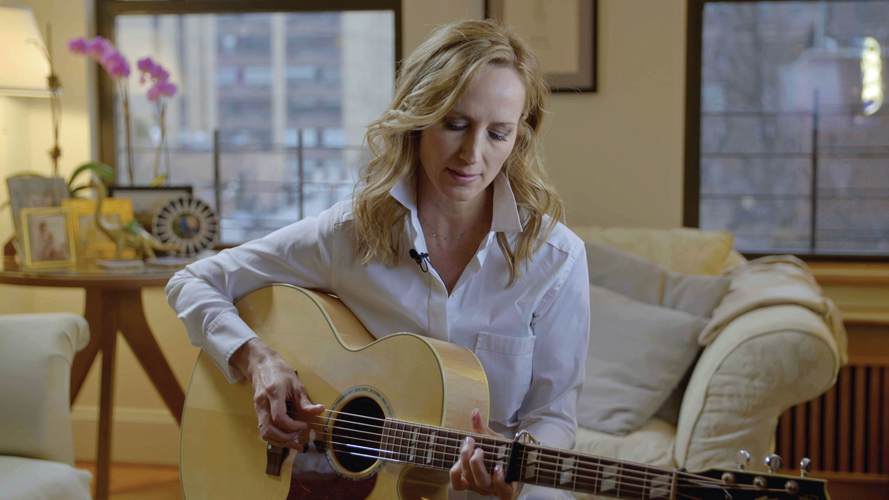
When they’ve chosen to be open about their sexual identity, it has meant being left out — or forced out — of the spotlight. Chely Wright, who in 2010 was the first mainstream country artist to come out publicly, lost a large part of her industry support system. Wright’s fans funded her next album, 2016’s I Am the Rain, through a record-breaking Kickstarter campaign.

Chely Wright in 'Invisible'
Over the course of his career as a visual artist in Nashville, Brimm made friends with several of the aforementioned women, and he knew their stories. About five years ago, a conversation with another friend — filmmaker T.J. Parsell, director of Invisible — led to the project of turning those stories into a film.
With editor Emily Gumpel, the filmmakers have nearly finished Invisible, and they plan to submit it to Sundance, among other festivals. They’ve already finished a short film called “The Gender Line,” which grew out of interviews for Invisible with trans artist Cidny Bullens, a phenomenal and wide-ranging musician who transitioned at age 61. (Read our 2016 cover story on Bullens here, as well as an extensive Q&A.) The short has been submitted to a multitude of festivals, and it has been accepted by the Melbourne Documentary Film Festival in Australia, where it will premiere July 29. Brimm says he’s learned a great deal from Bullens, and the two have become friends.
“It’s really been great, because as a gay man, it doesn’t necessarily mean that you understand about trans issues,” Brimm says. “You know, we all can’t be just put into a box. I mean, we’re all different.”
There’s one other major hurdle to completing Invisible: Licensing the music to use in the film is going to be expensive. Brimm says an IndieGoGo campaign will soon be launched to raise the needed funds. Visit the production company’s website, outhausfilms.com, for more information and updates.



Post a comment as anonymous
Report
Watch this discussion.
(0) comments
Welcome to the discussion.
Log In
Welcome to the discussion.
Keep it clean. Please avoid obscene, vulgar, lewd, racist or otherwise abusive language. Comments featuring hate speech or threatening or violent content will not be tolerated.
PLEASE TURN OFF YOUR CAPS LOCK.
Be truthful. Don't knowingly lie or mislead.
Be proactive. Use the “report” link on any comment that violates our comment policy.
Share with us. We'd love to hear your feedback.