

“Even with this going on, I would still tell people to come to Vanderbilt Divinity School, and I genuinely believe it is one of the best places to pursue theological education.”
Three months into a uniquely hectic graduate school term, Sharona Henderson comes back to gratitude. “That’s how amazing this institution is,” she says. “However, I cannot promise what that rigor will continue to look like. I feel like none of the questions we’re asking are really being answered.”
Henderson accepted her position on Vanderbilt’s student government association just before a university email announcing that Vanderbilt would hold its storied Divinity School, where she began graduate studies this fall, in receivership, a financial arrangement that empowers the university to assume broad and direct control over VDS. That Sept. 22 email — co-signed by Vanderbilt Divinity School dean Yolanda Pierce and deputy provost Tracey George — added confusion and uncertainty for students.

Some faculty express wariness, while the university says the process is meant to rejuvenate the school and will only last two years
“Receivership is a temporary administrative arrangement in which the university oversees a school’s operations in order to stabilize it and return it to independent, healthy standing,” the short email reads. “The goal is to position the Divinity School for renewed investment and growth.”
Students perceived such vague communication as an ominous sign for their futures and called for a follow-up town hall meeting. George scheduled it for Oct. 20. When the administration asked for questions in advance, Henderson, who represents first-year VDS students, organized a digital survey breaking down classmates’ concerns and shared the results with the administration ahead of time.
After a month of suspense, George, an attorney and law school professor promoted to university deputy provost in 2025, began the talk by barring students from recording her presentation. George suggested that such behavior would breach the student code of conduct and might trigger the school’s internal judicial system, according to multiple accounts of the meeting. (Vanderbilt declined to comment.) Throughout the receivership process, the administration assures students that VDS will not close, students’ current degree programs will not change, and teaching will continue as scheduled. In slides shared with the Scene, George warned that recording the proceedings would “chill discussion and limit candor.” Students who attended say the strict guidelines had the opposite effect, heightening pressure and tension between a skeptical student body and cagey administrators who previously told students they don’t “owe transparency,” according to town hall attendees.
“When they can’t describe to us, with any substance or specifics, what a ‘successful, healthy, strong’ divinity school looks like, that doesn’t give us a lot of confidence or trust in what they’re telling us,” one first-year student, who attended the town hall meeting and requested anonymity, tells the Scene. “The divinity school is part of an institutional corporation, but a lot of the values that we learn about, that we put into practice and that we live — they run counter to those of a corporation. We assumed that Vanderbilt doesn’t have the same goals of a corporation, but we’re learning that the way it’s being run presently is by a corporate logic.”
Information has come out in trickles. Students are aware that an external reviewer is vetting VDS finances and faculty have met in working groups. Classes go on — Henderson encourages her fellow students to maintain focus on their studies. She reaches for scripture to describe the situation on campus.
“In Nehemiah, those carrying materials to rebuild Jerusalem’s wall worked with one hand and held a weapon in the other, prepared for threats,” Henderson says. “We came here to be formed intellectually and personally, as scholars and people preparing to serve. Now we’re trying to do that while remaining guarded about an uncertain future. That doesn’t mean we’re fighting anyone. It means our attention is divided.”
Multiple classmates have left the group’s first-year cohort. The school’s financial circumstances were a factor for at least one of those, according to a classmate, but it has already shaped the campus’s small, tightly knit graduate school community. Students and faculty at VDS interviewed by the Scene all praise a community built through interpersonal relationships. They are defensive and protective, assuming that something will change and that anything can change in a matter of months. Small signs, like the recent relocation of Dean Pierce’s office, carry a greater significance.

The zoomed-in portrait of Lawson’s expulsion from Vanderbilt scrutinizes institutions and the destructive power of a moral crisis
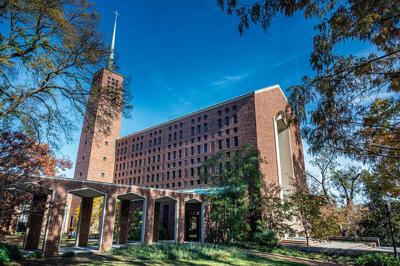
Vanderbilt Divinity School has brought international renown to Nashville. Next to the medical and law schools, it has been one of Vanderbilt’s foundational components for 150 years, spinning off notable, primarily Protestant Christian leaders in academia and congregations. Its faith-based moral philosophy drew civil rights figures who trained at, gathered around and, in the famous case of James Lawson, were expelled from VDS. Former students hold major civic, political and religious roles the world over. It is VDS’ singular reputation for academic rigor, moral groundedness and real-life work that drew Henderson and others to commit years learning here.
Yet several factors make a divinity school unattractive to a university optimizing financially. Compared to undergraduate or law school tuition, VDS is cheap at about $15,000 per semester. Alumni do not graduate into high-paying careers, instead typically working in academia, clergy and nonprofits. Vanderbilt Divinity School education does not have a natural connection to the lucrative corporate world. In fact, a VDS education often includes a healthy skepticism of systems of power, like capitalism itself, both in and out of the classroom.
Reconcile the sudden scrutiny of VDS finances with aggressive university spending under Chancellor Daniel Diermeier, a former business school professor who has led Vanderbilt since 2020, and it’s easy to question the school’s future. Vanderbilt spent $13 million on a new Belle Meade chancellor’s residence earlier this month and much more than that building out campuses in Manhattan, San Francisco and West Palm Beach. Millions more will go into a new “innovation neighborhood” on West End that will combine campus research with corporate partnerships. The school has positioned itself closer to the weapons and defense industry with the Institute of National Security, launched in 2024. This fall, Vanderbilt debuted a “national security” major for undergraduates. Time will tell where exactly social and economic justice can fit in.



Post a comment as anonymous
Report
Watch this discussion.
(0) comments
Welcome to the discussion.
Log In
Welcome to the discussion.
Keep it clean. Please avoid obscene, vulgar, lewd, racist or otherwise abusive language. Comments featuring hate speech or threatening or violent content will not be tolerated.
PLEASE TURN OFF YOUR CAPS LOCK.
Be truthful. Don't knowingly lie or mislead.
Be proactive. Use the “report” link on any comment that violates our comment policy.
Share with us. We'd love to hear your feedback.