
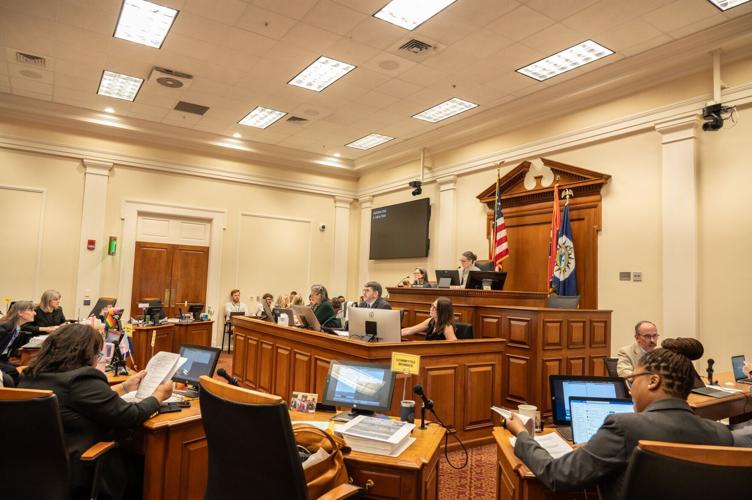

Up several flights of stairs, inside a nondescript MetroCenter office building, a dozen people were contemplating the biggest controversies facing Nashville. When the Scene visited their headquarters, they were technically powerless on this fall afternoon in 2025, play-acting decisive moments that influenced a Metro Arts grant debacle that led to lawsuits and six-figure settlements from city coffers. Jokes and snacks lent the space a classroom feel.
Within a year, practice turned into the real thing.

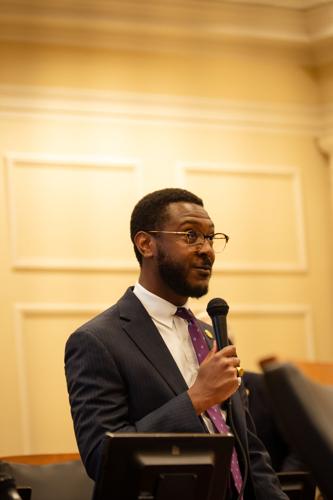
Councilmember Jeff Preptit, August 2025
Stand Up Nashville’s Boards and Commissions Leadership Institute has churned out alumni who currently sit across the Metro government. Two first-time candidates — Deonte Harrell and Jeff Preptit — won seats on the Metro Council in 2023. Both had attended the BCLI, an initial step in moves toward politics. Harrell sought out the program while serving on the Metro Beautification and Environment Commission. It helped clarify his aspiration to run for a council seat.
“As a citizen, you think you have knowledge of what the city does, and my intent was to prepare myself to learn more,” Harrell tells the Scene. “You meet with elected officials and learn about their day-to-day. I think it’s very beneficial for people who want to get more involved but don’t know exactly how.”
More than 10 other alumni currently sit on, or have served on, the city’s boards, commissions and authorities, of which there are more than 70. Not all are created equal. Some, like the Metro Sports Authority and Industrial Development Board, have the power to issue bonds — a powerful tool that can shape the city. Incentive packages for corporations like Oracle clear the IDB board, for example, and the sports authority was the primary political arena as the Titans negotiated the new $2.1 billion domed stadium currently under construction on the East Bank.
Quiteka Moten and Manaen Hall have it all mapped out on a series of color-coded spreadsheets. Moten, who oversees leadership development for SUN, refers to the pair as “Batman and Robin,” though she won’t clarify who is who. They keep an eye on Metro’s current power centers — the East Bank Development Authority, for example, quickly became a key local agency — and track upcoming vacancies with an eye toward qualified, interested matches in their BCLI rolodex. Given the right opportunity, Moten helps fast-track training for a perfect candidate. Such was the case for Diamond Bell, a SUN organizer who won a spot on the Short Term Rental Appeals Board in May. Bell is among four BCLI trainees confirmed by the Metro Council so far this year, along with Nick Cavin, Brittany Tabor and Hall himself, who now sits on the Transportation Licensing Commission — the Metro body best known for regulating party vehicles.

One East Bank planning decision has shown Metro’s limited tolerance for public participation
Stand Up Nashville established itself as a key political force in 2018 when the nonprofit helped ink a community benefits agreement across from billionaire John Ingram’s Nashville SC holding company. A slim operation headed by Odessa Kelly — an organizer and Democrat who unsuccessfully challenged former U.S. Rep. Mark Green for Congress in 2022 — and labor leader Michael Callahan-Kapoor, SUN seeks to advance racial and economic equity in the city and counts close allies in the Metro Council including Harrell, Preptit, Sandra Sepulveda, Kyonztè Toombs, Sean Parker, Clay Capp and Delishia Porterfield.
“The purpose of the program is to reimagine policymaking for the common good by training and supporting individuals from Black, brown, immigrant and working-class communities to serve on boards and commissions with the explicit goal of advancing equitable policies,” reads a handout advertising last year’s training. “It provides fellows with a framework to deepen their understanding of how local government works, economic development, employment, housing, land use, and transit through an intersectional lens that includes race and class.”
Curricula in the BCLI classroom reflect SUN’s political theory of change: Equip interested citizens with lived experience who can represent marginalized points of view, with an explicit preference for working-class Nashvillians and racial minorities. The two-month course includes bureaucratic skill work, like learning how meetings run via Robert’s Rules of Order, as well as media training and analyzing scenarios that might face a board or commission.
SUN’s effort correctly identifies how Metro distributes decision-making power to specific, dedicated, citizen-led bodies that generate hundreds of seats in need of dedicated volunteers. So much opportunity has historically favored the politically connected and Metro’s donor class, tending toward industries like law and real estate.
The entire appointments process has changed under Vice Mayor Angie Henderson, who won her seat presiding over the Metro Council in 2023. Each vacancy now triggers a council-wide announcement and a longer vetting process, meant to ensure more transparency and choice. Hearings push candidates to explain potential conflicts of interest and bear scrutiny from councilmembers on the Rules, Confirmations and Public Elections Committee — it’s no longer enough for the mayor or a councilmember to simply throw in a name.



Post a comment as anonymous
Report
Watch this discussion.
(0) comments
Welcome to the discussion.
Log In
Welcome to the discussion.
Keep it clean. Please avoid obscene, vulgar, lewd, racist or otherwise abusive language. Comments featuring hate speech or threatening or violent content will not be tolerated.
PLEASE TURN OFF YOUR CAPS LOCK.
Be truthful. Don't knowingly lie or mislead.
Be proactive. Use the “report” link on any comment that violates our comment policy.
Share with us. We'd love to hear your feedback.