

On Saturday, transportation safety advocates gathered at the intersection of Millwood Drive and Murfreesboro Pike to pay tribute to the 38 pedestrians killed while walking Nashville’s streets in 2021. That’s just one death fewer than 2020’s total. There were 132 traffic deaths total in 2020, the most since 1966.
More than half of these deaths occurred on the same seven streets: Dickerson Pike, Gallatin Pike, Old Hickory Boulevard, Charlotte Pike, Rosa Parks Boulevard, Murfreesboro Pike and Buena Vista Road. This was also the case last year.
Speakers at Saturday’s memorial included family members of traffic victims. Darlett Sowers, whose son Josh was killed while walking on Antioch Pike in 2020, called for drivers to become more aware of pedestrians, the same way they know to look out for other drivers. She also called for more lights at intersections.
Another speaker was Chuck Isbell, whose son Nate was killed by a driver on Halloween 2020. Isbell has been advocating for lower speed limits in Rutherford County since then.

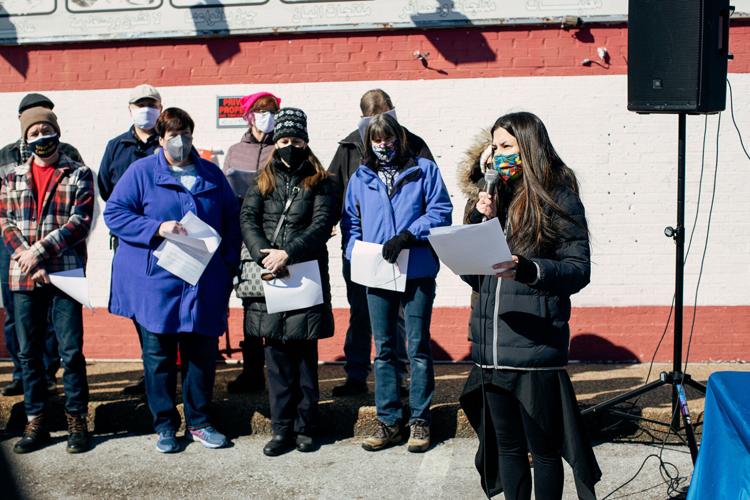
Walk Bike Nashville's Meredith Montgomery speaks at a Jan. 29 event commemorating pedestrians killed in 2021
Several Metro councilmembers attended the memorial and read the names of those killed on Nashville’s roads. Councilmember Angie Henderson spoke at the event and said many of the dangerous streets are state routes, and that the state should also be held accountable for safety improvements.
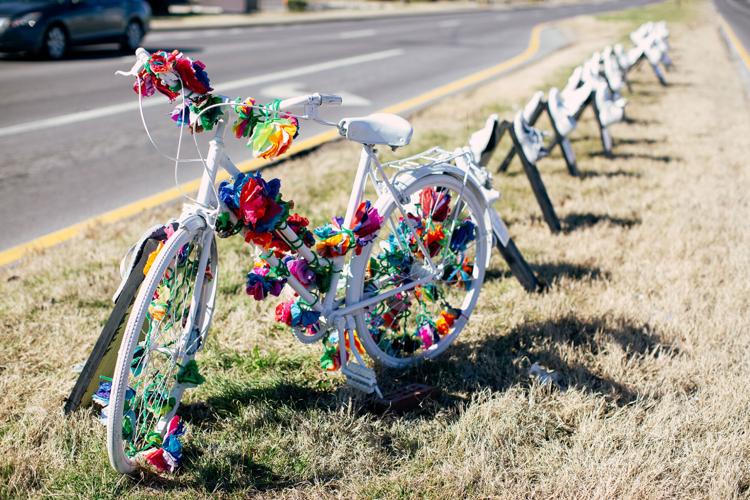
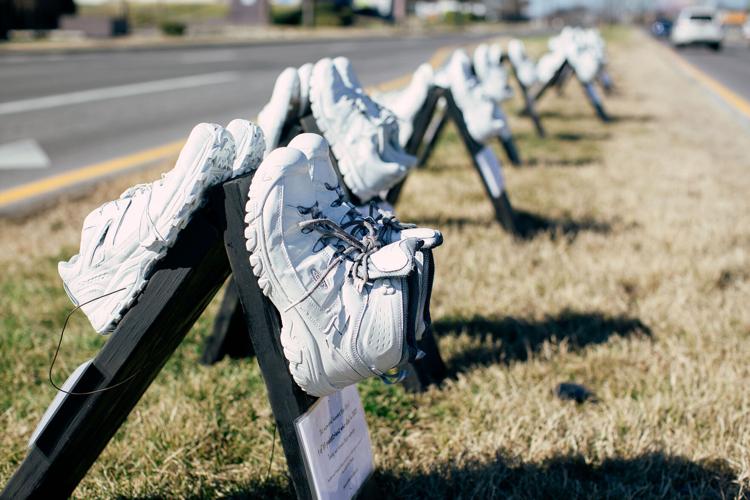
Walk Bike Nashville also set up a monument featuring a bike and several sets of shoes on an unprotected median on Murfreesboro Pike — the tough-to-access location reflects just how difficult traffic is to navigate for pedestrians.
When asked about the increase in fatal accidents, Cathy Carrillo — manager of Walk Bike Nashville’s schools program — pointed to a lack of “real improvements in infrastructure.” Streets are in rough shape, paint is wearing off of roads, and there aren’t enough lights. Plus, as Nashville’s population grows, the roads get busier. “You add up all the small things, they create really big issues,” said Carrillo.
Mayor John Cooper did not attend this year’s memorial, though he pledged the city to a Vision Zero plan at the 2019 pedestrian memorial during his first year in office. Vision Zero is an international initiative to reduce traffic deaths that has been adopted by U.S. cities over the past decade.
Andrea Fanta, a spokesperson for Cooper’s office, says the mayor is still committed to Vision Zero and that representatives of the Nashville Department of Transportation had attended the event. Fanta also points to Cooper’s investments in 50 infrastructure projects to support traffic-calming efforts, like reducing speed limits, as well as 28 sidewalk projects that are under construction or close to beginning construction.
Nashville is still drafting its Vision Zero plan and held a public meeting about the draft on Jan. 26. Participants included NDOT’s new director Diana Alarcon and Lewis Laff, a transportation safety officer from Austin, Texas — a peer city that has seen some success with Vision Zero programs.
Jennifer Baldwin of Alta, a transportation design company that has previously worked with Metro, said at the public meeting that Vision Zero will seek to use data from previous crashes to identify vulnerable communities and dangerous roadways and prevent future crashes. To stress the urgency of improving street safety, Baldwin noted that Nashville sees 14.5 fatalities per 100,000 traffic accidents, a higher rate than peer cities like Austin, Texas, and Charlotte, N.C. Additionally, 1 in 4 pedestrians hit by a vehicle is killed.
Baldwin noted that 6 percent of streets in Nashville accounted for 59 percent of traffic deaths and severe injuries since 2014. “By focusing on those 6 percent of roadways, we can really start to move towards reducing the loss of life that’s currently happening,” she said.
Leah Shahum of the Vision Zero Network noted at the meeting that certain safety trends are national issues. In Nashville and other cities, for example, low-income neighborhoods and communities of color are far more likely to see fatal traffic accidents. Vision Zero comes out of Europe and has seen success in cities like Helsinki and Oslo. Some U.S. cities have seen promising results as well — for example, Fremont, Calif., saw a 45 percent decrease in traffic deaths after implementing Vision Zero policies.
But other Vision Zero cities are struggling. Los Angeles has seen deaths increase since adoption, and Washington, D.C., reduced deaths only one year — 2019. Some of this reflects a national trend: Over the past year, traffic deaths have increased across the country.
Shahum acknowledged that some cities are “stalling,” but added that change is going to take time.

She pointed to the success Austin is seeing on streets that have received safety improvements. While Austin saw an increase in traffic deaths, the roadways that received safety improvements like new traffic signals have seen far fewer crashes. “If you can take that citywide, we have reason to believe you will see changes, improvements citywide,” said Shahum. “It’s gonna be harder to scale it. It’s gonna be harder to find that money. And let’s be honest, it’s gonna take political will.”
Carrillo echoed the sentiment at the pedestrian memorial. “The Vision Zero action plan is a great place to start,” she said, “but we need actual deadlines and dates for those things.”
Carrillo said the city can tackle smaller projects like installing more advanced traffic signals or repainting roads, and noted that community involvement will be important to holding officials accountable.
The public is invited to submit questions and comments about the Vision Zero draft plan to VisionZero@nashville.gov. The final version is expected to arrive in March.



Post a comment as anonymous
Report
Watch this discussion.
(0) comments
Welcome to the discussion.
Log In
Welcome to the discussion.
Keep it clean. Please avoid obscene, vulgar, lewd, racist or otherwise abusive language. Comments featuring hate speech or threatening or violent content will not be tolerated.
PLEASE TURN OFF YOUR CAPS LOCK.
Be truthful. Don't knowingly lie or mislead.
Be proactive. Use the “report” link on any comment that violates our comment policy.
Share with us. We'd love to hear your feedback.