

Street View is a monthly column taking a close look at development-related issues affecting different neighborhoods throughout the city.
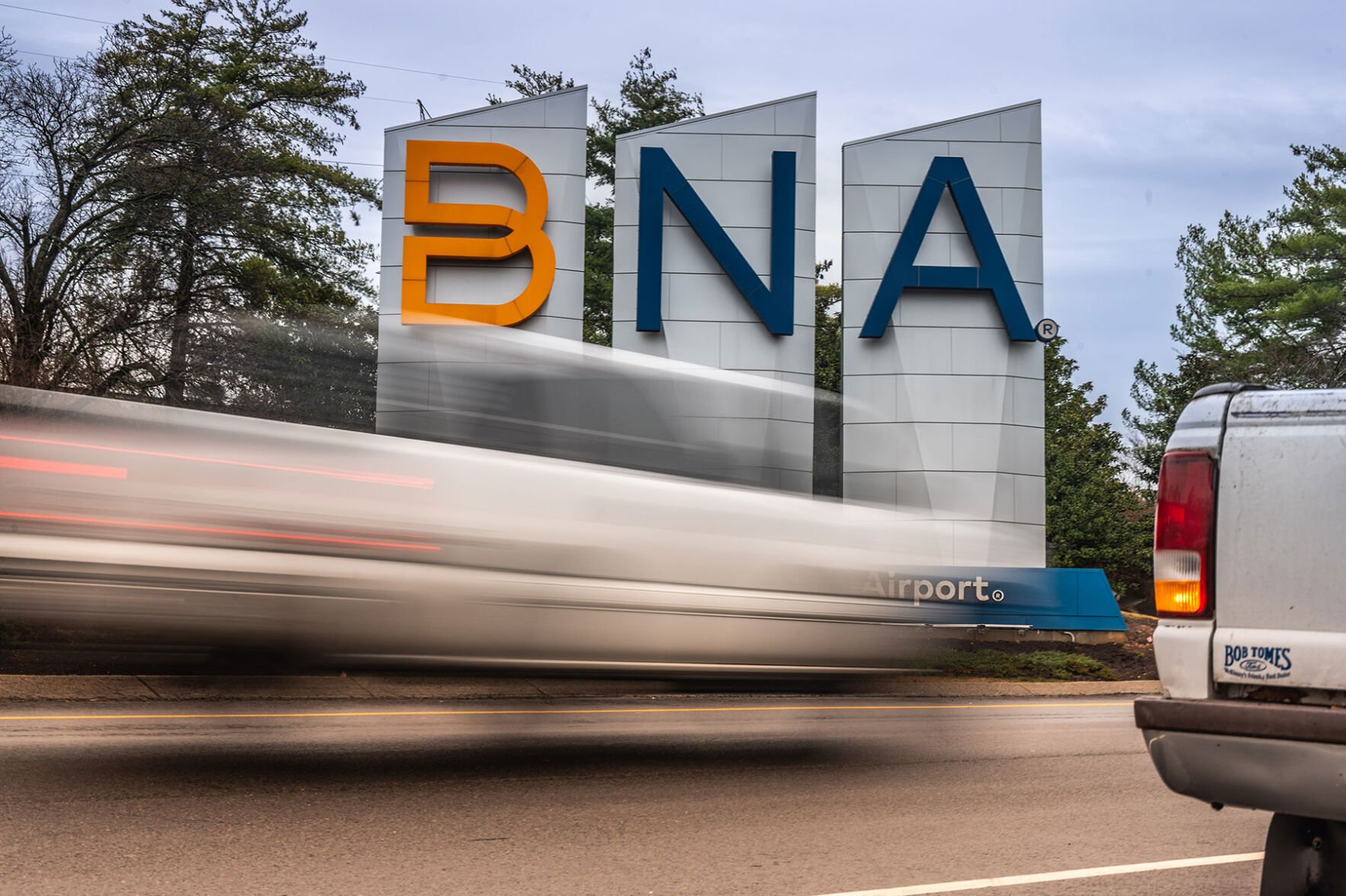
On Sept. 15, traffic from BNA reached nearly unbelievable levels. Gridlock lasted for hours. On I-40, people left their rideshares and began to walk toward the airport. Tennessee Department of Transportation response crews started to divert traffic.
Airport officials referred to the backup on that late-summer day as “unprecedented,” and at the time, unsubstantiated rumors swirled that the chaos was caused by a riot. TDOT later said that late afternoon traffic was caused by an accident, and the next day, the Metro Nashville Airport Authority said delays were “the result of several concurrent factors.” But beyond this event, it’s easy to see what’s causing airport traffic jams: More people are coming into the city than ever before, and most of them are coming and going to and from the airport in cars.
The city is taking steps to make those journeys quicker, easier and safer. But without the dedicated bus lanes or train services present in many other midsize U.S. cities and a dubious future for The Boring Company’s planned Teslas-only Music City Loop tunnel, the next few years will test whether Nashville’s infrastructure can keep pace with its growth.
The airport is projected to serve approximately 25 million passengers in fiscal year 2026, airport authority representatives tell the Scene. That’s an average of 70,000 passengers per day.
“BNA has experienced unprecedented growth, with passenger volumes more than doubling over the past decade,” says Charlotte Weatherington, director of corporate communications and marketing at BNA.
Similarly, figures from TDOT show that the average annual daily traffic (AADT) on I-40 near Donelson Pike was 143,759 vehicles in 2024, up from 131,824 vehicles in 2015. (At the time of this writing, TDOT’s 2025 figures are not yet available.)
So more people than ever are traveling to and from the airport. What’s the city’s plan?

Court upholds decision that legislation violates Home Rule protection, overturns ruling on equal protection guarantee
The airport authority has a few proposals. In a report published in response to the incident in September, they highlight five strategies: reassessing traffic monitoring and existing data, further strengthening their internal traffic response training, partnering with “transportation network companies” (rideshares like Uber and Lyft), using technology like LiDAR to better predict and understand traffic, and partnering with state and local agencies for improved response.
In a statement sent to the Scene, airport authority reps highlight their expansion programs: BNA Vision ($1.5 billion) and New Horizon ($3 billion, with more than $300 million dedicated to roadway improvements). BNA Vision ran from 2017 to 2024 and included expanded concourses, an international arrivals building, new ground transportation areas and other improvements. New Horizon will include “approximately four miles of new roadways, five bridges required to complete the terminal loop road, and utility relocations,” they say. It’s planned to provide capacity for up to 40 million passengers through BNA.
Airport authority representatives also point to collaboration with TDOT. “These roadway improvements are dependent on the completion of TDOT’s Donelson Pike Project, which BNA supported by providing an incentive that enabled TDOT’s contractor to complete the work one year ahead of schedule,” say reps.
TDOT tells the Scene that the department has invested $150 million into the new Donelson Pike Interchange. “Our goal is to help BNA leverage this infrastructure to better accommodate its growing traffic demands,” says Erin Zeigler, TDOT’s regional communications officer. TDOT also offers traffic management for the airport, helping clear accidents quickly and supply lane closures, diversions and detours to prevent traffic from building up. During the gridlock on Sept. 15, they offered this support, diverting vehicles onto Donelson Pike to clear traffic.
The mayor’s office has also made airport access improvements a “significant priority,” says Mayor Freddie O’Connell’s press secretary Alex Apple. This includes increasing public transit frequency, “an important part of WeGo service enhancements that are funded by Choose How You Move.”
“The Choose How You Move team, including WeGo and NDOT, have started conversations with the airport and look forward to a positive working relationship,” says Apple.
The mayor’s Choose How You Move transit initiative — successfully passed by a 2-to-1 voter margin in a 2024 referendum — has a number of upgrades planned near the airport, and increased bus access recently went into effect.
Beyond The Boring Company’s planned tunnel, which has recently been blighted with labor disputes and questions about feasibility, the city does have the potential to complete more extensive airport transit in the future.
Speaking to the Nashville Banner about airport transit last month, Metro Councilmember Sean Parker said increased bus frequency and a dedicated bus lane could help people get downtown faster. O’Connell’s office tells the Scene that an express bus lane, if planned, would have to be approved by the state legislature.
The airport also has the infrastructure to accommodate light rail, but no trains are currently planned to and from the airport.
Unsurprisingly, airport traffic severity depends on how well a city’s existing systems cope with population growth and tourism. Cities like Nashville feel more pressure because of an increase in travelers, while cities with “excess infrastructure” because of decreasing populations give residents and tourists the easiest time getting to and from the airport.
But for now, Nashville’s traffic will probably keep on growing. Hopefully, the transit options will soon catch up.



Post a comment as anonymous
Report
Watch this discussion.
(0) comments
Welcome to the discussion.
Log In
Welcome to the discussion.
Keep it clean. Please avoid obscene, vulgar, lewd, racist or otherwise abusive language. Comments featuring hate speech or threatening or violent content will not be tolerated.
PLEASE TURN OFF YOUR CAPS LOCK.
Be truthful. Don't knowingly lie or mislead.
Be proactive. Use the “report” link on any comment that violates our comment policy.
Share with us. We'd love to hear your feedback.