

Street View is a monthly column taking a close look at development-related issues affecting different neighborhoods throughout the city.
It’s Thursday, and District 12 Metro Councilmember Erin Evans is chasing after a rooster again. He’s been hiding out in the woods of Hermitage for a few weeks, ever since he showed up at a community center Easter egg hunt.
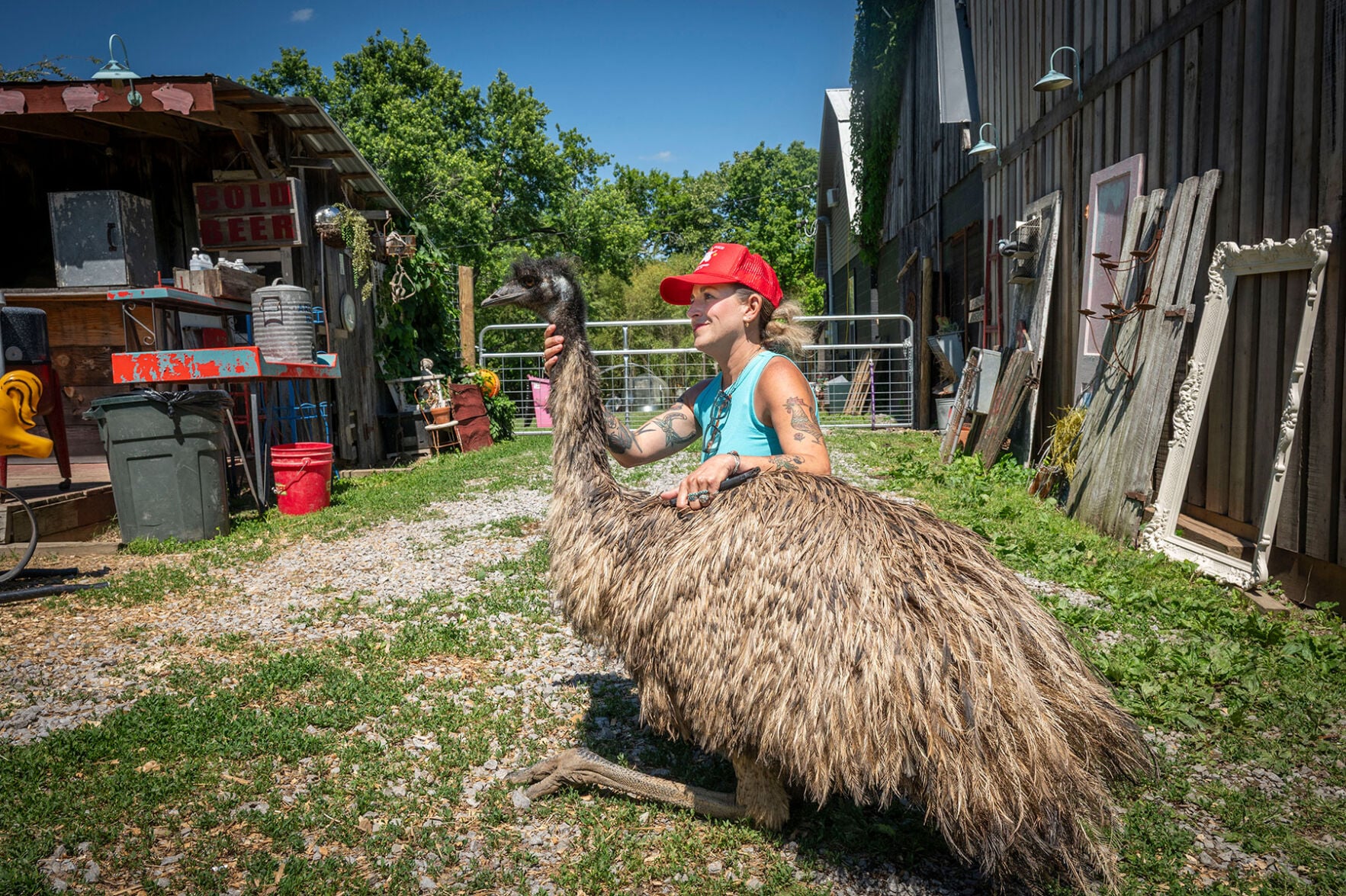
This is nothing new to Evans, who also contended with mysterious sheep and a runaway emu in District 12 last month.
“The most prominent thing in my first term was the cattle,” she says, referring to a herd from a nearby farm — led by a crafty, fence-breaking steer — that would intermittently but persistently show up in Hermitage backyards. “Residents would send me pictures of the cattle on their lawns,” she says. Evans would help coordinate reconnaissance efforts and would call Metro police to herd the cows off the roads.
Lost and abandoned animals show up across the whole city, but Hermitage seems to be a particular hot spot for them. People often abandon pet ducks and geese who cannot survive outdoors at Percy Priest Lake. And the mix of farmland and growing neighborhoods means that city and country meet in District 12 in unexpected ways when animals escape.
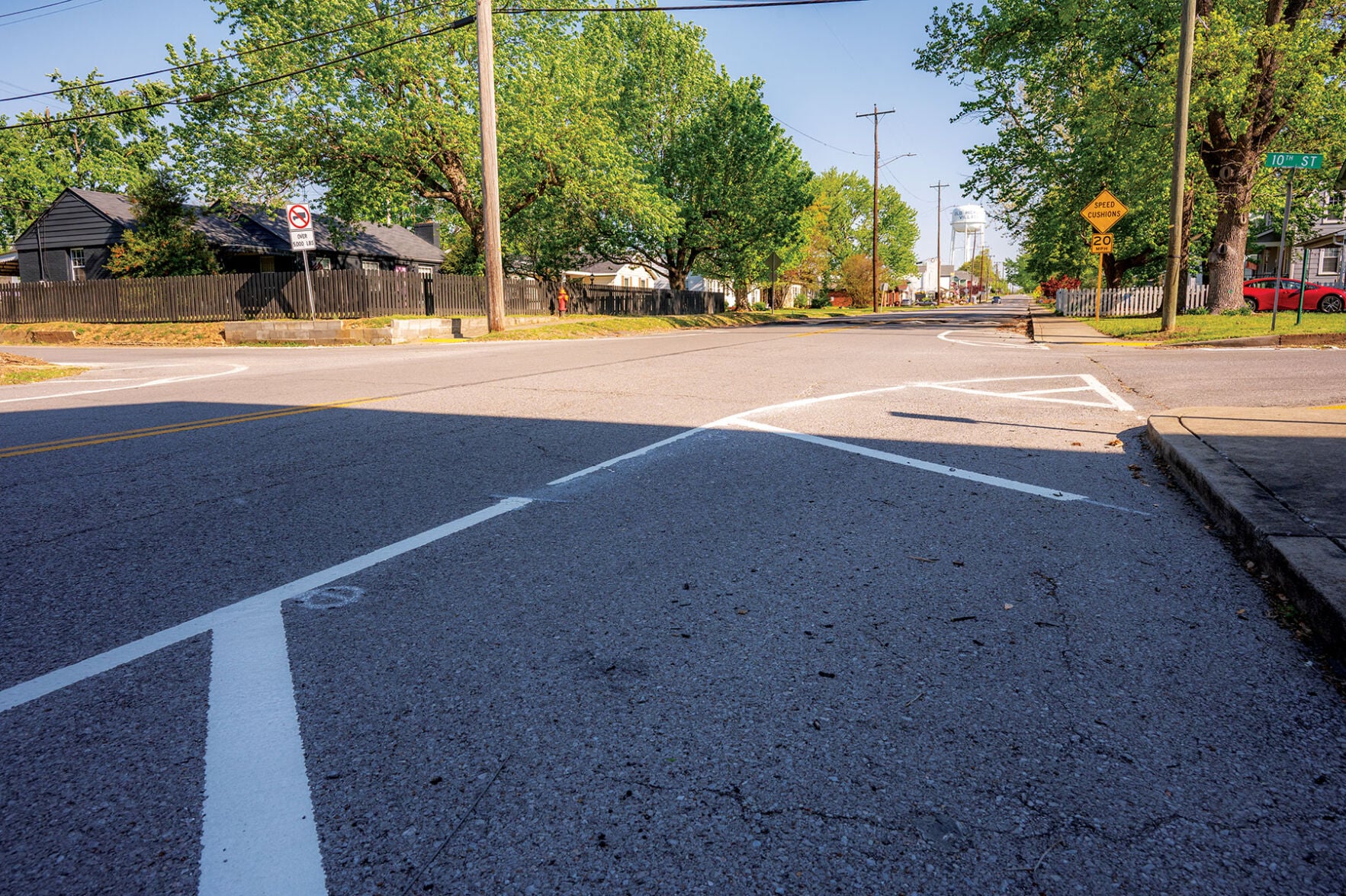
Old Hickory homeowners wanted traffic calming measures. It worked. Then they petitioned to have them removed.
When the animals show up in her district, Evans starts making phone calls. For animals in danger of being hit by cars, she calls the Metro Nashville Police Department — there was a time when she got a midnight call from a resident about a donkey on Old Hickory Boulevard. Otherwise, it’s usually Metro Animal Care and Control or the Tennessee Wildlife Resources Agency.
Some animals can be harder to place, like the domesticated Burmese python spotted living at a gas station on Old Hickory Boulevard. (“It had slithered around a gas pump and was just hanging out there,” says Evans.) For those animals, specialized rescues usually step in.
In the case of Evans’ rooster, that meant a call to animal sanctuary Piccolo Farms in Whites Creek. Established in 2018, the rescue now houses more than 200 animals, says Bonnie Glueck, who runs the sanctuary with her husband Jeff. They are a 501(c)(3) nonprofit and are supported entirely by donations, all of which go to the animals’ upkeep.
Talking with the Scene by phone — with the sounds of farm animals and parrots in the background — Glueck puts the Hermitage animals in perspective. She tells the Scene there’s a little-known but persistent problem in Middle Tennessee: the overwhelming volume of pigs and roosters that are surrendered or abandoned every year.
“Pigs are the biggest need,” says Glueck. “That’s the animal that we get called for the most, and they’re the ones that get dumped all the time.”
“I can’t fault the people who buy these little piglets, because they’re so dadgum cute,” she says. “But they don’t do their research. We all make mistakes, we make choices that we shouldn’t make, and that’s what happens with a lot of these pigs.”
If abandoned pigs are caught, they usually end up at Piccolo Farms. The sanctuary currently has about 60 permanent pig residents, Glueck says.
The rooster problem is a little more complicated.
“Davidson County makes the rooster problem,” says Glueck, referring to a 2009 ordinance that set requirements for Nashville backyard chickens while also banning domestic roosters. That was fine in theory, Glueck says, except “they don’t mandate where those chickens come from.”
“People go out and buy ‘hens,’” says Glueck. When “hen” chicks turn out to be roosters, “There’s no place but here that takes them.”
“If people don’t know about us, then they dump them,” she says.
The Piccolo Farms’ rooster flock is even bigger than its herd of pigs: More than 80 roosters currently live there.
Despite fielding multiple calls about animals every day, Glueck has sympathy for the people who leave pets by lakes and in parks, as they may not know a sanctuary is an option. Sometimes, she says, “They just don’t know what to do.”
Glueck says it’s difficult to say why animals end up in certain areas more than others — or why Hermitage might be so popular. Antioch seems to also be a hot spot for finders, and wildfowl often end up at lakes — not just at Percy Priest, but also at smaller lakes in Franklin and elsewhere. That said, it’s difficult to tell whether animals have been dumped in a certain spot or they just wander there.
Glueck hopes Nashville can reform its chicken laws in the future, and that people can be more informed about the commitment of buying pigs, who are highly intelligent and can grow to be much larger than owners suspect.
But in the meantime, it looks like the city will rely on concerned citizens — and one quick-acting councilmember — to get its abandoned animals and feathered escapees somewhere safe.
When asked whether the cow, python, rooster and emu management is part of normal Metro Council duties, Evans is matter-of-fact. “I think my problem is nobody told me what ‘normal’ was at the beginning,” she says. “I was thinking, ‘Well, nobody else is here with these cattle — I guess that’s my job?’”

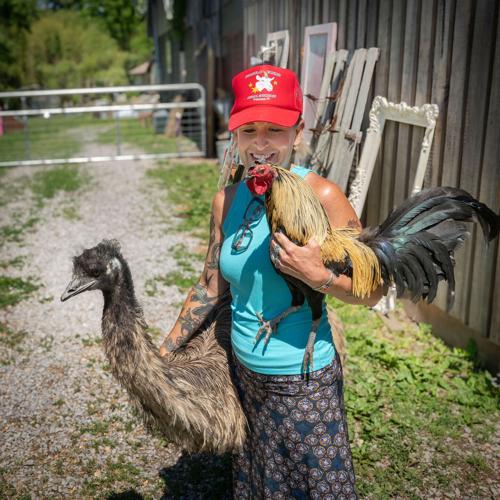
Bonnie Glueck with a rescued rooster and emu at Piccolo Farms
“I feel like I take other duties as assigned,” she says. “When there’s a gap in the department and it’s something happening where there needs to be an action taken, then I’m like, ‘Well, I guess that’s me.’”
When the aforementioned rooster was spotted at a condo in Donelson after being on the loose for days, Evans called Jessica Schultz, a local animal rights attorney who focuses on cruelty cases and had been tracking the rooster since it appeared at the Easter event.
With the help of two condo residents and a maintenance person, Schultz caught the rooster in her net. From there, he went straight to Piccolo Farms.
For Evans, the animals are part of what makes Hermitage unique — and a reminder of the area’s agricultural history. “It’s a weird juxtaposition between Old and New Nashville,” she says. “There are these animals going into these new developments, and then there are people still out there farming.”
But with the rooster safe in its new home, she can go back to her day job and council duties. That is, until the next animal comes along.



Post a comment as anonymous
Report
Watch this discussion.
(0) comments
Welcome to the discussion.
Log In
Welcome to the discussion.
Keep it clean. Please avoid obscene, vulgar, lewd, racist or otherwise abusive language. Comments featuring hate speech or threatening or violent content will not be tolerated.
PLEASE TURN OFF YOUR CAPS LOCK.
Be truthful. Don't knowingly lie or mislead.
Be proactive. Use the “report” link on any comment that violates our comment policy.
Share with us. We'd love to hear your feedback.