

Little things add up. Mayor Freddie O’Connell’s new capital spending plan — the annual docket greenlighting city projects across the county — includes just a few new line items alongside a long maintenance and infrastructure backlog that will command a $532 million price tag. Metro Nashville Public Schools and city general services, which include basic infrastructure needs like fire stations and the Metro vehicle fleet, combine for almost half the entire spending plan. The rest is distributed across priorities like the Nashville Department of Transportation and Multimodal Infrastructure’s traffic calming and sidewalks, as well as libraries, greenways, golf courses and various costs related to engineering and planning for city property.
The mayor announced his FY26 capital spending plan on Nov. 21, filing the accompanying legislation the same day for initial review at the Metro Council’s Dec. 4 meeting. While the annual capital improvements budget, filed during city budget season, details possible spending projects, the CSP selects specific projects from the capital improvements budget and legally commits funding toward each.
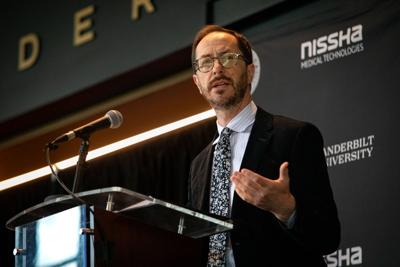
“This capital spending plan helps us respond to our growth by allowing departments to nimbly address needs that ensure Metro can continue to deliver great customer service to Nashvillians,” Mayor Freddie O’Connell says in a statement announcing the plan. “Funding from this capital spending plan helps us do the little things well and keep up with maintenance that may not grab headlines, but by doing the little things well, we can better execute on the big ideas and challenges ahead.”

Grant from state to Nashville Downtown Partnership for security uses is likely to be deferred after negative council feedback
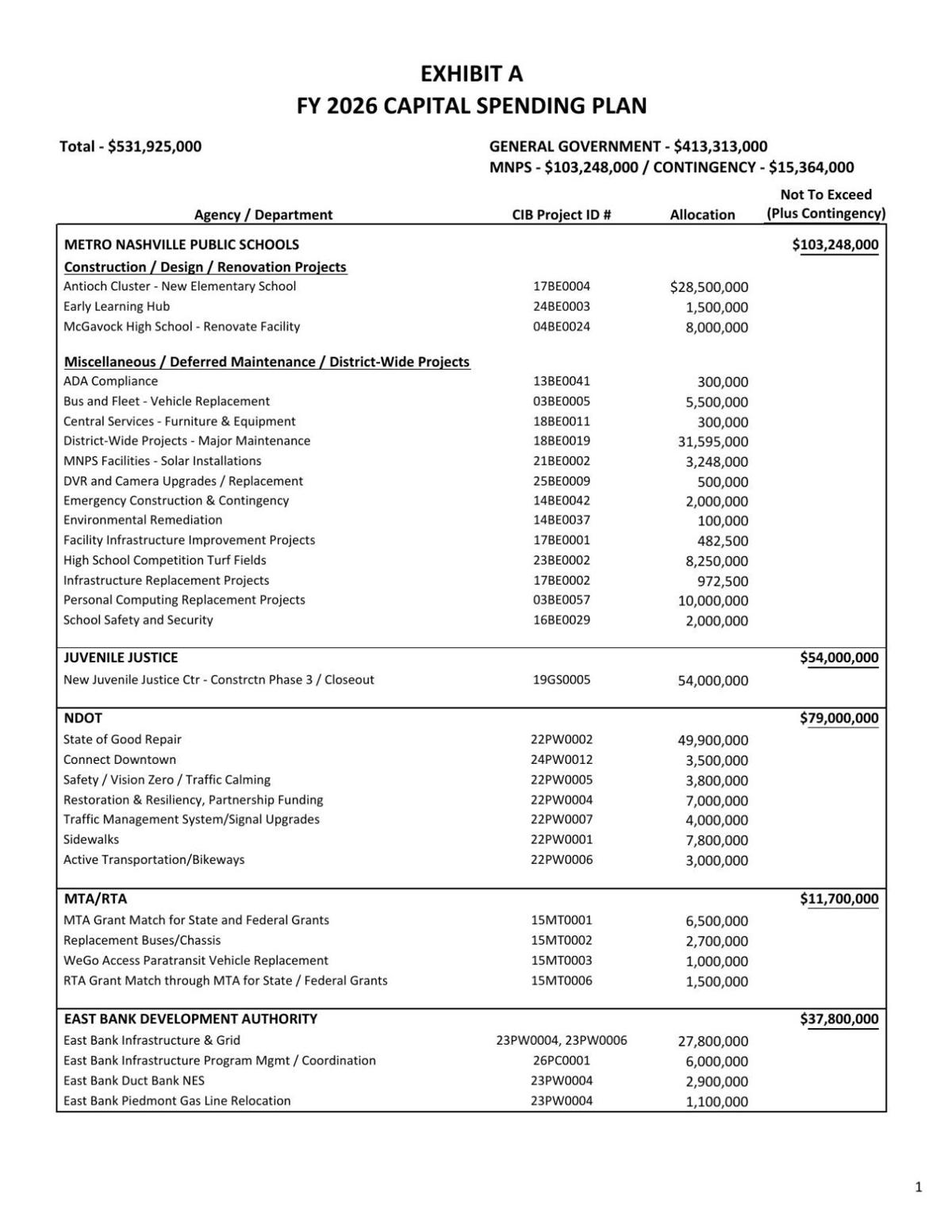
This year’s CSP comes almost exactly a year after O’Connell’s FY25 CSP. Both come within $6 million of each other in total cost and commit the majority of city spending to general infrastructure updates and maintenance. Two special projects, the city’s new juvenile justice center (also called the Nashville Youth Campus for Empowerment) and continued costs related to preparing the East Bank for development, have driven dedicated city spending for the past two years. If approved, the latest CSP would pledge $54 million — its single largest line item — to the final “closeout” phase of the juvenile justice center.
Long-awaited plans for a revamped Richland Park Library and a new elementary school in Antioch both receive nods from O’Connell, as does continued funding for McGavock High School renovations. The plan banks nearly $50 million for roadway “state of good repair” maintenance, $7.8 million for sidewalks, $4 million for greenway repairs, and $3 million for bikeways. Nashville does not solely rely on the CSP for transportation funding and often supplements with state and federal money.
The city may also throw another $750,000 toward the abandoned Global Mall, a property that has been imbued with various dreams and visions since being acquired by former Mayor John Cooper in 2022. Cooper bought it with plans to partner with VUMC on a health center, but negotiations fell apart, leaving the property vacant and dragging on city books.
While a new stadium for the Tennessee Titans rises on the East Bank, the mayor will budget a total of $37.8 million for hardscape spending on utilities and the road grid. Metro will apparently chip in $1.1 million for a Piedmont gas line relocation and another $2.9 million for a “duct bank” to protect cables and wiring from Nashville Electric Services. West Park, popular with city sports leagues and dog owners around The Nations, is also slated for $2 million in updates.
Councilmembers will review an accompanying request for $532 million in general obligation bonds in committee this week. The city enjoys a good credit rating and typically issues these bonds to back major spending efforts like the mayor’s capital spending plan.



Post a comment as anonymous
Report
Watch this discussion.
(0) comments
Welcome to the discussion.
Log In
Welcome to the discussion.
Keep it clean. Please avoid obscene, vulgar, lewd, racist or otherwise abusive language. Comments featuring hate speech or threatening or violent content will not be tolerated.
PLEASE TURN OFF YOUR CAPS LOCK.
Be truthful. Don't knowingly lie or mislead.
Be proactive. Use the “report” link on any comment that violates our comment policy.
Share with us. We'd love to hear your feedback.